





‹
›
‹
›
2.Stable bactericidal performance under low‑temperature cold‑chain working conditions
3.Food‑grade safety with zero residue, preserves raw‑material quality
4.Full‑chain coverage to block cross‑contamination
5.Enhanced freshness‑keeping, extends shelf‑life
6.Flexible installation, retrofittable for new & existing facilities
7.Customization for international export compliance
PRODUCT DESCRIPTION
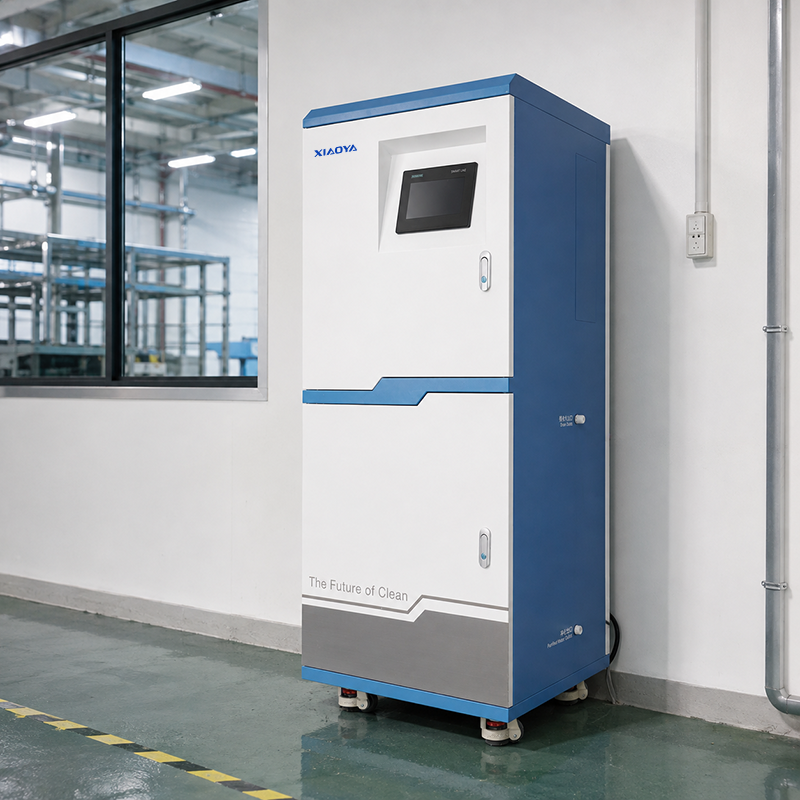
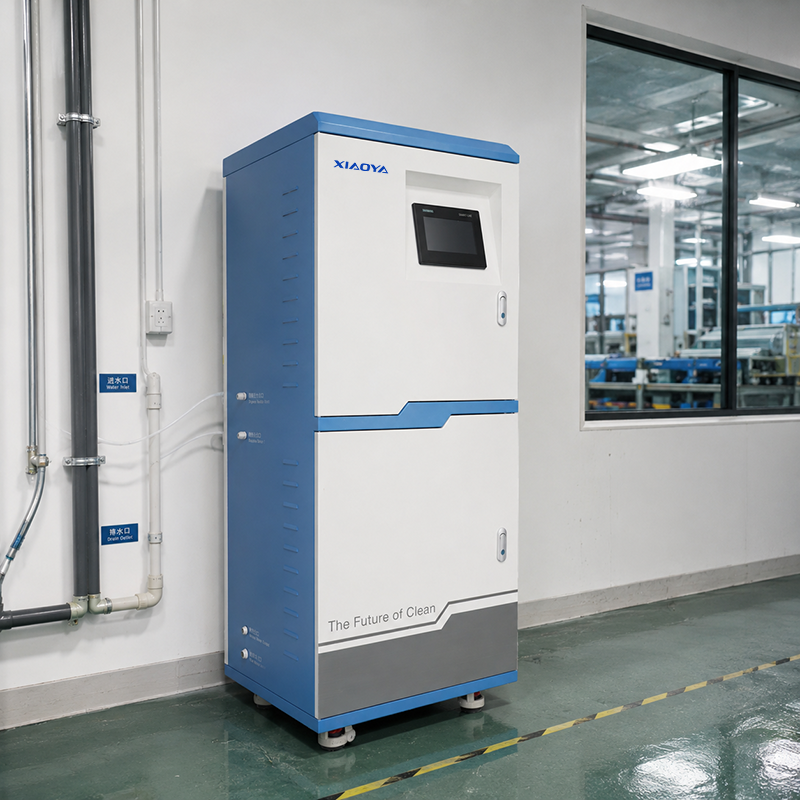
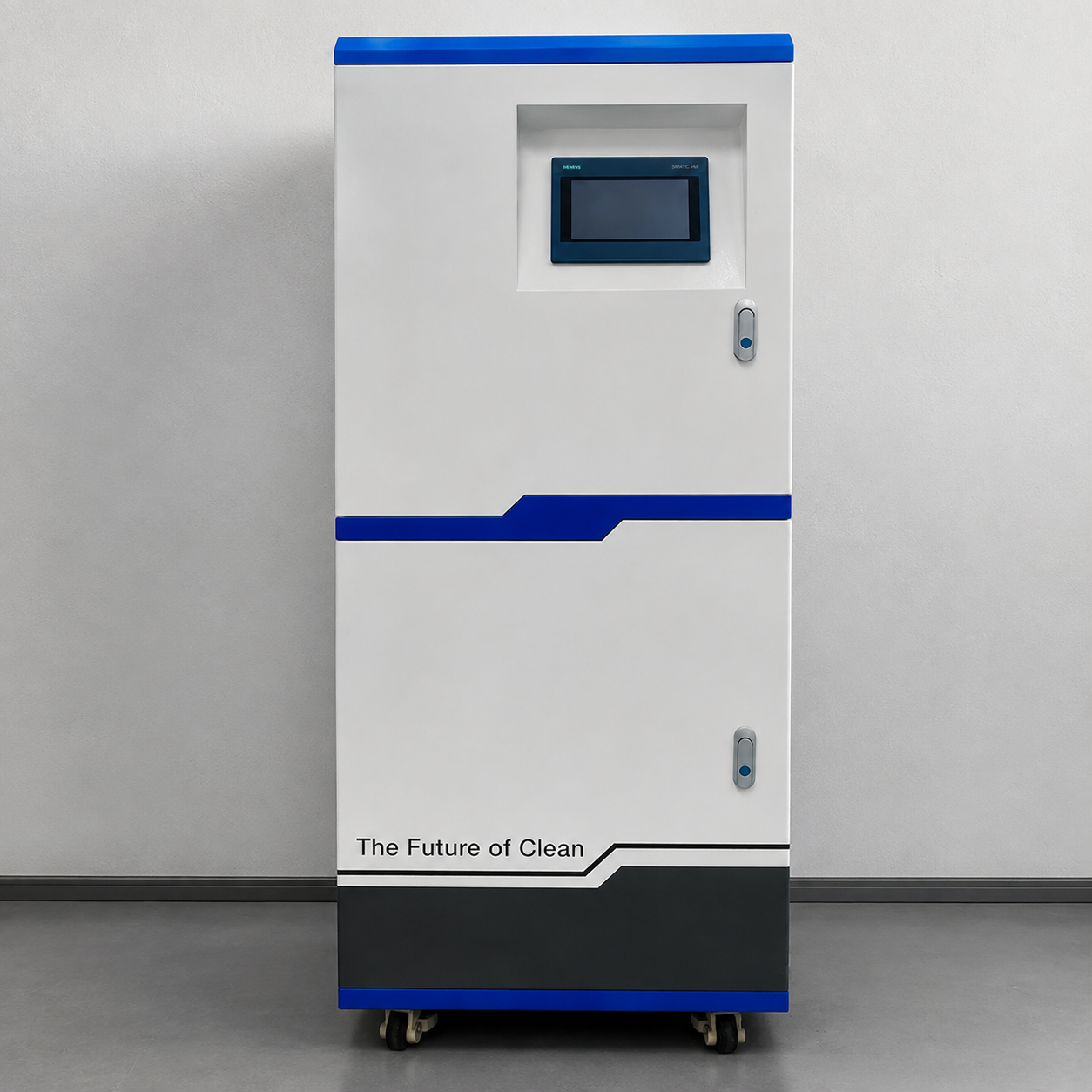
Electrolytic Salt Hypochlorous Acid Water Generator for Cold‑Chain Transportation
Product Definition
The Electrolytic Salt Hypochlorous Acid Water Generator is a fully‑automatic on‑site disinfection water‑making device custom‑built for cold‑chain transportation scenarios. Using sodium chloride and pure water as raw materials, the system adopts high‑precision electrolysis technology to generate high‑purity hypochlorous acid disinfectant on‑demand.
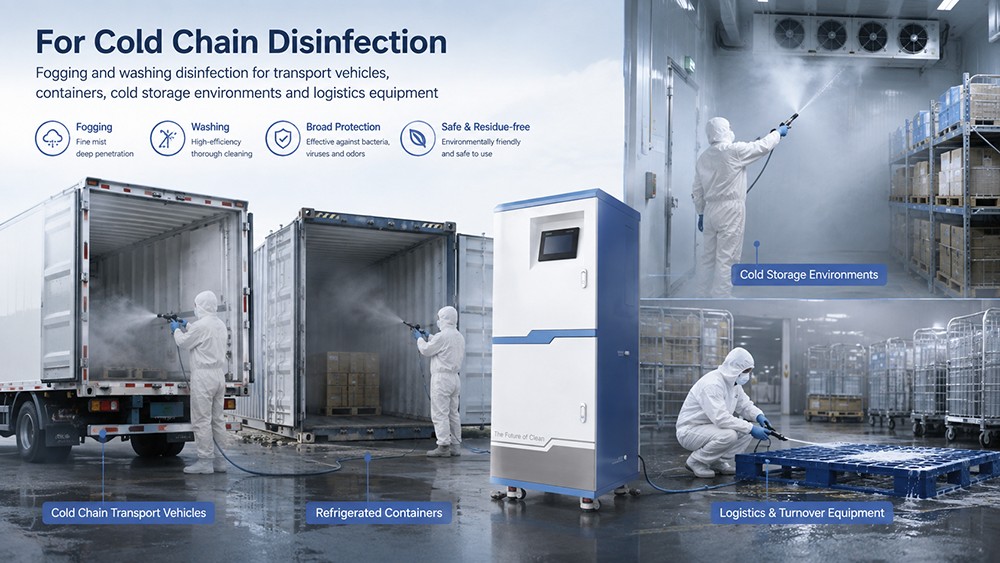
The produced disinfectant can be applied for atomization and flushing disinfection of cold‑chain vehicles, shipping containers, cold‑storage facilities and circulating equipment. It is also suitable for direct soaking and fresh‑keeping treatment of fresh food. One single unit completes full‑chain sterilization, deodorization and freshness preservation for cold‑chain logistics.
Replacing the traditional mode of purchasing and dosing pre‑made disinfectants, the Electrolytic Salt Hypochlorous Acid Water Generator fits diverse scenarios including fresh‑food cold‑chain trucks, cold‑storage warehouses, aquatic‑product, meat and fruit‑vegetable transportation. It enables microbial safety control covering “pre‑loading — in‑transit — post‑warehousing — circulation links”.
It addresses major pain points of conventional disinfection solutions: reduced disinfectant efficacy under low temperatures, cross‑contamination in truck compartments and cold‑storage rooms, as well as chemical residues. The product complies with domestic & international cold‑chain hygiene standards, including GB 31605‑2020 National Food Safety Standard‑Food Cold‑Chain Logistics Hygiene Specification.
Product Specifications (Customizable)
Core Selling Points & Application Scenarios
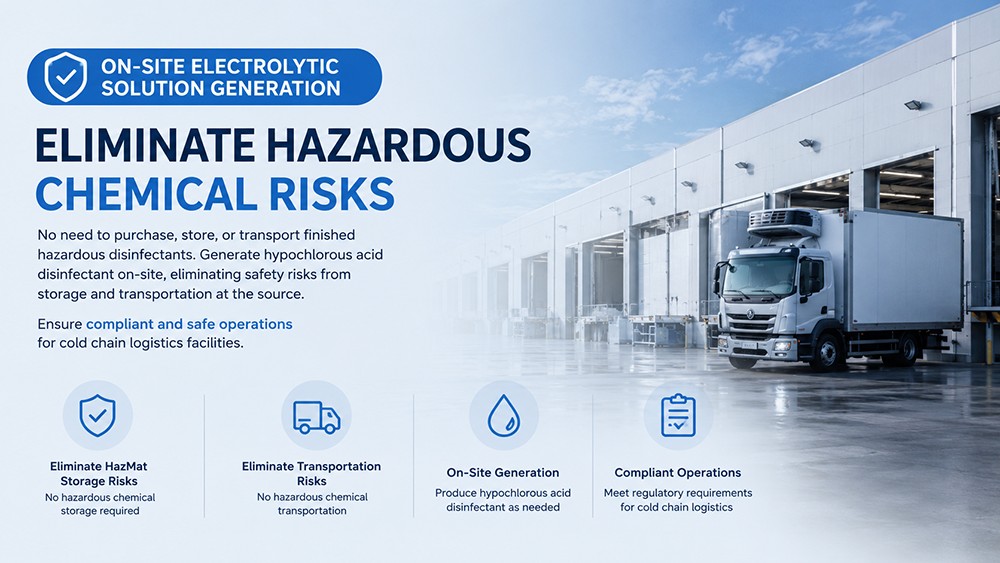
1. On‑site electrolytic disinfectant production, eliminates hazardous‑chemical risks
No purchasing, storage or transportation of finished hazardous disinfectant chemicals. Hypochlorous‑acid disinfectant is generated on‑site, removing safety hazards arising from hazardous‑agent storage and transit. Ideal for compliance operations at cold‑chain logistics yards.
2. Stable bactericidal performance under low‑temperature cold‑chain working conditions
Electrolytic hypochlorous acid maintains stable germicidal activity under refrigerated conditions (0‑10 °C) and even freezing environments (≤‑18 °C). It compensates for the performance degradation of traditional disinfectants at low temperatures, perfectly suited for long‑term low‑temperature operation in cold‑chain trucks and cold‑storage warehouses.
3. Food‑grade safety with zero residue, preserves raw‑material quality
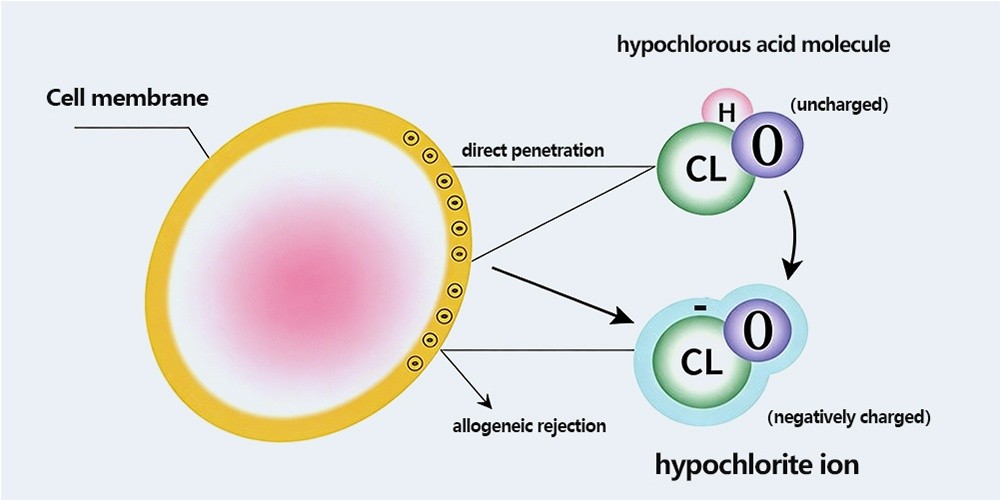
Hypochlorous acid is a natural bactericidal substance secreted by human white blood cells. Slightly acidic, mild and non‑irritating with no pungent odour. Once applied on surfaces, it rapidly decomposes back into water without chemical residues. Safe for direct disinfection of food‑contact surfaces for fruits, vegetables, seafood and meat, without damaging food flavour or colour.
4. Full‑chain coverage to block cross‑contamination
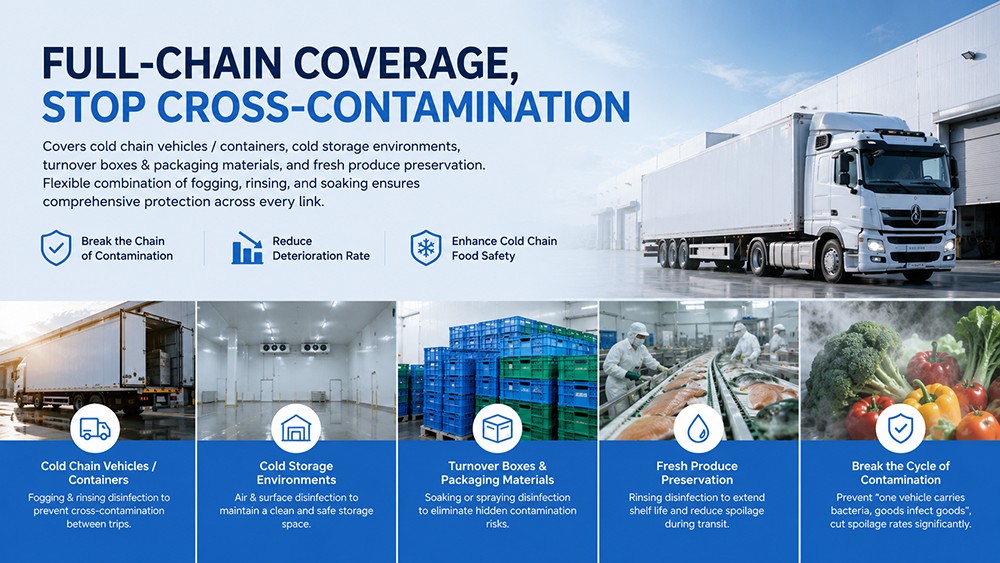
Covers cold‑chain vehicles, containers, cold‑storage environments, circulating containers & packaging materials and fresh‑food preservation. Multiple operation modes including atomization, flushing and soaking can be flexibly combined. Effectively prevents cross‑contamination (“pathogen transfer from one cargo load to another”), and significantly cuts spoilage & loss during circulation.
5. Enhanced freshness‑keeping, extends shelf‑life
Hypochlorous‑acid disinfected ice can be applied to cover seafood & aquatic products. As ice melts slowly, it continuously releases available chlorine to inhibit microbial regrowth. Field application data shows bacterial count on high‑value seafood such as tuna can be reduced by over 99.9 %, extending shelf‑life by 4‑5 days. For fruits & vegetables treated by soaking or atomization, storage life can be prolonged by more than 30 %.
6. Flexible installation, retrofittable for new & existing facilities
Compact footprint with quick & simple installation. Can connect to existing atomization, flushing and water‑supply pipelines. No large‑scale civil‑engineering modification required. Suitable for new‑build and retrofitting projects for cold‑chain fleets, cold‑storage warehouses and distribution centres.
7. Customization for international export compliance
Custom‑support for CE and other international certifications. Adaptable to food‑hygiene regulations and power‑supply standards of different overseas countries, meeting export customs‑declaration and inspection requirements.
Application Timing & Recommended Frequency
Key Application Timing
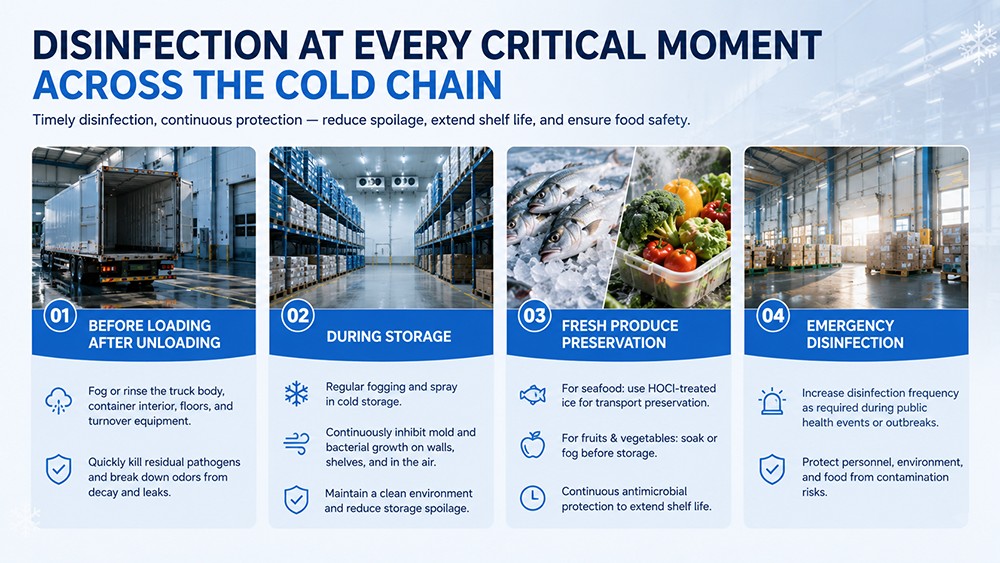
1. Before loading & after unloading: Perform atomization or flushing disinfection for cargo compartments, container inner walls, floors and circulating equipment. Rapidly kill residual pathogenic bacteria and decompose odours caused by spoiled juice residues.
2. During warehousing: Regular atomization & spraying inside cold‑storage rooms to continuously suppress mould and bacteria growth on walls, racks and in air. Maintain clean warehouse environment and reduce storage spoilage.
3. Fresh‑food preservation: Use hypochlorous‑acid disinfected ice for aquatic‑product transportation; soak or atomize fruits & vegetables before warehousing. Continuous bacteriostatic treatment prolongs shelf‑life throughout the whole process.
4. Emergency disinfection: During public‑health incidents or high‑epidemic‑risk periods, increase disinfection frequency for cold‑chain‑related zones and articles per local regulatory requirements, to avoid contamination risk to personnel, environments and food products.
Recommended Operating Frequency
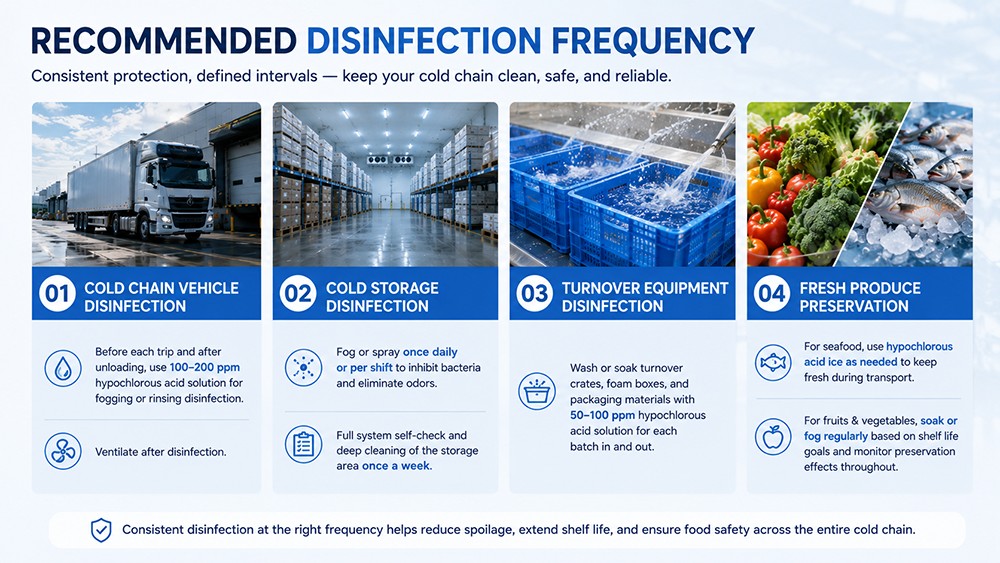
1. Cold‑chain vehicles: Disinfect with 100‑200 ppm hypochlorous‑acid solution by atomization or flushing before each departure and after unloading; ventilate compartments after disinfection.
2. Cold‑storage warehouses: Atomize & spray once per day or per work‑shift for bacteriostasis & deodorization; run full‑unit self‑inspection and deep warehouse sanitization once every week.
3. Circulating equipment: Flush or soak turnover baskets, foam boxes and packaging materials with 50‑100 ppm hypochlorous‑acid water for each inbound‑outbound batch.
4. Fresh‑food preservation: Apply hypochlorous‑acid ice for aquatic‑products as required; soak or atomize fruits & vegetables periodically according to target shelf‑life, and monitor preservation effects.
Frequently Asked Questions (FAQ)
Q: Does hypochlorous acid retain its disinfection efficiency under low‑temperature conditions?
A: Yes. Electrolytic hypochlorous acid maintains stable bactericidal activity under refrigerated and even freezing conditions. Unlike many traditional disinfectants with sharply reduced efficacy at low temperatures, it fits perfectly for cold‑chain trucks and cold‑storage warehouses operating persistently at low temperatures.
Q: Is hypochlorous‑acid treatment safe for fresh food? Will it leave chemical residues?
A: Safe to use. Hypochlorous acid is a natural germ‑fighting substance produced by human white blood cells. After contacting surfaces, it quickly decomposes into water, leaving zero chemical residues and no pungent smell. It is a food‑contact‑grade disinfectant and can be directly used for disinfection of contact surfaces of fruits, vegetables, seafood and meat.
Q: Will hypochlorous acid damage food taste, colour or quality?
A: No. Hypochlorous acid is mild and non‑irritating. It will not degrade food nutrition, flavour or colour. For preservation purposes, it effectively suppresses microbial reproduction and extends shelf‑life. Industry data shows bacterial load on aquatic products can drop by over 99.9 %, and fruit‑vegetable storage cycle can increase by over 30 %.
Q: Can it directly replace traditional disinfectants such as sodium hypochlorite? Is retrofitting cold‑chain trucks and cold‑storage warehouses easy?
A: Yes, it can directly replace traditional chemical‑dosing disinfection workflows and covers full‑range scenarios including vehicles, containers, cold‑storage rooms and circulating equipment. Compact unit size allows connection to existing atomization, flushing and water‑supply pipelines. No heavy civil‑engineering renovation; both new and legacy cold‑chain facilities can be retrofitted.
Q: Is the unit complicated to operate? Can ordinary logistics & warehouse staff handle it?
A: The machine runs fully automatically with intelligent controls. Disinfectant solution is generated with one‑click operation; no manual chemical mixing or dilution needed. Built‑in operation‑status monitoring and automatic fault alerts. General staff can operate it after short‑term training.
Q: What is the service life of electrolytic electrodes & other components? Are later‑stage maintenance costs high?
A: Corrosion‑resistant titanium‑alloy electrolytic electrodes are adopted, adapted to humid & low‑temperature cold‑chain working environments with long service life. The only consumable is common food‑grade salt. No expensive chemical consumables. Low maintenance workload and low overall operating cost.
Q: Can liquid‑output and concentration be adjusted for cold‑chain fleets and cold‑storage warehouses of different scales?
A: Custom‑non‑standard solutions are supported. Liquid‑production capacity can be tailored according to fleet size, cold‑storage volume and disinfection workload. Available‑chlorine concentration is adjustable within 50‑500 mg/L, covering small fresh‑food distribution points up to large‑scale cold‑chain logistics centres.
Q: For overseas export, can the machine satisfy local cold‑chain hygiene compliance requirements?
A: CE and other international‑certification documents are available. Wide‑voltage customization is supported. Operating parameters can be adjusted to match cold‑chain food‑hygiene codes of different countries, satisfying export customs‑declaration and local‑site‑operation inspection requirements.


ONLINE CONSULTATION
RELATED SUGGESTION
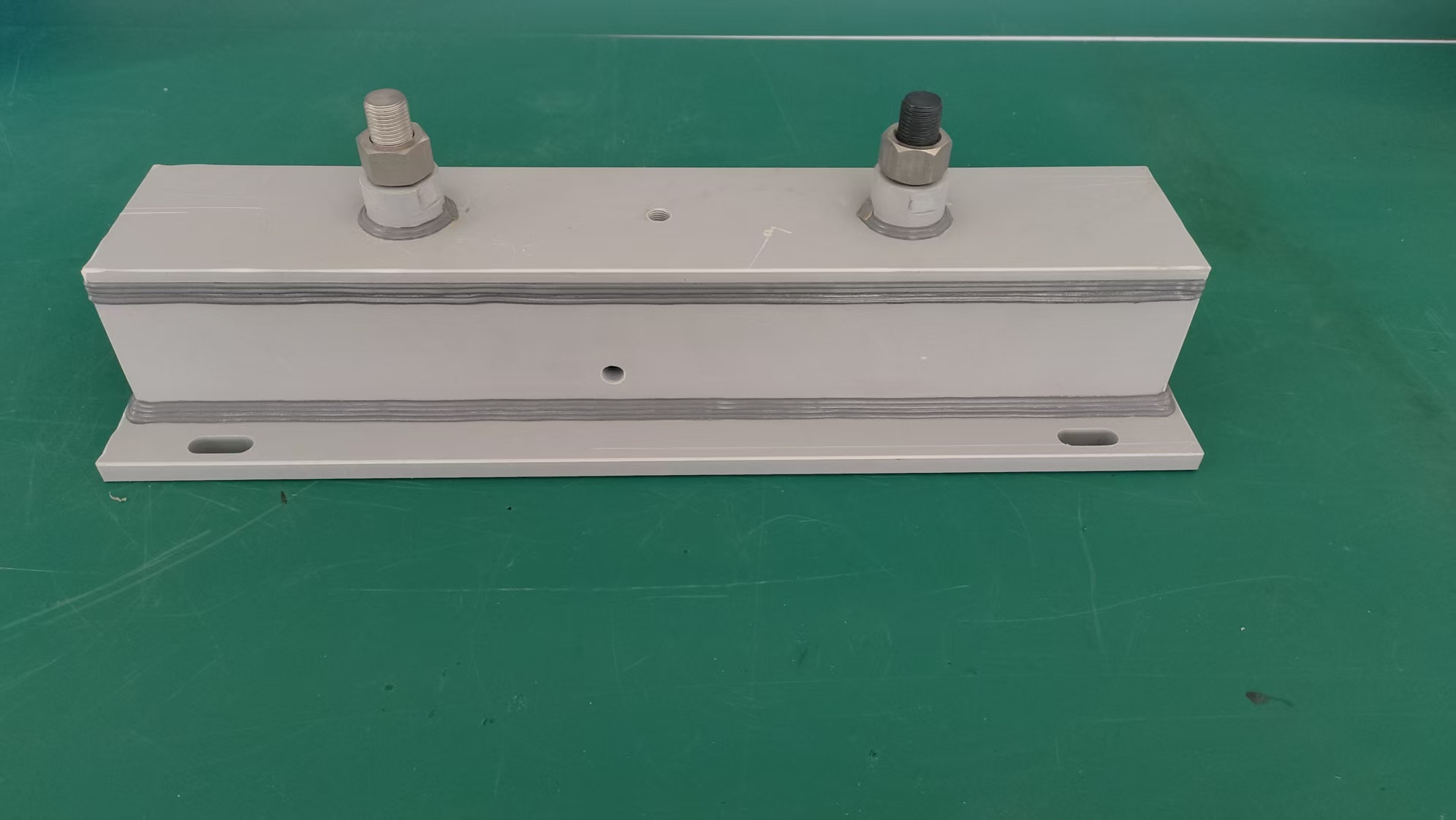
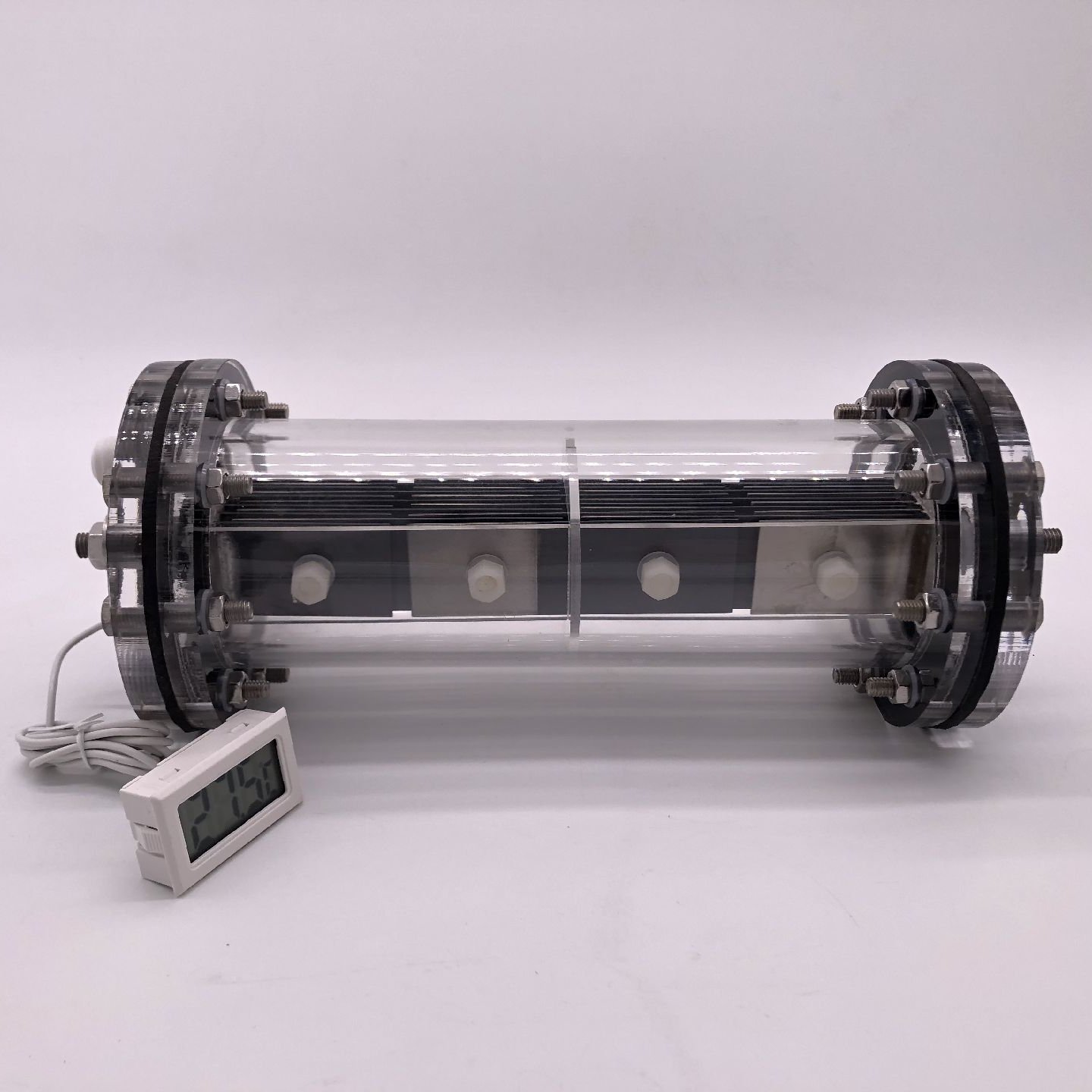
 Electrolyzer") Pure Hypochlorous Acid (HClO) ElectrolyzerLearn More
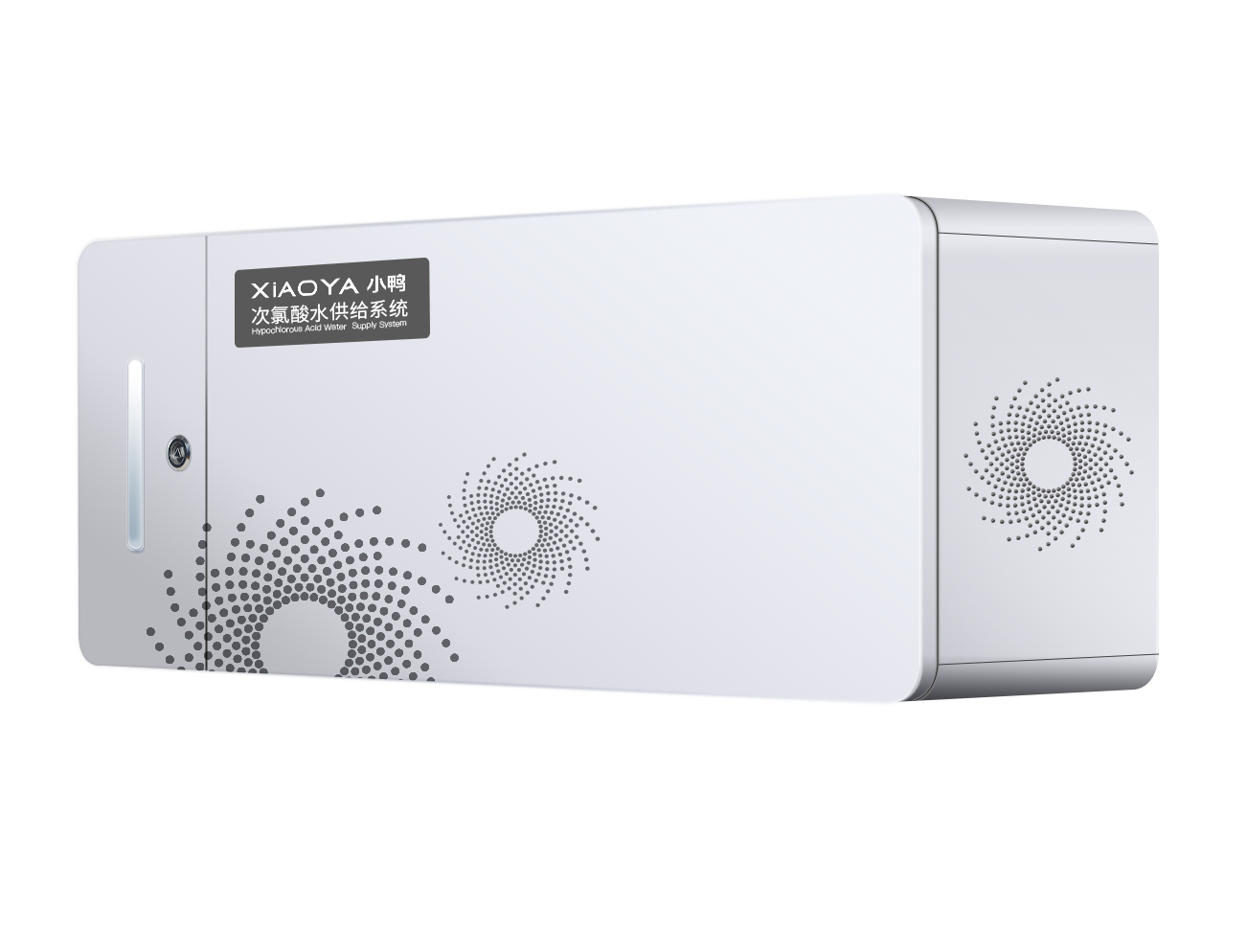
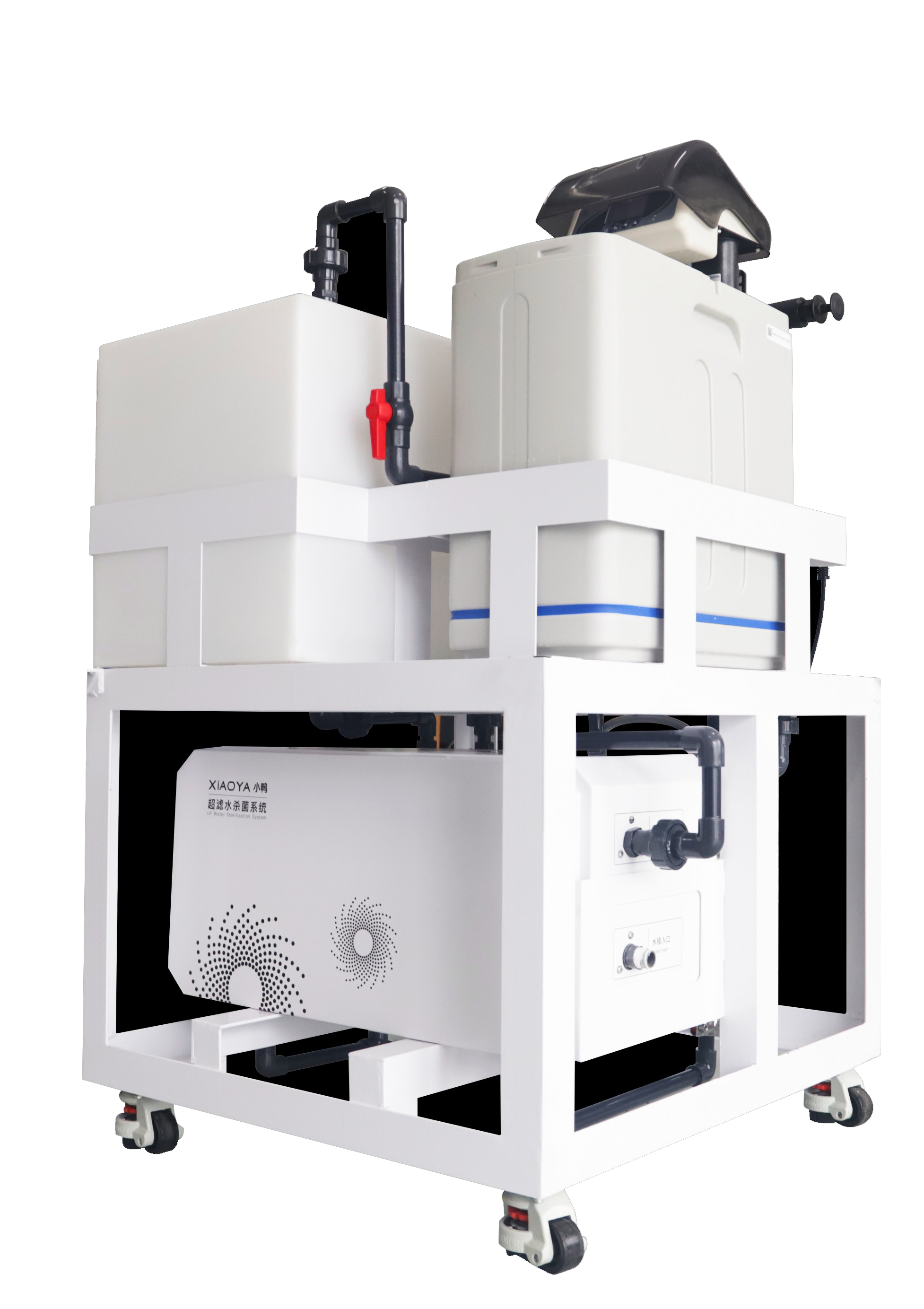
 water supply systemLearn More
 Sodium Hypochlorite ElectrolyzerLearn More
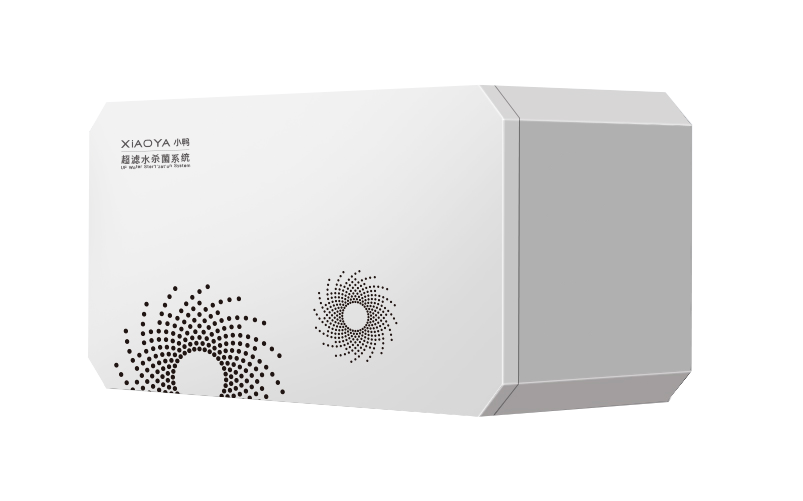
 Duckling ultrafiltration water purification and sterilization device XYCL-1000Learn More
 Diaphragm ElectrolyzerLearn More
 Water purification systemLearn More
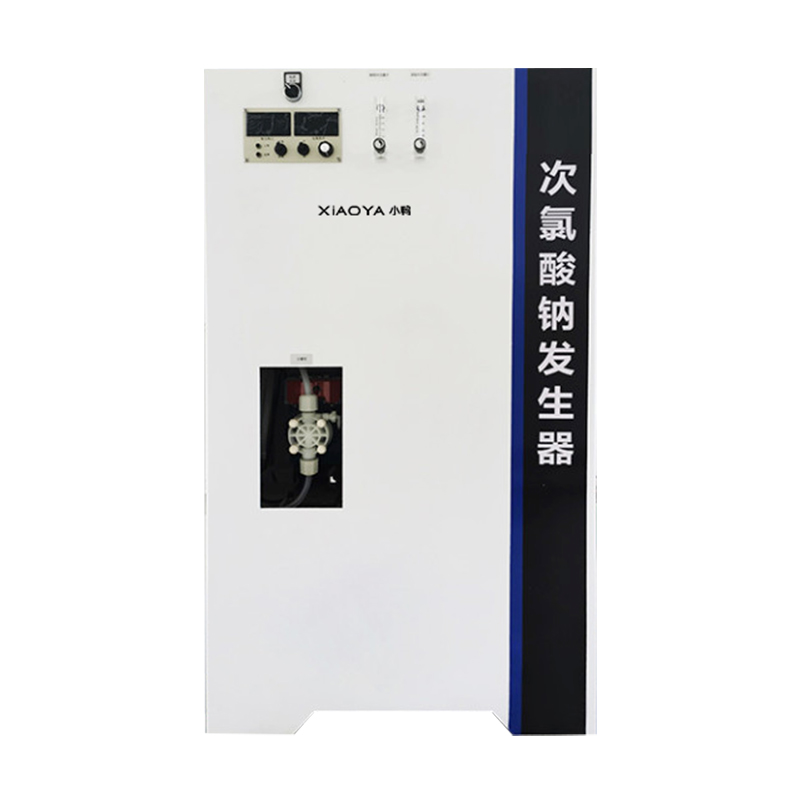
 Sodium hypochlorite generatorLearn More
 Water Treatment EquipmentLearn More


Xiaoya Group was founded in 1979,expert in the electrolyzed water industry.
Get in Touch
*We respect your confidentiality and all information are protected.