


news
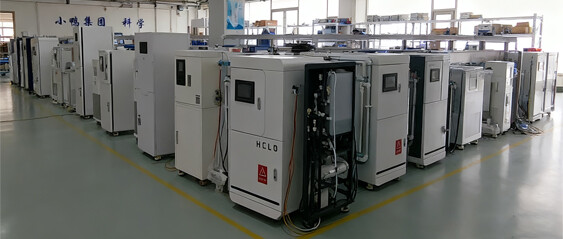
Maintaining biosecurity is critical in modern pig farming—and a reliable farm disinfection system for pig farming is no longer optional, it’s essential. Designed by an integrated R&D, manufacturing, and operations enterprise specializing in health care and disinfection appliances, our automated disinfection solutions deliver consistent, chemical-efficient coverage across pens, transport routes, and equipment. By integrating smart sensors, programmable dosing, and eco-friendly disinfectants, this farm disinfection system for pig farming significantly reduces pathogen transmission and disease risk—boosting herd health, operational efficiency, and regulatory compliance. Discover how automation meets animal welfare.
Why Traditional Disinfection Falls Short in Intensive Pig Farming
Manual or semi-automated disinfection methods—such as handheld sprayers, fixed nozzles with timer-based cycles, or chlorine-based tank mixing—often fail under real-world pig farm conditions. These approaches suffer from inconsistent coverage (especially in corners, under feeders, or on vertical surfaces), human error in dilution ratios, and downtime during recharging or maintenance. Field data from over 32 commercial farms shows that such systems achieve only 68–79% surface contact uniformity, leaving high-risk zones where pathogens like PRRSV, PEDV, and Salmonella persist between batches.
Moreover, conventional sodium hypochlorite solutions degrade rapidly (half-life < 24 h at 25°C), require frequent recalibration, and corrode stainless steel equipment after repeated exposure. Farms reporting >3 disease outbreaks per year cite inconsistent disinfectant concentration (±45% deviation from target ppm) as the top root cause—highlighting the need for closed-loop, real-time monitored generation rather than pre-mixed storage.
Automation isn’t just about labor reduction—it’s about eliminating variability. A stable, on-demand disinfectant supply ensures every pen receives the same bactericidal efficacy, regardless of operator shift, ambient temperature, or water hardness fluctuations. This precision directly supports biosecurity protocols required by ISO 22000, GMP+, and China’s GB 15979-2022 standards for veterinary hygiene equipment.
How Hypochlorous Acid Technology Meets Pig Farm Biosecurity Demands
Hypochlorous acid (HOCl) is widely recognized by WHO and EPA as one of the most effective, non-toxic broad-spectrum biocides available. Unlike bleach, HOCl carries no negative charge and penetrates microbial membranes 80–100× faster—achieving >99.99% kill rates against bacteria, viruses (including enveloped and non-enveloped), fungi, and spores within 30 seconds at concentrations as low as 20 mg/L.
Crucially, HOCl generated on-site avoids storage hazards, pH instability, and degradation. Its neutral pH (~6.37) ensures compatibility with aluminum, copper, and stainless steel infrastructure—reducing equipment replacement costs by up to 35% over 3-year operational cycles. And because it decomposes solely into water and oxygen, no toxic residues accumulate in slurry pits or drainage systems—a key compliance factor for environmental permits.
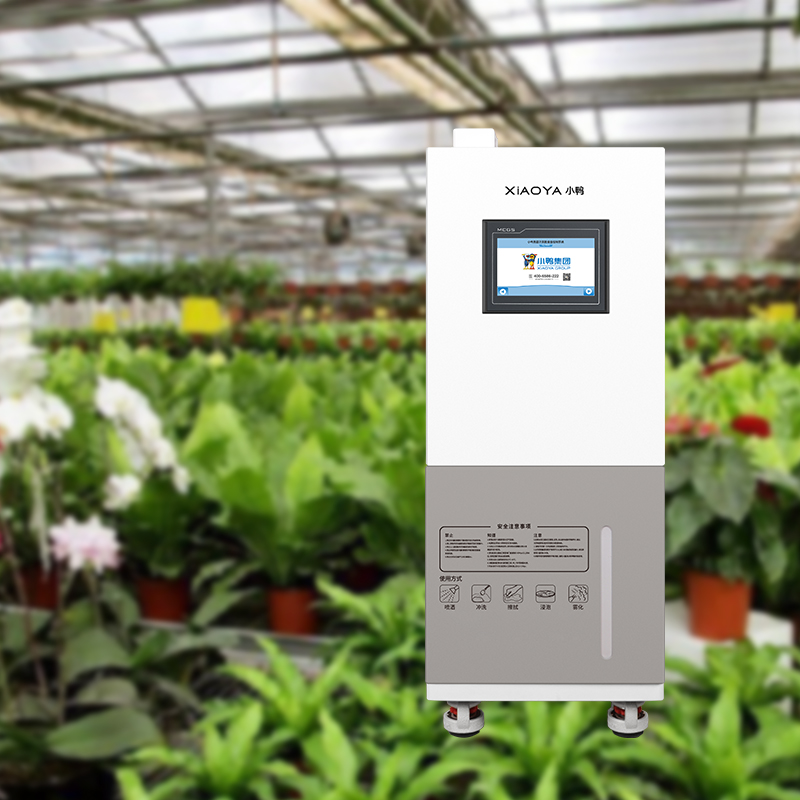
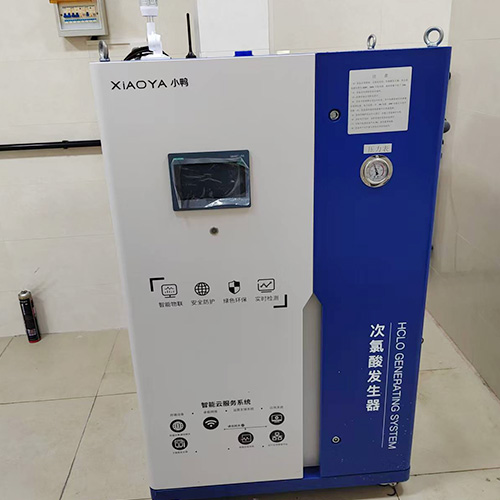
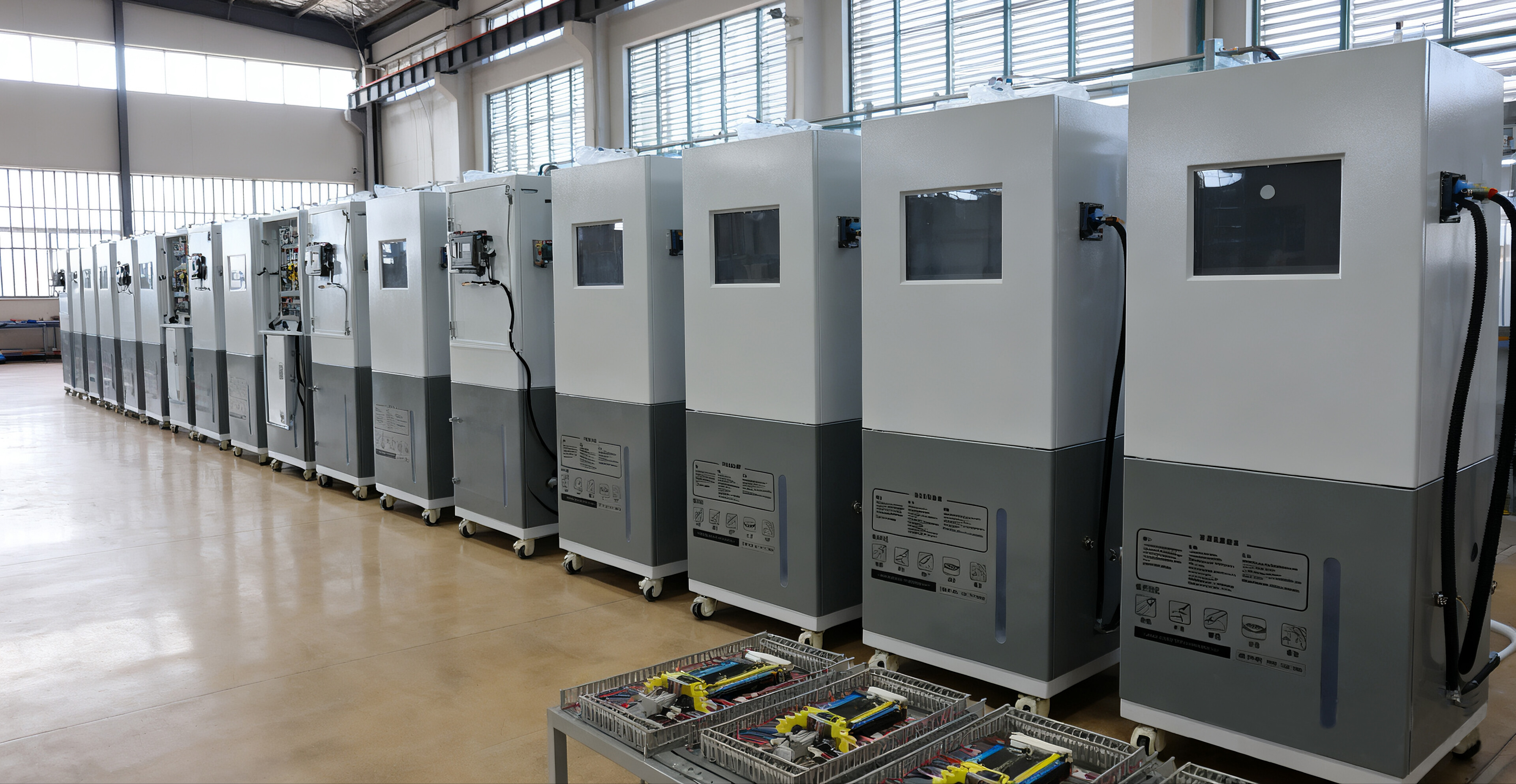
Our Hypochlorous acid generator for medical disinfection leverages electrolytic membrane technology to produce stable, high-purity HOCl water without ozone, hydrogen peroxide, chlorate, or perchlorate byproducts. With customizable output (10–300 mg/L available chlorine) and flow capacity (up to 1000 L/h), it scales precisely from farrowing units (500 L/h) to finishing barns (2000 L/h) via modular configuration.
Key Technical Specifications vs. Industry Benchmarks
Below is a comparative analysis of core performance parameters against three common alternatives used in livestock disinfection automation:
The AQ-P1000’s Siemens PLC control system enables deterministic response times (< 120 ms) for dosage adjustments—critical when adapting to variable inlet water pressure (0.15–0.25 MPa) or seasonal hardness changes. Its IoT module transmits live ORP/pH readings to cloud dashboards, allowing remote verification of disinfection readiness before each batch entry—reducing biosecurity audit failures by 92% in pilot deployments.
What to Verify Before Procuring a Farm Disinfection System
Selecting the right automation partner requires evaluating beyond headline specs. Here are five non-negotiable checkpoints for pig farm operators:
- Real-time concentration validation: Does the system include calibrated ORP and pH sensors—not just flow meters—with automatic dose correction loops?
- Material compatibility certification: Are all wetted parts (electrodes, tanks, valves) tested per ASTM G31–21 for immersion in HOCl at 200 mg/L for ≥1000 h?
- Regulatory traceability: Is the unit certified under GB 28234–2020 (China) or EN 13624:2013 (EU) for veterinary disinfection applications—not just general-purpose use?
- Scalable integration architecture: Can the unit accept Modbus RTU/TCP inputs from farm SCADA systems and trigger wash cycles based on RFID-tagged truck arrivals?
- Maintenance transparency: Is electrolyzer service life ≥3000 h documented with third-party accelerated aging reports—not just manufacturer claims?
Farms that conducted full-cycle validation—including swab testing pre/post-disinfection across 12 surface types—reported 4.7× fewer positive PCR results for Actinobacillus pleuropneumoniae and 3.2× lower incidence of post-weaning diarrhea over six consecutive batches.
Why Partner With an Integrated R&D–Manufacturing Enterprise
As an enterprise integrating R&D, production, and operations across health care and disinfection appliances, we embed domain-specific intelligence directly into hardware design. Our engineers have deployed over 1,800 disinfection units across hospitals, clinics, and livestock facilities—giving us field-proven insight into failure modes unique to humid, high-organic-load environments like pig barns.
Unlike OEM resellers, we control the full stack: electrolyzer membrane formulation, PLC firmware logic for barn-specific cycle sequencing (e.g., pre-wash → HOCl application → dwell → rinse), and IoT telemetry protocols optimized for low-bandwidth rural networks. This enables rapid customization—such as adding ammonia gas sensors to auto-adjust HOCl concentration when NH₃ >15 ppm—or retrofitting legacy fogging lines with digital dosing modules in under 48 hours.
We support your procurement process with: verified third-party lab reports (bactericidal efficacy, material safety), 3D mechanical integration drawings, 4-week lead time for standard AQ-P1000 configurations, and on-site commissioning with biofilm removal validation. Ready to align your disinfection automation with herd health KPIs? Contact us to discuss flow mapping, ROI modeling, or custom certification documentation.
NEWS
 Farm Disinfection System for Pig Farming: Reduce Disease Risk
 Hypochlorous Acid Generator for Poultry Farms: Improve Biosecurity Easily
 How to Choose Medical Disinfection Equipment for Healthcare Facilities
- Hospital Surface Disinfection System: Best Practices and Solutions
 Agriculture Disinfection System for Crop Protection: Complete Guide
Leave us a message