news
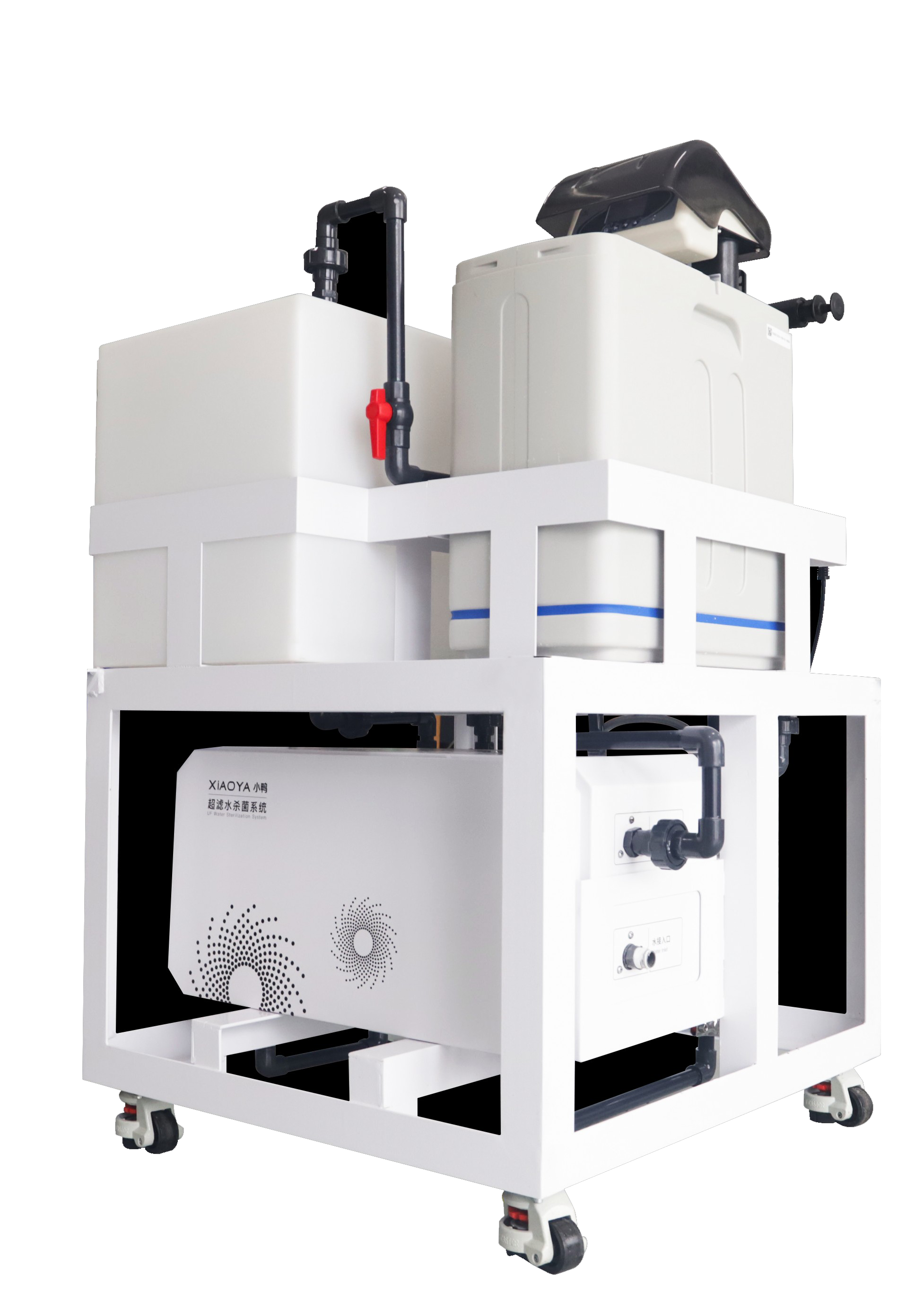
As a distributor or agent in the water treatment industry, understanding the cost of industrial water purification systems is crucial for your business decisions in 2024. This comprehensive breakdown explores pricing factors, system types, and ROI considerations to help you make informed recommendations to your clients. Discover how advanced purification technologies can meet diverse industrial needs while maximizing your profit margins.
Key Factors Influencing Industrial Water Purification System Costs
When evaluating the pricing of industrial water purification systems, multiple technical and operational factors come into play. System capacity is the primary cost driver – large-scale installations for heavy industries like pharmaceuticals or food processing require robust filtration stages, reverse osmosis membranes, and UV disinfection units, often exceeding $100,000. In contrast, compact systems such as the water supply system (production: 60-100L/H) cater to small-to-medium enterprises with budgets between $5,000-$20,000. Material selection also significantly impacts pricing; stainless steel (316L grade) housings add 15-25% to baseline costs compared to polyethylene alternatives but offer superior corrosion resistance for harsh environments.
Breakdown by Technology Type
The water treatment market offers four dominant technologies with distinct price points. Reverse Osmosis (RO) systems dominate high-purity applications, with industrial-scale installations ranging from $15,000 to $250,000 depending on flow rates (typically 1,000-50,000 GPD). Electrodeionization (EDI) systems, often paired with RO, add $20,000-$80,000 to project costs but eliminate chemical regeneration needs. For chemical-free disinfection, electrolytic systems generating hypochlorite (HCIO) like the referenced water supply system (effective chlorine concentration: 10-120mg/L) provide cost-effective solutions at $3,000-$15,000. Ultrafiltration systems fill the mid-range segment ($8,000-$60,000) for particulate removal without the energy demands of RO.
2024 Price Trends and Market Analysis
Current market data reveals a 6-8% year-over-year price increase for industrial water purification equipment, driven by three key trends. First, smart automation components (IoT sensors, predictive maintenance algorithms) now account for 12-18% of system costs but reduce lifetime operational expenses by up to 30%. Second, energy-efficient designs command 10-15% premiums – a worthwhile investment given that power consumption constitutes 40-60% of TCO. Third, modular systems are gaining traction; their 20-35% lower upfront costs compared to traditional skid-mounted units make them ideal for distributors serving SMEs. The compact dimensions (1050*302*400mm) and 55.8kg weight of modern systems like our featured model demonstrate this space-saving trend.
Hidden Costs and Operational Considerations
Beyond initial purchase prices, distributors must educate clients on five critical cost factors. Pre-treatment requirements (softeners, multimedia filters) often add $3,000-$25,000 to project budgets. Membrane replacement costs average $200-$800 per element every 3-5 years, though systems with >8000h electrolyzer lifespan reduce this burden. Chemical consumption for CIP (clean-in-place) procedures typically runs $1,500-$5,000 annually. Labor costs for specialized technicians ($50-$120/hour) vary by region, while energy consumption at 410W rated power translates to $0.12-$0.35 per operational hour depending on local utility rates. Smart distributors bundle these calculations into ROI models when presenting solutions.
Industry-Specific Cost Benchmarks
Water quality requirements dramatically affect system pricing across sectors. Pharmaceutical manufacturers require USP Grade Water systems ($150,000-$500,000) with continuous TOC monitoring and 0.2μm final filtration. Food and beverage plants typically invest $75,000-$200,000 in systems meeting FDA 21 CFR standards, often incorporating pH adjustment (5-6.5 range) and chlorine dioxide disinfection. For commercial buildings, compact electrolytic systems with 10-120mg/L chlorine concentration provide cost-effective Legionella control at $8,000-$25,000. The automotive sector favors $50,000-$120,000 systems for paint shop ultrapure water, while power plants utilize $200,000+ systems for boiler feedwater treatment.
Maximizing Value Through Smart Procurement
Forward-thinking distributors employ four strategies to optimize client investments. First, phased implementation allows budget-conscious clients to start with basic filtration ($5,000-$15,000) before adding RO or EDI modules. Second, emphasizing lifecycle costs over purchase prices demonstrates value – a system with 8000h electrolyzer lifespan may justify a 20% premium through reduced maintenance. Third, bundling automation packages (remote monitoring, predictive maintenance) creates recurring revenue streams while lowering client operational risks. Finally, partnering with manufacturers offering localized service support reduces downtime costs by 30-50%, a critical factor for process-critical applications.
Conclusion: Strategic Positioning for 2024
The industrial water purification market presents lucrative opportunities for distributors who master cost dynamics. By understanding the $3,000-$500,000 price spectrum and its technological drivers, you can position appropriate solutions for each client segment. Compact, automated systems with proven reliability (like our featured model with 60-100L/H production capacity) will dominate SME demand, while large industries continue investing in customized, high-recovery systems. Remember that in 2024, clients increasingly value total cost of ownership over upfront price – a paradigm shift that rewards distributors offering comprehensive water treatment solutions with transparent lifecycle costing.
Ready to expand your product portfolio with high-margin water treatment solutions? Contact our technical team today for customized pricing models and distributor support programs tailored to your market needs.
NEWS
 Public Facility HOCl Storage: Managing Heat, Light, and Shelf Life
 On-Site HOCl vs. Purchased Disinfectant for Municipal Buildings
- Sizing a Public Facility HOCl Generator for Peak Cleaning Demand
- What Can a Hypochlorous Acid Generator Do for Public Facility Cleaning?
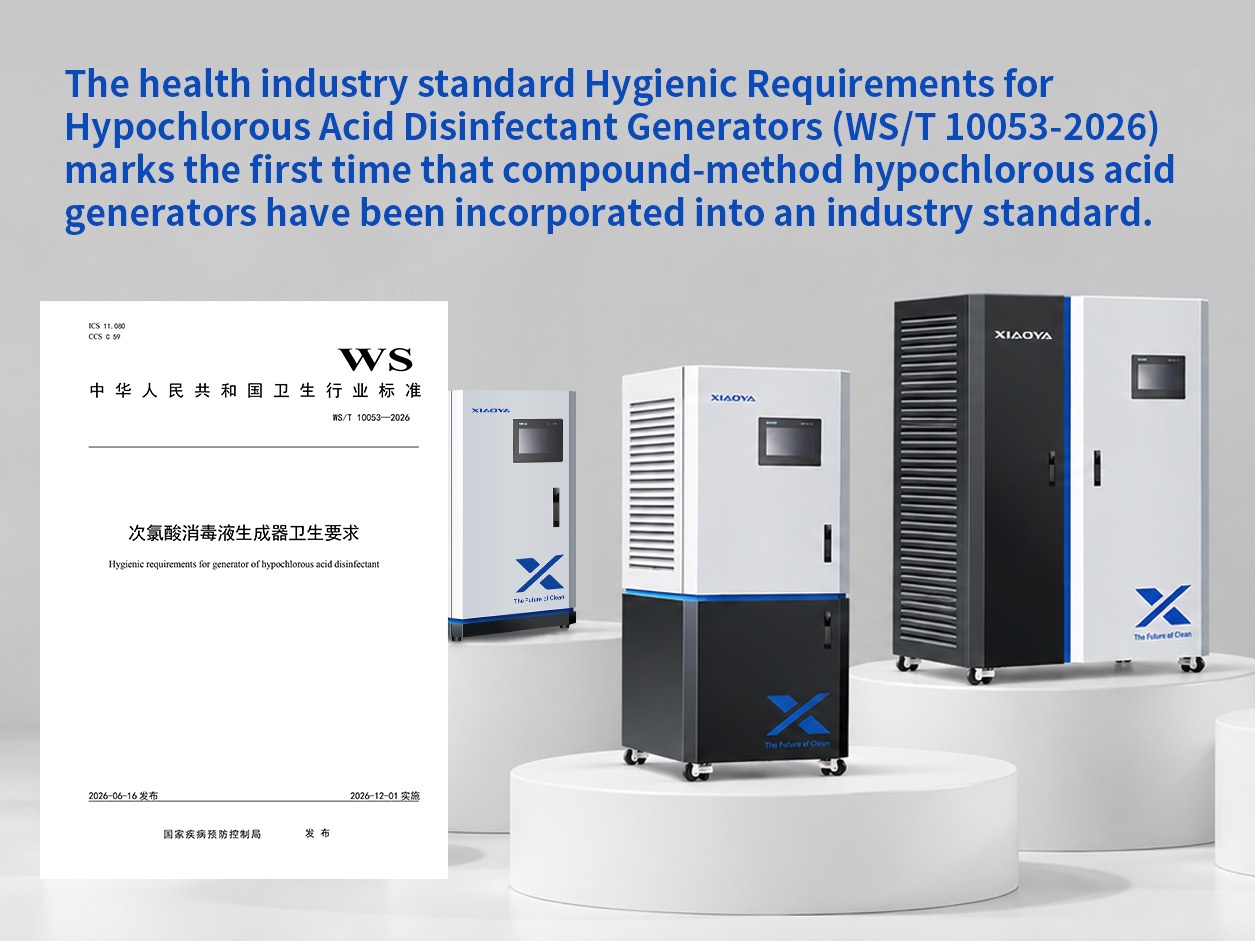
 WS/T 10053-2026 Includes the Compound Method for the First Time: Standard Signals and Market Opportunities for Mass Agricultural Production of Hypochlorous Acid Generators

Leave us a message

Xiaoya Group was founded in 1979,expert in the electrolyzed water industry.
Get in Touch
*We respect your confidentiality and all information are protected.