




products
‹
›
‹
›
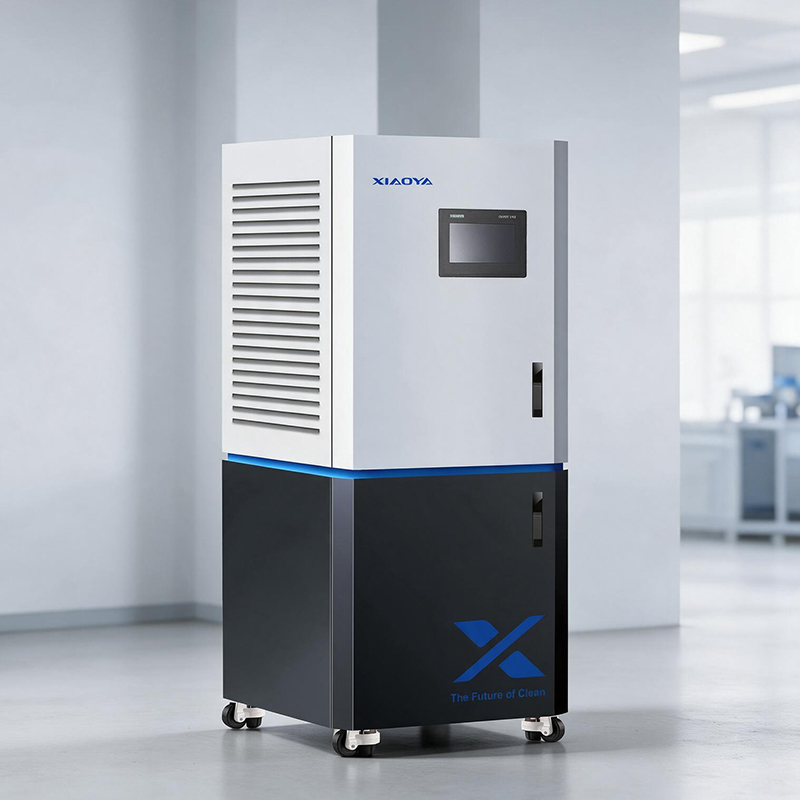
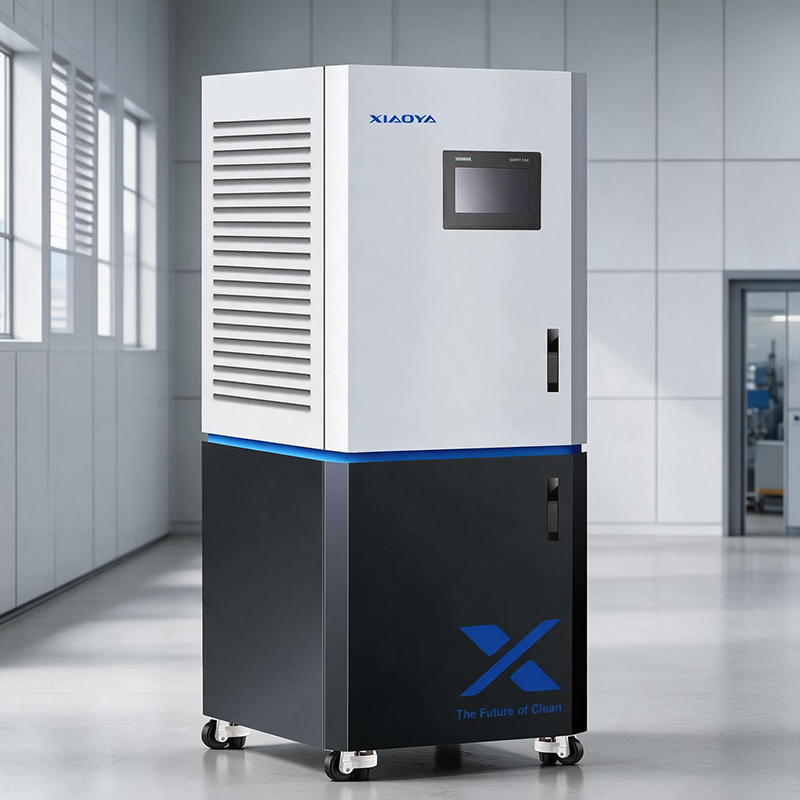
2.Standard stable concentration:NaOH 1,000 ppm (adjustable on request)
3.Water characteristics:Surfactant-free and low-foaming; suitable for spray-ball recirculation cleaning
4.Control:Fully automatic PLC; inline pH and level monitoring; audible and visual fault alarm
5.Installation:Floor-standing integrated skid; connects to existing CIP piping
6.Feed water:RO water (standard model)
7.Available batch output:50 L/h and 100 L/h; customizable to customer tank volume
PRODUCT DESCRIPTION
Super Alkaline Water Generator
Next-Generation Electrolytic CIP Cleaning Solution
Make alkaline water on site, buy less chemical, and cut caustic storage and compliance risk
Product Overview
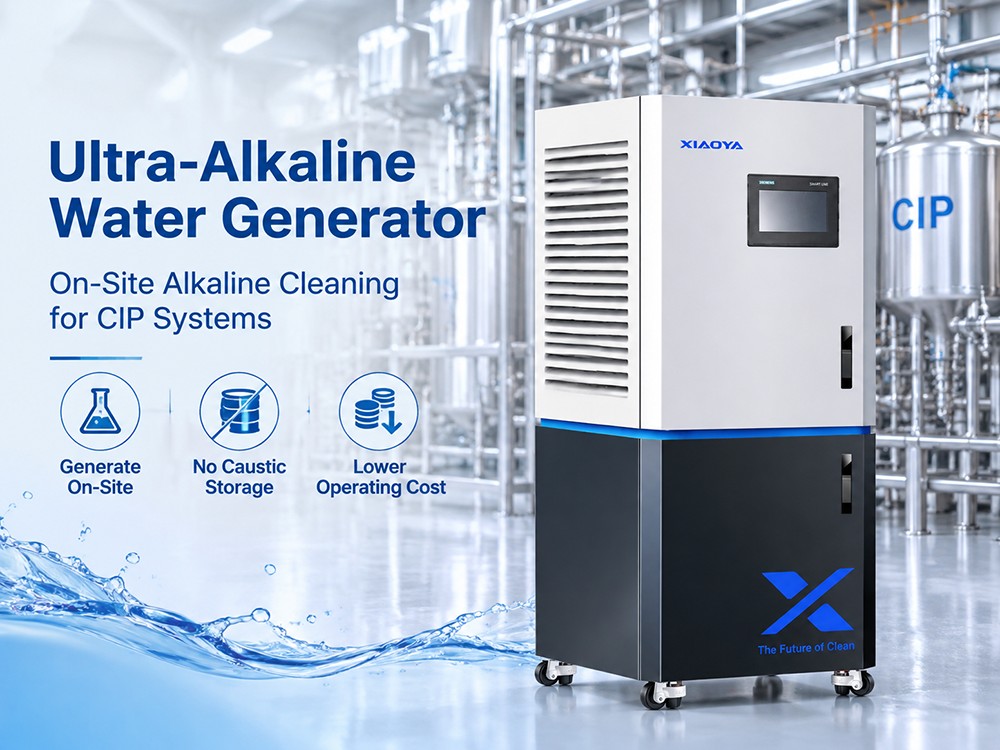
This super alkaline water generator uses membrane electrolysis to produce strongly alkaline electrolyzed water on site. It connects directly to the existing CIP circuits of food, dairy, brewing and beverage plants. Because the unit makes its own cleaning water on demand, it replaces drummed caustic soda as the daily alkaline wash medium, which cuts the cost of purchasing, storing and moving hazardous chemicals. The design suits continuous industrial cleaning operations.
Key Specifications
Standalone Super Alkaline Water Unit
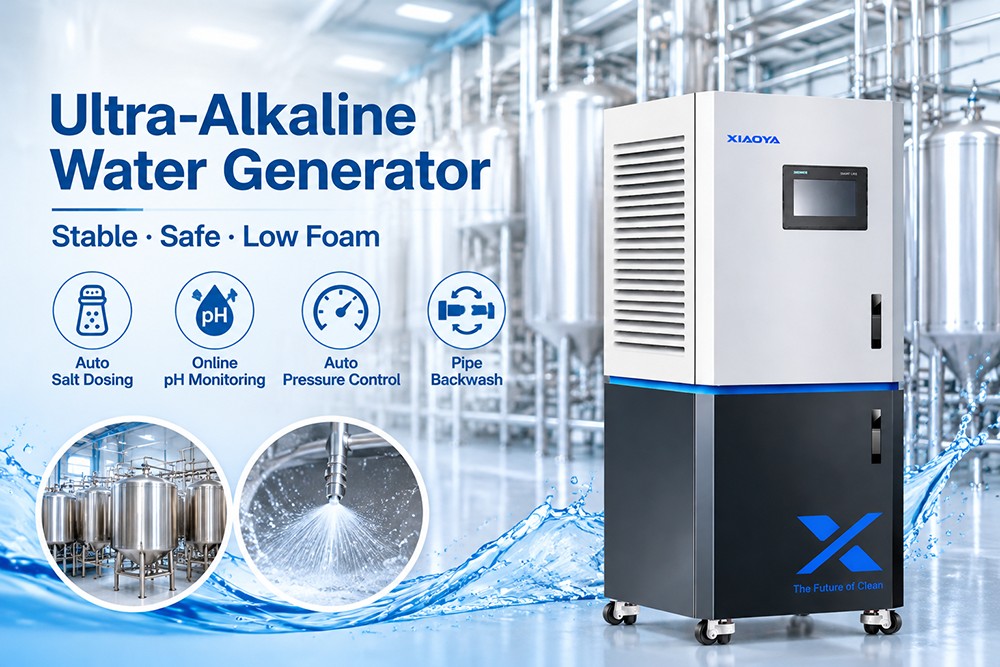
Using continuous ion-membrane electrolysis, the unit produces sodium hydroxide cleaning water steadily and continuously, with no interruption in the supply to the CIP alkaline wash stage.
Built-in automatic salt dosing, inline pH monitoring, automatic voltage stabilization and line backflushing keep the outlet concentration stable. The alkaline water is made only from water and salt, with no added additives or surfactants. Its low-foam formula resists foaming in recirculating spray cleaning, making it suitable for CIP of dairy tanks, pipelines and fillers.
Designed for long continuous runs, the unit is the workhorse for everyday organic-soil cleaning in food plants.
How It Works
The electrolyzer uses a perfluorosulfonic acid cation-exchange membrane. Saturated brine is fed to the anode side, where only sodium ions (Na⁺) pass through the membrane into the cathode chamber and chloride ions remain behind to form hypochlorous acid. RO water is fed to the cathode, where water electrolysis produces hydroxide ions (OH⁻); these combine with the migrating sodium ions to form high-purity sodium hydroxide (NaOH) cleaning solution.
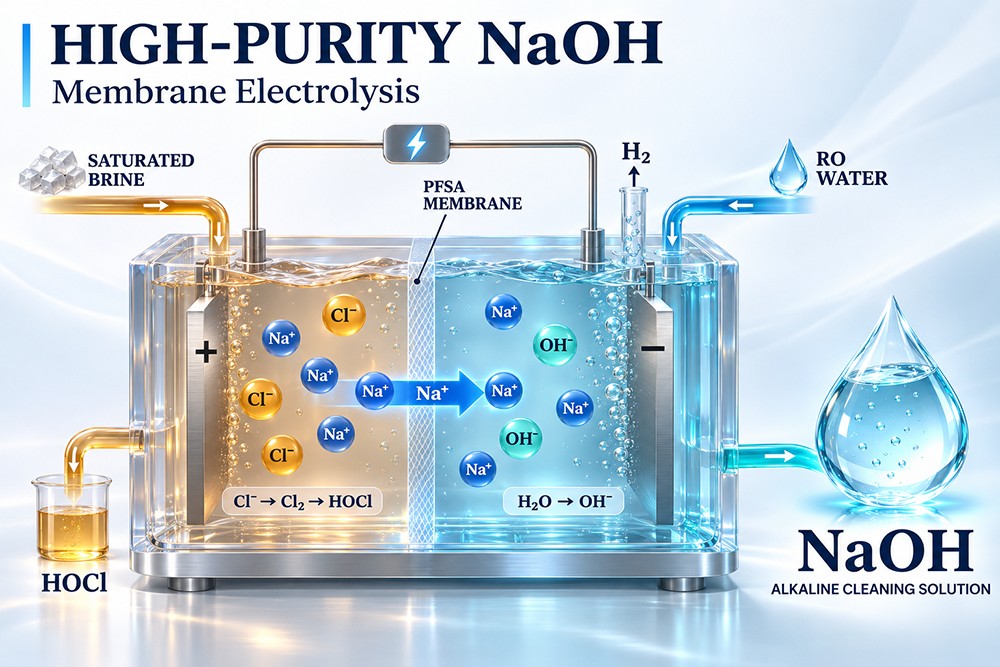
The entire system runs automatically under PLC control: start-up self-check, interlocked filling of both chambers, circulating electrolysis to stabilize concentration, and automatic transfer to the storage tank once pH is on target. After each batch the system performs a polarity-reversal membrane clean, in which the electric field lifts salt crystals off the membrane and electrode surfaces and a fresh-water flush drains them away, so no manual disassembly is required.
A low tank level starts water generation automatically, and abnormal level, sensor or pump conditions trigger automatic shutdown with an audible and visual alarm.
Key Benefits
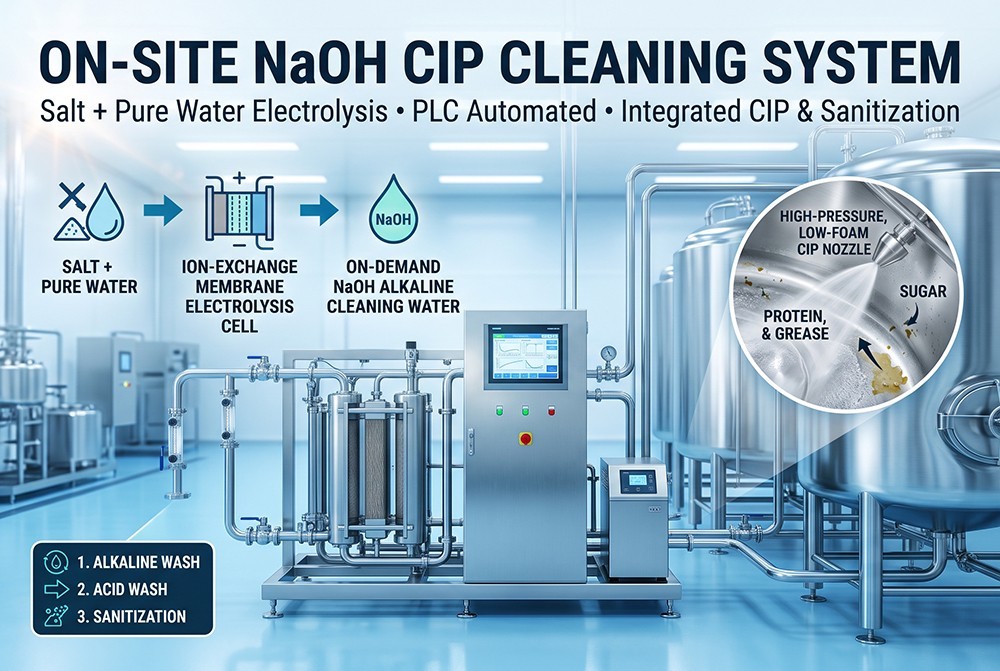
· Sodium hydroxide cleaning water is generated on site from salt and RO water by ion-membrane electrolysis, on demand, which removes drummed caustic soda from purchasing and storage.
· Effective on fresh protein, sugar and fat soils, making it suitable for daily CIP alkaline wash in food, dairy and beverage production lines.
· Low-foaming and free of added surfactants, so it suits CIP spray-ball recirculation and reduces foam overflow and unplanned downtime.
· Can be paired with a hypochlorous acid generator to form an integrated alkaline, acid and sanitizing CIP package that simplifies the customer supply chain.
· Fully automatic PLC operation with inline pH and level monitoring keeps outlet concentration stable and reduces manual dosing errors.
· Runs as soon as it is connected to the existing CIP circuit, which suits continuous industrial production shifts.
· Lower chemical purchasing costs for the plant over the life of the unit.
Complete CIP Cleaning Package
For dairy, beverage and brewing lines we can supply one integrated CIP package: a super alkaline water unit, a hypochlorous acid generator and matching acid cleaning chemicals. This positions the offer differently from pure-chemical routes such as Ecolab or Birko, and substantially reduces both everyday chemical purchasing costs and the burden of hazardous-chemical management.
Standard CIP Sequence
Recommended sequence for each cleaning cycle: Pre-Rinse, Alkaline Wash (super alkaline water), Intermediate Rinse, Acid Wash, Secondary Rinse, Sanitization (hypochlorous acid water) and Final Rinse. The requirement and purpose of each step are set out below.
Applications
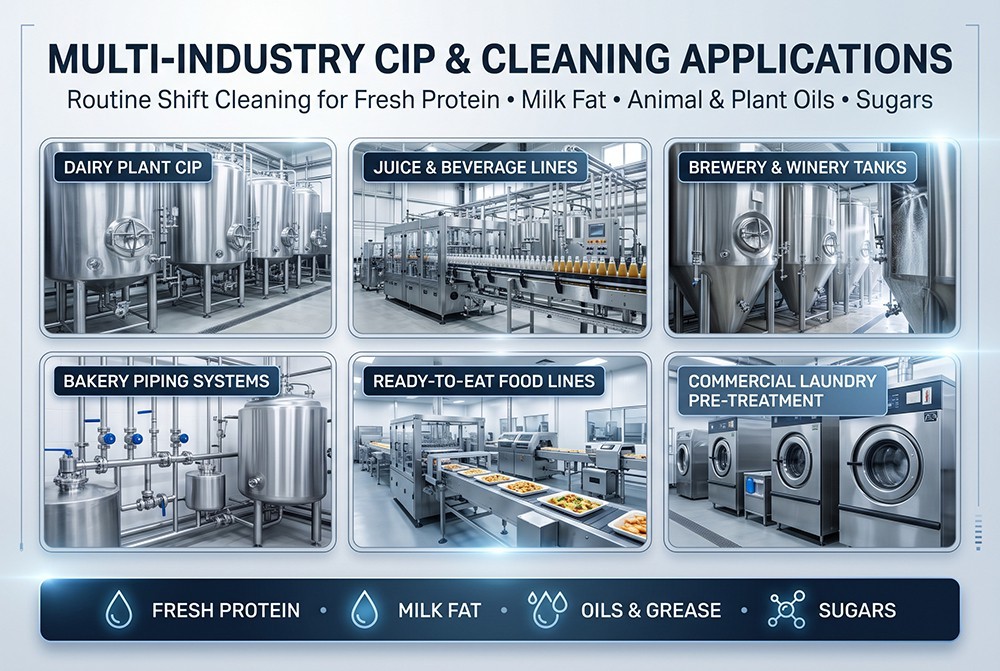
CIP cleaning in dairy plants; juice and beverage lines; beer and wine tank cleaning; pipeline cleaning in bakeries; prepared-food production lines; and grease pre-treatment in commercial laundries.
Best suited to routine shift cleaning where fresh protein, milk fat, animal and vegetable oils, and sugars are the main contaminants.
FAQ
Q: Can electrolyzed super alkaline water completely replace caustic soda?
A: Yes, for routine organic-soil cleaning. Heavy carbonized deposits, milk stone and beer stone scale still require an acid wash, or periodic deep cleaning with a commercial compounded alkaline cleaner.
Q: Does this system need complex downstream wastewater treatment?
A: Waste alkaline water from the standard model can be discharged into the plant’s existing wastewater system. The KOH batch model requires scheduled blowdown as described in the manual and cannot achieve zero liquid discharge.
Contact Us
Send us your CIP flow rate, tank size and contaminant profile, and we will match the right model and quote a complete cleaning package.
ONLINE CONSULTATION
RELATED SUGGESTION
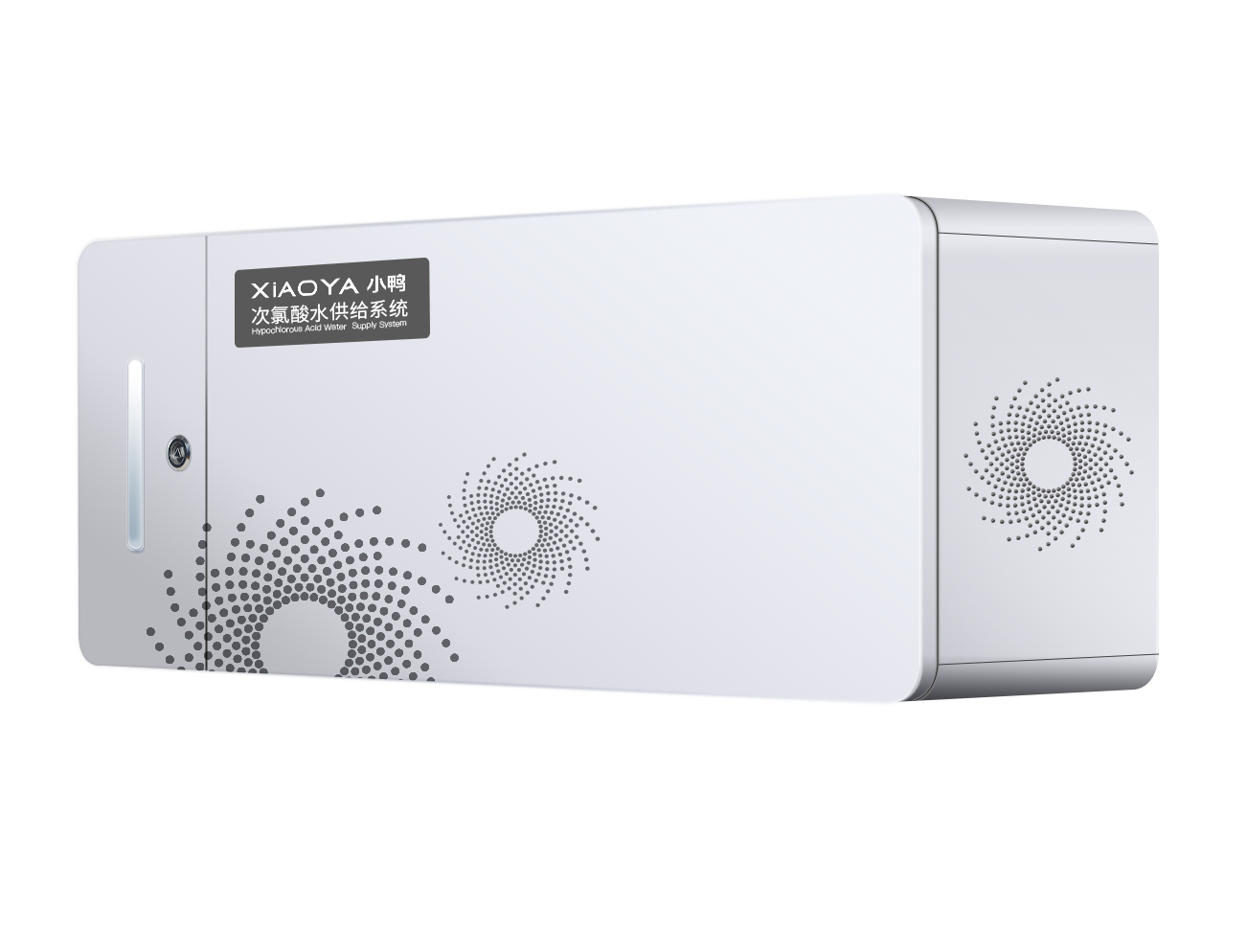
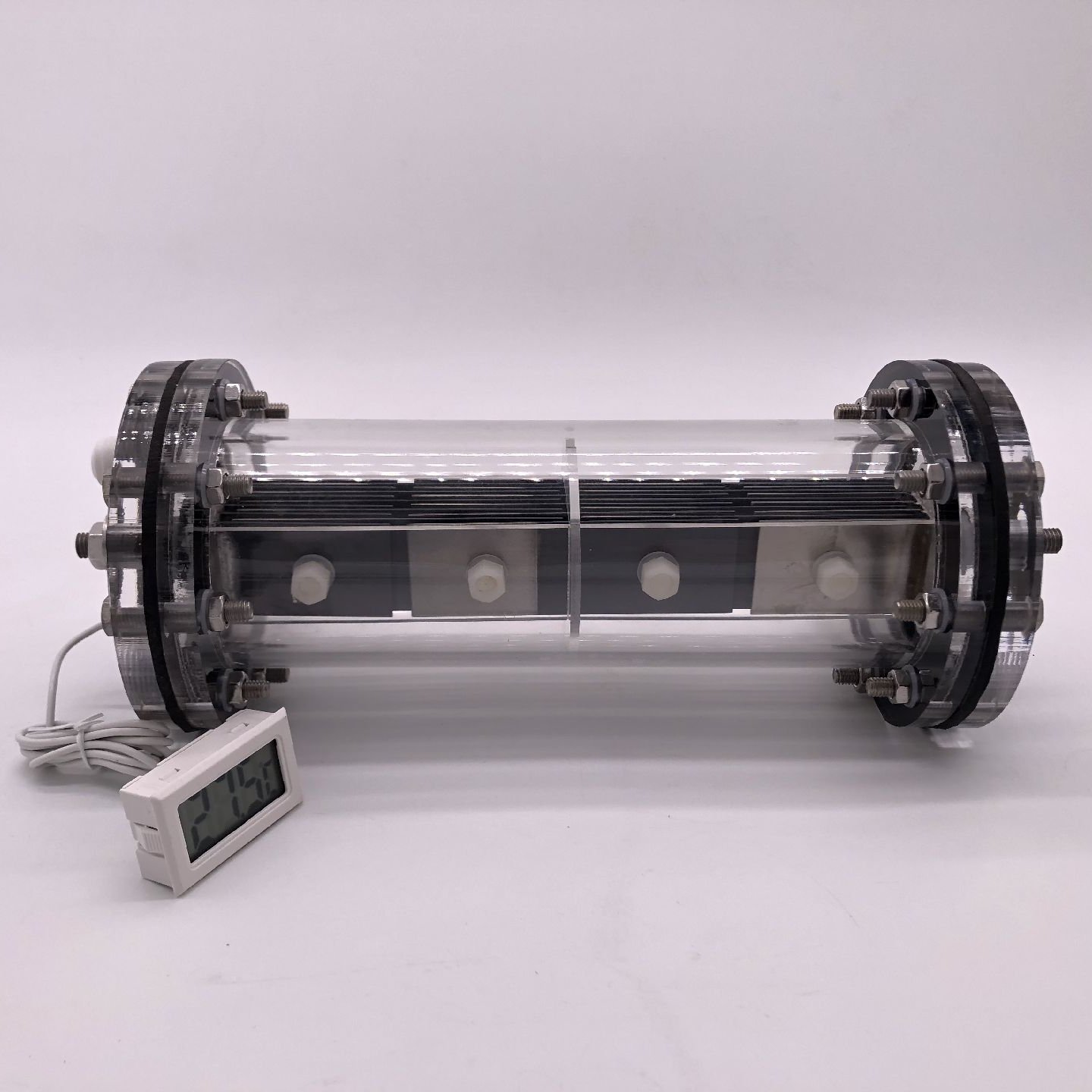
 Electrolyzer") Pure Hypochlorous Acid (HClO) ElectrolyzerLearn More
 water supply systemLearn More
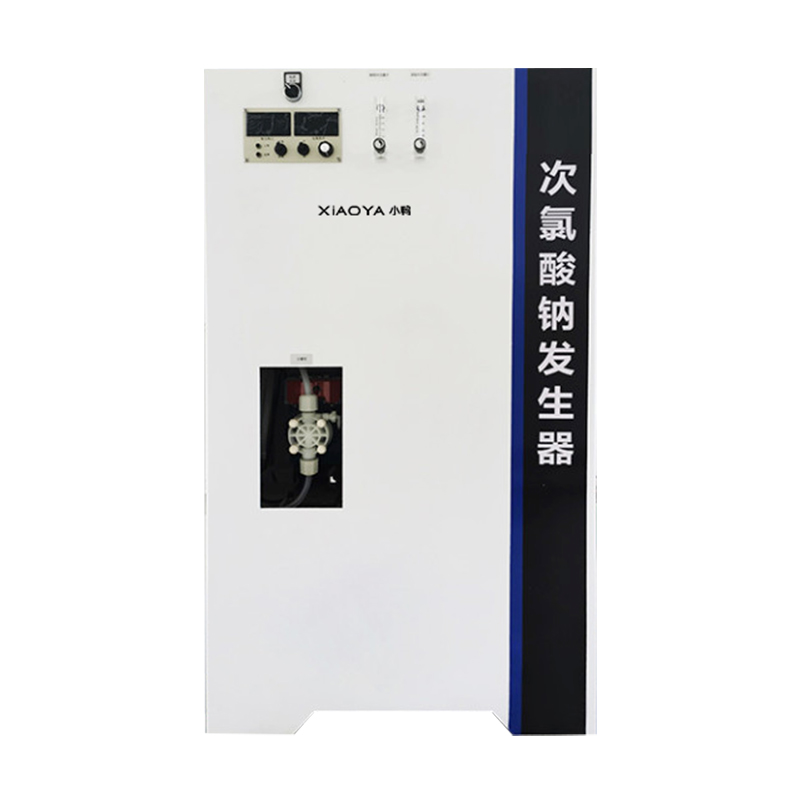
 Sodium Hypochlorite ElectrolyzerLearn More
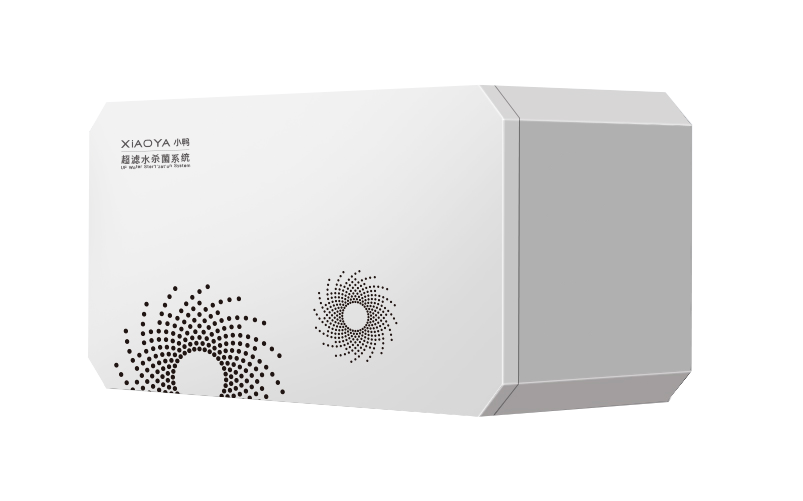
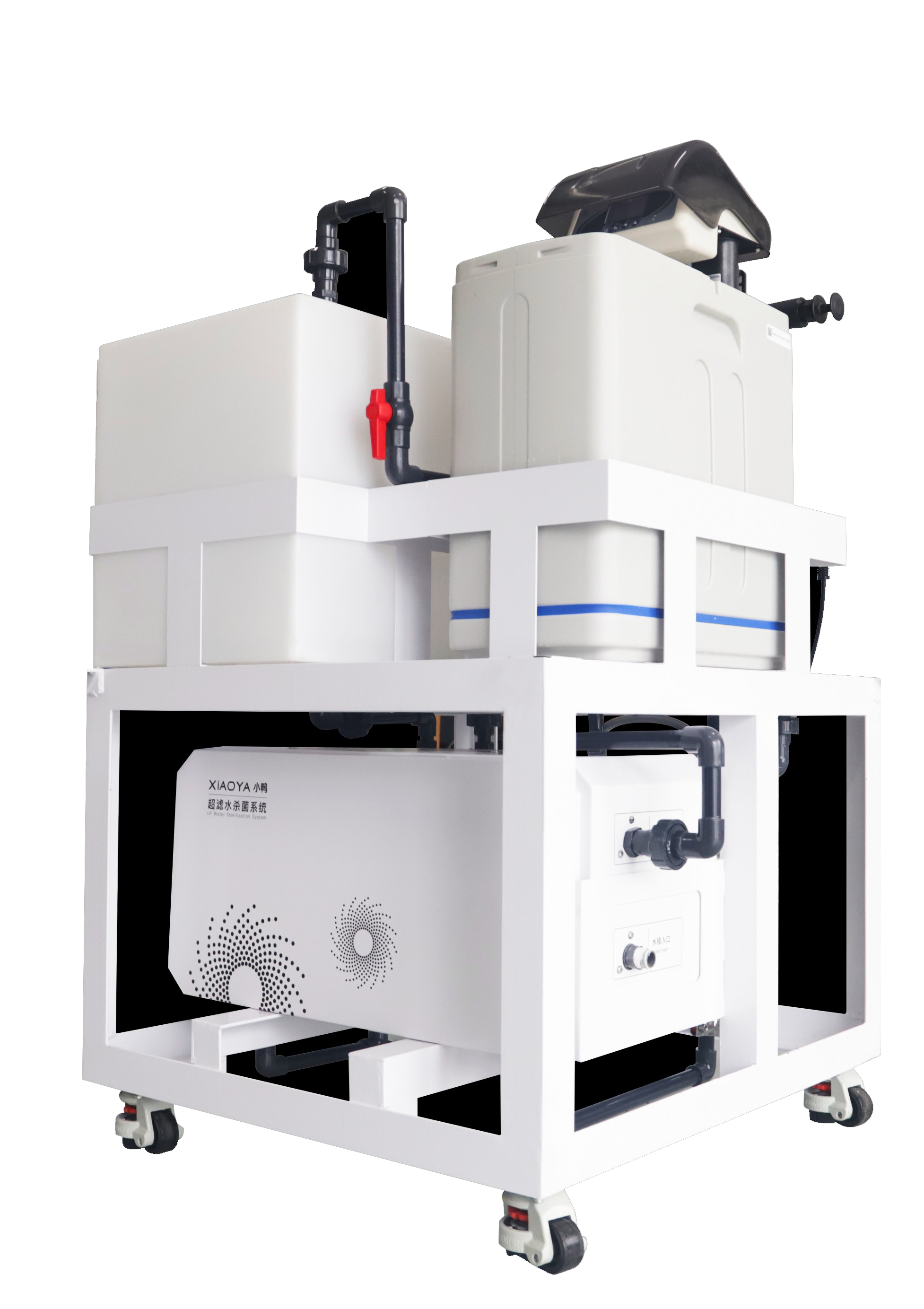
 Duckling ultrafiltration water purification and sterilization device XYCL-1000Learn More
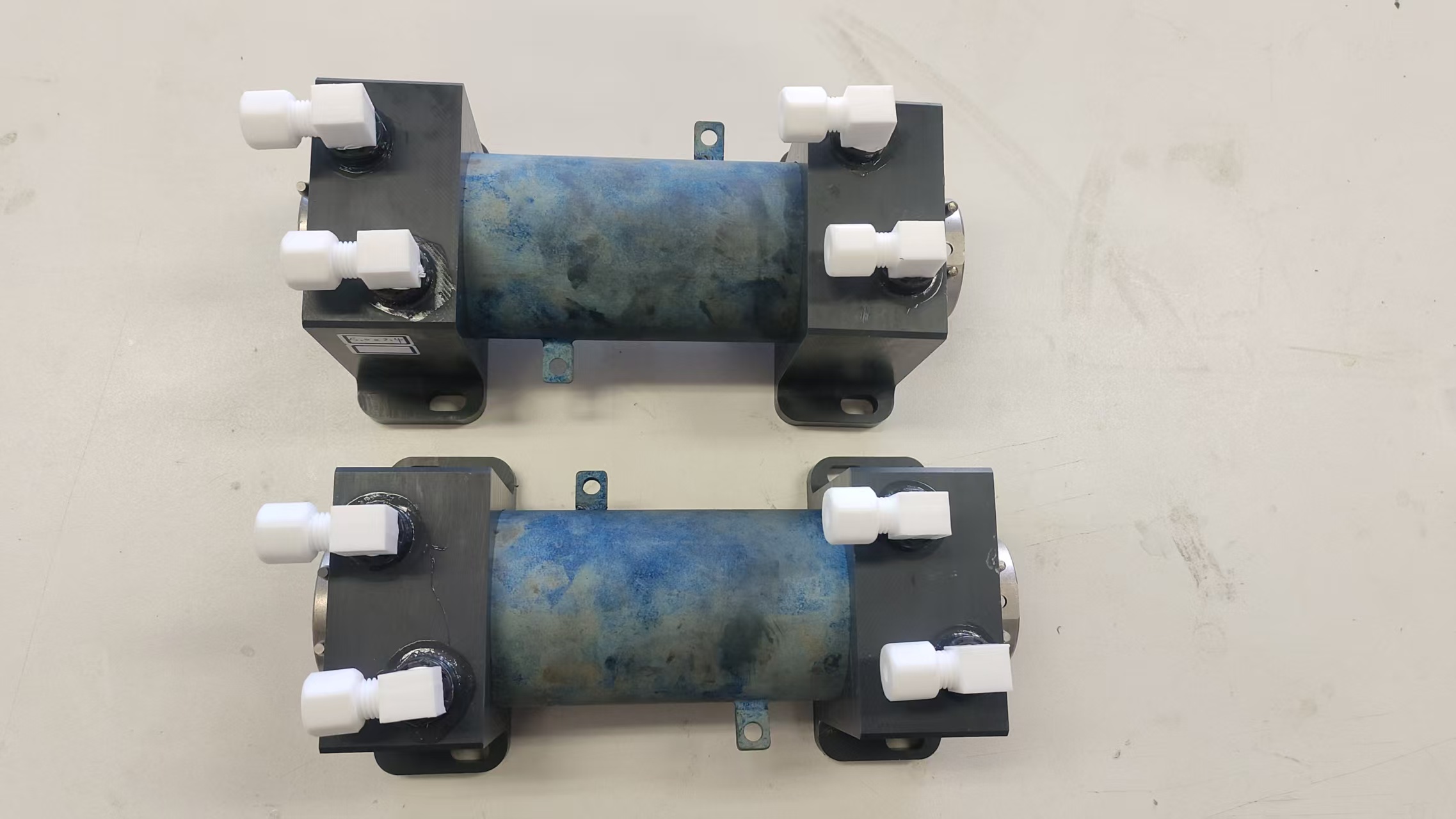
 Diaphragm ElectrolyzerLearn More
 Water purification systemLearn More
 Sodium hypochlorite generatorLearn More
 Water Treatment EquipmentLearn More
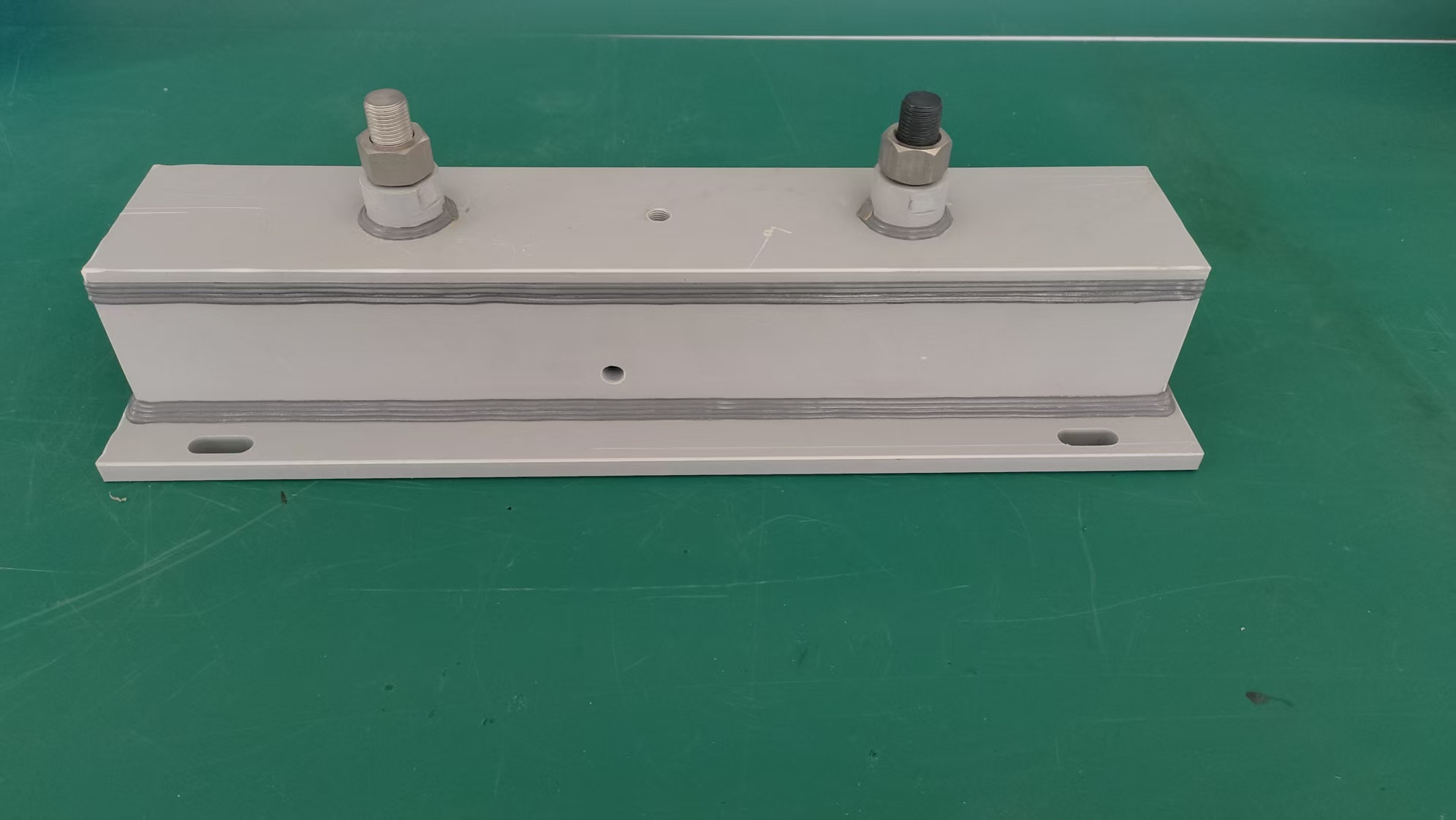


Xiaoya Group was founded in 1979,expert in the electrolyzed water industry.
Get in Touch
*We respect your confidentiality and all information are protected.