




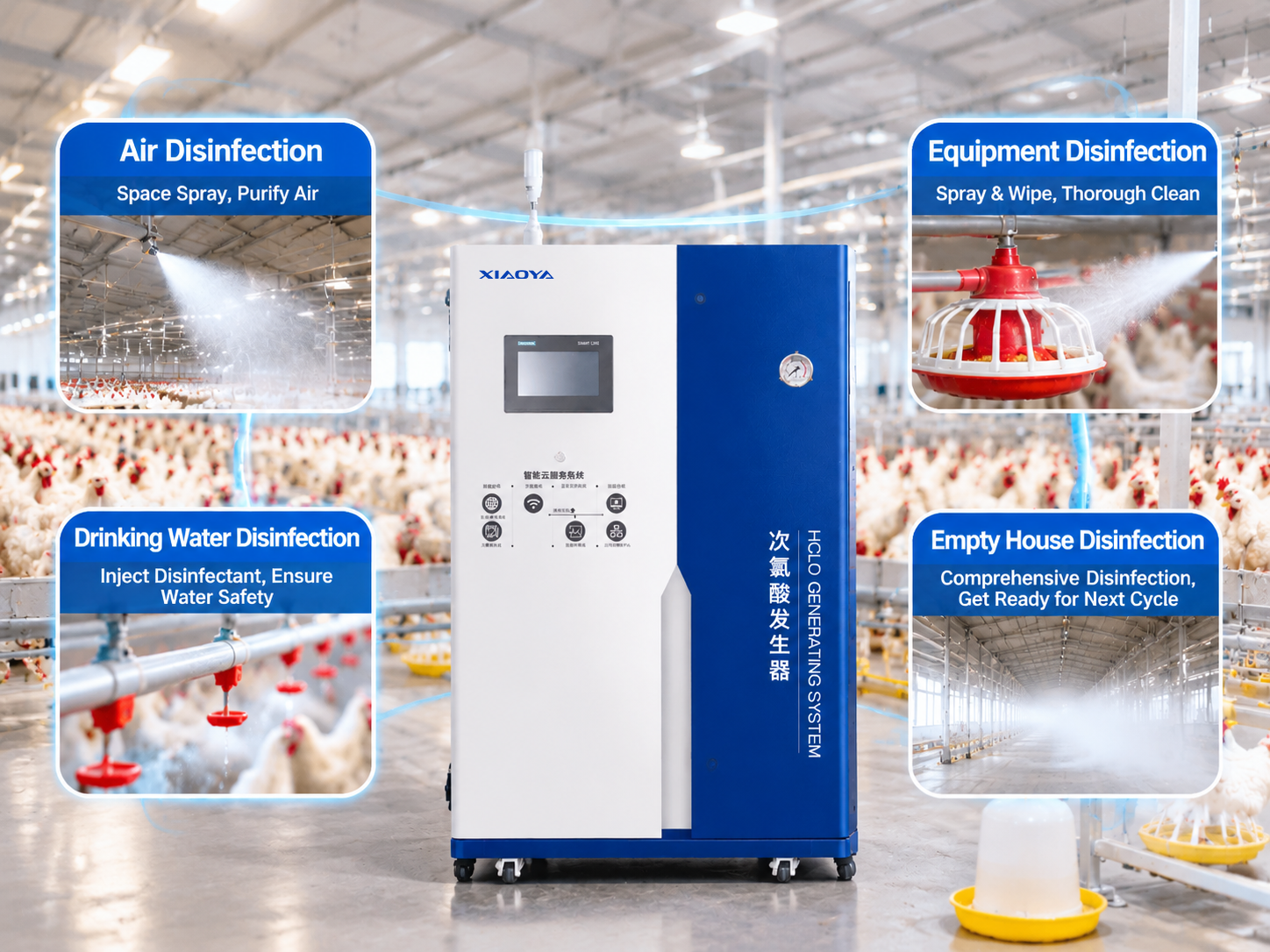
Large-scale poultry farms commonly struggle with airborne pathogens, strong ammonia odors, and recurring enteric diseases in flocks, all of which severely impact production capacity and profitability. Traditional disinfectants cannot be applied while birds are present, involve cumbersome procedures, and leave behind chemical residues. Beyond posing safety risks, these conventional methods often trigger flock stress and frequent disease outbreaks, driving up mortality and operational losses. To address these industry pain points, a full-scenario hypochlorous acid (HOCl) disinfection solution has been introduced. Offering full-cycle coverage, zero residue, and high safety, this solution spans the entire poultry production process to safeguard farm biosecurity.
Accumulated pathogens and excessive ammonia levels in poultry houses are the primary drivers behind high rates of respiratory and intestinal diseases. Conventional biosecurity protocols often suffer from limited coverage and suboptimal efficacy, leading to recurring cross-infections and poor feed conversion ratios (FCR). The HOCl disinfection program restructures farm biosecurity by establishing standardized protocols across four core scenarios: house air, equipment surfaces, drinking water lines, and empty-house terminal sanitation. By balancing potent antimicrobial action with flock safety, it effectively overcomes traditional biosecurity bottlenecks.
· Air Disinfection: For daily air sanitation, a 40–80 ppm HOCl solution is fogged for 3 to 5 minutes per session, once or twice daily. The fine mist thoroughly disperses throughout the poultry house, rapidly inactivating avian influenza viruses, E. coli, Salmonella, and other pathogens to block airborne cross-infection. At the same time, it quickly breaks down ammonia odors and improves indoor air quality. Because this method is safe for continuous, occupied-house disinfection, there is no need to relocate the birds, greatly simplifying daily biosecurity routines.
· Equipment & Surface Disinfection: Floors, walls, feeders, cages, and other surfaces can be sanitized using a 60–80 ppm HOCl solution with a 5- to 10-minute wet contact time to completely eliminate surface-bound pathogens. Non-corrosive and non-irritating, it neither damages farm equipment nor induces stress in the birds, eliminating the drawbacks of harsh chemical disinfectants.
· Waterline Sanitation: To tackle recurring gut health issues at the source, the program implements continuous waterline sanitation by maintaining a residual HOCl concentration of 3–5 ppm at the drinking nipples 24/7. This continuously removes and inhibits biofilm and bacterial growth inside the pipes, preventing secondary water contamination. As a result, it significantly reduces diarrhea and intestinal disorders, stabilizes flock health, improves FCR, and boosts overall cost efficiency.
· Empty-House Terminal Sanitation: During the downtime after flock depopulation, a high-concentration 80–100 ppm HOCl fog or spray is applied throughout the empty house and left to act for 10 minutes. This eliminates residual viruses and pathogens with zero blind spots, preventing cross-batch disease transmission and establishing a solid biosecurity foundation for the incoming batch of chicks.
Non-toxic, residue-free, and non-irritating, this full-scenario HOCl solution meets international poultry biosecurity standards and covers every stage of the production cycle. By closing the gaps left by traditional disinfection methods, it significantly lowers disease incidence, reduces flock losses and medication costs, and tangibly improves overall farm profitability.
Industry analysts note that livestock and poultry farming is rapidly transitioning toward greener, more standardized practices, making safe, effective, and residue-free disinfection a fundamental necessity. By directly solving core biosecurity challenges with a standardized, full-cycle, and high-safety approach, the full-scenario HOCl solution provides vital technical support for upgrading the poultry industry and building a modern, sustainable animal husbandry system.
NEWS
 Solving Biosecurity Challenges in Poultry Farming: Full-Scenario Hypochlorous Acid Disinfection Powers Green Industry Upgrades
- Xiaoya Hypochlorous Acid Generator | Safeguarding School Milk Safety: The Preferred Eco-Friendly Sanitization Solution for Dairy Plants
 A Smarter, Compliant Sanitization Solution for Food Processing Plants: XIAOYA Hypochlorous Acid Generator — Lower Costs, Zero Residue, Better Alignment with National Standards
- Tighter School Meal Food Safety Rules: How Electrolyzed Water Sanitization Can Guard Cafeteria Hygiene
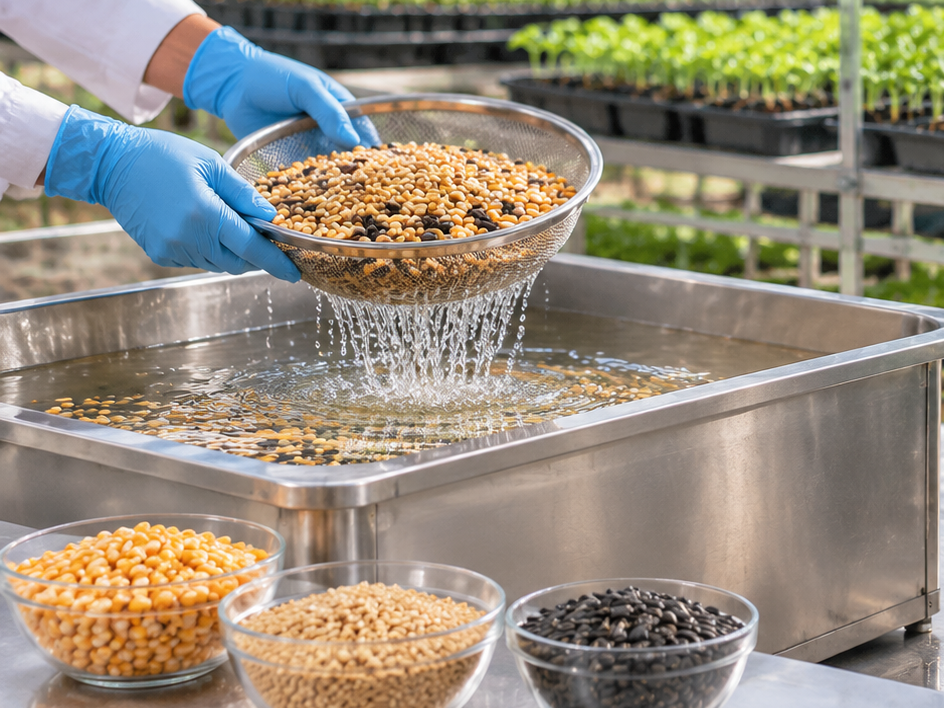
- The Water You Soak Seeds In Is Actually Your First Line of Defense
Leave us a message

Xiaoya Group was founded in 1979,expert in the electrolyzed water industry.
Get in Touch
*We respect your confidentiality and all information are protected.