




news
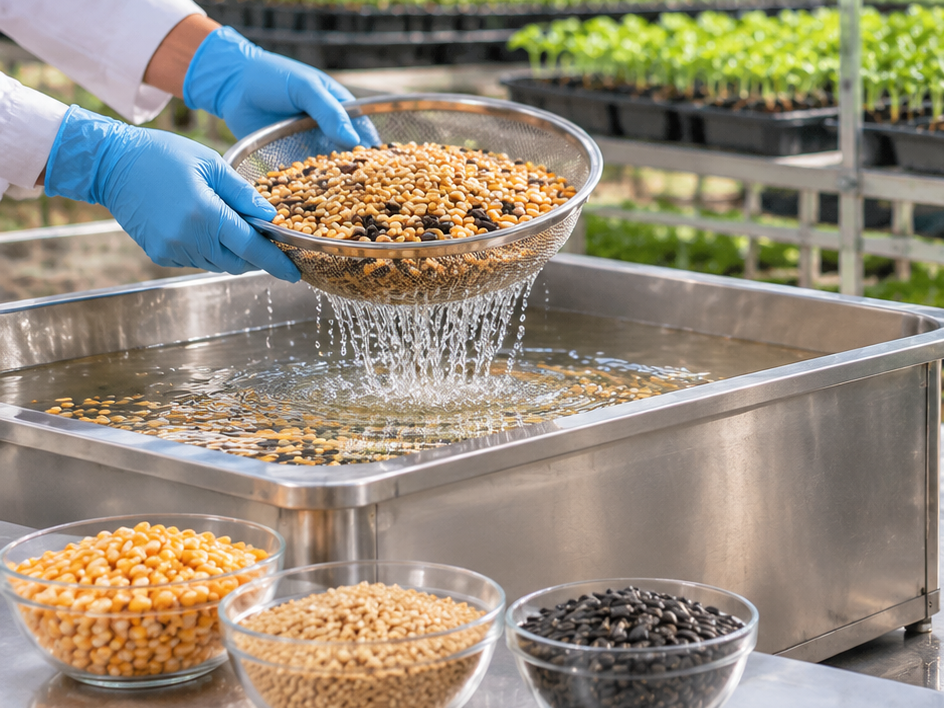
Applying Slightly Acidic Electrolyzed Water to Agricultural Seed Soaking
Soaking seeds in water for a dozen hours or more before planting is a routine step for almost every grower. Yet few stop to ask: Is this basin of water helping the seed absorb moisture, or is it giving pathogens a warm spa? This article skips the jargon and focuses on one practical question—can seed soaking actually be used to stop seed-borne diseases before they start?
1. Seed Soaking: A "Golden Window" for Disease
Bakanae disease (foolish seedling disease), seedling blight, and bacterial leaf streak in rice, as well as bacterial spot and anthracnose in vegetables, are frequently seed-borne. Attached to seed surfaces and tucked inside seed coat crevices are "old residents" such as Fusarium, Bipolaris, Xanthomonas, and Pseudomonas. Normally they stay dormant and out of trouble. But the moment you pour seeds into 25–30°C (77–86°F) water and soak them for a day, everything changes: the temperature hits the sweet spot for most pathogens; abundant moisture supplies the free water spores need to germinate; 12–24 hours is plenty of time to gear up for infection; and as the seed softens and seed coat permeability rises, its natural defenses actually drop.
That creates an awkward catch-22 in traditional soaking: while the seed takes up water, pathogens multiply. Many nursery-stage outbreaks actually trace their roots back to that soaking tub.
Seed treatments or chemical soaking can solve this, but the trade-offs are clear: chemical residues, resistance buildup, stress on workers and the environment, and a complete dead end on organic or green-certified farms. Slightly acidic electrolyzed water (SAEW) fits right into that gap—it kills microbes without leaving chemical residues behind.
2. First, What Exactly Is Slightly Acidic Electrolyzed Water?
It is produced by electrolyzing dilute hydrochloric acid (or hydrochloric acid with a small amount of sodium chloride), with clearly defined parameters.
Table 1. Key Parameters of Slightly Acidic Electrolyzed Water
Note: In 2002, Japan’s Ministry of Health, Labour and Welfare listed "slightly acidic electrolyzed water" (termed "slightly acidic hypochlorous water" in Japanese food additive regulations) as a food-additive sanitizer, and in 2012 expanded the permitted available chlorine range to 10–80 mg/L.
Three practical traits stand out:
· pH makes it potent yet gentle. In chlorine-based sanitizers, the active powerhouse is hypochlorous acid (HClO), not hypochlorite (ClO¯). Higher pH shifts the balance toward ClO¯ and lowers antimicrobial efficiency; lower pH increases HClO, but risks releasing chlorine gas and corroding metal. SAEW holds pH at 5.0–6.5, where HClO can account for over 95% with virtually no chlorine off-gassing—the physical basis that lets it move safely into greenhouses and rice seedling facilities.
· Food-grade pedigree. In China, chlorine-based disinfectants are covered under general standards such as Hygienic Requirements for Chlorine-Containing Disinfectants (GB/T 36758—2018), while specific agricultural applications follow local agriculture and rural affairs rules and product registration requirements.
· Turns back into plain water. Exposed to light, organic matter, and air, available chlorine decays rapidly and reverts to ordinary water. No chemical residues and no resistance buildup—that is the fundamental divide between SAEW and chemical fungicides.
3. Why It Both Kills Microbes and Promotes Growth
Antimicrobial action: "Dismantling" rather than poisoning
Because $text{HClO}$ is electrically neutral and small, it crosses bacterial cell walls and membranes directly, damaging membrane proteins, oxidizing intracellular enzyme systems, and cleaving nucleic acid strands. Against fungi, it targets spore walls and germ tubes; against bacteria, it disrupts peptidoglycan layers and flagella. Crucially, this is multi-target physicochemical damage, making it hard for pathogens to evolve resistance through a single gene mutation—a major advantage for nurseries that have relied on a narrow set of chemicals for years.
Growth promotion: Low-dose "hormesis"
This is the easiest part to overlook and one of the best worth knowing. A 2025 rice study soaked seeds in SAEW across available chlorine concentrations of 10, 20, 30, 40, 50, and 60 mg/L and tracked internal water changes using low-field nuclear magnetic resonance (LF-NMR). The results were striking: 10–40 mg/L significantly promoted germination, peaking at 30 mg/L, whereas 50–60 mg/L inhibited it.
The reason comes down to water dynamics. Low concentrations sped up internal water uptake and boosted free-water conversion and accumulation, giving germination better moisture conditions. Higher concentrations caused osmotic stress and cell wall damage, slowing water uptake instead. It is a classic low-dose stimulation, high-dose inhibition curve—not "stronger is better," but a defined optimal window. Ignoring this curve is the easiest way to trip up during soaking.
Beyond germination percentage
In a field trial in Jingzhou, Hubei, rice seedlings grown from seeds soaked in acidic electrolyzed water outperformed the plain-water control across all five measured traits: seedling establishment rate, seedling height, root length, shoot fresh weight, and root fresh weight. Research from the Japan International Research Center for Agricultural Sciences (JIRCAS) also found that treating legume seeds with around 10 mg/L SAEW noticeably raised germination rates and produced mung bean sprouts roughly 23% longer than plain-water controls. For a nursery operation, those gains translate to uniform emergence, sturdy seedlings, plug trays that hold together for mechanical transplanters, and faster post-transplant recovery.
4. Measured Performance Across Crops
The figures below come from published studies, aligning treatment conditions with observed outcomes.
Table 2. Trial Results of Electrolyzed Water Seed Soaking Across Crops
Sources: Published literature references 1–7.
Three takeaways from this table matter more than any single number:
1. Slightly acidic is safer than strongly acidic. Strongly acidic electrolyzed water can injure seeds and suppress germination during extended soaks; at comparable antimicrobial effectiveness, SAEW is much kinder to seeds.
2. Available chlorine has an operating window. Rice peaks around 30 mg/L and reverses above 50 mg/L, while sprout beans only need around 10 mg/L.
3. It solves surface contamination. The tomato results make this plain: surface microbes are cleared, but pathogens inside the seed coat remain. Expecting SAEW to replace every seed treatment will disappoint; treating it as a first line of defense pays off.
5. Putting It into Practice: A Starter Parameter Guide
Treat the figures below as starting recommendations, not rigid rules. Cultivars, seed coat thickness, and initial pathogen loads vary widely, so always run a small side-by-side test first: use the same seed lot, soak on the same day, and keep a plain-water control.
Table 3. Suggested Soaking Parameters by Scenario
Four operating habits matter even more than the numbers on the chart:
· Generate and use fresh. Available chlorine decays, and exposure to open air, light, and organic matter speeds that up. Solution left sitting for more than 24 hours likely falls short of target strength—never soak seeds in yesterday’s leftover water.
· Start with clean water. Dilute with clean or low-hardness water rather than organic-heavy pond water or recycled runoff, which can consume chlorine before it reaches the seed.
· Do not mix. Avoid combining SAEW with alkaline chemicals, reducing agents, organic fertilizer extracts, or most fungicides.
· Keep it covered, shaded, and ventilated. Maintain good airflow in work areas; even though chlorine off-gassing is minimal, there is no reason to leave open tanks sitting in tight, unventilated spaces.
6. Where to Start First
· Priority 1: Centralized rice nurseries and mechanical transplanting. High volume, concentrated batches, heavy pressure from bakanae and seedling blight, and high sensitivity to stand establishment and seedling vigor check every box—and existing water lines in seedling facilities keep retrofit costs low.
· Priority 2: Sprout facilities. Bean sprouts and pea shoots are eaten directly, where SAEW aligns cleanly with food-grade sanitation precedents and supports clear product differentiation.
· Priority 3: Protected vegetable nurseries. Seed-borne issues like bacterial spot on tomato and anthracnose on pepper flare up quickly in warm, humid propagation houses; adding an SAEW step blocks an early entry point.
· Priority 4: Medicinal herb and forestry seeds. Thick coats, heavier microbial loads, and uneven germination are prime territory for combining surface sanitization with improved water uptake.
· Priority 5: Organic and green-certified farms. When synthetic chemicals are off-limits but disease pressure still looms, a zero-residue sanitation option shifts from a nice-to-have to a practical necessity.
7. Four Common Pitfalls
· Pitfall 1: Assuming "more concentrated is safer." Rice data clearly show germination inhibition starting at 50–60 mg/L. High concentration does not add a safety buffer—it damages seed. Stay within the window, and err on the lower side.
· Pitfall 2: Soaking longer for a "more thorough" kill. Soak time should match the seed’s water-uptake need, not antimicrobial wishful thinking. Over-soaking means available chlorine has already faded while seeds face oxygen deprivation, anaerobic respiration, and rot. Stop once sanitization is done.
· Pitfall 3: Expecting it to replace every seed treatment. SAEW addresses surface and seed-coat crevices; it will not reach pathogens deep inside the seed coat, certain viruses, or entrenched internal infections. Use hot-water treatment, seed coating, or registered treatments where those are needed.
· Pitfall 4: Using whatever tub is lying around. Open buckets, sun-exposed basins, and reusing soaking water the next day will strip out available chlorine fast. Covered, light-shielded, freshly generated solution at the right seed-to-water ratio is what keeps results consistent.
8. Closing Note
Seed soaking is meant to hydrate seeds, not multiply pathogens. Slightly acidic electrolyzed water does something straightforward: while seeds take in water, it clears microbes from the water and—at low concentrations—can give water uptake an extra lift. It is no cure-all, nor is it magic, but it can turn a risky necessity into a lower-risk first line of defense. For rice and vegetable nurseries, it may be one of the lowest-cost, fastest-paying upgrades of the entire season.
NEWS
 The Water You Soak Seeds In Is Actually Your First Line of Defense
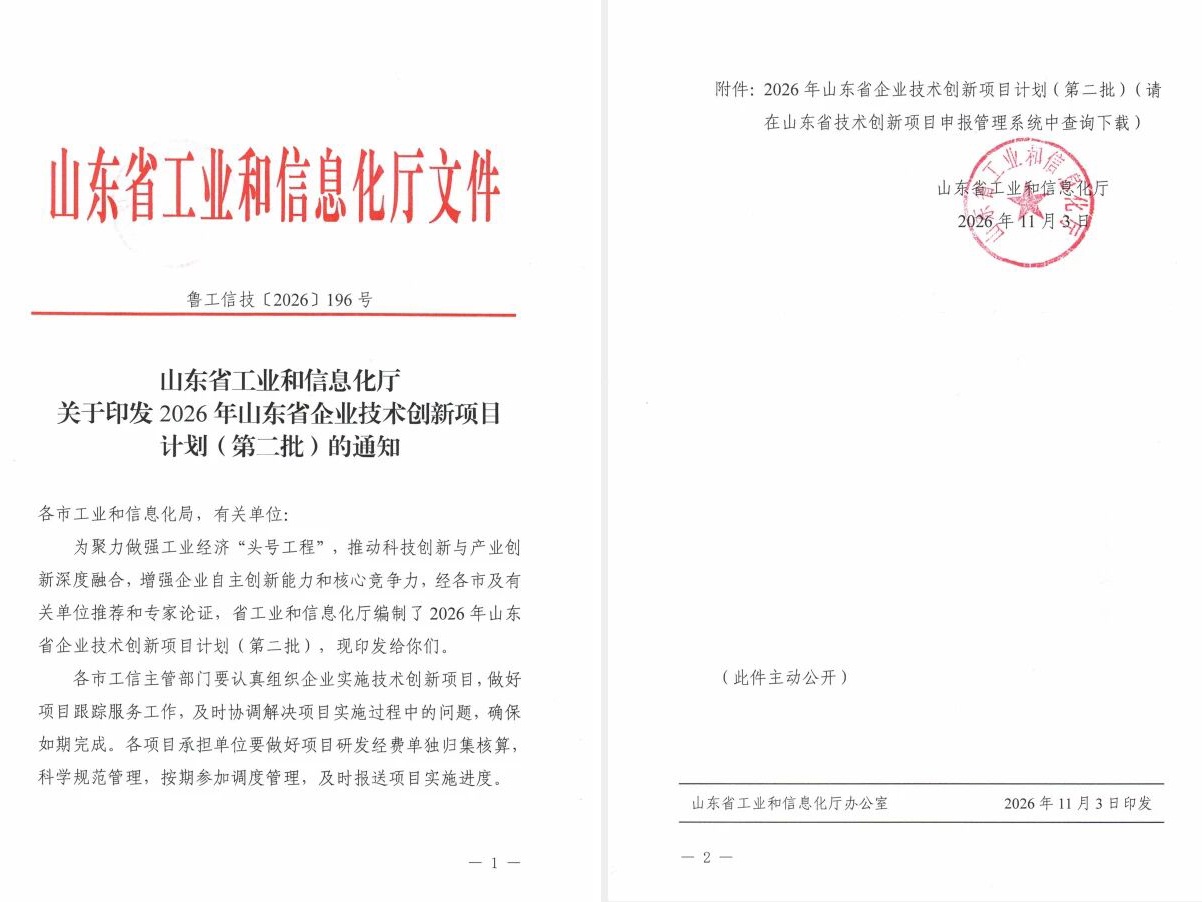
- Industry-Academia Collaboration Drives Breakthrough: Xiaoya Small Appliances’ "Smart Adaptive Hypochlorous Acid Electrolysis Module" Approved Under Shandong Provincial Enterprise Technology Innovation Program
- Struggling with Strict Pesticide Residue Limits on Export Farms? This On-Site Disinfection Solution Helps Safeguard Your Quality Standards
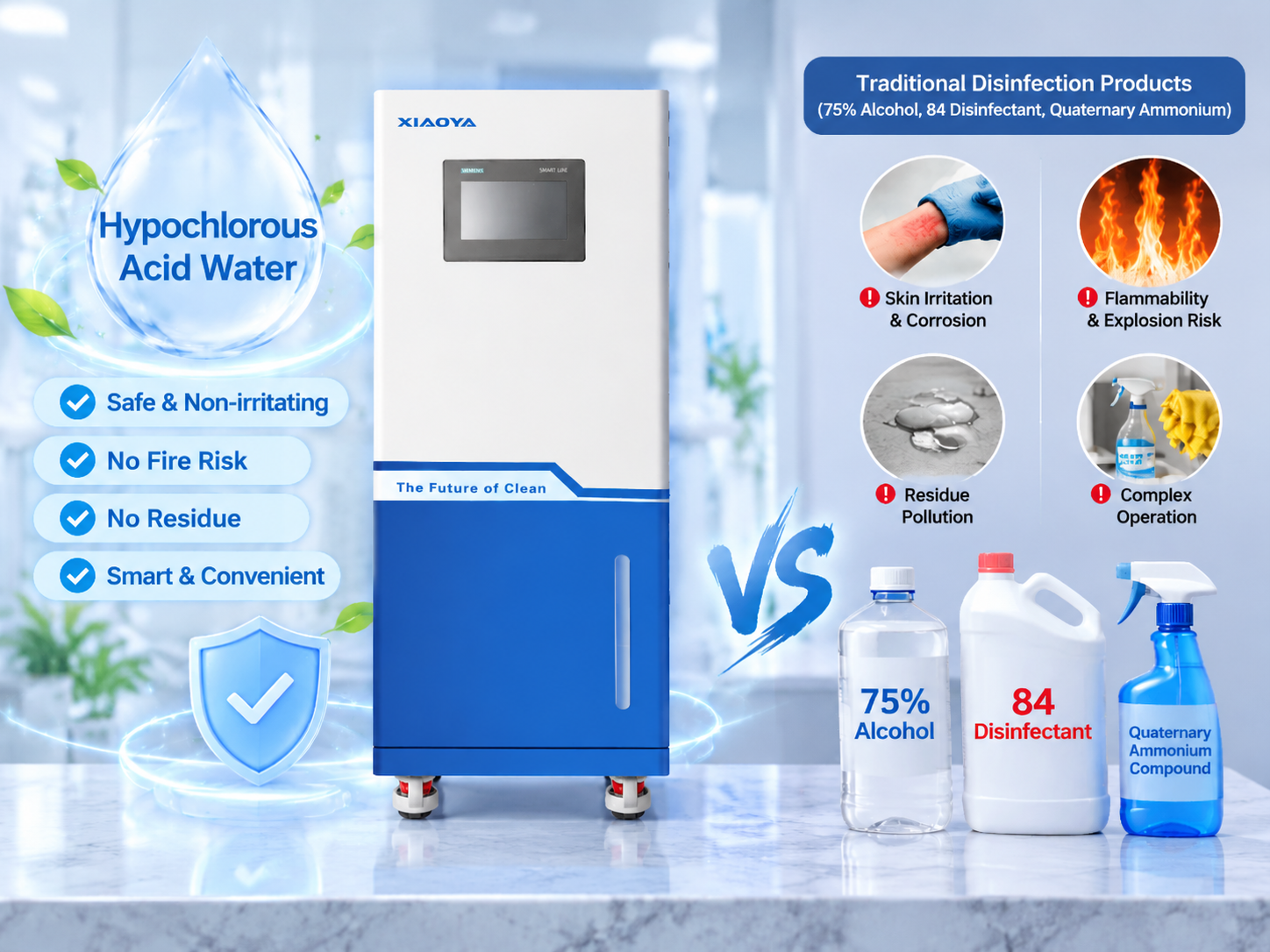
- Hypochlorous Acid Water vs. Traditional Disinfectants
- Tighter Standards Force Disinfection Upgrades: Edible-Salt Hypochlorous Acid Generators Become the "New Standard" in Fresh-Cut Produce Processing
Leave us a message

Xiaoya Group was founded in 1979,expert in the electrolyzed water industry.
Get in Touch
*We respect your confidentiality and all information are protected.