After years in sustainable and green agriculture, have you ever faced situations like these?
Powdery mildew hits strawberries right as they set fruit. It takes two chemical sprays to get it under control, only for a residue test to come back 0.02 over the limit—forcing the buyer to reject an entire greenhouse harvest. In the nursery, gray mold infects half a tray overnight, while root rot keeps recurring in the growing media. Even after replacing soil, rotating crops, and solarizing the greenhouse, the problem returns the next season.
Relying heavily on synthetic fungicides is risky: over-application drives pathogen resistance and leaves chemical residues, while holding back leaves crops vulnerable to disease. With export farms and certified organic operations facing increasingly strict maximum residue limits (MRLs), growers are caught in the middle—balancing yield on one side and market compliance on the other, with no room to let their guard down.
1. Where Is the Root Problem?
Decades of conventional chemical use have bred stronger pathogen resistance from one generation to the next. Application rates climb year after year, yet input costs fail to drop. More importantly, sustainable agriculture isn't simply about "knocking down outbreaks"—it's about controlling disease without leaving harmful residues on the harvested crop.
That requires a fundamental shift in how we approach sanitation: eliminating pathogens at the source rather than waiting for outbreaks to flare up and trying to suppress them afterward.
2. How to Solve It: An On-Site Hypochlorous Acid Disinfection System
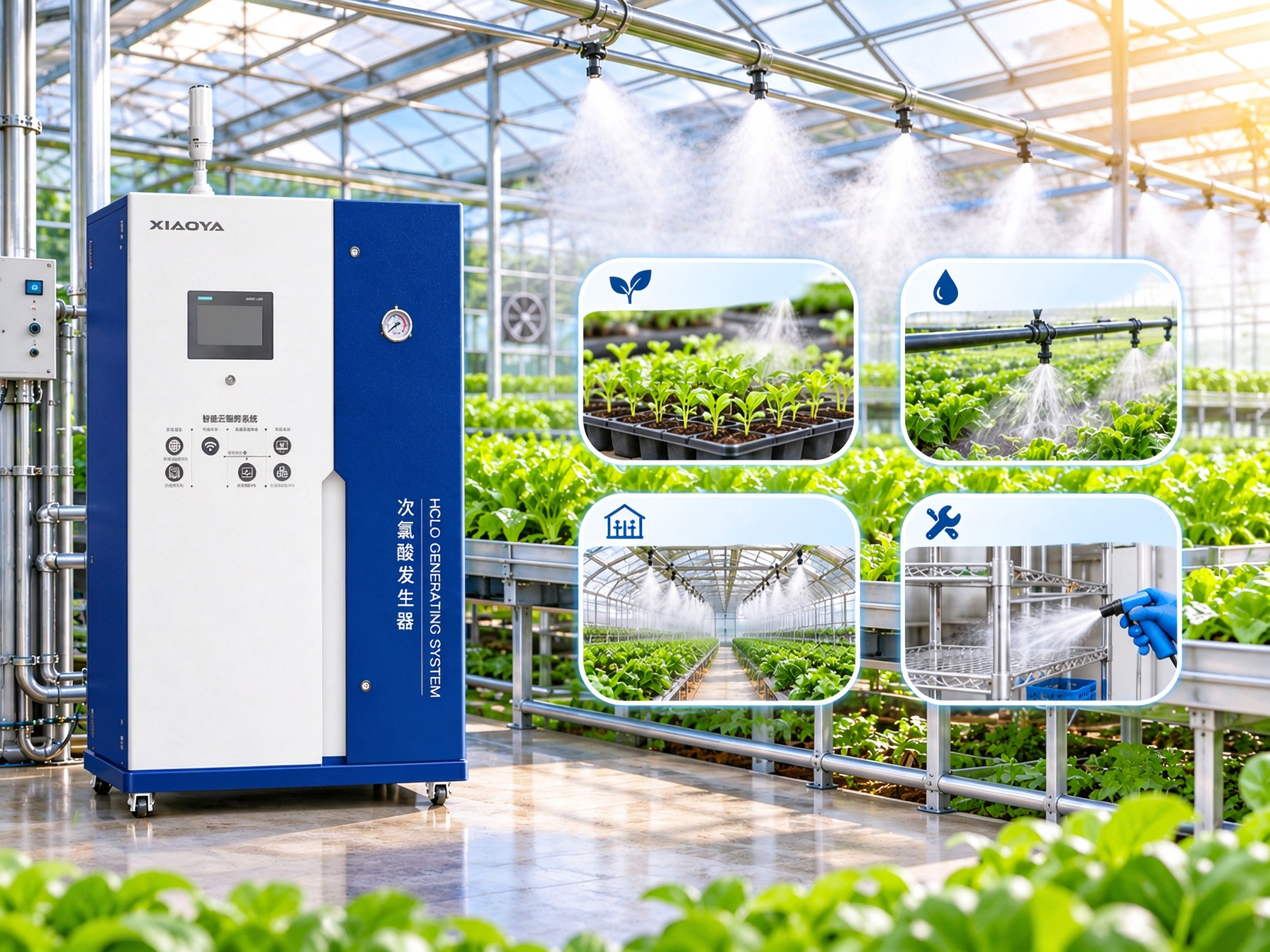
A blending-type hypochlorous acid (HOCl) generator produces slightly acidic electrolyzed water on site with broad-spectrum activity against fungi, bacteria, and viruses. A single system can cover multiple applications, including seedling disinfection, irrigation water treatment, greenhouse space misting, and surface cleaning for racks and tools.
When used at low concentrations, it is gentle on plants and unlikely to scorch leaves or flower buds. After acting, it breaks down into water and trace salts, leaving no harmful residues. For farms exporting to markets such as Japan or the European Union, usage should be evaluated against local regulatory standards and testing requirements.
Diagram / Infographics Callouts (from the accompanying visual):
· Unit Label: XIAOYA — Hypochlorous Acid Generating System (Smart Cloud Service System)
· Application 1: Seedling Disinfection
· Application 2: Irrigation Water Treatment
· Application 3: Greenhouse Space Misting
· Application 4: Racks & Tools Surface Cleaning
3. Fully Automated Operation, Lower Labor Demands
Many commercial growing operations need to maintain clean conditions around the clock, where dedicating staff to constant monitoring adds significant labor overhead. This system features an intelligent auto mode with automatic restart after power restoration, delivering a steady supply of sanitizing solution without requiring operators to repeatedly power it up and recalibrate settings.
4. End-to-End Coverage from Seed to Harvest
From seed and transplant pre-treatment and biofilm control in recirculating irrigation lines to airborne misting for microbial suppression and pre-harvest facility sanitation, one system covers the entire production cycle. Growers no longer need to constantly purchase and store multiple chemical inputs—cutting consumable costs while reducing the safety risks of storing harsh chemicals on site.
In high-value crop production, success isn't measured by yield alone—it depends on consistent, residue-free quality and food safety. Still gambling your harvest on conventional pesticides? An on-site hypochlorous acid disinfection system helps stop disease pressure at the source before it threatens your crop.
NEWS
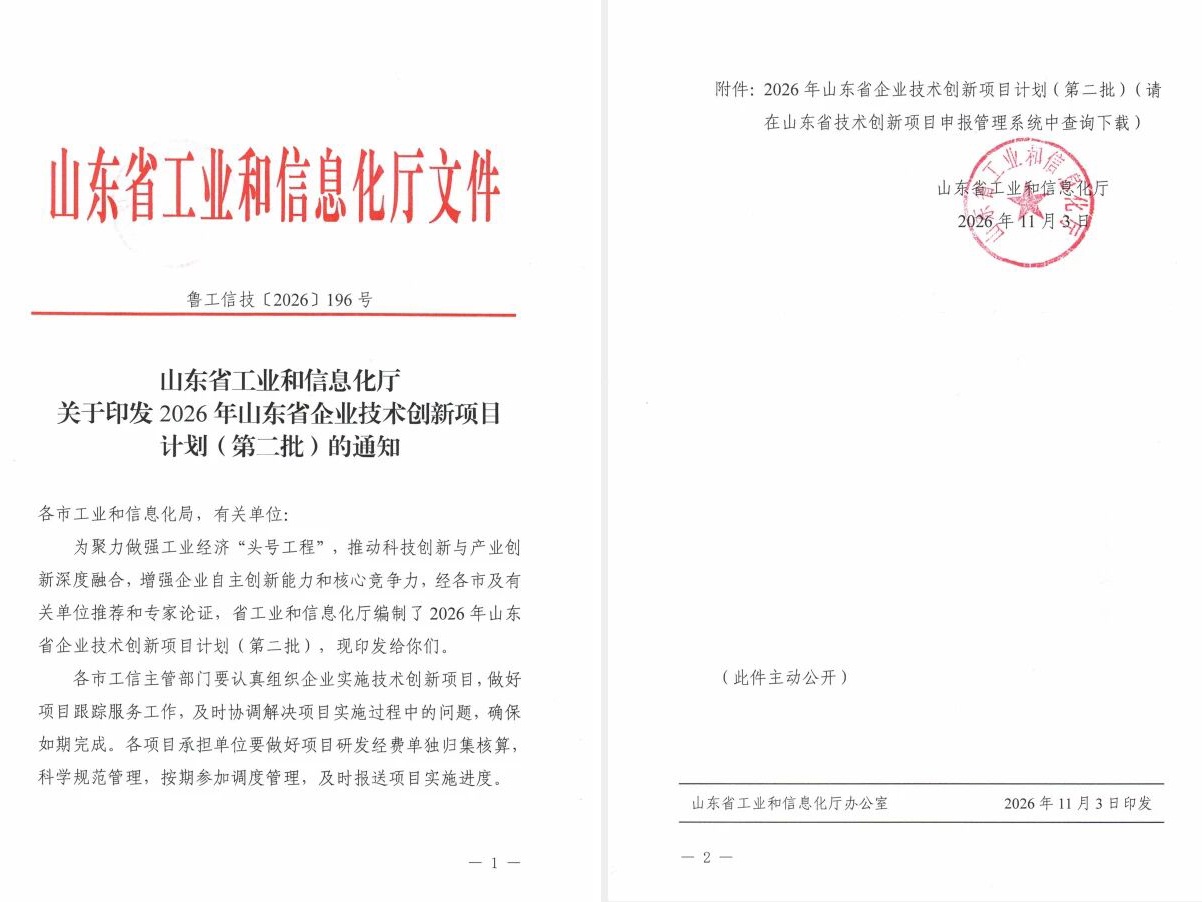
 Industry-Academia Collaboration Drives Breakthrough: Xiaoya Small Appliances’ "Smart Adaptive Hypochlorous Acid Electrolysis Module" Approved Under Shandong Provincial Enterprise Technology Innovation Program
- Struggling with Strict Pesticide Residue Limits on Export Farms? This On-Site Disinfection Solution Helps Safeguard Your Quality Standards
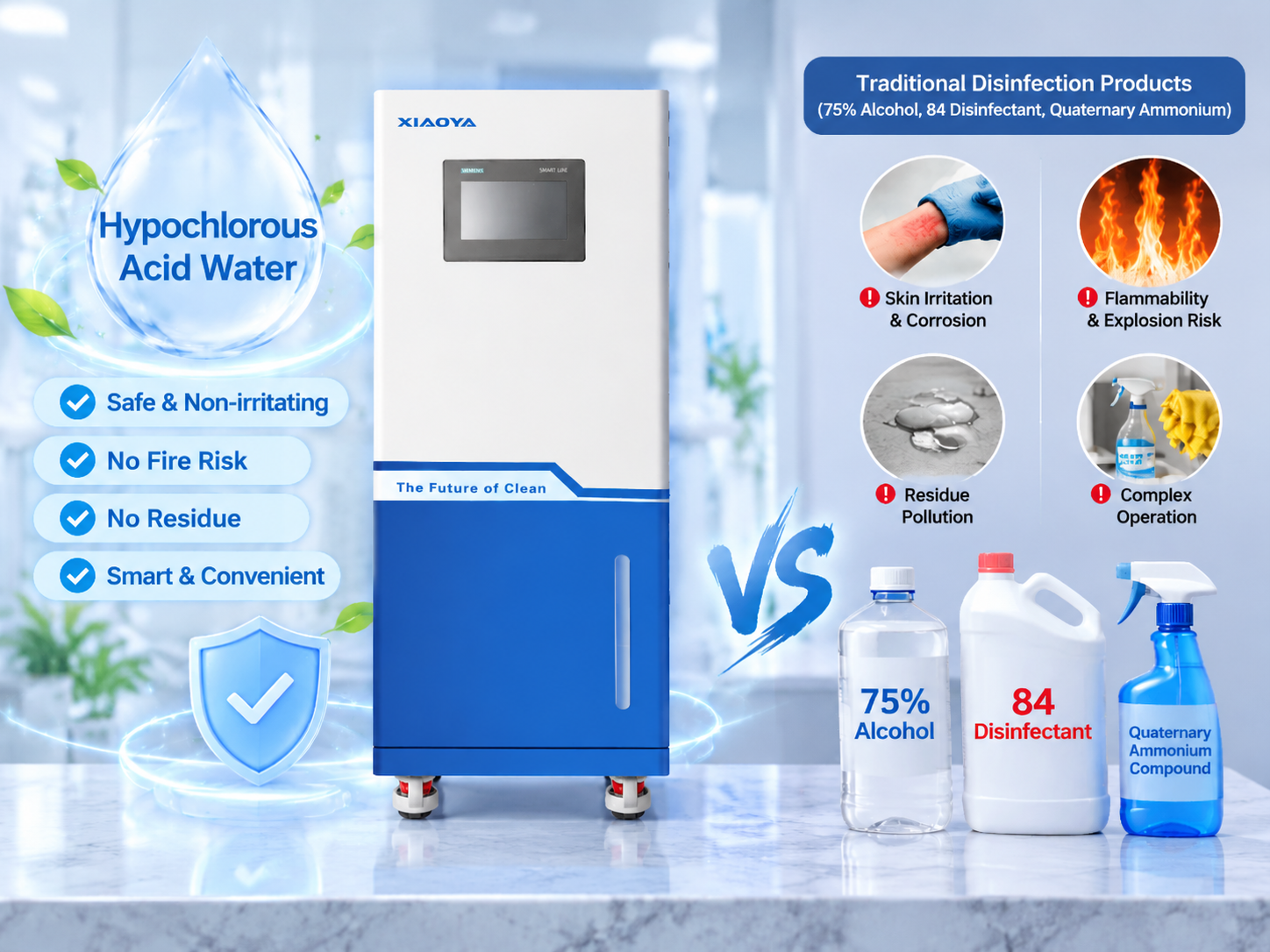
- Hypochlorous Acid Water vs. Traditional Disinfectants
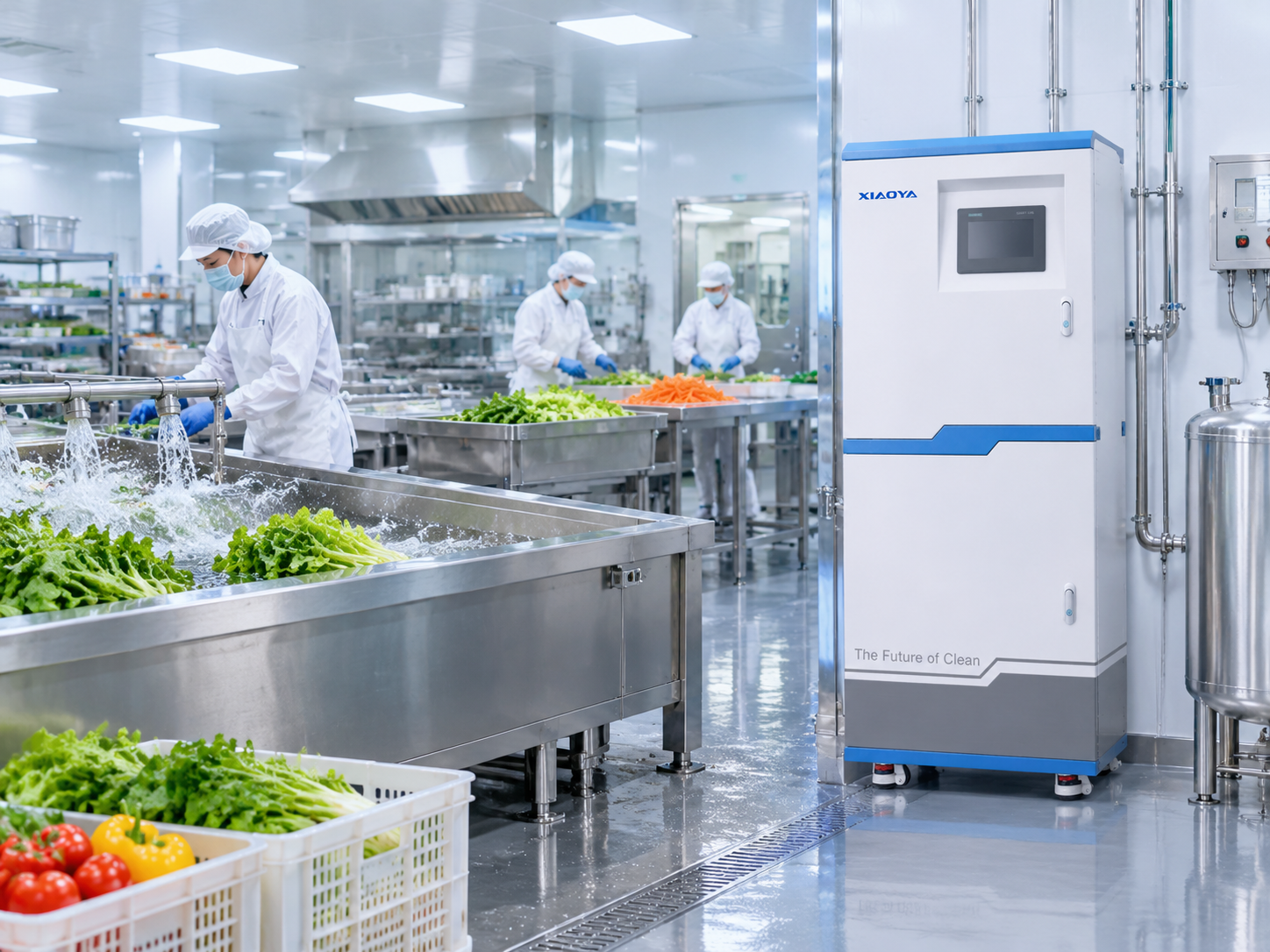
- Tighter Standards Force Disinfection Upgrades: Edible-Salt Hypochlorous Acid Generators Become the "New Standard" in Fresh-Cut Produce Processing
- XIAOYA CIP Electrolyzed Water Generators: On-Site Generation for Food & Beverage CIP Cleaning and Disinfection
Leave us a message

Xiaoya Group was founded in 1979,expert in the electrolyzed water industry.
Get in Touch
*We respect your confidentiality and all information are protected.