news
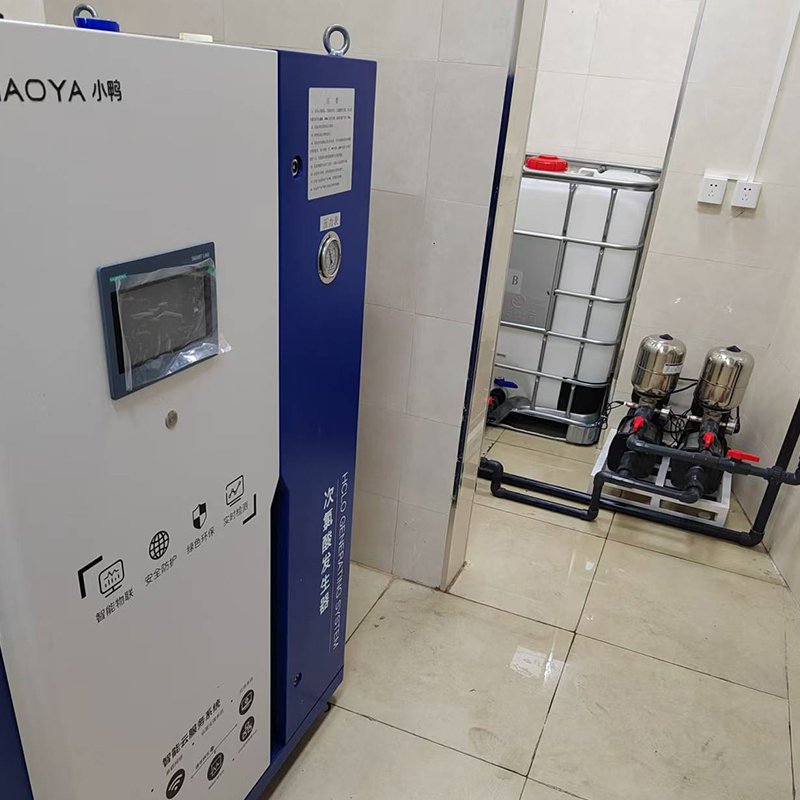
Troubleshooting HOCl Generator Machine Alarms Without Bypassing Safety
When a hocl generator machine triggers an alarm, restoring operation quickly must not come at the expense of technician safety or disinfectant quality. The immediate challenge is separating a supply problem from a flow, sensor, or electrolysis fault. An alarm reset alone does not make that distinction. Record what happened, follow the manufacturer’s shutdown and isolation procedures, and verify the operating conditions before attempting a restart.
The most useful question is not “How do I clear this code?” It is “Which condition caused the controller to stop production, and can I prove that condition has been corrected?” That approach avoids repeated restarts that obscure fault history or send unverified solution into service.
Preserve the evidence before touching the reset button
Photograph the alarm screen and record the code, timestamp, operating stage, displayed values, and recent maintenance. Note whether the fault appeared during startup, steady production, tank filling, or a cleaning cycle. Alarm codes are model-specific; a familiar-looking code from another machine is not a reliable diagnosis.
Look at the sequence of events. A low-flow alarm followed by an electrolysis fault may indicate that the cell fault was secondary. A problem appearing immediately after filter replacement makes valve position, trapped air, and incorrect assembly worth checking before condemning the control board.
For equipment suppliers spanning kitchen and bathroom appliances, healthcare disinfection, clean energy, and small household appliances, service routines should remain product-specific. An integrated R&D, production, and operations team is especially useful when field observations need to be checked against firmware behavior or an approved component revision.
Establish a safe boundary for diagnosis
Before opening covers or disconnecting tubing, use the manufacturer’s shutdown procedure and the site’s applicable energy-isolation process. Account for electrical power, stored pressure, chemical feeds, and any automatic restart command from an external controller. A stopped display does not prove that every circuit or pressurized line is safe.
Do not bridge a flow switch, defeat a cover interlock, force a PLC input, or disable a ventilation alarm to “see whether it runs.” These protections may prevent operation under conditions that damage the cell or create exposure hazards. Authorized diagnostics must retain the safeguards specified by the manufacturer.
Unexpected chemical odor, leakage, overheating, or a gas or ventilation alarm calls for stopping work and following the site emergency procedure. Do not lean into an enclosure to investigate by smell. Depending on the equipment design, electrolysis can involve gas generation; ventilation and gas-handling faults require qualified assessment.
Trace supply and flow before replacing components
A running pump is not proof of adequate cell flow. Inspect accessible supply valves, tank levels, inlet strainers, tubing condition, and drain routing within the approved maintenance scope. Compare pressure and flow readings with the machine’s specified operating range—not with a remembered value from a different installation.
Where pressure measurement points exist, readings upstream and downstream of a filter can help localize restriction. Low pressure throughout the supply suggests a different investigation from adequate inlet pressure with poor downstream flow. Confirm actual flow using the approved verification method before treating a flow-sensor alarm as an electrical fault.
Upstream treatment equipment also deserves attention. For example, the Duckling ultrafiltration water purification and sterilization device XYCL-1000 lists ultrafiltration flow of 1000 L/H but maximum UV sterilization capacity of 0.35 T/H. Those are different process ratings, not interchangeable guarantees of treated-water delivery. If used upstream, its compatibility and usable capacity must be checked against the generator’s feed requirements.
Ultrafiltration is not a substitute for controlling dissolved minerals or conductivity. An apparently clean water supply can still fall outside the generator’s chemistry limits. Avoid adding treatment stages simply to silence an alarm; first identify the required water specification.
If the alarm points to salt feed or conductivity
Check the approved feedstock, preparation record, reservoir level, and dosing arrangement. Depending on the design, low conductivity may reflect insufficient electrolyte, poor dosing, excessive dilution, or a measurement fault. High conductivity is not an invitation to adjust concentration by guesswork.
Use the manufacturer’s sampling location, instrument method, and temperature-compensation requirements. Never add acid, salt, or another chemical merely to chase a displayed number. Feed correction must follow the approved formulation and procedure.
Distinguish sensor faults from process faults
A sensor alarm can mean the process is outside limits, the probe is fouled, the instrument needs calibration, or the signal path has failed. Review trends rather than a single reading. An abrupt jump after servicing suggests a different line of inquiry from gradual drift over several production cycles.
With the equipment safely isolated, inspect permitted connections for moisture, corrosion, loose terminals, or damaged cables. Clean and calibrate probes only using approved methods. If independent testing disagrees with the machine, verify the test instrument and sampling conditions before replacing parts.
ORP alone does not establish disinfectant concentration. For output verification, use the manufacturer’s specified pH and available-chlorine tests, including the correct measurement range. A reassuring ORP reading cannot release a batch whose required quality checks have failed.
Know when electrolysis troubleshooting should stop
Current, voltage, and temperature alarms require context. Possible contributors include unsuitable feed conditions, inadequate flow, deposits, connection faults, or power-supply problems. None can be confirmed from the alarm label alone. Check accessible process conditions before escalating to internal electrical testing.
Cell inspection, descaling, and power-circuit measurements belong within the manufacturer-authorized service scope. Do not improvise a cleaning solution or energize an exposed cabinet. Incorrect chemistry can damage cell materials, while live electrical diagnosis requires qualified personnel and appropriate controls.
Restart only after the cause and output are verified
An authorized reset is a confirmation step, not a repair. Restore guards, connections, and normal valve positions, then follow the prescribed startup sequence. Observe the stage where the original fault occurred and check for recurrence, unstable readings, leaks, or abnormal temperature.
Hold suspect output from use until required quality checks pass. Follow the documented procedure for flushing, disposal, or batch segregation rather than blending uncertain solution into acceptable stock.
Escalate unresolved or recurring alarms with the fault history, measured conditions, maintenance details, and actions already taken. Close the service record with the confirmed cause and verification results—not just “alarm cleared.” If safe operation or disinfectant quality remains uncertain, leave the machine out of service.
NEWS
 Hypochlorous Acid Gains Recognition in Chinese Farm Emissions Guidance
- Disinfection Empowers Orthodontic Safety: Hypochlorous Acid Generators Build a Sterile Defense Line for Dental Instruments
- Accumulating Strength and Reaching New Heights: A Record of the Production Breakthrough of Xiaoya Small Home Appliances' Hypochlorous Acid Generators
 Troubleshooting HOCl Generator Machine Alarms Without Bypassing Safety
- HOCl Generator Machine Startup Checks for Consistent Daily Output

Leave us a message

Xiaoya Group was founded in 1979,expert in the electrolyzed water industry.
Get in Touch
*We respect your confidentiality and all information are protected.