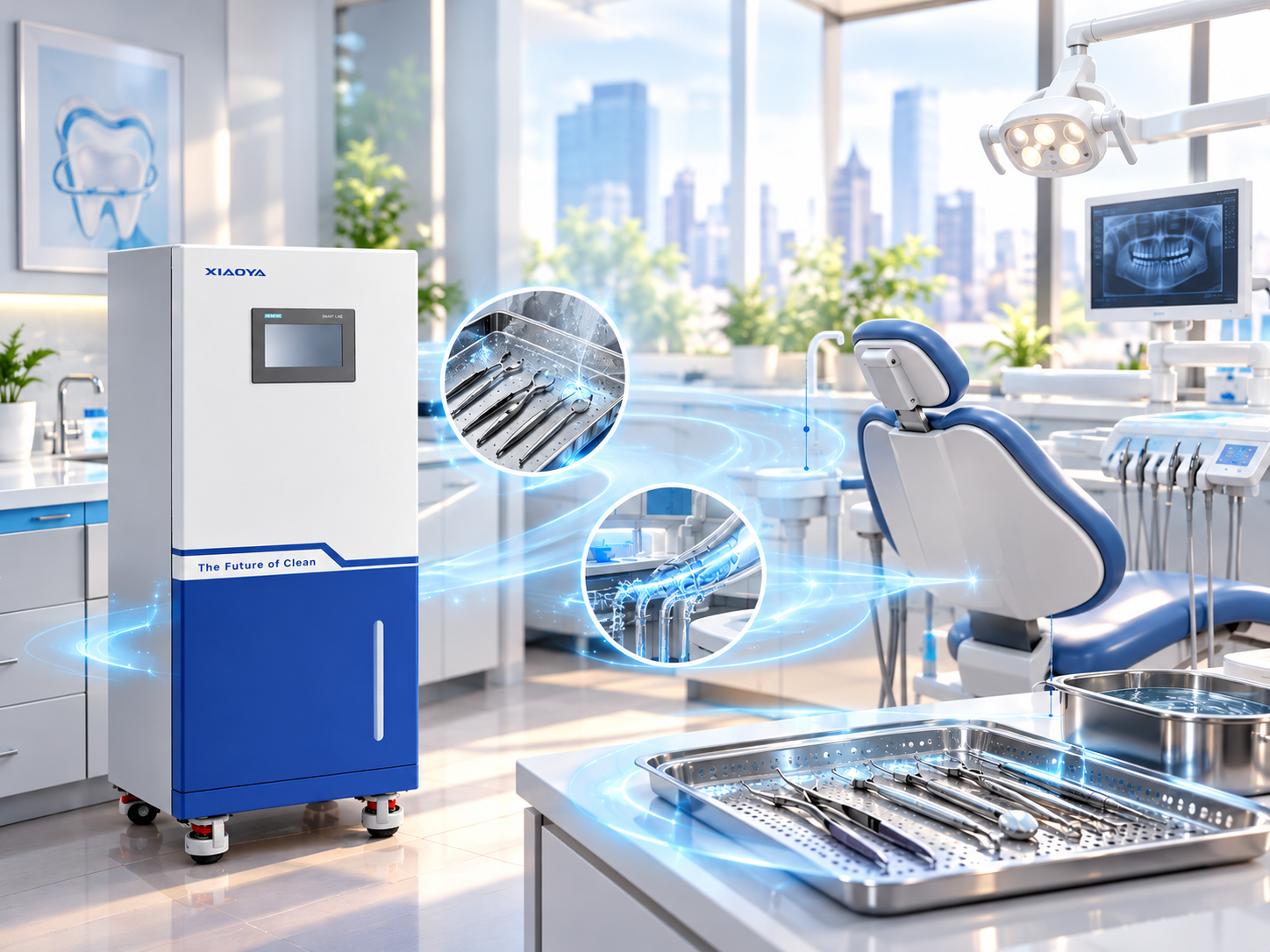
Recently, infection prevention and control in orthodontic diagnosis and treatment have ushered in a technical upgrade, with multiple hypochlorous acid disinfection devices being widely applied in the clinical disinfection of dental instruments. Aiming at the characteristics of orthodontic instruments being sophisticated, diverse, and subject to high-frequency reuse, hypochlorous acid generators—relying on their core advantages of broad-spectrum efficiency, mildness and safety, zero residue, and strong adaptability—completely solve the pain points of traditional disinfection models. They build a solid safety barrier for aseptic operation throughout the entire orthodontic diagnosis and treatment process, effectively avoiding the risk of cross-infection, and helping dental institutions upgrade to standardized and high-quality diagnostic and treatment services.
With the popularization of orthodontic items such as clear aligners, fixed bracket braces, and early childhood intervention braces, refined diagnosis and treatment have become the mainstream of the industry. Orthodontic diagnosis and treatment involve various precision instruments such as molar bands, brackets, buccal tubes, orthodontic pliers, impression trays, and dental unit waterlines. These instruments feature complex structures and tiny crevices, making them highly susceptible to residues of saliva, blood, dental plaque, and pathogenic microorganisms. Traditional methods like alcohol wiping, high-temperature and high-pressure sterilization, and soaking in chlorine-containing disinfectants either struggle to thoroughly clean dead corners or easily corrode precision orthodontic instruments and leave behind chemical residues. This not only consumes diagnostic equipment and increases operating costs, but may also trigger cross-infection between medical staff and patients due to substandard disinfection, becoming a hidden hazard to orthodontic safety.
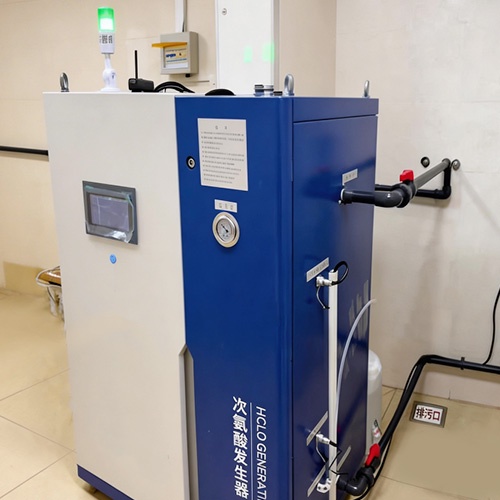
Addressing the industry pain points in the disinfection of dental orthodontic instruments, hypochlorous acid generators have achieved a revolutionary breakthrough in disinfection technology. Adopting advanced electrolysis technology, the equipment uses only ordinary salt and tap water to instantly generate slightly acidic hypochlorous acid disinfectant on-site, eliminating the need to store chemical agents and realizing instant production, freshness, efficiency, and environmental friendliness. The generated hypochlorous acid water maintains a pH value between 5.0 and 6.5, which highly matches the human oral environment. Its core bactericidal component is consistent with the natural bactericidal substance of human white blood cells, and its safety has been verified by authoritative sources.
In terms of disinfection efficacy, hypochlorous acid water possesses super broad-spectrum bactericidal capabilities, with a sterilization potency 80 to 100 times that of ordinary chlorine-containing disinfectants. It can rapidly inactivate Staphylococcus aureus, Candida albicans, and common oral pathogens and viruses within 30 seconds, and penetrate microbial biofilms within 1 minute. It achieves full-coverage disinfection of traditional disinfection blind spots such as orthodontic instrument gaps, dental unit waterlines, and micropores of precision instruments, with a sterilization rate as high as 99.99%, perfectly matching the high-frequency and high-standard disinfection needs of orthodontic diagnosis and treatment. Compared with traditional disinfection methods, its greatest advantages lie in efficient disinfection without residue, as well as being mild and non-corrosive. It will not damage the delicate structures of fine orthodontic instruments, produces no irritating odor or chemical residual pollution, makes operations safer for medical staff, and provides a more comfortable diagnosis and treatment experience for patients.
In clinical orthodontic application scenarios, hypochlorous acid generators can achieve full-scenario adaptive disinfection. On the one hand, they can perform integrated soaking and spraying disinfection for reusable precision instruments such as orthodontic pliers, traction hooks, and impression tools, thoroughly removing residual pollutants in instrument gaps. On the other hand, they can carry out all-weather circulating disinfection for dental unit waterlines, diagnosis and treatment countertops, and the environment of orthodontic operation areas, effectively solving the problem of biofilm breeding in dental waterlines and preventing secondary pollution during diagnosis and treatment. Meanwhile, the equipment supports intelligent automated operation, capable of outputting standard-compliant disinfectant stably and in real time without manual proportioning. This significantly simplifies the disinfection process, improves the disinfection efficiency of dental institutions, and suits continuous diagnosis and treatment scenarios during peak outpatient hours.
Industry experts in dental infection prevention and control stated that orthodontic diagnosis and treatment are close to the oral mucosa, and patients are mostly adolescents and sensitive groups, posing extremely high requirements for a sterile diagnostic environment and instrument cleanliness. The limitations of traditional disinfection models have long restricted the improvement of orthodontic service quality. The implementation and application of hypochlorous acid generators have broken through the industry dilemma where "thoroughness of disinfection" and "instrument protection" could not be achieved simultaneously. They not only meet national dental diagnosis and treatment disinfection specifications and standards, but also match the exclusive needs of refined orthodontic treatment, drastically reducing the risk of cross-infection in dental care.
At present, hypochlorous acid generators have gradually become standardized disinfection configurations for major stomatological hospitals and chain dental institutions, being widely applied in full oral diagnosis and treatment scenarios such as orthodontics, prosthodontics, and implantology. In the future, as dental medical safety standards continue to upgrade, efficient, safe, and intelligent hypochlorous acid disinfection technology will continuously empower the construction of oral infection prevention and control systems, providing safer, cleaner, and higher-quality oral medical protection for the general public, especially adolescent orthodontic populations, and promoting the standardized, refined, safe, and high-quality development of the orthodontics industry.
NEWS
 Disinfection Empowers Orthodontic Safety: Hypochlorous Acid Generators Build a Sterile Defense Line for Dental Instruments
- Accumulating Strength and Reaching New Heights: A Record of the Production Breakthrough of Xiaoya Small Home Appliances' Hypochlorous Acid Generators
 Medical HOCl Generator Claims: What Regulatory Evidence Is Needed?
 Choosing a Medical HOCl Generator for Hospital Cleaning Workflows
- Medical HOCl Generators: Surface Disinfection Is Not Sterilization
Leave us a message

Xiaoya Group was founded in 1979,expert in the electrolyzed water industry.
Get in Touch
*We respect your confidentiality and all information are protected.