‹
›
‹
›
2.Instant deodorization, purifying air and improving the environment
3.Safe and non-irritating, suitable for worker protection
4.Two operation modes, adapting to full-scenario disinfection and deodorization
5.On-demand production with no loss, low usage cost
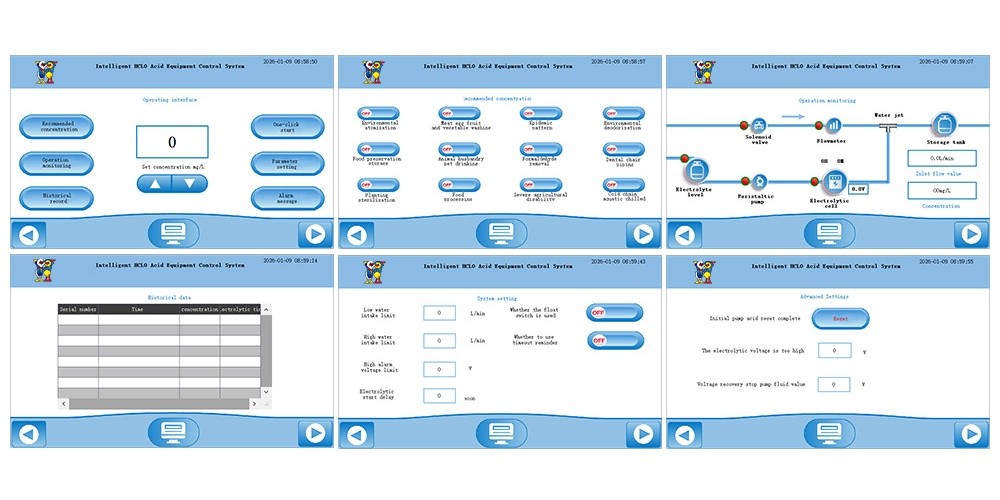
6.Industrial-grade durability, adapting to harsh working environments
PRODUCT DESCRIPTION
Hypochlorous Acid Generator for Garbage Disinfection (AQ-P300-W)
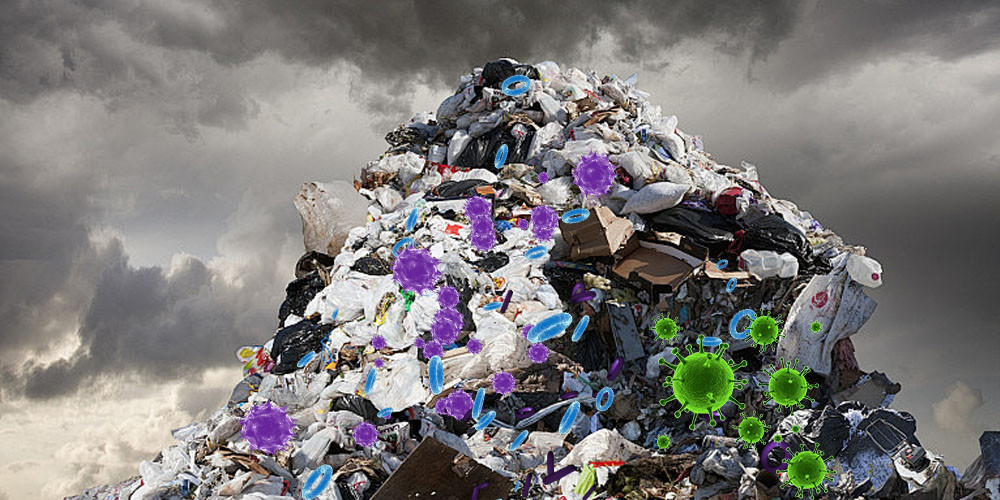
A large number of pathogens can be detected in wet garbage after 24 hours of storage, including nearly 20 types such as Vibrio cholerae, hemolytic streptococci, coliform bacteria, Mycobacterium tuberculosis, hepatitis viruses (A and E), and HIV. These pathogens include both those transmitted through the air and those through contact.
Garbage in bins, drop-off points, transfer stations and collection vehicles is not sealed, emitting an unbearable stench. Under high temperature and humidity conditions, wet garbage provides an ideal breeding ground for microbial reproduction. Leftovers, kitchen waste and peels in wet garbage not only rot easily and produce an offensive odor, but also attract a large number of mosquitoes and flies. The combined action of microorganisms, mosquitoes, flies and small animals further exacerbates the stench and putridity of domestic garbage during decomposition.
Product Definition
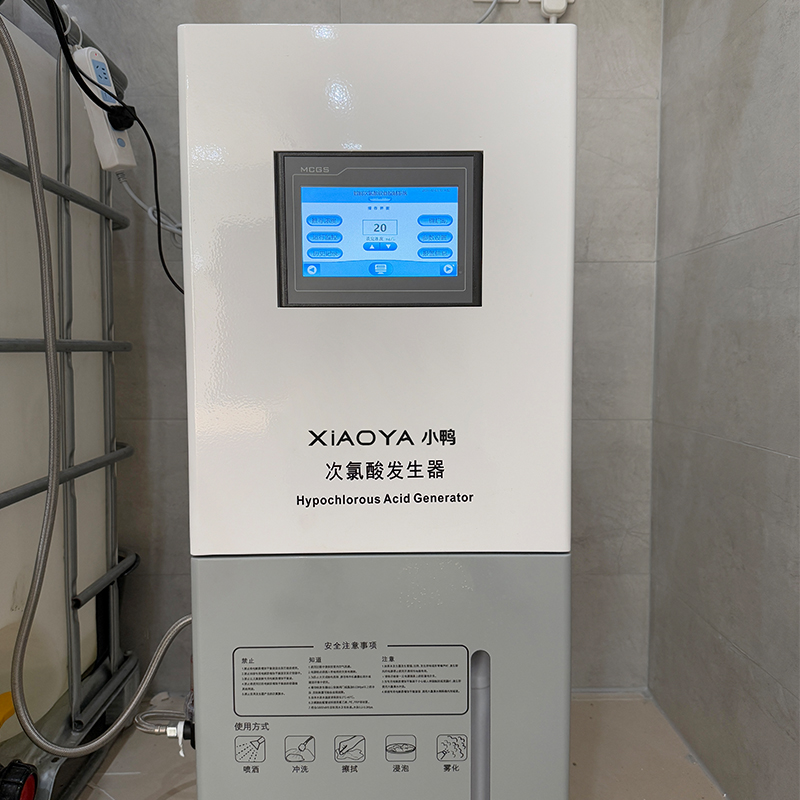
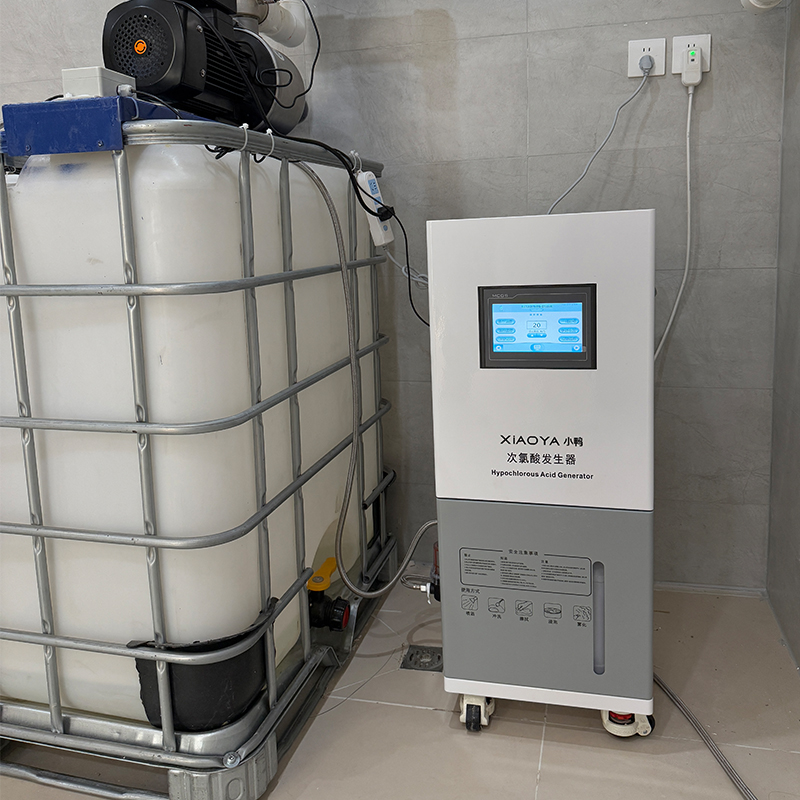
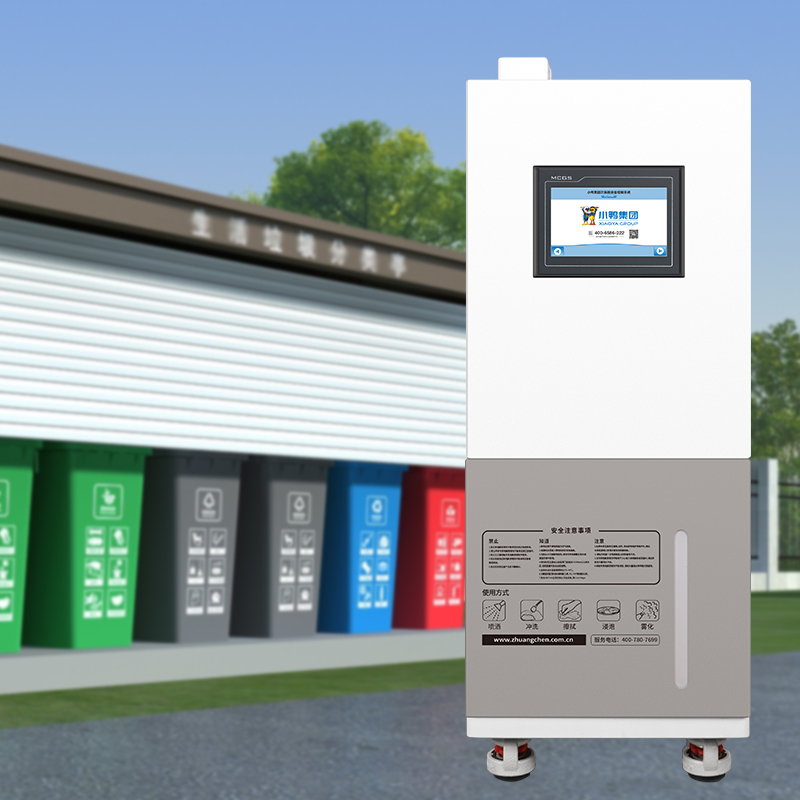
The hypochlorous acid generator for garbage disinfection produces slightly acidic hypochlorous acid water on-site based on core electrolysis technology. It addresses the needs of pathogen prevention and control as well as odor management throughout the entire process of garbage storage, transfer, transportation and disposal, and features three key functions: powerful sterilization, rapid deodorization and inhibition of mosquito and fly breeding. It is non-corrosive, non-irritating, residue-free and free of harmful by-products, and can be operated via spray and atomization modes. It not only kills various pathogenic bacteria carried by garbage and blocks pathogen transmission, but also decomposes malodorous factors and purifies the air. Thoroughly solving the core pain points of garbage disposal scenarios such as pungent odor, rampant pathogens, difficult protection for frontline workers and prominent drawbacks of traditional disinfection methods, it is a professional sanitation and prevention solution suitable for garbage rooms, transfer stations, collection vehicles, disposal plants and other scenarios, fully safeguarding the health of garbage disposal workers and improving the surrounding public health environment.
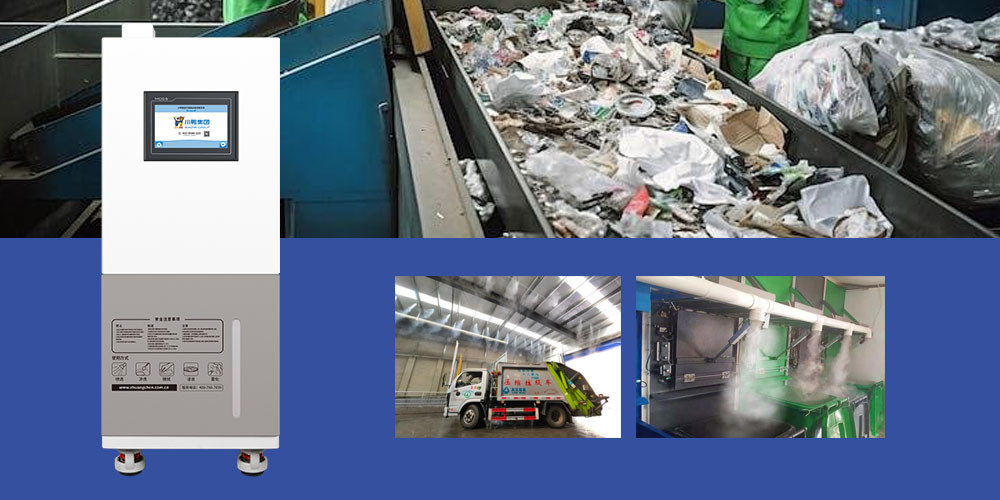
Product Parameters (AQ-P300-W)
Core Selling Points
1. Broad-spectrum and powerful sterilization, blocking pathogen transmission risks
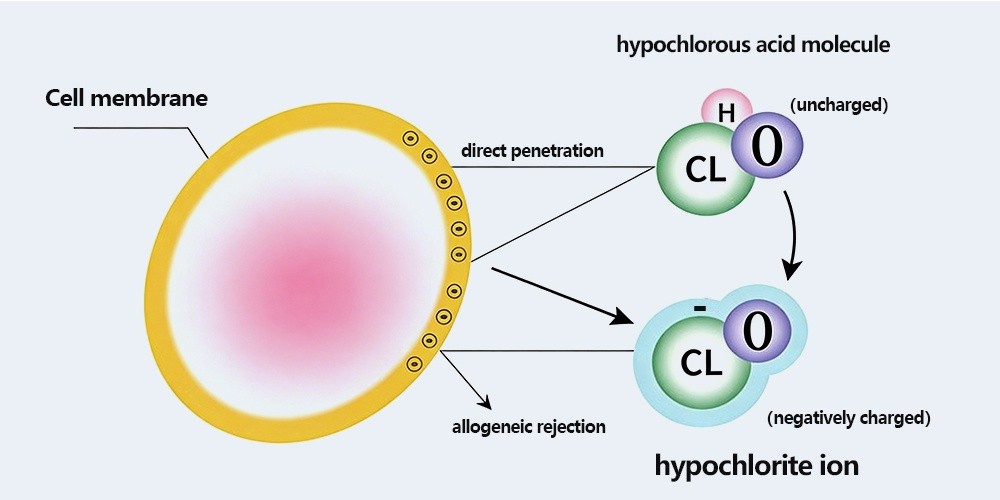
Hypochlorous acid has strong oxidizing properties, which can directly penetrate microbial cell membranes and quickly kill nearly 20 types of pathogenic bacteria and viruses carried by garbage, such as Vibrio cholerae, hemolytic streptococci, coliform bacteria, hepatitis viruses and HIV. Its sterilization effect is superior to 75% alcohol and 84 disinfectant. A concentration of 10-120ppm can achieve complete sterilization of spores, fungi and bacteria, curbing the spread of garbage-borne pathogens from the source and protecting the health of frontline workers and surrounding residents.
2. Instant deodorization, purifying air and improving the environment
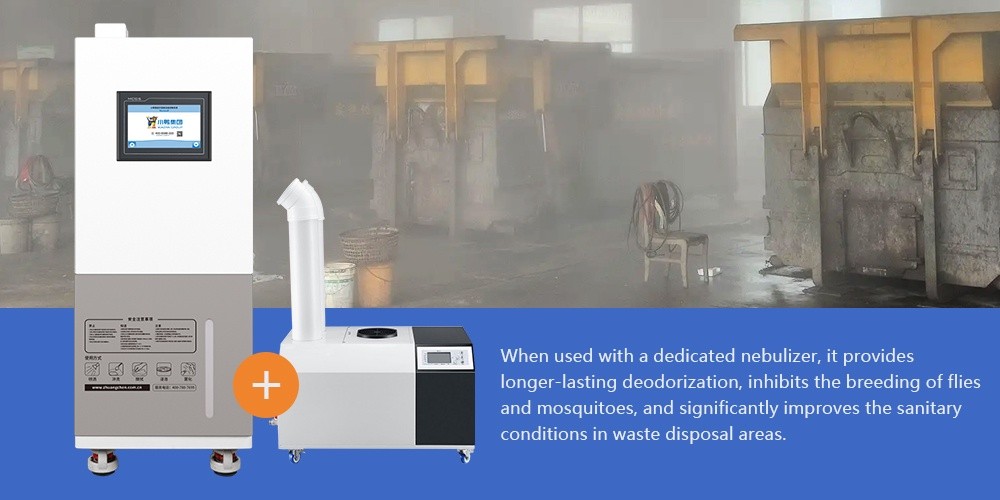
Hypochlorous acid water forms an aerosol through high-pressure atomization, which can quickly capture malodorous factors in the air such as ammonia and sulfur-containing compounds, and decompose them into water and odorless substances through redox reactions. It specifically removes the putrid odor of kitchen waste and the pungent smell in garbage stations. When used with a special atomizer, the deodorization effect is more durable, and it can also inhibit the breeding of mosquitoes and flies, greatly improving the sanitary environment of garbage disposal areas.
3. Safe and non-irritating, suitable for worker protection
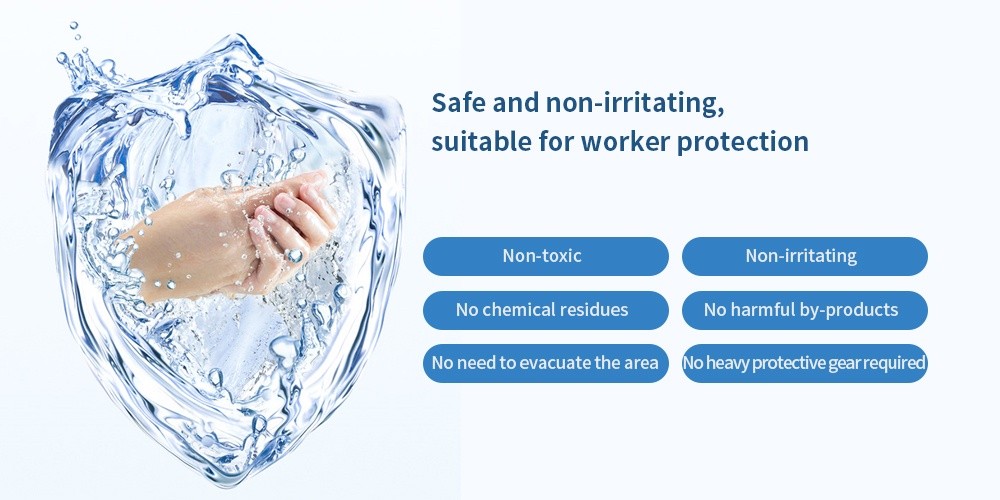
The produced slightly acidic hypochlorous acid water is close to the pH value of human skin, non-toxic and non-irritating. It will not damage workers' skin and respiratory tract, and leaves no chemical residues or harmful by-products. No enclosed evacuation or heavy protective equipment is required during operation, solving the pain points of traditional disinfectants such as pungent smell, corrosiveness and harm to human health, and meeting the protection needs of frontline garbage disposal operations.
4. Two operation modes, adapting to full-scenario disinfection and deodorization
Supporting both spray and atomization operation modes, the spray mode can directly reach the garbage itself to inhibit bacterial reproduction and eliminate the source of odor; the atomization mode can diffuse in the entire air space to capture floating odor factors and pathogens, achieving air purification. It meets the multiple needs of garbage surface disinfection, space deodorization and environmental prevention and control in one stop.
5. On-demand production with no loss, low usage cost
The device can produce the disinfectant on-site with one click, eliminating the need for manual blending and proportioning and avoiding ineffective disinfection caused by concentration imbalance. Only tap water and a small amount of electrolyte are required for operation, resulting in extremely low consumable costs. There is no need for frequent procurement and storage of finished disinfectants, and long-term use can significantly reduce the expenditure on disinfection and deodorization in garbage disposal, with a much higher cost performance than traditional disinfection and deodorization agents.
6. Industrial-grade durability, adapting to harsh working environments
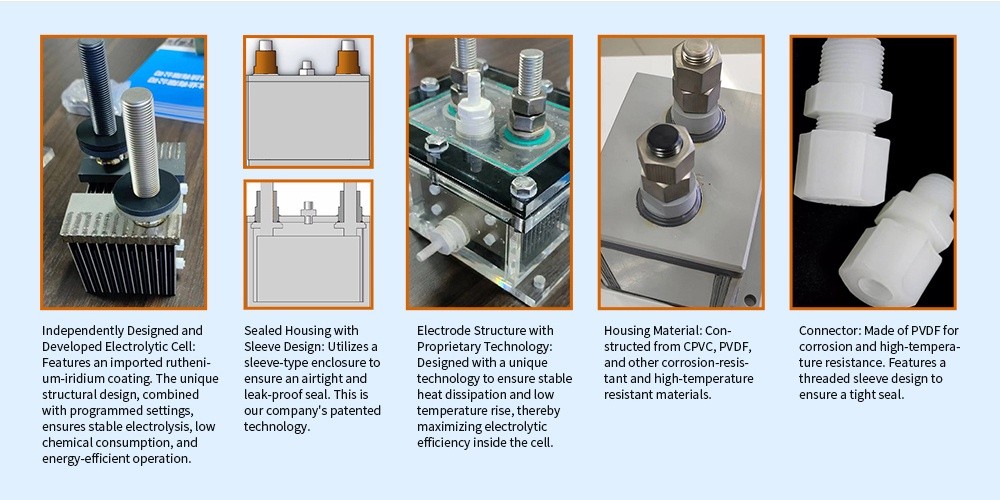
The core electrolytic plates adopt ruthenium-iridium coated titanium electrodes, which are corrosion-resistant, acid and alkali-resistant and wear-resistant, adapting to the harsh environment of garbage disposal scenarios with high humidity, heavy odor and many pollutants. The device features strong stability and simple daily maintenance, requiring no on-duty professional technicians, and can meet the needs of long-term and high-frequency operations.
Application Scenarios
The slightly acidic hypochlorous acid water produced by the hypochlorous acid generator (AQ-P300-W) for garbage disinfection fully covers the entire process of domestic waste collection, transfer, transportation and disposal, achieving all-round disinfection and deodorization. The specific application scenarios are as follows:
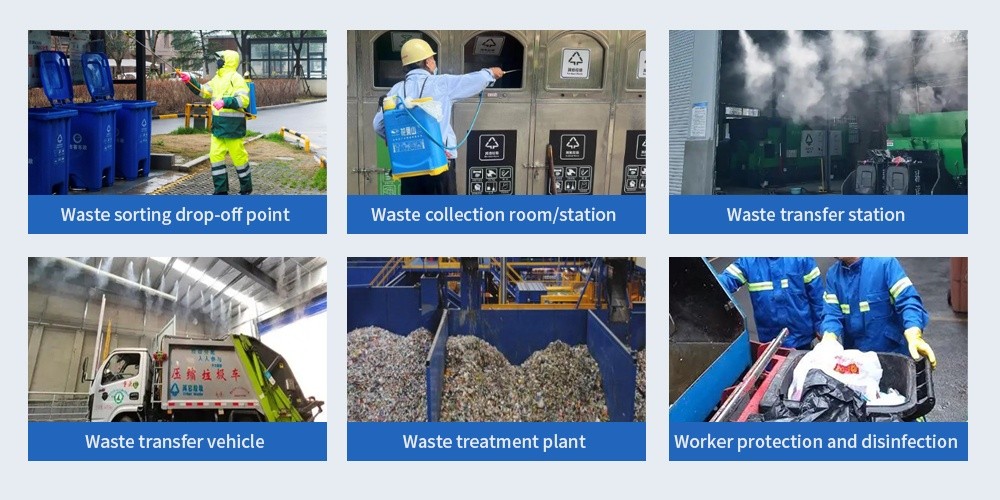
1. Domestic waste sorting drop-off points: Spray disinfection and atomization deodorization for garbage bins, drop-off countertops and surrounding ground at residential and commercial area sorting drop-off points to inhibit bacterial reproduction, remove garbage odor and reduce the concentration of microbial aerosols in the surrounding area.
2. Garbage rooms/collection stations: All-round spray disinfection for the internal space, garbage storage area, collection and transportation channels, walls and ground of enclosed garbage rooms, combined with atomizers for air deodorization, solving the problems of pungent stench and rampant pathogens in the rooms.
3. Garbage transfer stations: Disinfection operations for the unloading area, compression equipment, storage silos and transfer channels of transfer stations, with focused spray on the putrid wet garbage areas to inhibit bacterial reproduction, decompose odor and reduce the breeding of mosquitoes and flies.
4. Garbage collection vehicles: Spray disinfection for the interior of carriage, vehicle surface and discharge port of garbage collection vehicles, with atomization deodorization before and after transfer operations to remove residual odor in the carriage and prevent pathogen spread with the vehicle.
5. Garbage disposal plants: Full-area disinfection for the operation area, sorting table, landfill area and leachate treatment area of disposal plants to degrade harmful aerosols in the air, improve the working environment of the plant and prevent sanitary and safety risks.
6. Disinfection for worker protection: Rinse and disinfection for the hands, operation tools and protective equipment of garbage collection and sorting workers. It is safe and non-irritating, protecting the health of frontline workers and cutting off contact transmission routes.
Operation Timing and Frequency
1. Routine Daily Disinfection and Deodorization (Non-high temperature/Low passenger flow period)
1. Garbage drop-off points/rooms: Conduct a full spray disinfection + atomization deodorization once before and after daily garbage collection respectively, and supplementary disinfection once every 4 hours during the daytime, focusing on the wet garbage drop-off area to inhibit odor spread.
2. Garbage transfer stations: Conduct a full-area disinfection and deodorization once before daily startup and after shutdown respectively; spray disinfection on the unloading area and compression equipment once every 3 hours during operation, and turn on atomization deodorization at the same time to purify the air.
3. Garbage collection vehicles: Conduct a spray disinfection on the carriage interior after each collection task, and a full-vehicle deep disinfection + atomization deodorization after daily shutdown to remove residual odor.
4. Garbage disposal plants: Conduct a spray disinfection on the operation area once every 4 hours, and atomization deodorization on the public areas of the plant once in the morning and evening every day for continuous pathogen prevention and air quality improvement.
5. Personnel and tool disinfection: Conduct disinfection for workers once before going on duty and after leaving duty, and disinfect hands and tools once every 2 hours during operation to avoid contact infection.
2. Enhanced Disinfection and Deodorization (High temperature and rainy season/Peak passenger flow/Garbage overflow period)
During high temperature and humidity weather, garbage drop-off peak hours and when garbage overflows and is not collected in time, significantly increase the operation frequency: conduct spray disinfection + atomization deodorization for garbage drop-off points, rooms and transfer stations once every 1 hour, and disinfect collection vehicles immediately after a single collection task; increase the concentration of hypochlorous acid for severely putrid wet garbage to enhance the sterilization and deodorization effect, completely curbing odor spread and massive microbial reproduction, and strictly preventing sanitary and safety hazards.
Frequently Asked Questions
Q: Is the device corrosive to garbage transfer equipment and bins when used for garbage disinfection and deodorization?
A: It is completely non-corrosive and can be used with confidence for a long time. The slightly acidic hypochlorous acid water produced by the device is mild in nature, non-bleaching and non-corrosive. It will not damage metal garbage bins, transfer equipment, plastic utensils or cement ground, and no rust, aging, damage or other problems will occur with long-term use, making it suitable for disinfection of various garbage disposal facilities.
Q: The odor in garbage disposal scenarios is extremely strong. How long can the deodorization effect of this device last, and can it eliminate the odor at its source?
A: The deodorization effect is instant and durable, and can inhibit odor from the source. Hypochlorous acid water can not only decompose malodorous factors in the air, but also kill odor-causing bacteria in garbage and inhibit their reproduction, reducing odor production from the root. The deodorization effect can last for more than 4 hours under routine operation, and with increased frequency during high temperature periods, no obvious odor can be detected in garbage areas, completely improving the working environment.
Q: Will hypochlorous acid water harm workers' skin and respiratory tract with long-term contact in garbage disposal?
A: It will not harm human health at all. The slightly acidic hypochlorous acid water produced by the device is non-toxic and non-irritating, and close to the pH of human skin. Even with long-term contact, it will not irritate the skin and respiratory tract. There is no need to wear heavy gas masks and protective gloves, solving the pain points of traditional disinfectants such as pungent smell and physical damage, and meeting the protection needs of frontline operations.
Q: Is the device complicated to operate, and can the staff at garbage transfer stations master it quickly?
A: The operation is extremely simple and can be mastered quickly with zero foundation. The device adopts a one-click start-stop design for instant use, with no need for manual blending and proportioning of agents or complex parameter debugging. The staff at garbage transfer stations can operate it proficiently after simple training, adapting to high-frequency and high-intensity disinfection and deodorization operations without the need for on-duty professional technicians.
Q: Compared with traditional disinfection tablets and deodorants, what are the usage cost and sterilization advantages of this device?
A: It has far more advantages than traditional agents and lower usage costs. Traditional disinfection and deodorants can only achieve a single function of sterilization or deodorization, with high residue and strong irritation; this device has both sterilization and deodorization functions, with more thorough effects. The only consumables are tap water and a small amount of electrolyte, and the cost per ton of the solution is much lower than that of traditional agents. There is no need for frequent procurement and storage, and long-term use can significantly reduce operation and maintenance costs.
Q: Can this device be used in overseas garbage disposal scenarios, and can it adapt to local voltage and usage needs?
A: It is fully suitable for global overseas garbage disposal scenarios. The device can be customized with overseas voltage specifications such as 110V/60Hz according to the needs of different countries and regions. The available chlorine concentration can be flexibly adjusted to comply with the sanitation and prevention standards of garbage disposal in various regions, and it can be equipped with atomization and spray accessories to meet the disinfection and deodorization needs of various overseas garbage disposal scenarios.
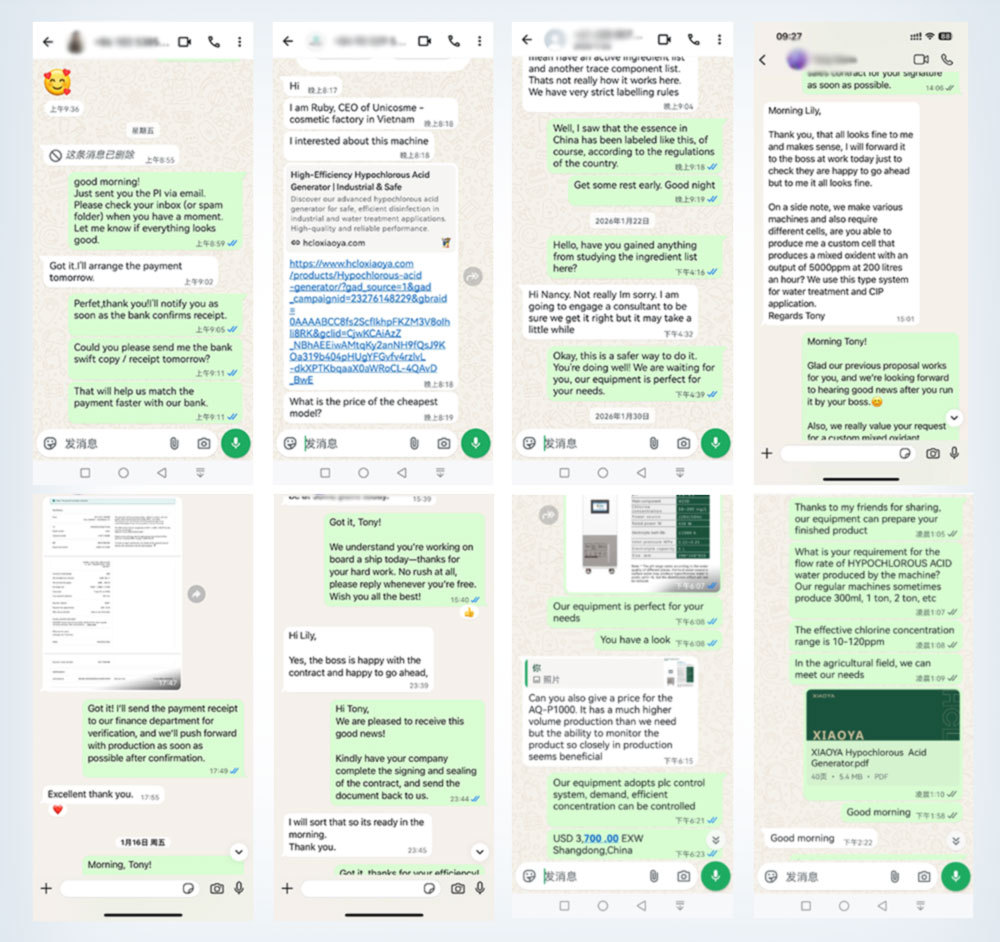
Customer Feedback
ONLINE CONSULTATION
RELATED SUGGESTION
 Electrolyzer") Pure Hypochlorous Acid (HClO) ElectrolyzerLearn More
Pure Hypochlorous Acid (HClO) ElectrolyzerLearn More water supply systemLearn More
 Sodium Hypochlorite ElectrolyzerLearn More
 Duckling ultrafiltration water purification and sterilization device XYCL-1000Learn More
 Diaphragm ElectrolyzerLearn More
 Water purification systemLearn More
 Sodium hypochlorite generatorLearn More
 Thermal EngineLearn More