news
Disinfection Compliance Is a Verification Process, Not a One-Time Setup
In public-facing environments, a hypochlorous acid system is rarely judged by whether it can produce disinfectant on the day it is installed. It is judged by whether staff can demonstrate stable, safe, repeatable operation over time. That distinction matters in dental clinics, outpatient departments, schools, care facilities, commercial washrooms, and other locations where people expect hygiene controls to work without creating new risks.
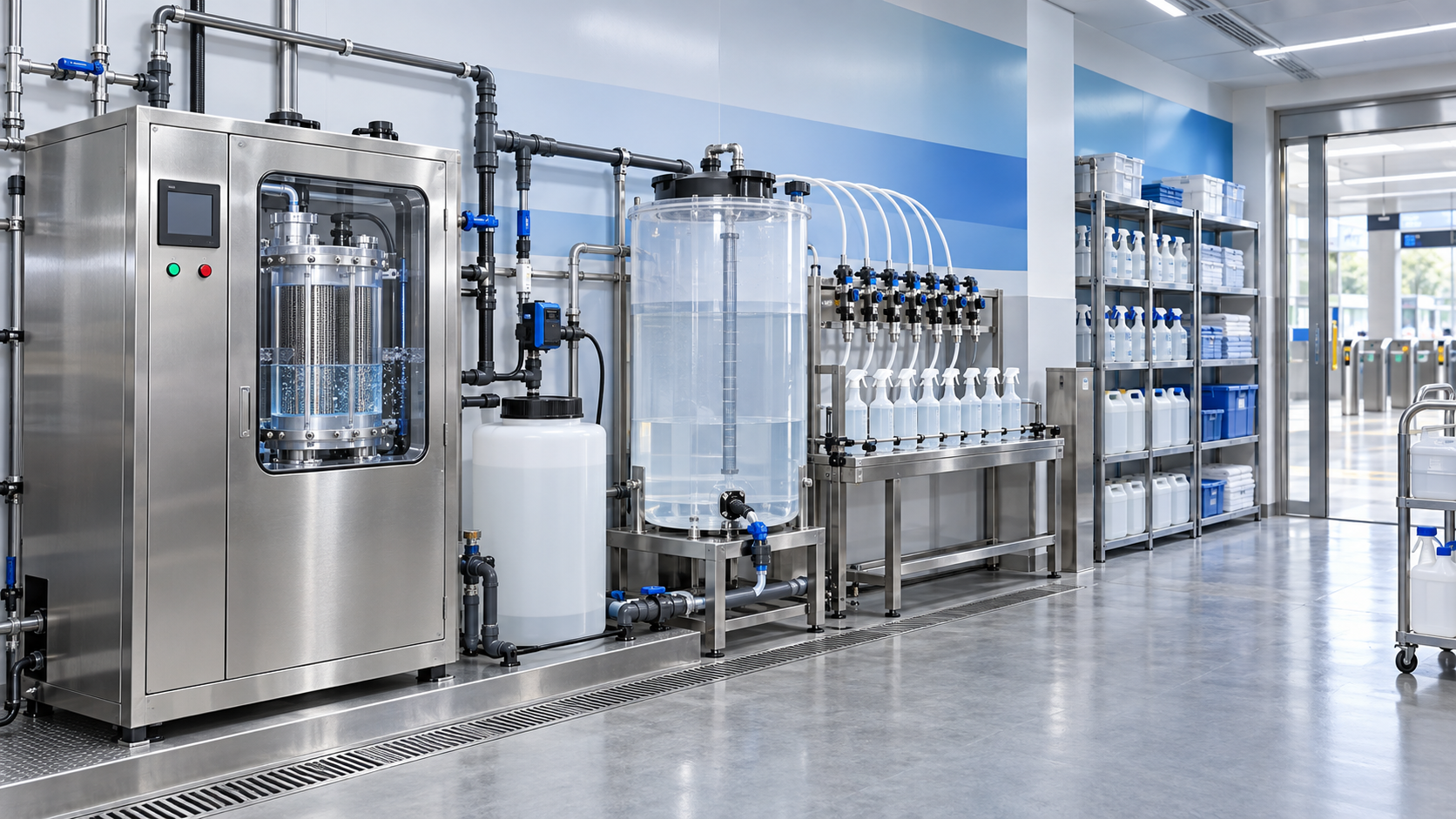
For a Public Hypochlorous AcidGenerator, compliance checks should connect four things: the quality of the generated solution, the condition of the equipment, the way the solution is used, and the records available when an internal review or external inspection occurs. A machine may have a sound electrolysis design, but output can still drift if inlet water, electrolyte dosing, storage conditions, or maintenance routines are poorly controlled.
Quality teams often discover the weak point is not the generator itself. It is the gap between “the unit is running” and “we can verify that the correct disinfectant was delivered at the point of use.” A practical compliance program closes that gap.
Start with the Intended Use and the Actual Exposure Path
Before reviewing concentration readings or maintenance logs, confirm what the system is intended to disinfect. Surface wiping, pipeline circulation, misting, hand-contact applications, and equipment flushing do not create the same control requirements. Contact time, delivery method, material compatibility, residual-liquid management, and user exposure all change with the application.
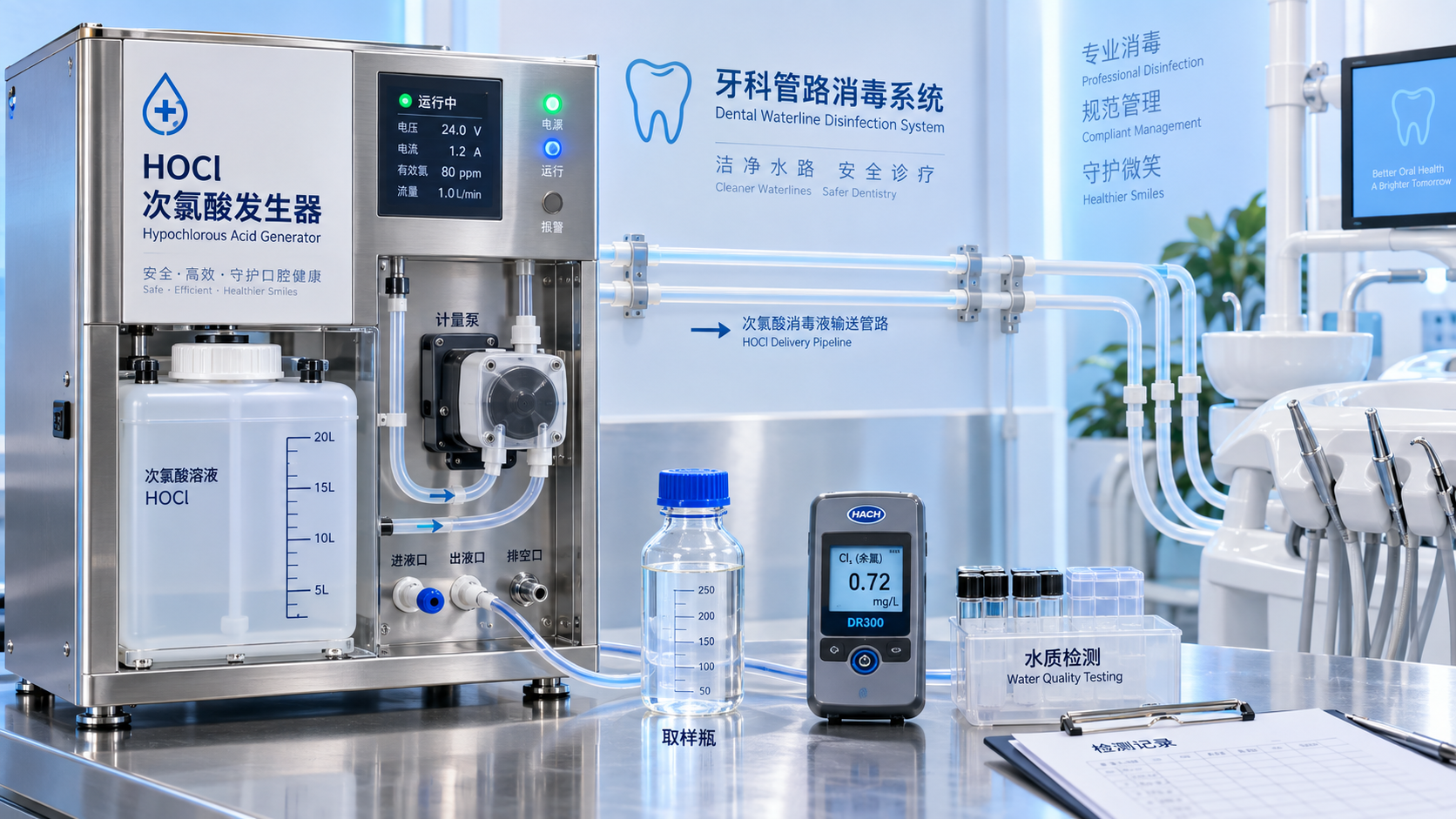
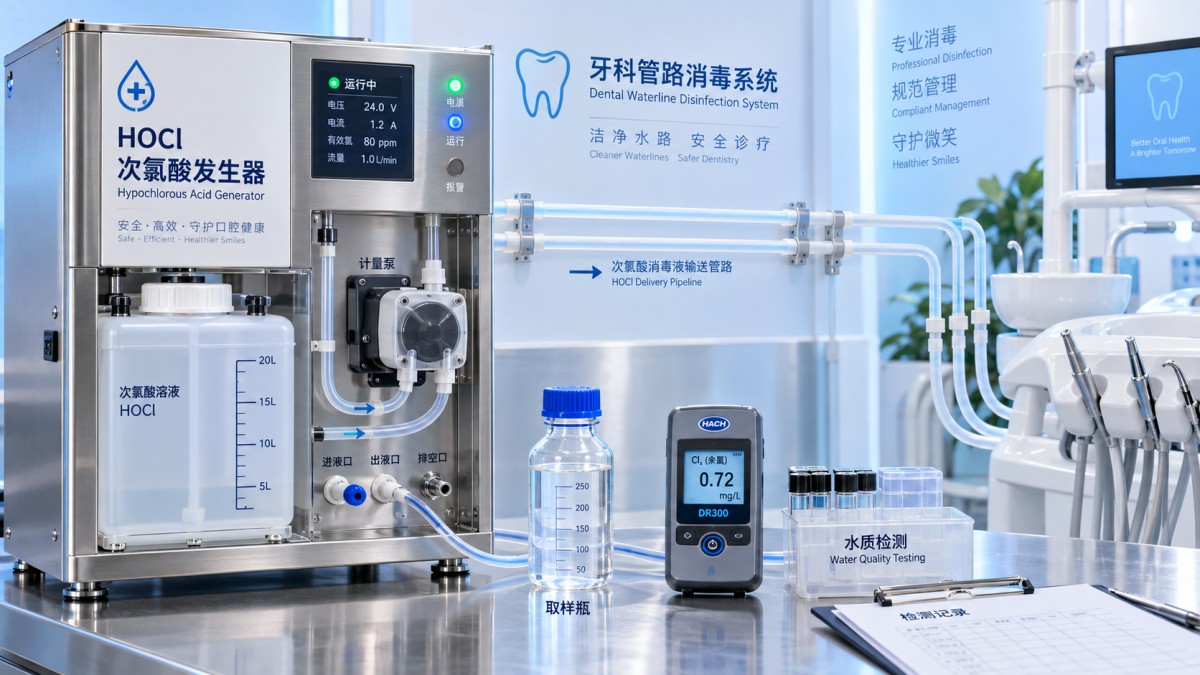
This is especially relevant in treatment environments. Dental chair waterlines, for example, are enclosed systems with narrow passages and intermittent water flow. A check that only confirms solution generation at the machine outlet does not necessarily prove that the disinfectant reached the far end of the pipeline at the intended condition. Facilities should define sampling points and flushing procedures based on their own chair configuration and operating workflow.
It is also worth separating equipment capability from local compliance responsibility. Manufacturers can provide technical files, operating instructions, electrical test documentation, and declared product qualifications. The facility still needs to confirm that the selected use, chemical handling method, and disinfection procedure align with applicable local requirements and internal infection-control rules.
The Core Checks That Should Appear in a Routine Inspection
A useful inspection does not need to be complicated, but it should be specific enough to identify drift before it becomes a hygiene incident. The following controls are usually more meaningful than a generic “equipment normal” entry in a checklist.
- Generation output: Verify that the unit is producing solution within the concentration range defined for the intended use. Test methods, instrument calibration, sampling timing, and acceptance limits should be documented in the site procedure.
- pH and water conditions: Hypochlorous acid performance is closely linked to solution chemistry. Inlet water quality, pressure stability, electrolyte quality, and pH should not be treated as background details.
- Storage and age of solution: If solution is stored, record the container type, closure condition, light exposure, labeling, and retention period. “Freshly generated” and “stored for later use” are different risk conditions.
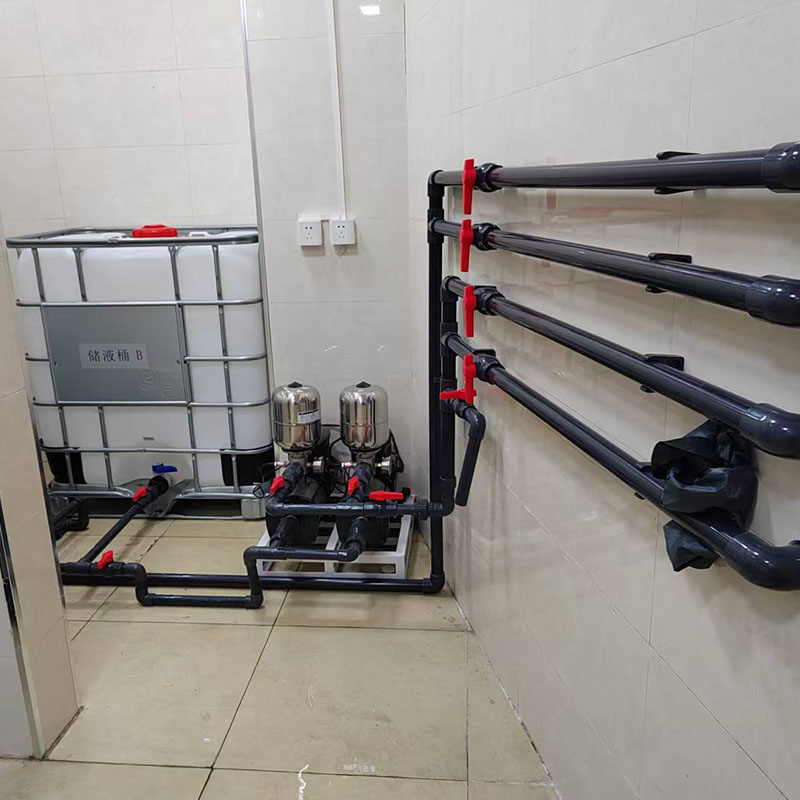
- Distribution integrity: Inspect tubing, joints, reservoirs, dosing points, and return lines for leaks, blockages, scaling, backflow risk, or unintended cross-connections.
- Control-system evidence: Alarm history, fault codes, remote access records, parameter changes, and maintenance resets should be reviewable, particularly for automated systems.
- Operator practice: Confirm that personnel know which solution is used where, how to respond to a low-output alarm, and when a system must be taken out of service.
The key is consistency. A concentration test performed once at commissioning is useful, but it does not replace periodic verification after changes in water supply, electrolyte batches, plumbing repairs, usage frequency, or component replacement.
Why Automation Helps Only When Its Records Are Trusted
Automated disinfection equipment can reduce dependence on manual mixing and subjective operator judgment. PLC-based control, dosing logic, fault alarms, and remote monitoring can make operations easier to supervise across multiple rooms or sites. But automation is not compliance by itself. A remote dashboard that shows “online” is not the same as a verified disinfection record.
During an audit, the practical questions tend to be simple: Was the unit operating? Was the solution within the defined range? Who changed the settings? Was an alarm acknowledged? What corrective action followed? Systems that can retain or export meaningful operational data make these questions easier to answer. Systems that only display a live status often leave quality staff reconstructing events from memory.
For this reason, access control deserves attention. If concentration settings can be adjusted, define who is authorized to change them and how changes are recorded. A concentration increase may seem like a safe reaction to a contamination concern, yet it can introduce compatibility or exposure issues if it is made without reviewing the intended application.
Dental Pipeline Disinfection Requires a More Focused Review
Dental waterline applications are a good example of why broad claims should be tested against a real operating environment. Pipelines may contain biofilm, and the treatment system must work with the chair’s water path, flushing cycle, valves, and precision components. Compatibility is not merely a purchasing preference; it affects whether the disinfection program can be sustained without avoidable service interruptions.
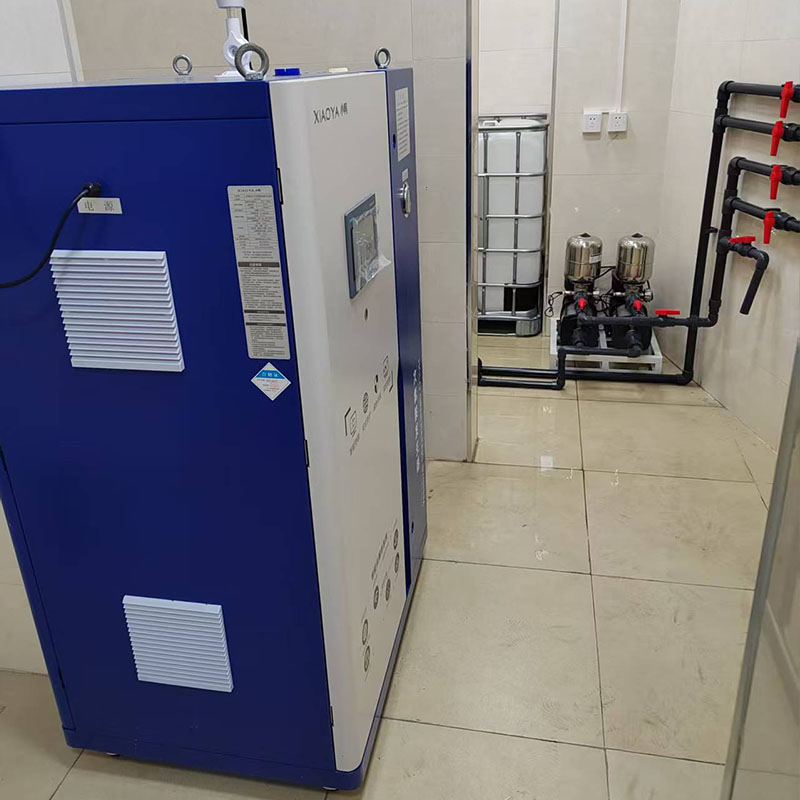
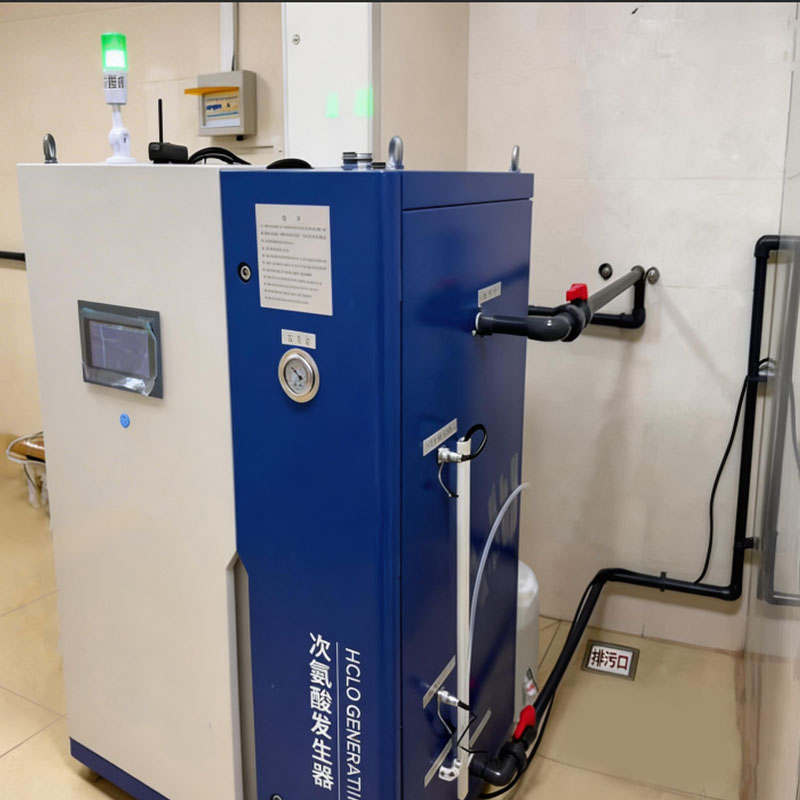
One configuration intended for this setting is the Hypochlorous Acid Generator for Dental Chair Pipeline Disinfection, model XY-SAEW-300W. Its stated generation capacity is 300 L/h, with a reported pH value of 6.37 and effective chlorine concentration of 68.9 mg/L. These parameters are useful starting points for technical evaluation, not a substitute for site validation. Quality managers should still check whether the concentration, delivery method, and cycle design match their own clinical procedure and applicable requirements.
The unit is specified for 220 V/50 Hz operation, rated at 420 W, with an inlet water-pressure requirement of 0.15–0.25 MPa. Those details should be checked before installation rather than after a stability problem appears. In practice, unstable inlet pressure can be mistaken for a chemical-output issue, while poor water conditions can shorten the interval between maintenance actions.
Its PLC control architecture, modular design, 4G remote-control capability, and stated electrolyzer service life of at least 3,000 hours can support planned maintenance and traceability. The product is described as having medical qualifications and having passed electromagnetic compatibility testing; the relevant certificates, scope, and local acceptance should be reviewed as part of the procurement and commissioning file. That documentation review is a small task compared with the difficulty of filling gaps after an inspection.
Common Compliance Gaps That Are Easy to Miss
The most common weak practice is treating a hypochlorous acid generator like an ordinary appliance: fill it, switch it on, and inspect it only when it alarms. Public disinfection systems need a more disciplined approach because their output is part of a hygiene control process.
Another gap is relying on a single measurement without checking the measurement method. If test strips, meters, or reagents are used, their storage condition, expiry date, range, and operator technique can affect the result. A number in a logbook has limited value if nobody can explain how it was obtained.
Maintenance records are often too vague as well. “Cleaned unit” does not indicate whether the electrolyte tank, filters, electrodes, dosing path, or connected pipeline were inspected. Better records identify the component, action taken, findings, person responsible, and any required follow-up. This level of detail is particularly valuable for enterprises that develop and manufacture health-care and disinfection appliances alongside kitchen, bathroom, clean-energy, and small household equipment: industrial production discipline should continue through installation and service.
Build a Check Schedule That Matches Operational Risk
There is no universal inspection interval that fits every public facility. A heavily used clinic with multiple connected treatment units needs a different review rhythm from a low-traffic facility with a standalone point-of-use system. What matters is that the frequency is justified by use intensity, water conditions, storage practice, manufacturer instructions, risk assessment, and any applicable local rules.
A sensible approach is to combine pre-use observations, scheduled output verification, periodic preventive maintenance, and event-triggered checks. Triggered checks are especially important after power interruptions, water-supply changes, replacement of electrolyte or key components, unusual odor or appearance, prolonged idle periods, leakage, or alarm events.
The strongest compliance file is not the thickest one. It is the one that lets a reviewer follow the chain from equipment specification to daily operation, measured output, corrective action, and return-to-service decision. When that chain is clear, a public hypochlorous acid disinfection system becomes easier to manage—and much harder to misjudge when conditions change.
NEWS
 Disinfection Compliance Checks for Public Hypochlorous Acid Generator Systems
 Public Hypochlorous Acid Generator Maintenance to Prevent Output Instability
- What Output Capacity Does a Public HClO Generator Need for Large Venues?
- Selecting a Public Hypochlorous Acid Generator for Schools and Transit Hubs
- How Public Hypochlorous Acid Generators Support Safer Facility Disinfection
Leave us a message

Xiaoya Group was founded in 1979,expert in the electrolyzed water industry.
Get in Touch
*We respect your confidentiality and all information are protected.