news
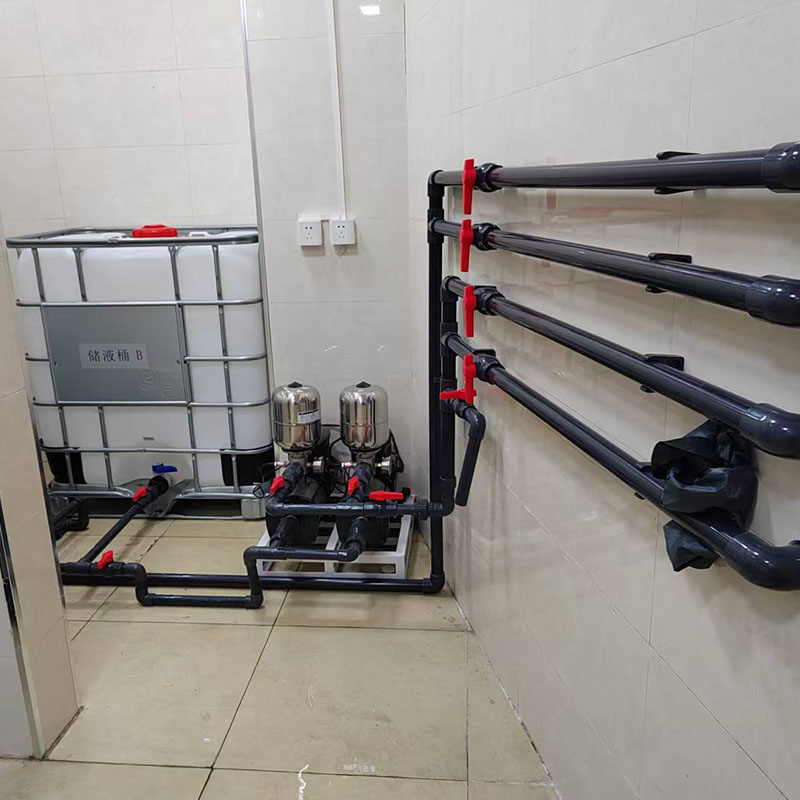
Large venues rarely need a generator sized from floor area alone. The required output capacity is set by the amount of ready-to-use hypochlorous acid solution needed during the busiest sanitation window, plus enough reserve to recover after unusually high demand. A stadium with concentrated turnover before and after an event can require a higher hourly output than a larger campus with steady daily use. Hospitals, airports, schools, swimming facilities, and commercial complexes also differ because their disinfection routes, contact surfaces, dilution practices, and operating hours are not alike.
Start capacity selection with two separate numbers: daily chemical demand and peak hourly demand. Daily demand shows whether the unit can sustain routine operations. Peak demand shows whether it can replenish storage or feed dosing points quickly enough when cleaning activity is concentrated. Choosing from only one of these values commonly produces either an oversized installation that idles most of the time or an undersized system that forces staff to delay cleaning cycles.
Convert the cleaning plan into solution demand
List each use point before comparing generator specifications. These might include floor-scrubber tanks, surface-spray stations, sanitation rooms, laundry or waste areas, entrance misting equipment where permitted, pool-water treatment, or water pre-oxidation. Each point needs a defined solution concentration, batch size, refill frequency, and time of use. The same venue may have low-volume hand-spray applications alongside a continuously dosed water-treatment line; combining them into one generic “disinfection volume” hides the sizing problem.
A useful calculation begins with the volume dispensed at each point:
Daily ready-to-use solution demand = tank or application volume × refills per day × number of use points.
Then account for the concentration supplied by the generator and the dilution performed before application. A unit rated in liters per hour cannot be evaluated without knowing the concentration of that output. Conversely, an effective-chlorine concentration alone does not describe how many liters the system can produce during the shift. Capacity comparisons should therefore use a common basis: liters of ready-to-use solution at the required application concentration, or grams of available chlorine delivered per hour.
For example, a large facility that prepares diluted solution for surfaces needs enough generated stock solution to cover its scheduled batches. A pool or water-treatment application is different: the relevant requirement is the continuous chlorine feed needed to maintain the selected treatment condition, adjusted for water volume, turnover, organic load, and dosing control. Treating these as the same duty can lead to a poor equipment match.
Peak demand determines the practical output rating
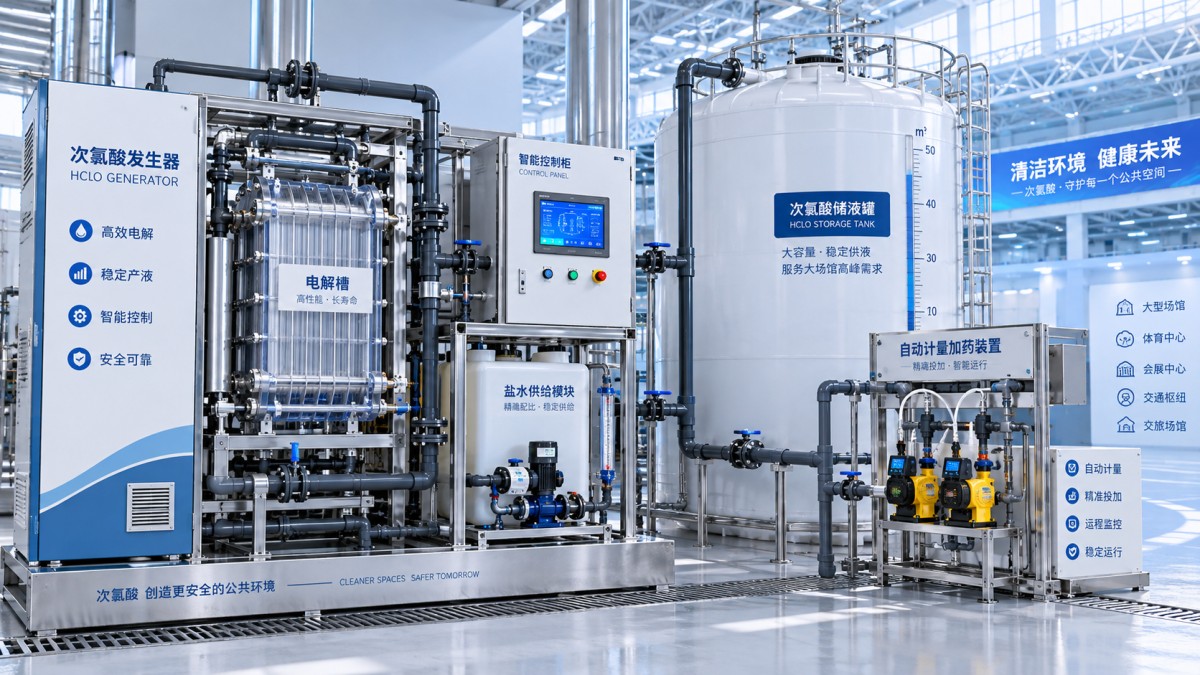
Daily averages are often misleading in public facilities. Passenger waves, class changes, event breaks, visiting hours, catering clean-down, or post-event turnover can compress most of the solution demand into a short period. If a system produces the full daily requirement but needs nearly the entire day to do so, it leaves little margin for a second event, a contamination response, or an interrupted production cycle.
Define the shortest realistic replenishment period. For a venue that expects a storage tank to be restored between two cleaning windows, divide the volume that must be replaced by the available hours. Add a reasonable operating margin for water-quality variation, electrode aging, cleaning of the cell, and temporary peaks. The result is the minimum useful production rate, not merely the nominal daily total.
Storage changes the result, but it does not eliminate the need for output capacity. A larger storage tank lets a generator run ahead of demand during quieter hours. It is valuable when water supply, electrical load, or cleaning schedules make continuous high-rate generation impractical. Yet stored solution has to be managed according to its stability and the site’s handling procedures. Oversizing the tank without considering solution turnover can leave old stock in the system and make concentration control less predictable.
Do not confuse solution volume with disinfection capacity
Public HClO generator specifications can be presented as liters per hour, grams of chlorine per hour, effective chlorine concentration, or a range of output concentrations. None is sufficient on its own. A high liquid-output figure may represent a low-concentration stream that is unsuitable for a particular duty without further dosing. A concentrated output can reduce storage and transfer volume, but it still needs compatible dilution control and application equipment.
pH also matters because it affects the balance of chlorine species in solution. For applications described as hypochlorous acid disinfection, the target concentration and pH range should be reviewed together rather than treated as independent purchasing fields. Water temperature, hardness, conductivity, and incoming chlorine content can affect electrolysis performance and repeatability. Before final selection, obtain an analysis of the actual feed water or confirm what pretreatment is required. A generator proven on favorable municipal water may produce a different concentration profile when installed on a site with harder or more variable water.
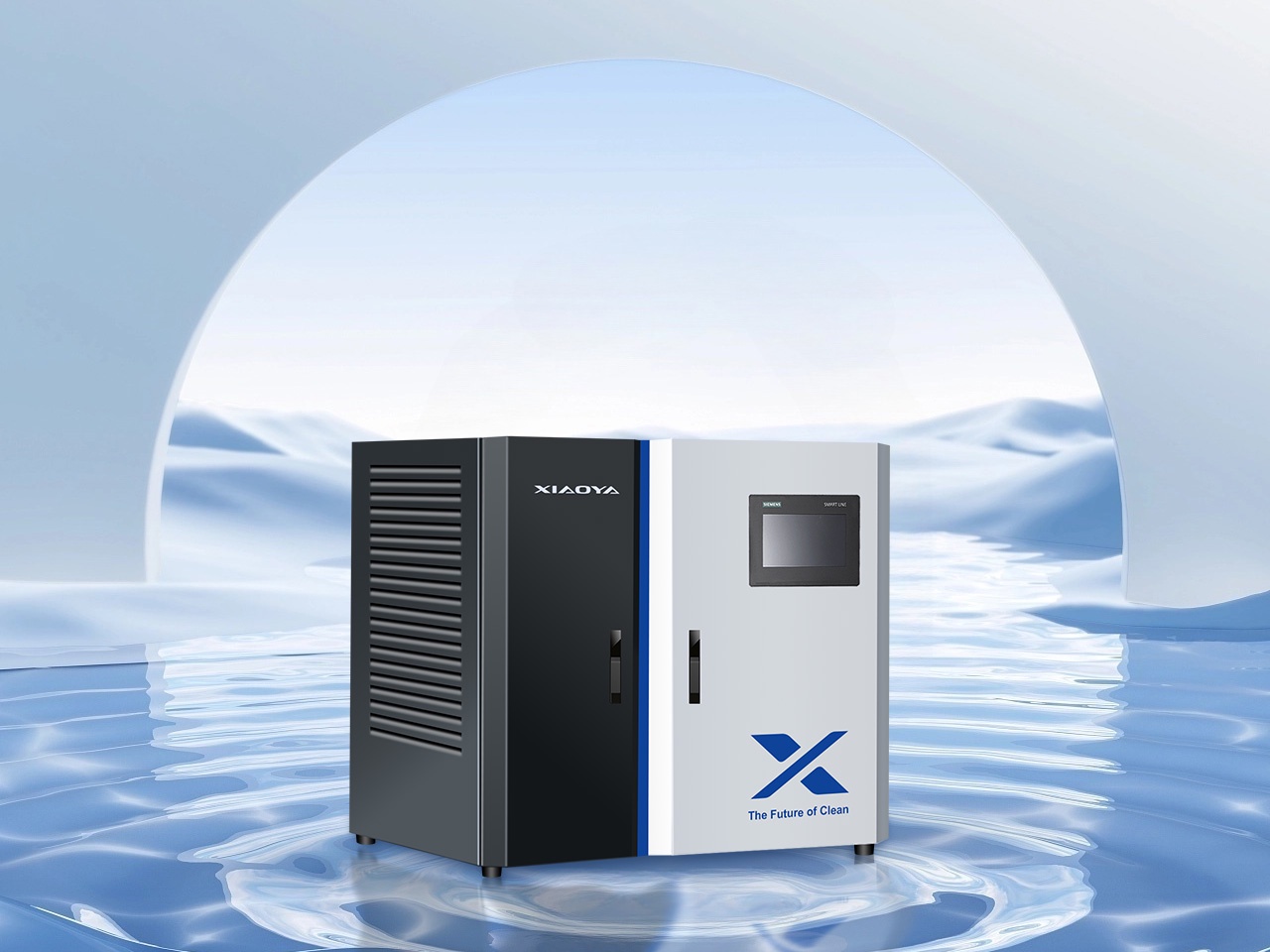
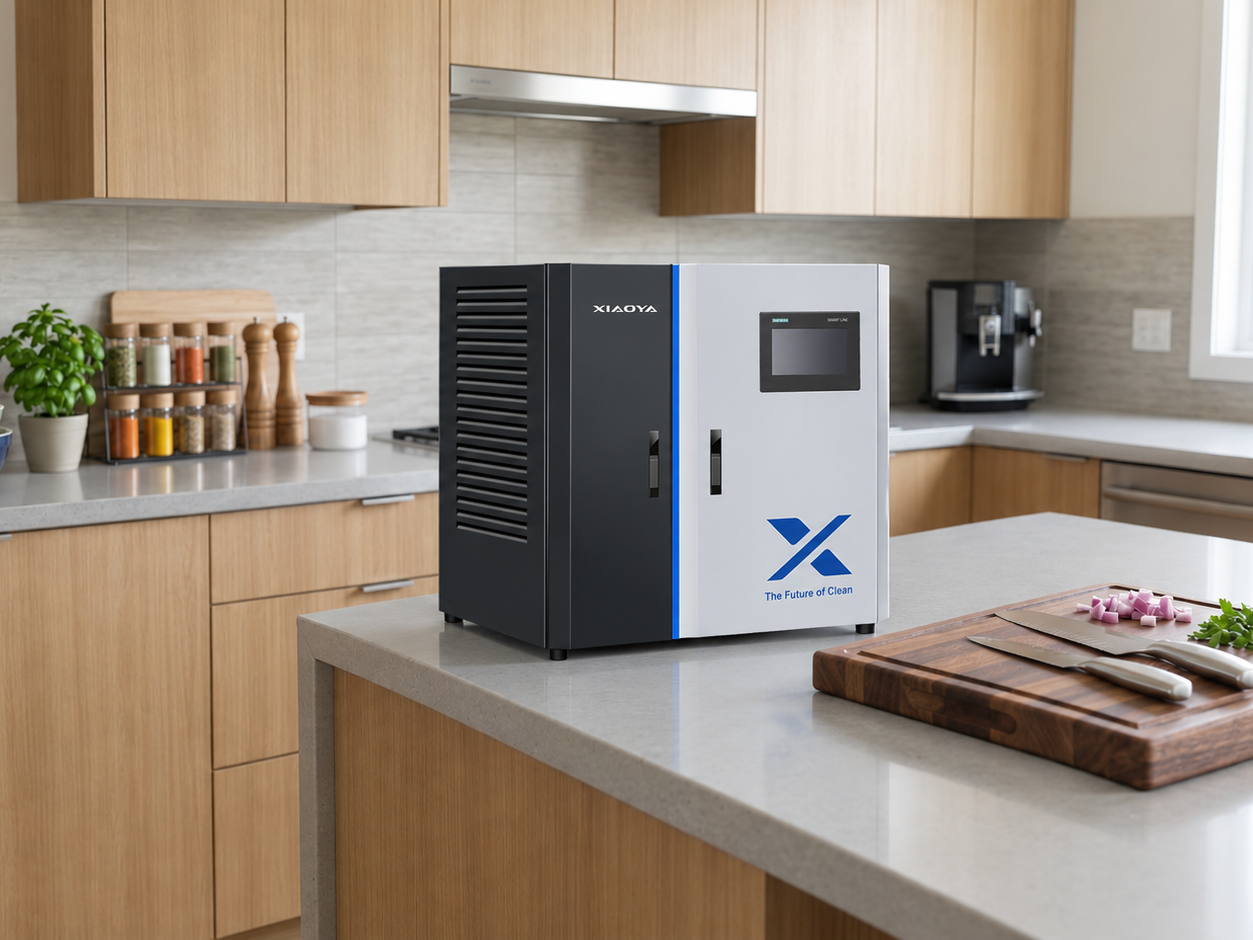
For sites considering on-site sodium hypochlorite production, a Sodium hypochlorite generator illustrates why the specification must be read as a system. A stated production range, effective-chlorine range, PLC control method, solution storage volume, metering-pump flow, and salt-brine capacity each describe a different limit. They should be matched to the actual use route rather than compared as isolated selling points.
Match the equipment layout to the distribution method
Central generation is attractive when multiple areas use a common solution specification and transfer piping is short, protected, and easy to flush. It can also simplify monitoring of production and stock level. Long transfer runs, however, add pressure loss, dead-leg risk, installation work, and opportunities for concentration drift or cross-connection errors. In a widely distributed airport or campus, separate storage or localized dispensing points may be more practical than forcing all demand through one distant room.
A generator feeding automatic dosing equipment should be assessed as part of a closed control loop. The metering pump must cover the maximum injection demand at the required pressure, while retaining controllability at low demand. A pump that is adequate by flow rating may still cycle too aggressively or lose dosing accuracy when the line pressure changes. Level switches, low-salt alarms, flow verification, and interlocks with downstream equipment reduce the chance that a nominally high-capacity unit sits idle because a small auxiliary component has stopped the process.
- Batch surface sanitation: Size around the busiest refill period and reserve tank recovery time.
- Continuous water dosing: Base the calculation on treatment demand over time, with automatic adjustment where water conditions vary.
- Mixed-duty sites: Separate the continuous base load from the batch peak load, then verify whether one storage and dosing arrangement can manage both without cross-contamination or scheduling conflict.
Installation constraints can change the selected size
A higher-output machine may require more than extra floor space. Confirm the water inlet quality and pressure, drainage for flushing and maintenance, electrical supply, ventilation suitable for the chemical handling arrangement, brine preparation area, and access for replacing consumable components. PVC housings and corrosion-resistant wetted materials can suit chlorinated solution service, but pipework, seals, valves, storage tanks, and fittings must also be selected for the actual concentration and temperature.
Salt logistics deserve attention in high-demand installations. On-site generation using food-grade salt and tap water reduces delivered liquid chemical volume, but the salt tank capacity and replenishment routine must support the planned duty cycle. A system that has adequate cell output but requires frequent manual brine preparation during peak periods does not deliver the expected operating capacity.
Build capacity around a documented duty profile
The most defensible specification records the application points, required concentrations, daily volumes, peak window, storage strategy, feed-water conditions, and acceptable recovery time after a peak. It should also state whether the quoted output is nominal or guaranteed under the site’s expected conditions. Ask for performance data at the intended operating concentration, not only at the equipment’s most favorable setting.
For large venues, modest scalable headroom is usually more useful than a large theoretical maximum that cannot be supported by the storage, dosing, salt supply, or maintenance plan. The appropriate output capacity is the rate that reliably restores available disinfectant within the actual operating schedule while preserving concentration control at every point of use.
NEWS
 What Output Capacity Does a Public HClO Generator Need for Large Venues?
 Selecting a Public Hypochlorous Acid Generator for Schools and Transit Hubs
- How Public Hypochlorous Acid Generators Support Safer Facility Disinfection
 Next-Generation Hypochlorous Acid System Solution for Sterile Self-Service Laundromats Officially Released
- Upgrade in Healthy Living: Hypochlorous Acid Generators Become the New Standard for Luxury Villas
Leave us a message

Xiaoya Group was founded in 1979,expert in the electrolyzed water industry.
Get in Touch
*We respect your confidentiality and all information are protected.