news
Hard water does not automatically make a hypochlorous generator unsuitable, but it can make untreated operation unreliable. Pretreatment is needed when feedwater exceeds the manufacturer’s limits, when mineral deposition prevents the required production and cleaning interval, or when water chemistry disrupts control of disinfectant concentration and pH. There is no universal hardness threshold that applies to every generator.
The decisive question is which water reaches which part of the system. A unit that electrolyzes diluted brine has different requirements from one that uses treated water for brine preparation and a separate supply for product dilution. Before selecting a filter, softener, or reverse-osmosis system, establish the water paths, obtain their operating limits, and compare them with a representative site-water analysis.
Why scale can develop before it becomes visible
Calcium and magnesium are the principal hardness-forming ions. During electrolysis, hydroxide forms near the cathode, creating a locally alkaline environment even when the incoming water is close to neutral. This can promote calcium carbonate and magnesium hydroxide deposition. A slightly acidic final product does not prove that every internal surface operates under acidic conditions.
Deposits on electrodes or within narrow flow passages can affect electrical resistance, flow distribution, and heat transfer. Depending on the generator’s control strategy, deterioration may appear as increased cell voltage, reduced current, lower production, or more frequent faults. Output can therefore drift before scale is obvious in a tank or pipe.
Hardness must be assessed alongside alkalinity. Hardness describes calcium and magnesium content; alkalinity describes acid-neutralizing capacity, commonly associated with bicarbonate and carbonate in supply water. The two are related to scaling behavior but are not interchangeable. Waters with similar hardness can impose different demands on pH adjustment and mineral control.
Alkalinity also matters beyond deposition. Producing slightly acidic hypochlorous acid requires control of final pH, which influences the balance between hypochlorous acid and hypochlorite. A change in feedwater alkalinity can change the adjustment required to reach the intended product specification. Conductivity alone cannot identify this change or confirm disinfectant quality.
Establish the generator’s water-quality envelope
A specification stating only “use tap water” is inadequate for a demanding installation. Request maximum allowable hardness and alkalinity, the permitted conductivity range, feed temperature, pressure, and relevant contaminant limits. Confirm whether those values apply to incoming water, brine preparation, the electrolyzer feed, or downstream dilution.
Cell construction and operating strategy affect tolerance. Divided and undivided cells expose components to different chemical environments. Polarity reversal or automatic cleaning may reduce deposition, but these features do not establish unlimited hard-water compatibility. Their value depends on the approved water range, cleaning method, and expected duty cycle.
Also distinguish a maximum permissible value from a preferred operating value. Water near the upper limit may be acceptable under the stated conditions yet require more maintenance than water within the preferred range. Ask whether the quoted output, service interval, and warranty conditions remain applicable at the site’s actual chemistry.
If the supplier cannot define acceptable feedwater conditions, adding treatment by guesswork does not resolve the uncertainty. It transfers an undefined requirement into another piece of equipment.
Water tests that support a defensible decision
Test water at the proposed generator connection, not only at the building inlet. Existing softeners, storage tanks, blended supplies, and plumbing can change what the unit receives. Where supply sources vary, use results that capture that variation rather than relying on a single favorable sample.
Additional testing should follow source-water risks and manufacturer requirements. Silica, for example, matters when evaluating some reverse-osmosis applications. A conventional carbonate saturation calculation can help characterize bulk water, but it cannot fully represent the elevated pH next to a working cathode. A favorable bulk-water result is not proof that an electrolyzer will remain scale-free.
Match treatment to the problem—not to the hardness label
Filtration protects flow paths but does not remove dissolved hardness
A sediment filter can intercept suspended particles and protect valves, pumps, and narrow channels. It does not remove dissolved calcium, magnesium, or bicarbonate. Installing a finer cartridge is therefore not a substitute for softening when dissolved hardness is outside the generator’s specification.
Activated carbon addresses a different set of contaminants. Where it is required, its suitability depends on the feedwater and equipment instructions. It adds maintenance obligations and does not provide dependable hardness removal.
Softening is appropriate when calcium and magnesium are the main constraint
A sodium-cycle ion-exchange softener replaces calcium and magnesium with sodium. It can reduce hardness-related deposition without the broader demineralization and reject-water production associated with reverse osmosis.
However, softened water is not low-mineral water. Softening does not substantially remove alkalinity, so a high bicarbonate load can remain after hardness is reduced. If the limiting issue is product-pH control rather than calcium or magnesium, softening alone may not solve it.
Specify the required outlet hardness, service flow, usable capacity, and regeneration arrangement. Check whether untreated water can reach the generator during regeneration or bypass operation. Breakthrough monitoring is particularly important where a system must run without routine attendance; an upstream softener is useful only while it consistently delivers compliant water.
Reverse osmosis is justified when broader chemistry needs control
Reverse osmosis can substantially reduce hardness, alkalinity, and dissolved salts. It is a stronger candidate when multiple feedwater limits are exceeded, when source chemistry varies enough to destabilize operation, or when the supplier specifically requires low-mineral water.
It also introduces membrane pretreatment, reject water, pressure requirements, and potentially storage and booster equipment. Recovery must suit the source chemistry: dissolved minerals become more concentrated on the reject side, creating a separate scaling risk within the treatment system.
Low-conductivity permeate is not automatically the correct final feed. Brine-electrolysis systems require controlled electrolyte conditions. Verify how salt is added, whether the generator accepts RO permeate directly, and whether separate dilution water has its own specification. Treatment must support the designed chemistry rather than simply minimize every dissolved constituent.
Duty cycle determines whether an acceptable supply is practical
Two installations with identical water can reach different decisions because their production volumes and maintenance access differ. A lightly used generator may tolerate approved periodic cleaning. Continuous production with narrow downtime windows can justify pretreatment even where untreated operation is technically permitted.
In automated laundries, for example, the New-Generation Sanitary Self-Service Laundromat HOCl System Solution combines programmable operation with a storage tank, booster pump, and multiple outlets. Such an arrangement makes generation capacity and stored-product availability important selection questions. Tank capacity can buffer demand, but it cannot correct inadequate production or off-specification disinfectant. Treatment and regeneration capacity must cover the generator’s actual water demand.
For any installation, compare the cost of pretreatment with approved cleaning, labor, downtime, replacement components, and discarded off-specification solution. Include treatment consumables and maintenance rather than assuming that additional equipment necessarily lowers total cost.
Confirm performance at the point of use
Commissioning should verify both treated feedwater and disinfectant output. Record feed hardness, conductivity, flow, cell operating values, product pH, and free available chlorine using suitable methods. Establish a clean-system baseline so subsequent changes can be distinguished from ordinary operating variation.
Where product is stored or distributed, verify concentration at the relevant outlet as well as at the generator. Storage time, temperature, light exposure, and contamination can affect available chlorine independently of hardness. A low outlet reading should not automatically trigger more aggressive water treatment.
Untreated operation is defensible when representative water results meet documented limits and the required output is maintained over an acceptable cleaning interval. Softening is the targeted choice for a hardness problem; reverse osmosis becomes appropriate when broader dissolved-water chemistry requires control. The selection should end with measurable feedwater and product acceptance criteria—not merely with the installation of a treatment stage.
NEWS
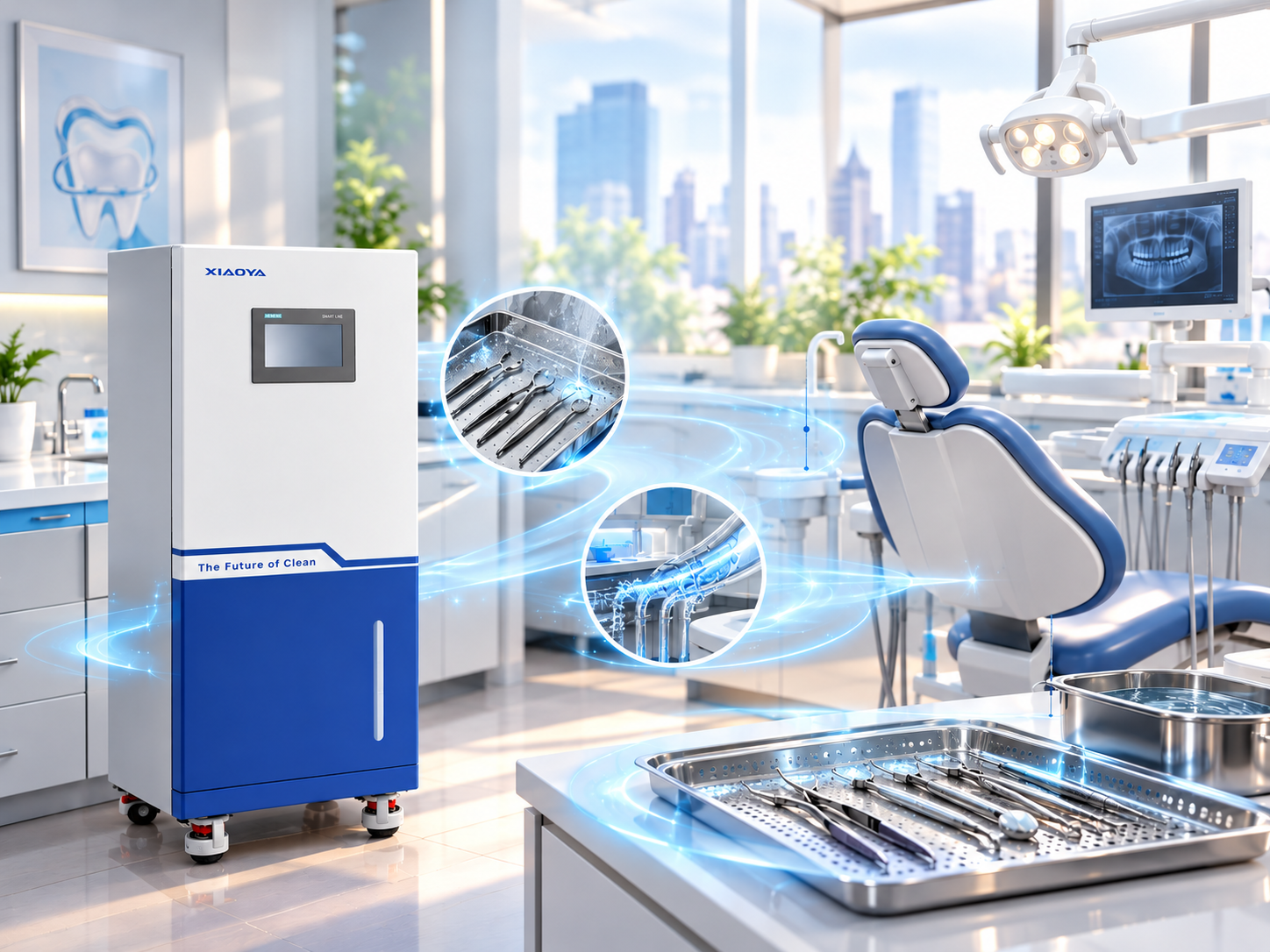
 Disinfection Empowers Orthodontic Safety: Hypochlorous Acid Generators Build a Sterile Defense Line for Dental Instruments
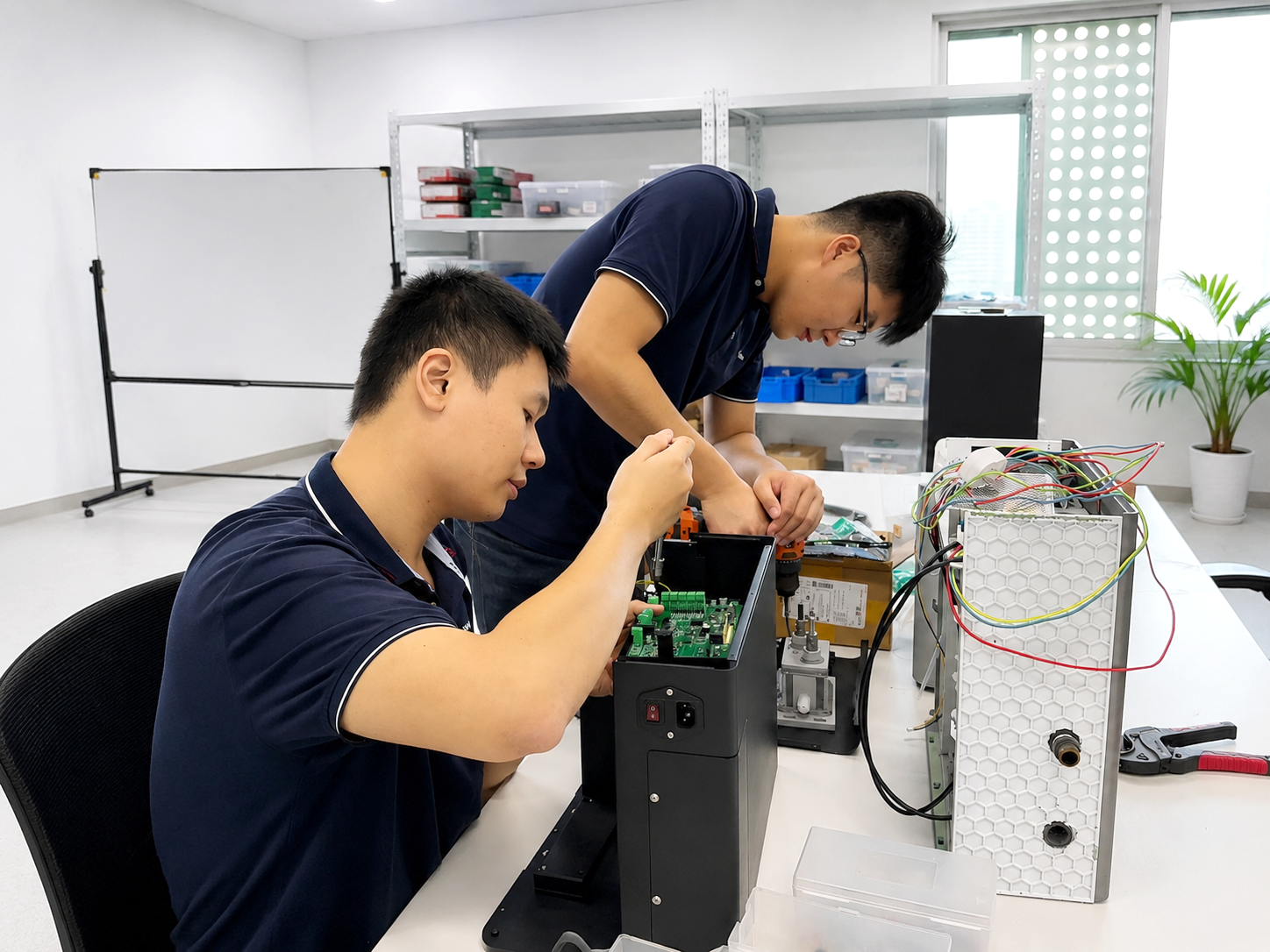
- Accumulating Strength and Reaching New Heights: A Record of the Production Breakthrough of Xiaoya Small Home Appliances' Hypochlorous Acid Generators
 Hard Water and Hypochlorous Generators: When Is Pretreatment Needed?
 Hypochlorous Generator Chemistry: Why pH Changes HOCl Availability
 The Hidden Costs of HOCl Generators: Labor, Testing, and Cell Replacement


Leave us a message

Xiaoya Group was founded in 1979,expert in the electrolyzed water industry.
Get in Touch
*We respect your confidentiality and all information are protected.