news
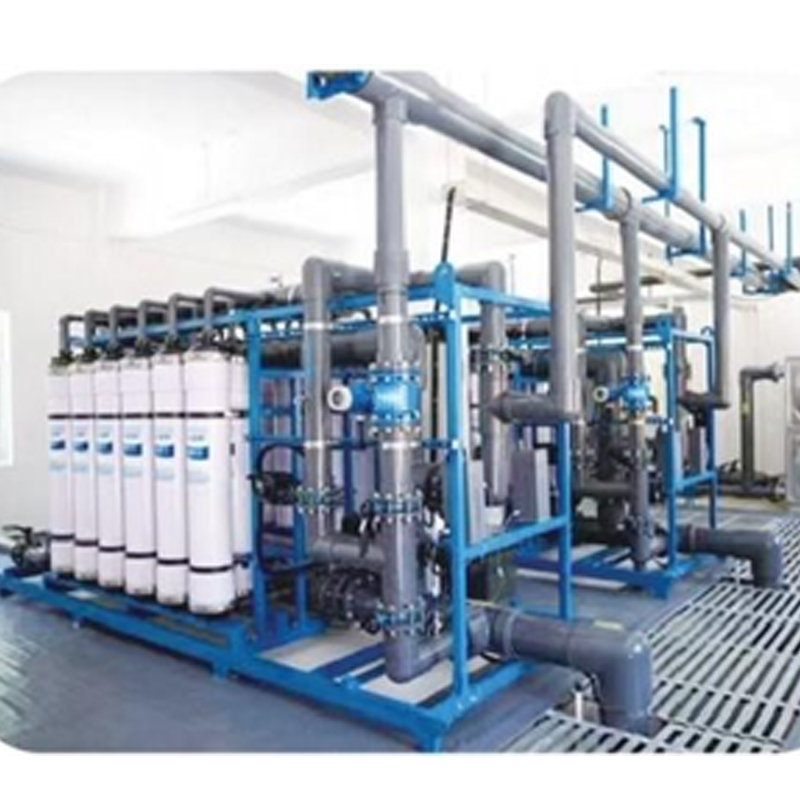
For a multi-shift facility, the decisive difference between batch and continuous HOCl generators is how each configuration handles the timing of disinfectant demand. Batch production can support round-the-clock operations if verified inventory covers consumption between production runs. Continuous production can reduce storage requirements, but it does not guarantee availability during peak withdrawals, maintenance, or process faults.
The stronger selection criterion is therefore not nominal daily output. It is the ability to deliver compliant solution at the point of use throughout the operating schedule, including shift changes and planned downtime. That requires evaluating production capacity, buffer storage, solution stability, and control logic as one supply system.
Size against the consumption profile, not the daily total
A facility consuming the same volume every day may have very different supply requirements depending on when sanitation occurs. Regular withdrawals across three shifts create a relatively steady load. Simultaneous cleaning at shift handover creates a short, concentrated demand that can exceed the generator’s production rate.
For an illustrative calculation, suppose a sanitation window consumes 600 liters over two hours, while a continuous generator produces 100 liters per hour at the required available chlorine concentration. Production contributes only 200 liters during that window. At least 400 liters of usable starting inventory is needed, before allowing for reserve stock, unusable tank volume, or interruptions. The dispensing pumps and distribution piping must also support the withdrawal rate.
Batch sizing requires a different calculation: usable batch volume multiplied by the number of achievable production cycles. Cycle time must include filling, generation, any required mixing or conditioning, quality verification, transfer, and cleaning—not just electrolysis time. A batch that is finished but awaiting release is not yet available inventory.
Compare vendor capacity figures at the required solution concentration and specified feedwater conditions. A liters-per-hour rating at one concentration is not directly equivalent to the same flow at another. Available chlorine mass output helps establish a common basis, although generation efficiency and operating limits still require confirmation.
Clarify what “continuous” actually means
Batch equipment produces a defined quantity before that quantity is released for use. This creates an identifiable quality-control boundary: a batch can be sampled, accepted, held, or rejected. It also makes production scheduling explicit, which can suit facilities with staffed preparation windows and predictable sanitation cycles.
A continuous system generates solution while operating, but it may still feed a storage tank rather than supply users directly. Some equipment starts and stops automatically according to tank level; other configurations modulate output. These arrangements have different implications for startup transients, tank turnover, and maintenance coverage.
Ask suppliers to describe the complete operating sequence rather than relying on the configuration label. Can users withdraw solution during generation? Where is quality measured? What happens to startup output? Is off-specification solution isolated before entering the usable inventory?
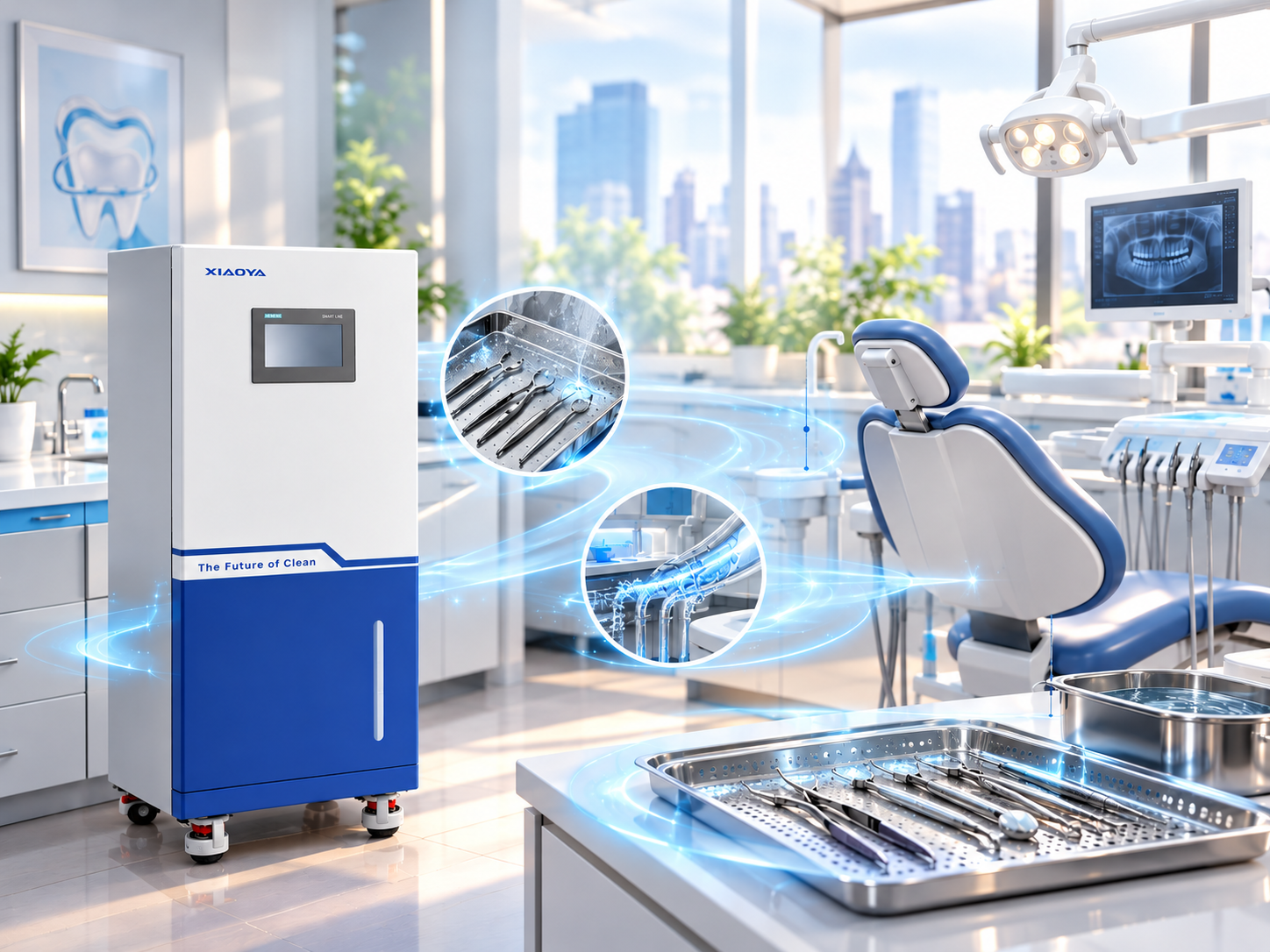
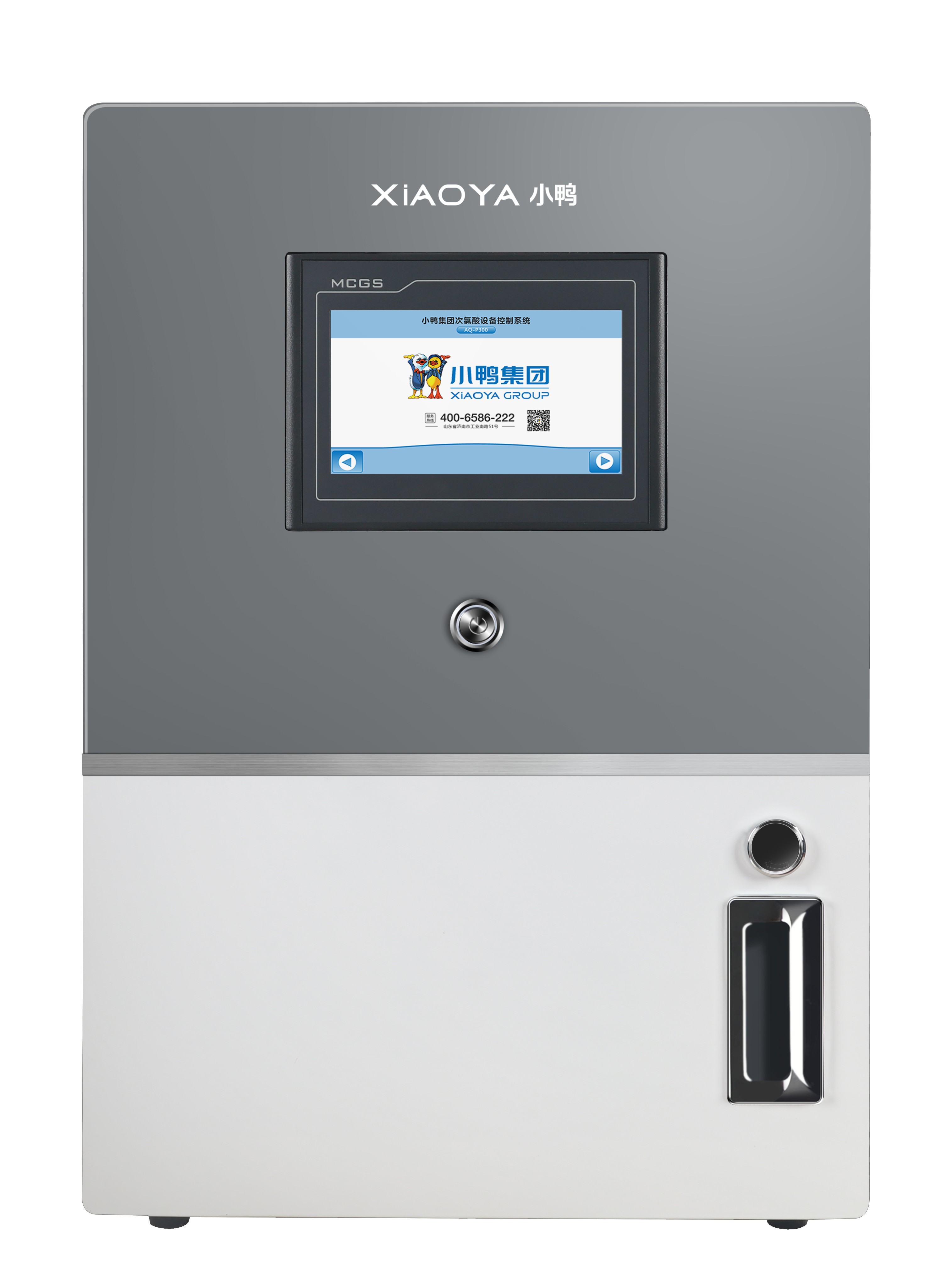
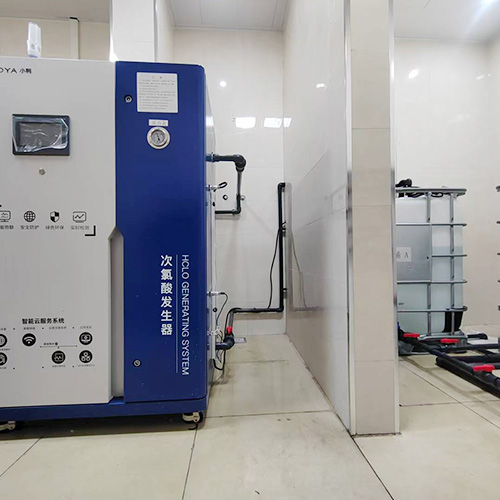
A product listing such as Hypochlorous Acid Generator for Public Health (AQ-P1000) should be evaluated on those same questions. Its stated application does not establish whether its operating mode, verified output, or controls suit a particular multi-shift demand profile; that requires technical documentation.
Quality control must follow the solution to its destination
Available chlorine concentration and pH are central acceptance variables. HOCl and hypochlorite exist in a pH-dependent equilibrium, so equal available chlorine readings do not necessarily mean identical chemical conditions. The required concentration, pH range, contact time, and application method should come from the facility’s validated sanitation procedure and applicable authorized-use requirements.
Batch production allows release testing of a defined volume. Its limitation is what happens afterward: concentration may change during storage, and contamination or mixing with residual solution can alter the delivered product. A satisfactory release result does not automatically establish suitability at the end of the next shift.
Continuous production offers opportunities for ongoing monitoring, but a displayed value is only as reliable as the measurement system. Establish sensor location, response time, calibration requirements, and sensitivity to the process conditions. Oxidation-reduction potential can provide useful process information, but it should not be treated as a universal substitute for available chlorine measurement.
The control system should prevent nonconforming solution from reaching users through a suitable stop, diversion, or quarantine arrangement. Periodic independent measurements remain important for checking online instruments. Where distribution lines or storage tanks introduce significant residence time, acceptance checks should include representative points of use rather than only the generator outlet.
Storage is both a reliability buffer and a quality constraint
Batch systems generally depend more heavily on stored inventory. Continuous systems can reduce that dependency, but eliminating storage entirely may leave sanitation vulnerable to a brief generator fault or a demand spike. The appropriate buffer is determined by the interruption the facility needs to tolerate, not by a preference for either production mode.
HOCl solution stability depends on its formulation and concentration, water quality, temperature, light exposure, contamination, and contact materials. A generic shelf-life claim is insufficient for deciding tank capacity. Establish an acceptable holding period under the intended storage conditions and verify that solution remains within specification through that period.
Oversized tanks can create slow turnover. Repeatedly topping up residual inventory also makes solution age difficult to determine. Tank design and operating procedures should support controlled turnover, suitable cleaning, and traceability of production and release status. Wetted materials—including pumps, seals, and dispensing components—need compatibility assessment for the actual solution.
If outage coverage requires more inventory than can remain acceptable during storage, a larger tank is not the answer. Additional generation capacity, an independent standby unit, or an approved alternative supply arrangement may be needed.
Multi-shift operation exposes weaknesses in automation and maintenance
The practical automation question is whether an unattended shift can identify a fault and respond safely. Useful functions include low-feed alarms, water-supply monitoring, tank-level interlocks, quality alarms, controlled restart sequences, and records linking production conditions to released solution.
Batch equipment may simplify release decisions, but manual preparation and sampling can become bottlenecks outside staffed hours. Continuous equipment may reduce routine handling while creating greater dependence on instrument maintenance and reliable fault handling. Neither configuration should be assumed to operate without intervention.
Maintenance planning must account for electrode servicing, cleaning, sensor calibration, and feed-system upkeep. Feedwater hardness and other characteristics can affect scaling, output consistency, and service intervals. Pretreatment requirements should therefore be established from site water analysis rather than inferred from the batch or continuous designation.
For electrolytic systems, installation requirements also include management of process gases where generated, ventilation, drainage, electrical protection, and chemical segregation. Acid contamination of chlorine-containing solutions can create hazardous conditions. These requirements remain relevant regardless of production schedule.
Test the operating sequence before accepting the capacity claim
A useful acceptance test reproduces the facility’s demand profile rather than demonstrating only steady output. It should include peak withdrawal, low tank level, startup after idle time, and planned maintenance recovery. Confirm the quantity of usable solution delivered, its quality at relevant locations, and the time required to rebuild reserve inventory.
Fault testing should establish what happens when water supply fails, feed concentration changes, or a quality signal exceeds its limits. Check alarm delivery, off-specification isolation, restart authorization, and retained records. Otherwise, apparently sufficient capacity may depend on intervention that is unavailable during a night shift.
Compare operating costs per liter of accepted solution delivered, not merely per liter generated. Include feed materials, water treatment, electricity, testing, labor, consumable components, rejected output, storage losses, and downtime coverage. Batch operation may concentrate labor into scheduled windows; continuous operation may spread production while adding monitoring and service obligations.
Batch is a defensible choice when production and release windows are predictable, inventory turns over within its verified holding period, and stored reserves cover interruptions. Continuous generation is a stronger fit when demand is sustained, storage should be limited, and automated quality control has dependable maintenance support. Where demand is sustained but sharply peaked, continuous production with a properly sized buffer may offer the better fit. The final decision should rest on a demonstrated supply-and-quality balance across every shift—not on the production label alone.
NEWS
 Disinfection Empowers Orthodontic Safety: Hypochlorous Acid Generators Build a Sterile Defense Line for Dental Instruments
- Accumulating Strength and Reaching New Heights: A Record of the Production Breakthrough of Xiaoya Small Home Appliances' Hypochlorous Acid Generators
 Batch vs. Continuous HOCl Generators for Multi-Shift Facilities
 How Do HOCl Generators Turn Salt and Water into Cleaning Solutions?
 Medical HOCl Generator Procurement: Service, Training, and Traceability
Leave us a message

Xiaoya Group was founded in 1979,expert in the electrolyzed water industry.
Get in Touch
*We respect your confidentiality and all information are protected.