news
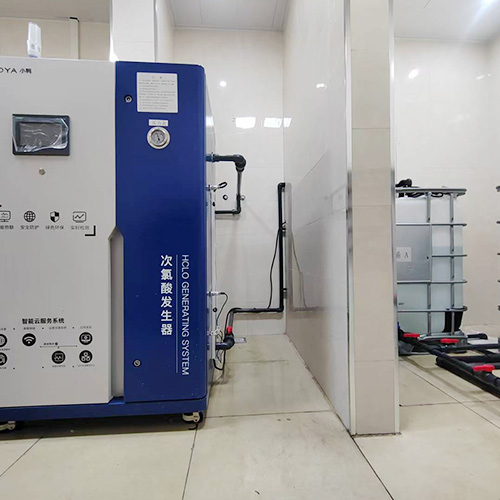
A Medical Hypochlorous Acid Generator should be evaluated as a disinfectant production system, not simply as an appliance with a rated output. The decisive question is whether the facility can produce, verify, release, and trace usable solution under its actual operating conditions—and restore that capability promptly when something fails.
Service, training, and traceability therefore belong in the purchase specification, not in optional after-sales discussions. A lower equipment price can lose its advantage if replacement components are difficult to obtain, operators cannot recognize out-of-specification production, or records cannot connect a disinfectant container to its production conditions.
Define the intended use before comparing support packages
The intended disinfection task determines what the equipment and its support system must demonstrate. Environmental surface disinfection, medical device reprocessing, and applications involving patient contact are not interchangeable. A generator described as “medical” does not, by that description alone, establish suitability for every healthcare application.
Specify the intended surfaces or equipment, required organisms or efficacy claims, concentration range, contact time, application method, and storage conditions. Confirm which local requirements apply to the generator, the generated disinfectant, and its intended use. Equipment electrical compliance does not establish disinfectant efficacy, and a laboratory efficacy report does not establish authorization for every proposed application.
Request supporting documents with identifiable issuers, dates, test methods, and scope. Efficacy evidence should match the proposed concentration and contact time. Claims such as “non-corrosive,” “non-irritating,” or “residue-free” should not replace application-specific compatibility and safety assessments.
Commissioning must establish a usable operating envelope
Factory output ratings cannot substitute for acceptance testing at the installation site. Feedwater characteristics, inlet pressure, electrolyte quality, operating settings, and downstream storage can affect performance. The supplier should identify permissible conditions and explain what happens when those conditions move outside the approved range.
Consider the AQ-P1000 Hypochlorous acid generator for medical disinfection. Its published specifications list a generation capacity of 1,000 L/h, customizable available chlorine concentration of 10–300 mg/L, and inlet water pressure of 0.15–0.25 MPa. These figures are useful starting points, but the contract should establish whether the required flow and concentration can be achieved simultaneously with the facility’s feedwater. A customizable range is not a guarantee that every combination is available.
Acceptance testing should cover startup, stable production, stopping and restarting, and relevant fault conditions. Confirm whether low water pressure, depleted electrolyte, sensor failure, or an out-of-range reading stops production, triggers an alarm, or allows continued discharge. The consequences matter more than the presence of an alarm icon.
Define acceptance criteria before shipment. They should include output verification using a suitable independent method, alarm demonstrations, delivery of documentation, and completion of training. Where an automated release decision relies on sensors, establish how those sensors are calibrated and how disagreement with independent measurements is handled.
Translate “technical support” into contractual obligations
A service promise has limited value unless it identifies who responds, what they can resolve, and how long restoration may take. Distinguish acknowledgment time from remote diagnosis time, site attendance, and return to service. An immediate email response does not restore disinfectant availability.
The service agreement should address:
- Support hours, language, escalation contacts, and coverage across time zones.
- The location and availability of qualified technicians and replacement parts.
- Responsibility for travel, freight, customs clearance, labor, and diagnostic charges.
- Maintenance intervals, calibration requirements, and warranty exclusions.
- Access to manuals, configuration backups, and support after the warranty expires.
Request a recommended critical-spares list tied to failure consequences and replenishment lead times. An electrolyzer, dosing component, sensor, or controller may have very different replacement requirements. Determine whether replacement requires proprietary tools, software access, or supplier authorization.
The AQ-P1000 specifications state an electrolyzer service life of at least 3,000 hours. This is not a whole-system lifetime or maintenance-free guarantee. Ask which operating conditions support that figure, how declining performance is detected, and what replacement costs include. Lifecycle estimates should also cover testing supplies, calibration, consumables, labor, and downtime arrangements.
For essential disinfection operations, define a backup route using an approved alternative. The service agreement should support continuity, but it cannot eliminate the need for a facility-controlled contingency plan.
Training should prove competence, not just attendance
A touchscreen demonstration establishes familiarity with controls, not the ability to manage disinfectant quality. Training should cover the full workflow: pre-start checks, electrolyte preparation or replenishment, production settings, sampling, output verification, labeling, storage, shutdown, and escalation when results fall outside limits.
Operators need to understand why a displayed value may not be sufficient for release. Oxidation-reduction potential, or ORP, reflects oxidizing conditions but is not a direct substitute for an appropriate available-chlorine measurement. pH also matters because it affects chlorine speciation. The measurement method must be suitable for the concentration range and supported by defined sampling and verification procedures.
Competency assessment should include practical scenarios rather than attendance signatures alone. Can the operator respond correctly to a low-concentration result? Can they segregate affected solution, identify the relevant production interval, and prevent distribution? Can maintenance staff replace and calibrate a sensor without leaving an undocumented configuration change?
Specify training materials in the working language, practical assessment records, refresher arrangements, and instruction for replacement staff. Divide responsibilities between routine operators, maintenance personnel, and those authorized to release product or change settings. Training should be completed before routine production begins.
Traceability must connect production to use
A production counter is not a traceability system. A usable record should connect the equipment, production conditions, quality checks, and destination of the solution. For continuous production, define identifiable production intervals or lots rather than assuming that traceability requires discrete batches.
The required record should include the generator identifier, production date and time, operator, relevant settings, feedstock identification where applicable, measurement results, alarms, release decision, and receiving container or distribution destination. It should also capture maintenance and calibration events that could affect output quality.
Traceability must continue after solution leaves the generator. Available chlorine can change during storage and handling; a production result does not establish indefinite suitability. Container labeling, validated storage conditions, use-by limits, and any required point-of-use checks should form part of the operating procedure.
Ask the supplier to demonstrate a specific investigation: a failed quality check is detected after some solution has been distributed. Can the records identify the affected production window, containers, destinations, and previous acceptable check? This demonstration reveals more than a generic statement that the system “supports data logging.”
If remote monitoring or IoT connectivity is offered, verify which records are actually retained. Remote visibility does not automatically provide an audit trail. Specify user permissions, time synchronization, change history, export formats, retention capacity, backup procedures, and operation during network outages. Remote access should follow facility cybersecurity controls and remain under facility authorization.
Make evidence and handover conditions part of the purchase
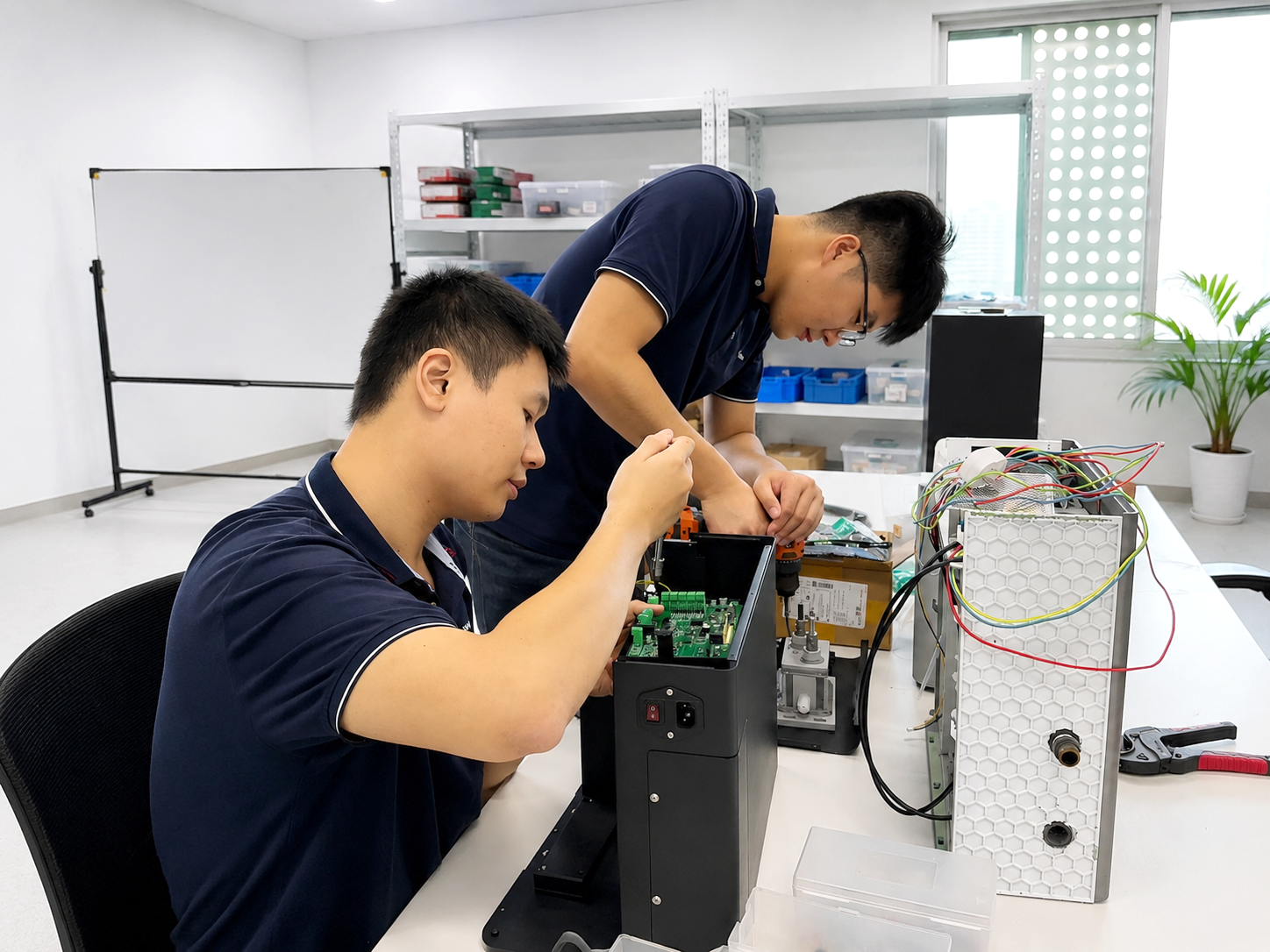
Supplier capability should be judged through deliverables: application-specific supporting evidence, a site acceptance protocol, maintenance instructions, sample production records, training assessments, and a service agreement with named responsibilities. R&D and manufacturing capabilities matter when they translate into documented configuration control, repairability, and sustained parts support.
Before award, resolve who owns the production data, who can change operating limits, how software updates are assessed, and how long critical components will remain supported. Where appropriate, link a portion of payment to successful acceptance and complete handover rather than delivery alone.
The stronger offer is the one that makes reliable operation demonstrable: output verified under agreed conditions, staff competence documented, failures recoverable, and distributed solution traceable. Missing evidence in any of these areas is an unresolved procurement risk, even when the capacity and purchase price appear attractive.
NEWS
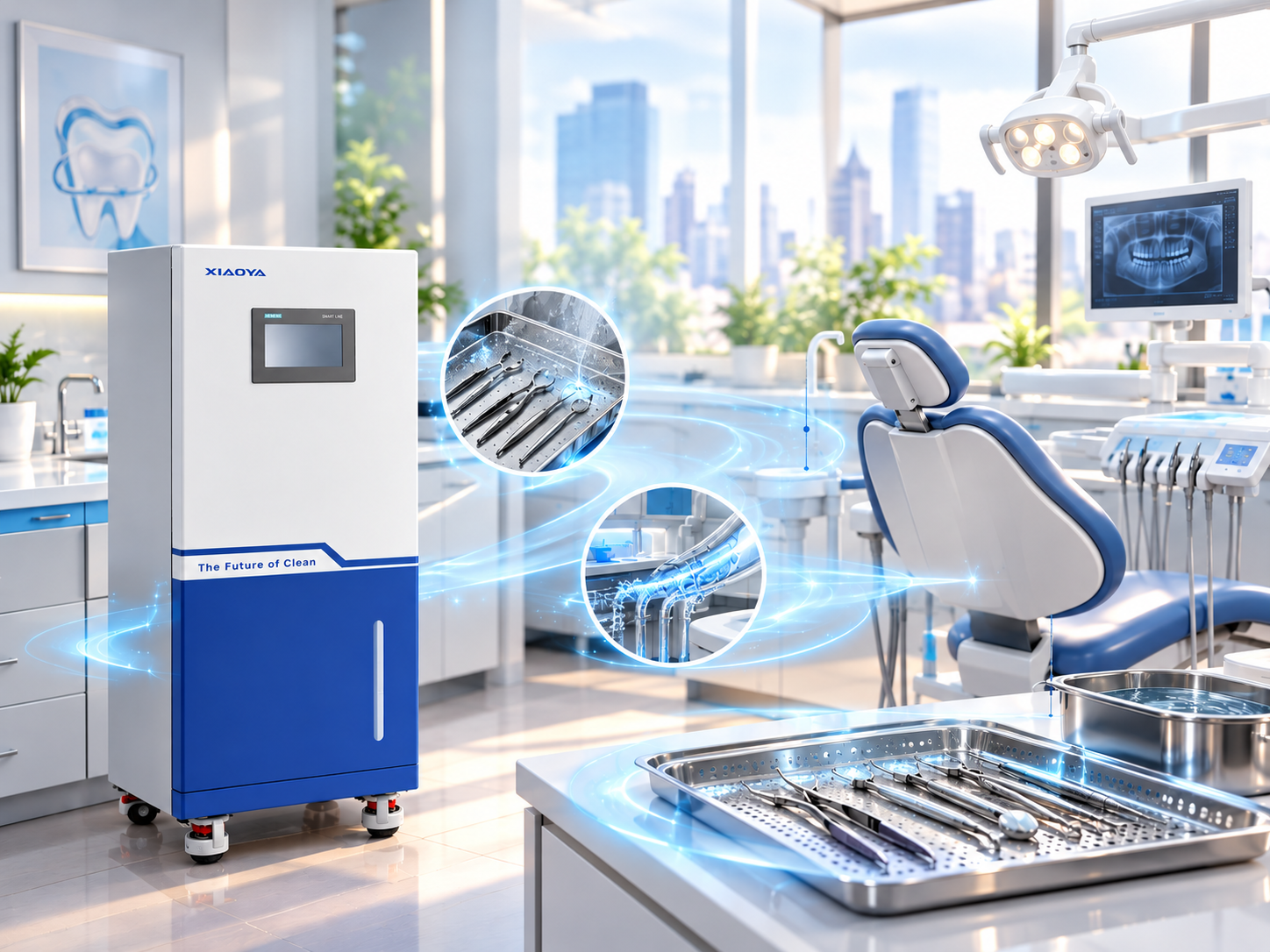
 Disinfection Empowers Orthodontic Safety: Hypochlorous Acid Generators Build a Sterile Defense Line for Dental Instruments
- Accumulating Strength and Reaching New Heights: A Record of the Production Breakthrough of Xiaoya Small Home Appliances' Hypochlorous Acid Generators
 Medical HOCl Generator Procurement: Service, Training, and Traceability
- Integrating a Medical HOCl Generator into Hospital Cleaning Stations
 Verifying HOCl Concentration and Contact Time for Hospital Surfaces
Leave us a message

Xiaoya Group was founded in 1979,expert in the electrolyzed water industry.
Get in Touch
*We respect your confidentiality and all information are protected.