news
Hypochlorous Generator Chemistry: Why pH Changes HOCl Availability
A hypochlorous generator can deliver consistent free chlorine readings while producing very different levels of hypochlorous acid (HOCl). The reason is pH: it governs the balance between HOCl and hypochlorite ions, influencing disinfection performance and process stability. When assessing automated disinfection equipment, understanding this chemistry is essential to comparing control systems, operating ranges, and output specifications. Concentration alone cannot tell you whether the solution leaving a generator will behave consistently at the point of use.
This distinction matters in appliance-integrated rinsing systems, environmental cleaning equipment, and healthcare-related applications. A specification that promises a chlorine concentration without defining pH, measurement conditions, and application requirements leaves a substantial part of performance unresolved.
The equilibrium behind the chlorine reading
Electrolysis of chloride-containing water produces chlorine species through reactions at the electrodes. The resulting composition depends on cell design, electrolyte dosing, water chemistry, and operating conditions. Within the usual slightly acidic to alkaline operating range, free chlorine is predominantly distributed between hypochlorous acid and hypochlorite:
HOCl ⇌ H+ + OCl−
Lower pH favors HOCl; higher pH favors OCl−. At approximately 25°C, using an approximate pKa of 7.5, the HOCl fraction can be estimated as 1 / [1 + 10(pH − pKa)]. Temperature and solution composition affect the exact equilibrium, so this calculation is an engineering estimate rather than a substitute for measurement.
These percentages describe chemical speciation, not microbial reduction. HOCl generally acts more rapidly than OCl− against many microorganisms under comparable conditions, but disinfection still depends on organism, contact time, temperature, soil load, and delivery method.
Why a ppm specification needs context
Free chlorine measurements normally include both HOCl and OCl−, commonly reported as chlorine-equivalent concentration. They do not directly report HOCl alone. In a calculated example, 50 mg/L free chlorine at pH 6.5 corresponds to approximately 45.5 mg/L of HOCl-associated chlorine equivalent; at pH 8.5, that falls to approximately 4.5 mg/L. The displayed concentration is unchanged, but the chemical balance is not.
Do not interpret that difference as a tenfold guarantee of disinfection performance. Laboratory efficacy claims must specify test conditions. Also confirm what a supplier means by “available chlorine”: the term should be tied to an analytical method and distinguished from total chlorine, which may include combined chlorine species.
Driving pH progressively lower is not a sound optimization strategy. Once HOCl already predominates, further acidification adds little speciation benefit and can increase corrosion and chlorine-release risks. Never improvise by adding acid to chlorine-containing solutions or mixing them with cleaning chemicals.
Automation should control chemistry, not just production
A one-key start function is useful, but it does not establish closed-loop chemical control. An automated generator may regulate flow and electrolysis current while relying on assumptions about incoming water. Feedwater alkalinity can shift output pH; conductivity, temperature, and electrolyte delivery can influence production behavior. Stable performance on one water supply does not establish stability on another.
The useful questions concern what the machine measures and what happens when a measurement leaves its permitted range:
- pH monitoring: Is output pH measured continuously, periodically, or only during commissioning? How are probes calibrated and replaced?
- Chlorine verification: Is concentration measured directly, or inferred from current and flow? Which reference method checks the reading?
- Off-spec handling: Does the system stop, divert output, or merely display an alarm? How is startup water handled?
- Traceability: Can operators retrieve pH, concentration, flow, alarms, and calibration records for a production interval?
Oxidation-reduction potential can support monitoring, but it is not a unique measure of HOCl concentration. ORP changes with pH, temperature, and other oxidizing or reducing substances. A high ORP reading cannot replace separate pH and chlorine checks.
Reading a slightly acidic generator specification
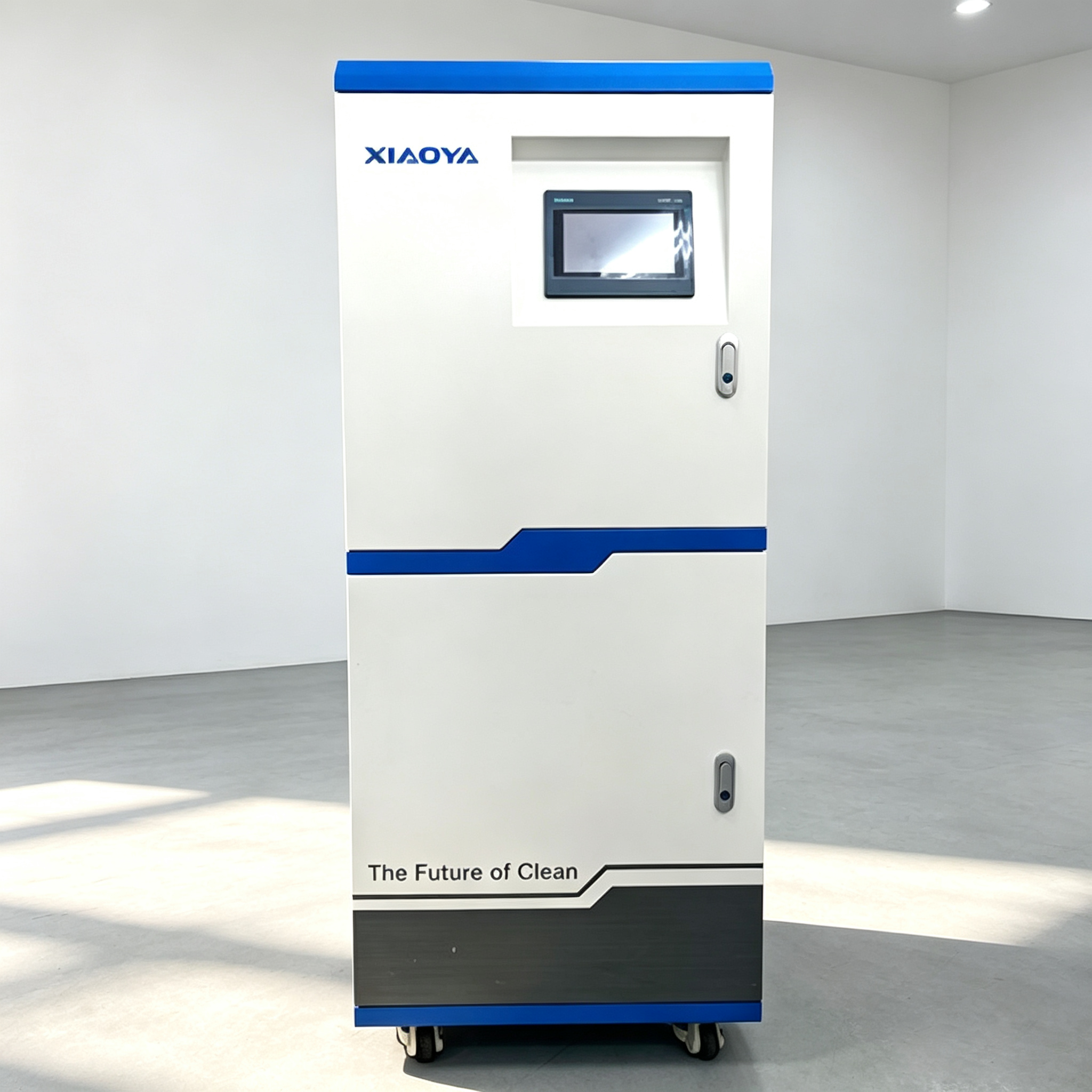
The Hypochlorous Acid Generator for the Pet Industry (P100-4G) illustrates how to interpret a stated operating envelope. Its supplied specifications list pH 5.0–6.5, available chlorine of 10–80 ppm customized by application, and output of 60–120 L/h. Within that pH range, the equilibrium estimate indicates that HOCl should predominate.
Those figures are a starting point, not proof that every concentration and flow combination is simultaneously achievable. Ask for performance data across the required settings, including startup and sustained production. The specified inlet pressure of 0.15–0.25 MPa also needs checking against the installation, especially where other equipment shares the water line.
Its stated electrolyzer service life of at least 5,000 hours should be assessed alongside maintenance conditions and end-of-life criteria. For pet-care or veterinary environments, validate the intended spraying, wiping, rinsing, or soaking procedure separately. A suitable output pH does not establish safety for eyes, inhalation, wounds, or direct animal contact.
The acceptance test should reach the application
Solution chemistry can change after generation. Light, heat, storage time, and contact with organic material can consume free chlorine. Tanks, hoses, containers, and dilution water may alter the delivered solution. Measure at the outlet and at the actual point of use, after the expected holding period.
For an enterprise integrating R&D, production, and operation across kitchen and bathroom appliances, healthcare and disinfection equipment, clean energy, and small appliances, the engineering task is broader than selecting an electrolyzer. Wetted-material compatibility, dosing hardware, maintenance access, and control logic need to work together without transferring validation responsibility to the operator.
Standards evidence must also match the claim. References to FDA, EPA, CDC, or other authorities are not interchangeable certifications. Request the actual registration, test report, or applicable compliance document and check its product identity, scope, and permitted use. Surface disinfection evidence does not automatically support medical-device reprocessing or treatment applications.
Before acceptance, define a paired pH-and-chlorine specification, allowable variation, sampling locations, and off-spec response. Then verify the required contact time and microbial performance under the intended conditions. That gives a hypochlorous generator specification practical meaning: not simply how much chlorine it produces, but whether the delivered chemistry remains suitable for the validated process.
NEWS
 Disinfection Empowers Orthodontic Safety: Hypochlorous Acid Generators Build a Sterile Defense Line for Dental Instruments
- Accumulating Strength and Reaching New Heights: A Record of the Production Breakthrough of Xiaoya Small Home Appliances' Hypochlorous Acid Generators
 Hypochlorous Generator Chemistry: Why pH Changes HOCl Availability
 The Hidden Costs of HOCl Generators: Labor, Testing, and Cell Replacement
 HOCl Generators in Food Plants: Where Surface Sanitation Fits

Leave us a message

Xiaoya Group was founded in 1979,expert in the electrolyzed water industry.
Get in Touch
*We respect your confidentiality and all information are protected.