news
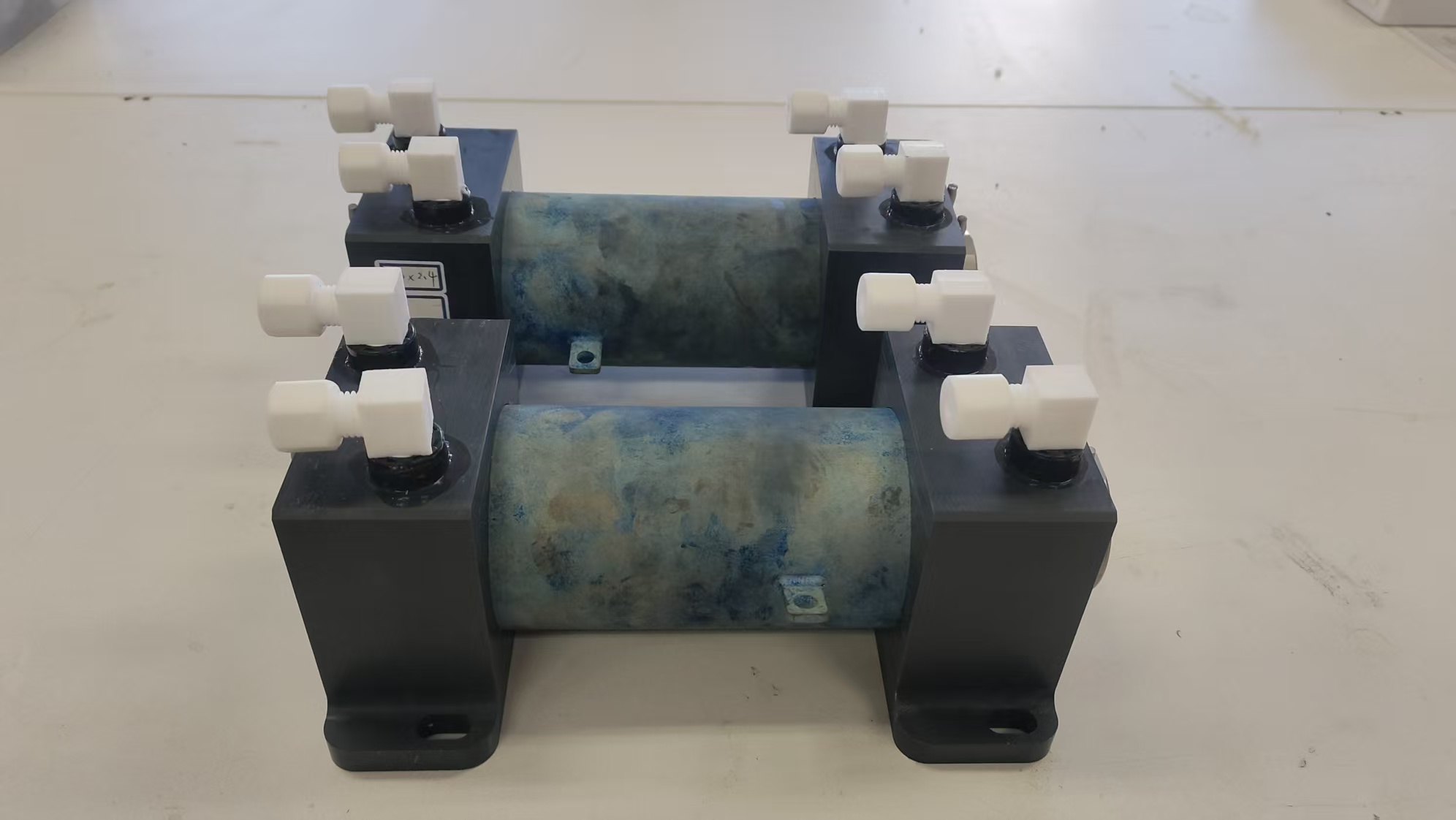
A hocl generator machine can meet its rated output and still leave a disinfection operation short of usable solution. A liters-per-hour figure becomes meaningful only when it is tied to the required free available chlorine concentration, an acceptable pH range, and a defined operating period. For equipment selection, the strongest comparison is the volume of compliant solution delivered to the application during the available production window.
A lower-rated system may therefore be the better choice if it maintains the required chemistry continuously, while a higher-rated machine needs frequent interruptions or produces solution outside the application’s limits. Technical evaluators should establish the operating conditions behind each rating before comparing capacity, then check how much output survives production interruptions, storage, and distribution.
Read output and concentration as one specification
A capacity claim such as “500 L/h” leaves several questions unanswered. Is that finished solution or feedwater flow? At what chlorine concentration and pH was it measured? Does the figure describe continuous operation, a short production run, or downstream flow after dilution? Each interpretation changes what the machine can support.
Free available chlorine, or FAC, provides a useful basis for comparing aqueous chlorine solutions. It includes hypochlorous acid and hypochlorite, with their relative proportions influenced by pH. Consequently, equal FAC readings do not establish identical solution chemistry. Both concentration and pH need acceptance limits appropriate to the intended application.
For dilute aqueous solutions, FAC expressed in ppm is approximately equivalent to mg/L. The corresponding chlorine mass output can be calculated as:
FAC output, g/h = finished-solution flow, L/h × FAC, mg/L ÷ 1,000.
Consider a hypothetical comparison: one machine supplies 500 L/h at 100 mg/L FAC, while another supplies 250 L/h at 200 mg/L. Both deliver 50 g/h of FAC. Their liquid volumes differ, but neither has a higher chlorine mass output under those stated conditions. If the application requires 200 mg/L, the first machine’s larger flow figure does not establish that it can meet the requirement.
Mass output is a useful cross-check, not a guarantee that flow and concentration can be traded freely. Increasing concentration may encounter limits in cell operation, reagent dosing, mixing, or control response. Diluting concentrated solution also changes the conditions that determine final pH and introduces the quality of the dilution water. Request a demonstrated operating point at the required concentration rather than calculating an unsupported capacity from a maximum rating.
The specification should also distinguish FAC from total chlorine. An evaluator needs to know what the instrument measures, how its reading is verified, and whether the reported concentration applies at the generator outlet or after downstream dilution.
Convert rated flow into production-window capacity
A continuous flow rating does not automatically translate into daily supply. Startup, flushing, cleaning, calibration, reagent replenishment, and fault recovery can all consume time within the production window. Some interruptions stop production entirely; others allow flow to continue while the solution remains outside the agreed limits.
A practical calculation is:
Accepted production volume = demonstrated operating flow × productive operating hours × fraction of output meeting specification.
Keep the terms separate. Productive operating hours exclude stopped periods. The acceptance fraction accounts for off-specification solution produced while the machine is running. Counting the same interruption in both terms would understate capacity.
For illustration, a machine demonstrated at 300 L/h that actually produces for six hours during an eight-hour shift makes 1,800 liters. If 95% of that flowing output meets the agreed chemistry limits, accepted production is 1,710 liters. These are hypothetical planning assumptions, but they show why multiplying the nameplate rating by the full shift length can overstate available supply.
Request the duty-cycle definition behind the rating. A machine intended for repeated batches may suit intermittent tank filling yet struggle with a continuous process. Conversely, continuous production can still miss demand if a spray system or wash station requires a large volume over a short interval.
Map demand by time as well as volume. A storage tank can bridge a temporary mismatch between production and consumption, provided the stored solution retains acceptable chemistry. Its useful buffer depends on validated holding conditions, tank materials, temperature, light exposure, and turnover. Increasing tank size alone does not resolve a sustained production deficit.
Distribution capacity also needs its own check. Transfer pumps, piping, filters, and simultaneous users may restrict delivery even when the generator produces enough solution. Specify the required flow and pressure at the application connection separately from generator output.
Check which site conditions change the rating
Feedwater quality affects whether a demonstrated factory operating point is reproducible on site. Hardness can contribute to deposits in susceptible equipment, while alkalinity influences the chemical demand for pH adjustment. Organic matter and other chlorine-consuming constituents can reduce the FAC that remains available. Conductivity requirements depend on the generation process and equipment design.
Ask for an operating envelope covering the water characteristics relevant to the proposed system, together with any pretreatment requirements. A test on a controlled water supply establishes performance under those conditions; it does not establish performance across all agricultural wells, municipal supplies, or reused process waters.
The generation method also determines which constraints deserve attention. Electrolytic equipment should be evaluated for cell operating limits, electrode condition, and cleaning requirements. Reagent-based systems require scrutiny of dosing accuracy, reagent strength, mixing, and chemical handling. Product naming alone may not adequately describe the process.
For agricultural applications, the Compound Electrolysis Hypochlorous Acid Generator for Agricultural Green Pest Control illustrates how a configurable specification should be assessed. Its stated features include customized flow, adjustable concentration, a corrosion-resistant reagent mixing unit, and PLC control with data export. Those features can support an evaluation, but “high-flow capacity available” still needs to become a guaranteed operating point for the intended duty.
Because the described process includes hypochlorite and acid dosing, evaluation should cover reagent consumption and strength variation, dosing interlocks, mixing performance, and the response to loss of either chemical feed. Incorrect acidification can create a chlorine-release hazard, making control of dosing and pH part of the capacity assessment as well as safe operation.
For seed soaking, facility sanitation, foliar application, or post-harvest treatment, the required chemistry should be established for each use. A machine’s adjustable range does not demonstrate that every setting is suitable for every crop or treatment. Application compatibility and effectiveness remain separate acceptance questions.
Make the capacity claim testable before purchase
A useful acceptance test reproduces the intended production window and checks output against agreed limits. It should include representative feedwater, the required concentration, normal downstream conditions, and the interruptions expected during operation. A brief demonstration at maximum flow cannot establish sustained capacity.
The acceptance criteria should define:
- The operating point: finished-solution flow, FAC range, pH range, and relevant feedwater conditions.
- The production window: run duration, scheduled interruptions, startup allowance, and required accepted volume.
- The measurement method: independent FAC and pH checks, sampling locations, and verification of online instruments.
- The failure response: how off-specification solution is detected, diverted, or prevented from entering the usable supply.
Online concentration control is valuable when its performance is demonstrated across the operating range. Ask what happens when the sensor drifts, a reagent container empties, or flow changes abruptly. Data exports are most useful when they connect flow, chemistry, downtime, and alarms, allowing accepted volume to be reconstructed rather than inferred from a setpoint.
Take measurements at the point of use where the workflow includes storage or substantial distribution. A satisfactory outlet reading can coexist with lower FAC downstream because of holding conditions or chlorine demand. Acceptance should identify where the contractual capacity is measured and where the application’s chemistry limits must still be met.
The purchase specification can then state a concrete requirement: a minimum accepted volume within a defined operating window, at the required FAC and pH, using the agreed feedwater conditions. That gives technical evaluators a comparable performance commitment—and gives the supplier a clear target to demonstrate.
NEWS
 Hypochlorous Acid Gains Recognition in Chinese Farm Emissions Guidance
- Disinfection Empowers Orthodontic Safety: Hypochlorous Acid Generators Build a Sterile Defense Line for Dental Instruments
- Accumulating Strength and Reaching New Heights: A Record of the Production Breakthrough of Xiaoya Small Home Appliances' Hypochlorous Acid Generators
 HOCl Generator Machine Specifications: Rated Output vs. Usable Capacity
 Hypochlorous Generator Output Testing: Why ORP Alone Is Not Enough


Leave us a message

Xiaoya Group was founded in 1979,expert in the electrolyzed water industry.
Get in Touch
*We respect your confidentiality and all information are protected.