




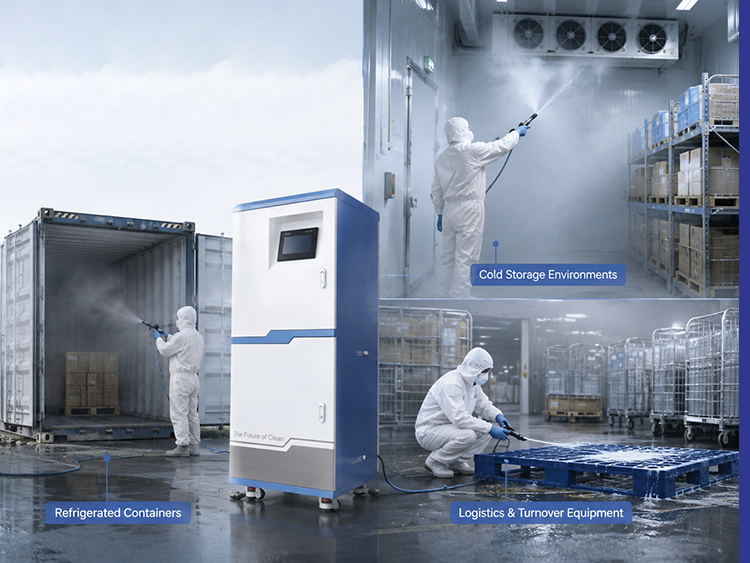
With the rapid boom in global fresh food import/export trade, ready-to-eat (RTE) meals, and cold-chain logistics, food safety regulations and customs biosecurity standards are tightening worldwide. Challenges such as microbial growth in cold storage, viral contamination on outer packaging, excessive bacterial counts during fresh food processing, equipment corrosion from traditional disinfectants, and chemical residue violations have become major financial and compliance burdens for cold-chain operators.
Benchmarked against mainstream Western HOCl cold-chain disinfection standards, the Xiaoya Hypochlorous Acid Generator delivers a tailored, slightly acidic hypochlorous acid (HOCl) sanitization solution covering the entire cold chain—from fresh food processing and cold storage warehousing to refrigerated transport and import/export packaging. It provides a one-stop solution addressing four core industry needs—sanitization, preservation, deodorization, and environmental sustainability—helping food enterprises minimize product shrinkage, cut sanitization costs, and pass regulatory audits seamlessly.
I. Four Core Pain Points of Traditional Cold-Chain Sanitization
· Equipment Corrosion & Accelerated Depreciation: Traditional bleach (sodium hypochlorite) and chlorine effervescent tablets are highly alkaline. Repeated spraying on cold-storage insulated panels, stainless steel racks, and metal truck interiors causes oxidation, rusting, and premature cracking of rubber/plastic seals—driving up annual maintenance and replacement costs. Meanwhile, ozone sanitization requires vacating goods and sealing the facility, disrupting warehouse turnover and severely reducing operational efficiency.
· High Residue Risks, Flavor Loss & Customs Delays: Chemical disinfectants leave behind a pungent chlorine odor that compromises the natural flavor of fruits, vegetables, seafood, and meats. Conventional sanitization also requires extensive fresh-water rinsing, inflating processing water costs. Worse yet, fresh produce treated with high-residue chemicals risks failing customs food safety inspections, resulting in cargo detentions and massive financial losses.
· Weak Antimicrobial Efficacy & High Product Shrinkage: Low cold-chain temperatures merely slow microbial growth; they do not eliminate pathogens such as Listeria, Salmonella, or Vibrio parahaemolyticus. Within 3 to 5 days of storage, produce and seafood often develop mold and spoilage. Furthermore, traditional disinfectants only target free-floating bacteria and fail to penetrate biofilms on racks and crates, causing recurring contamination and pushing fresh food shrinkage rates above 15%.
· Hazmat Storage Risks & High Overall Costs: Drummed chemical disinfectants are classified as hazardous materials, requiring dedicated explosion-proof storage facilities and incurring extra long-haul shipping fees. Manual dilution often leads to inconsistent concentrations and unreliable disinfection, while continuous monthly chemical restocking keeps long-term operating expenses high.
II. Core Technical Advantages of Xiaoya Cold-Chain Hypochlorous Acid Generators
Generating food-grade, slightly acidic hypochlorous acid water (pH 5.0–6.5) on-site and on demand, the system features continuously adjustable available chlorine levels from 10 to 200 ppm. It complies with China’s GB 28234 standard as well as U.S. FDA and EPA food-contact sanitization standards. Acting far faster than conventional chlorine-based agents, it eliminates 99.99% of common cold-chain pathogens within 30 seconds before naturally reverting to plain water—leaving zero chemical residue.
1. Gentle & Non-Corrosive Across All Metal and Plastic Cold-Chain Assets
With extremely low corrosiveness, slightly acidic hypochlorous acid water can be safely fogged or sprayed directly onto cold-storage insulation, stainless steel shelving, refrigerated truck interiors, plastic crates, and food conveyor lines. Long-term use prevents rusting and pipe degradation, significantly extending the lifespan of cold storage facilities and refrigerated fleets while lowering maintenance budgets.
2. One System Covering Every Cold-Chain Scenario—No Multi-Equipment Setup Needed
· Fresh Produce Processing Line Spraying: Integrated into automatic spray systems along meat, seafood, and produce washing lines, low-concentration HOCl water degrades organophosphate pesticide residues and inhibits spoilage bacteria. No post-treatment fresh-water rinse is required, preserving the food's natural flavor, extending shelf life by 3 to 7 days, and cutting shrinkage rates to under 6%.
· 24/7 Unattended Cold-Storage Fogging: Connected directly to cold-storage fresh-air circulation ducts, the system runs scheduled, automated fogging cycles without requiring goods to be removed. It continuously suppresses mold and bacterial growth overnight while breaking down ammonia and fishy odors so they never taint stored inventory. Built-in low-temperature protection modules ensure stable operation down to -20°C (-4°F).
· Sanitization of Refrigerated Trucks, Containers & Import/Export Packaging: Paired with automatic dip tanks or mobile fogging units, the system performs static disinfection on imported foam boxes, plastic crates, and container interiors. On-demand generation eliminates hazmat storage burdens, while complete digital disinfection logs fulfill strict customs biosecurity and traceability mandates.
· CIP Circulation Cleaning for Crates & Pallets: Connected to automated crate-washing lines, medium-concentration HOCl water circulates to break down surface biofilms. This replaces energy-intensive high-temperature washing—saving both water and electricity—while leaving crates odor-free and preventing cross-contamination.
3. Smart IoT Control Built for Large-Scale Cold-Chain Parks
Equipped with an industrial-grade PLC touchscreen and a built-in 4G remote IoT module, the system lets facility managers remotely adjust concentrations, schedule fogging cycles, and export complete sanitization logs—satisfying both domestic regulatory requirements and overseas client factory audit standards. Integrated multi-alarm protections monitor for low water, low salt, extreme cold, and pressure anomalies. Multiple units can also be linked in parallel to support centralized sanitization across large cold-chain logistics parks and central RTE kitchens.
4. Dramatic Cost Reduction: Slash Sanitization Consumable Costs by 85%
By eliminating the purchasing, shipping, and storage of drummed chemical disinfectants, the system runs solely on edible salt and tap water—keeping daily consumable costs under RMB 10 per unit. Fully automated operation cuts labor hours spent on manual mixing and rinsing, while avoiding costly downtime from vacating cold rooms for disinfection—saving small and mid-sized cold-chain enterprises tens of thousands of RMB annually.
NEWS
 Xiaoya Cold-Chain Hypochlorous Acid Generator | End-to-End Fresh Produce Sanitization & Preservation Solution: Reducing Shrinkage and Ensuring Customs Compliance
 Solving Biosecurity Challenges in Poultry Farming: Full-Scenario Hypochlorous Acid Disinfection Powers Green Industry Upgrades
- Xiaoya Hypochlorous Acid Generator | Safeguarding School Milk Safety: The Preferred Eco-Friendly Sanitization Solution for Dairy Plants
 A Smarter, Compliant Sanitization Solution for Food Processing Plants: XIAOYA Hypochlorous Acid Generator — Lower Costs, Zero Residue, Better Alignment with National Standards
- Tighter School Meal Food Safety Rules: How Electrolyzed Water Sanitization Can Guard Cafeteria Hygiene
Leave us a message

Xiaoya Group was founded in 1979,expert in the electrolyzed water industry.
Get in Touch
*We respect your confidentiality and all information are protected.