




news
A delivery delay becomes a facilities problem long before it becomes a procurement problem. Restrooms still need attention, library desks still need cleaning, and recreation centers cannot simply suspend their hygiene routines while a replacement shipment arrives.
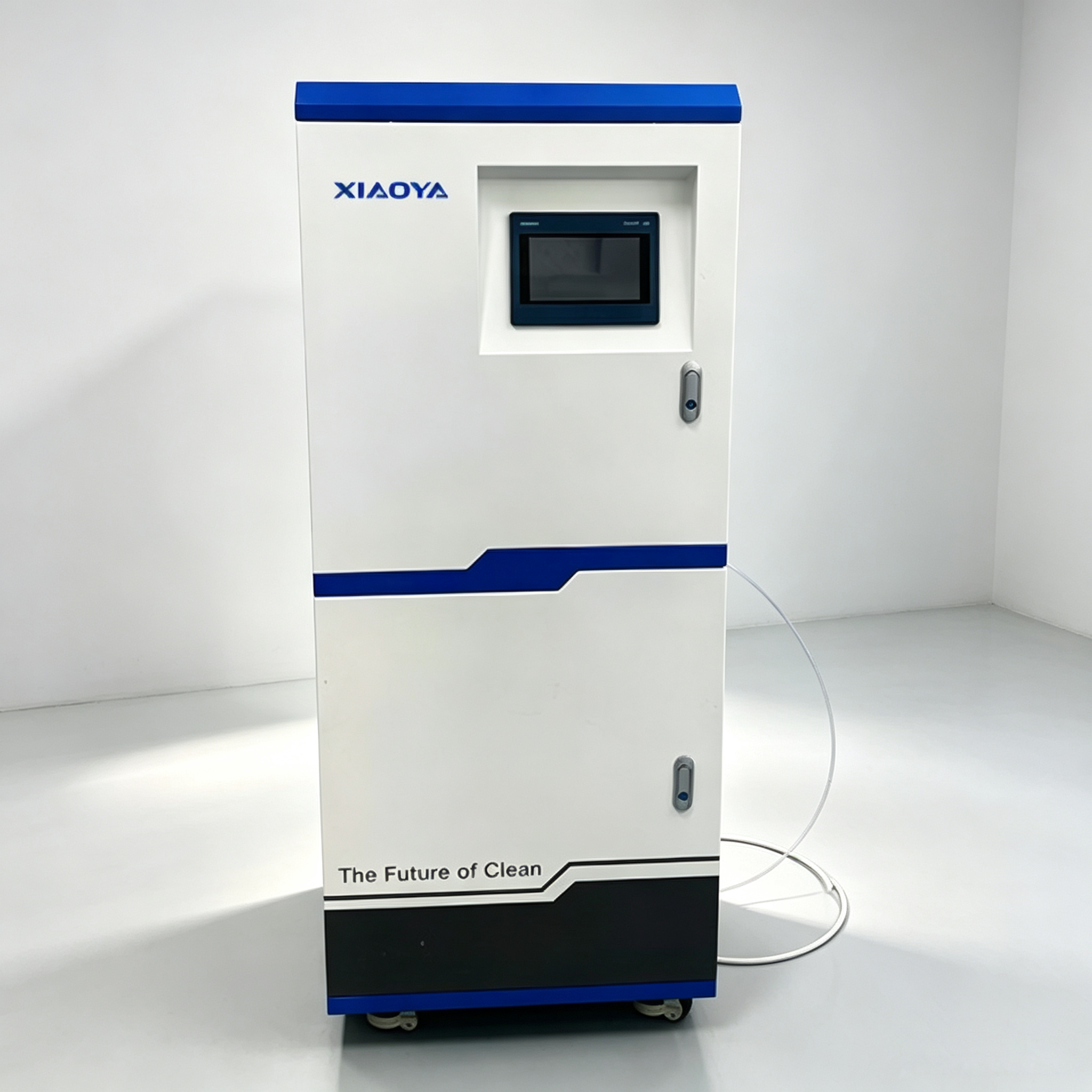
For municipal buyers, comparing a Public Hypochlorous AcidGenerator with purchased disinfectants therefore means looking beyond the price per gallon. On-site hypochlorous acid (HOCl) generation can reduce reliance on recurring deliveries, but it also introduces equipment maintenance, quality checks, and operating responsibilities. The better choice depends on how buildings use disinfectant, what performance is required, and whether the municipality can reliably manage production.
Compare usable disinfectant—not containers or machine output
Purchased disinfectants may arrive ready to use or as concentrates that require dilution. An on-site generator produces an HOCl solution from specified inputs through electrolysis. These are different purchasing models, so comparing a gallon of concentrate with a gallon of generated solution tells buyers very little.
A fair comparison starts with the same task: treating a defined surface area against specified organisms, using an approved application method and the required wet contact time. Include preparation, application, and any rinsing requirements. A lower liquid cost may not translate into lower operating cost if staff must repeatedly rewet surfaces or discard unused solution.
Also separate cleaning from disinfection. HOCl does not automatically replace the detergents needed to remove grease, soil, or other contamination. Municipal buildings may still need several products for different tasks, even after installing a generator.
Build the cost model around the building portfolio
A busy civic complex and a small neighborhood office should not be evaluated as if they have identical demand. Collect actual consumption records across representative weeks, including seasonal peaks. Distinguish routine use from emergency stock and identify where disinfectant is being wasted through overmixing, expired inventory, or inconsistent dispensing.
For on-site generation, request a total-cost calculation covering:
- Installation: equipment, plumbing, electrical work, water treatment where required, and commissioning.
- Production: water, electricity, approved electrolyte or other inputs, and quality-testing consumables.
- Operation: staff time for production, checks, labeling, container handling, and distribution.
- Maintenance: preventive service, replacement components, technician visits, and downtime coverage.
- Losses: rejected batches and solution discarded because it no longer meets specifications.
For purchased products, include delivered price, dilution equipment, storage, handling, expired stock, and disposal—not just invoice value. Apply the same accounting period and labor assumptions to both options.
Annual cost per usable liter = total annual cost ÷ liters available for compliant use. This measure is more useful than rated production cost because it excludes liquid that cannot actually be used. Pair it with cost per completed cleaning-and-disinfection task to account for differences in application requirements.
Break-even estimates should use conservative utilization. A machine running well below capacity may struggle to recover its installed cost. Centralized production can improve utilization, but transporting solution between buildings adds labor and requires validated storage and distribution arrangements.
What a Public Hypochlorous AcidGenerator must prove
“HOCl” describes the active chemistry; it does not establish that every generated solution is suitable for every municipal application. Effectiveness depends on available chlorine concentration, pH, contact time, target organism, soil conditions, and the application method.
Ask bidders for evidence tied to the proposed operating conditions. Testing at a concentration the municipality will not use is not a sound basis for purchasing. Neither is a broad statement that the solution is “safe” or “hospital grade.” Buyers need documentation connecting performance claims to the actual equipment, output, and intended use.
Regulatory requirements also vary by jurisdiction. In the United States, confirm applicable EPA requirements for the generating device, generated solution, and antimicrobial claims, along with relevant state requirements. An EPA establishment number alone does not demonstrate product approval or efficacy. References to FDA, CDC, or another authority should be checked for their exact scope rather than treated as interchangeable endorsements.
Require written operating procedures for concentration checks, pH verification where specified, storage conditions, expiration or use windows, and failed-batch handling. HOCl stability depends on formulation and exposure to factors such as light, heat, and contamination; buyers should not assume an unrestricted shelf life.
A product specification is a starting point, not a municipal qualification
The Hypochlorous Acid Generator for the Pet Industry (P100-4G) illustrates the specifications procurement teams should examine. Listed models AQ-P100-4G and AQ-100-4G offer output of 60–120 L/h, pH of 5.0–6.5, and customizable available chlorine concentration of 10–80 ppm. The equipment features automatic control with one-key production.
Its stated utility requirements include 220 V/50 Hz power, a rated power of 170 W, and inlet water pressure of 0.15–0.25 MPa. These details matter when assessing installation feasibility, especially where local electrical service differs. The listed electrolyzer service life is at least 5,000 hours; buyers should clarify the conditions behind that figure, replacement costs, and warranty coverage.
Because this model is positioned for pet-related applications, it could be considered during an evaluation involving municipal animal facilities. That positioning does not establish suitability for all public buildings. Any proposal should provide application-specific efficacy evidence, regulatory documentation, material-compatibility guidance, and confirmation that its concentration range meets the intended task.
The operational trade-off: fewer deliveries, more process ownership
Automation can simplify production, but it does not remove accountability. Someone must check output, replenish inputs, maintain the equipment, and prevent unverified solution from reaching cleaning teams. A straightforward interface helps only if responsibilities are clear across shifts.
Before awarding a contract, walk through an ordinary working day. Where will containers be filled? Who labels them? How does an evening custodian know a batch is within specification? What happens when the machine alarms just before a public event?
Purchased disinfectants remain attractive where consumption is modest, facilities are widely scattered, or maintenance support is limited. They can also provide access to formulations validated for specialized tasks that the proposed generator cannot cover. Their disadvantages—delivery dependence, storage needs, and recurring packaging—must be weighed against that operational simplicity.
For either approach, retain a contingency supply appropriate to the facility. On-site production changes the sources of supply risk; it does not eliminate them.
Use a pilot to turn supplier claims into purchasing evidence
A limited pilot should measure usable output, testing time, staff handling, maintenance demands, and actual consumption. Check whether surfaces can remain wet for the required contact time without disrupting service, and assess compatibility with representative fixtures and finishes.
Set acceptance criteria before the pilot begins. Request documented output consistency, practical service-response commitments, consumable availability, and a complete operating-cost estimate. A manufacturer’s integrated R&D and production capabilities may support technical problem-solving, but local service capacity and replacement-part access deserve separate scrutiny.
The most defensible decision may be a hybrid: on-site HOCl for validated, high-volume routine applications, with purchased products retained for specialized needs and backup. Municipal procurement succeeds when the chosen system keeps buildings functioning, gives staff a workable routine, and delivers measurable value—not simply when it produces the lowest quoted price per gallon.
NEWS
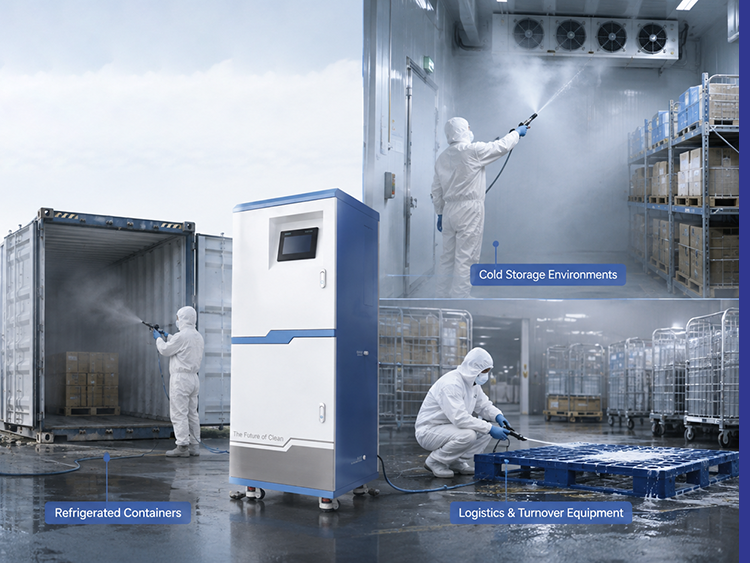
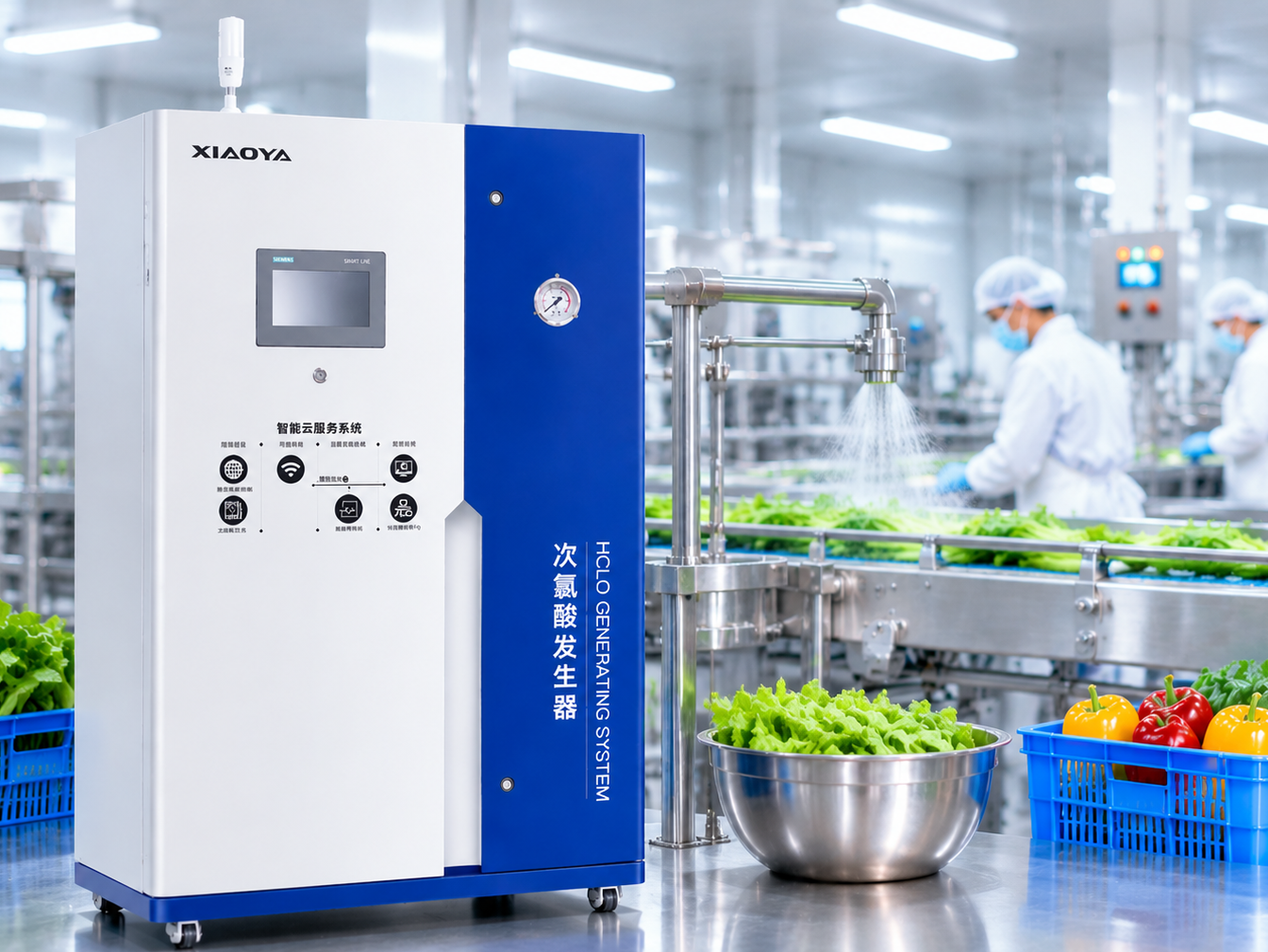
 Xiaoya Cold-Chain Hypochlorous Acid Generator | End-to-End Fresh Produce Sanitization & Preservation Solution: Reducing Shrinkage and Ensuring Customs Compliance
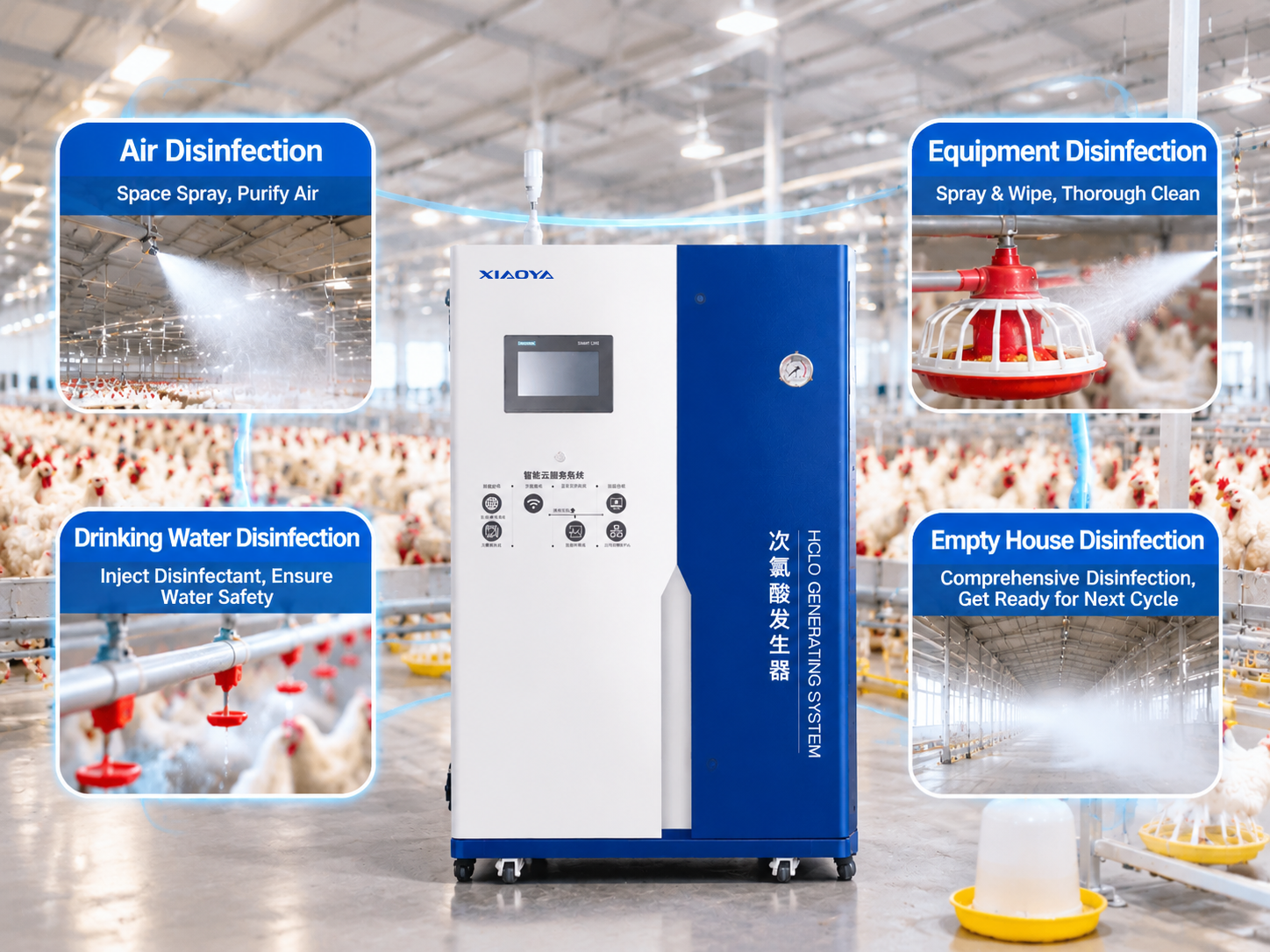
 Solving Biosecurity Challenges in Poultry Farming: Full-Scenario Hypochlorous Acid Disinfection Powers Green Industry Upgrades
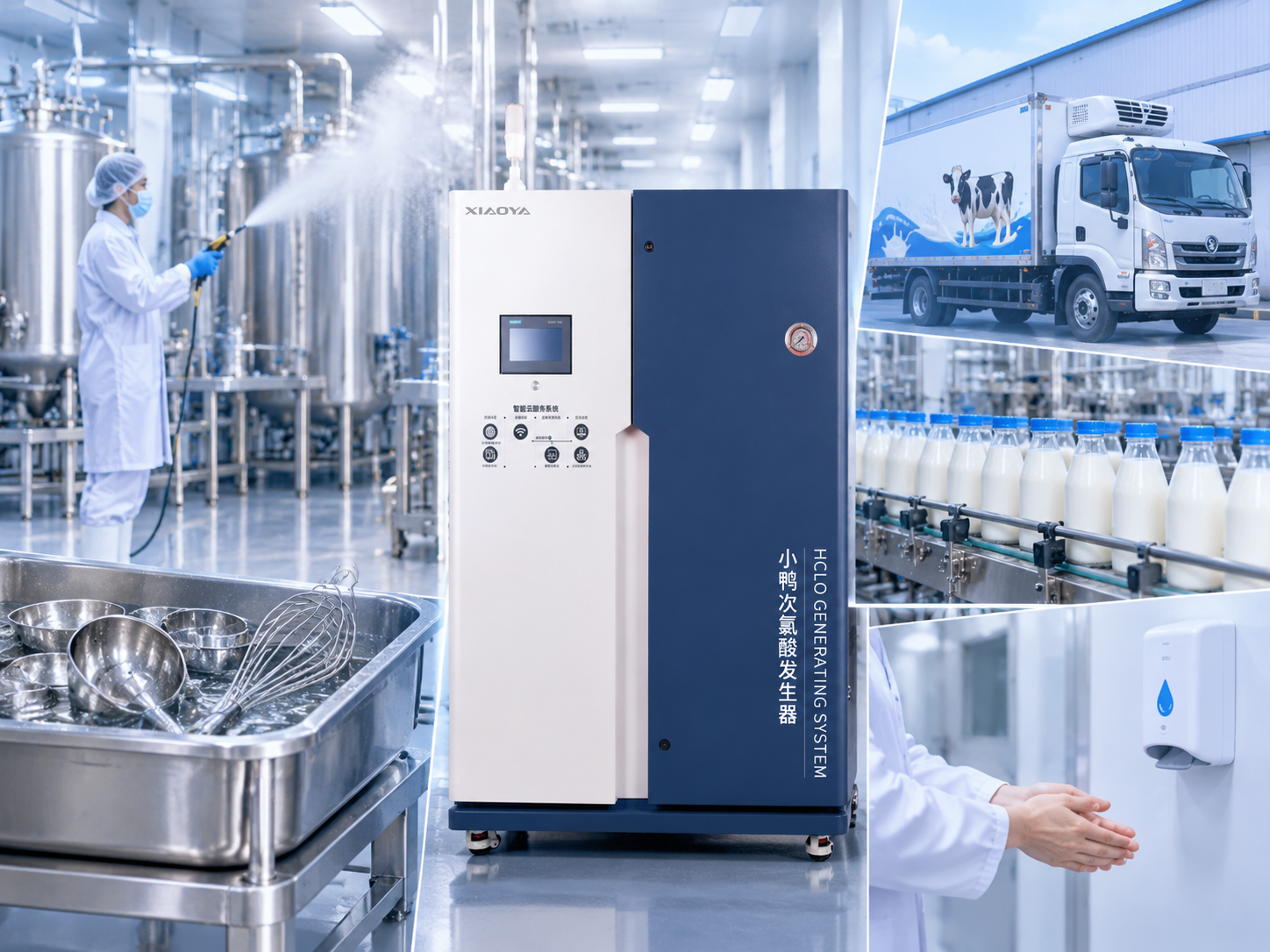
- Xiaoya Hypochlorous Acid Generator | Safeguarding School Milk Safety: The Preferred Eco-Friendly Sanitization Solution for Dairy Plants
 A Smarter, Compliant Sanitization Solution for Food Processing Plants: XIAOYA Hypochlorous Acid Generator — Lower Costs, Zero Residue, Better Alignment with National Standards
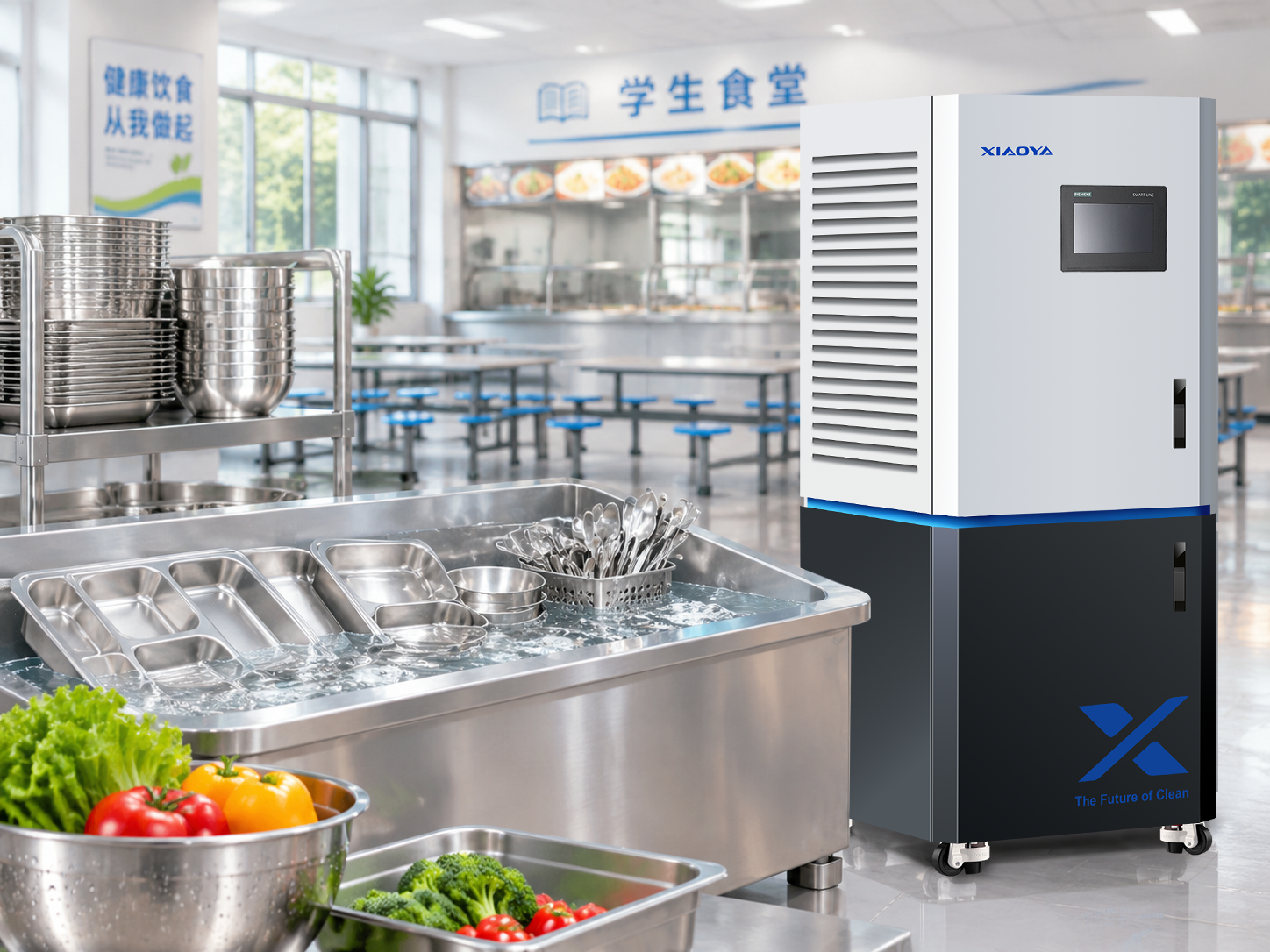
- Tighter School Meal Food Safety Rules: How Electrolyzed Water Sanitization Can Guard Cafeteria Hygiene
Leave us a message

Xiaoya Group was founded in 1979,expert in the electrolyzed water industry.
Get in Touch
*We respect your confidentiality and all information are protected.