news
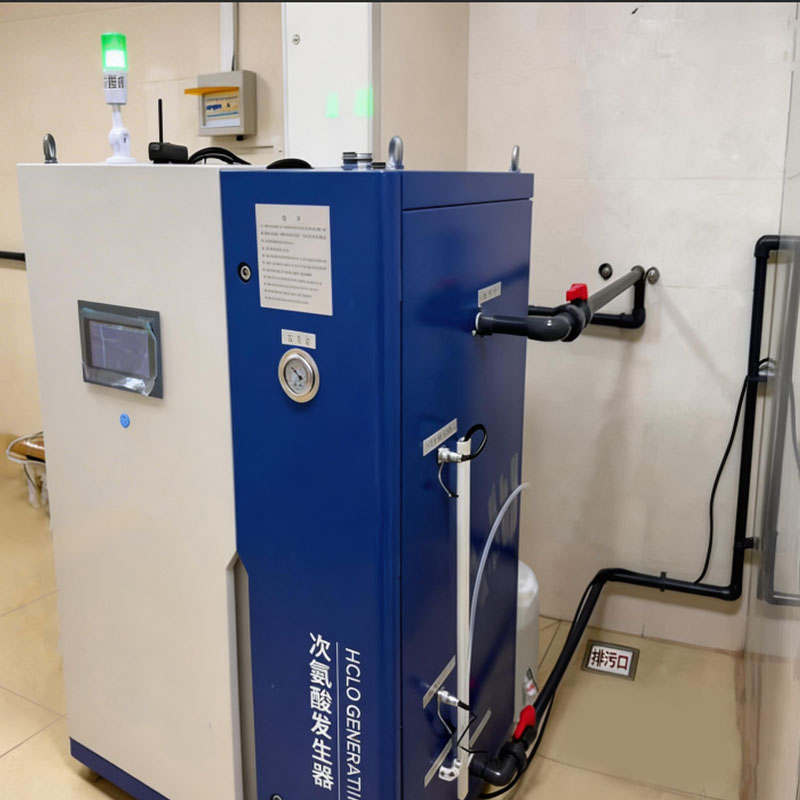
Can a Public Facility HOCl Generator Pay Back Its Installation Cost?
Yes—but only when the facility consistently uses enough suitable disinfectant to recover the full installed cost. A Public Hypochlorous AcidGenerator can reduce dependence on purchased chemicals and simplify supply logistics. Those advantages do not automatically produce a financial return. Utilization, solution quality, maintenance, operator time, and local compliance requirements determine whether on-site production is economical.
For schools, transport terminals, recreation centers, and other public buildings, the useful question is not “How cheaply can this machine produce a liter?” It is “What will it cost to deliver a compliant disinfection process at the point of use?” That distinction separates a credible investment proposal from an attractive equipment quotation.
Start with the disinfectant you can actually replace
Hypochlorous acid, or HOCl, is an active chlorine species that can be produced through electrochemical processes. Its suitability depends on the generated solution and the intended application, including available chlorine concentration, pH, contact time, surface compatibility, and relevant authorization. A generator does not make every cleaning chemical unnecessary.
Build the purchasing baseline from invoices and actual usage records. Separate ready-to-use disinfectants from concentrates, detergents, descalers, and specialist products. Compare concentrates at their working dilution—not by container price. Only count products that the proposed HOCl process can legitimately replace.
This matters in mixed-use facilities. Bathrooms may still need soil removal and descaling; food-contact areas may have specific application requirements; healthcare spaces may require protocols that do not apply elsewhere. Budgeting against the entire cleaning-chemical bill would overstate savings.
Record consumption by location and season. A sports venue with intermittent events has a different demand profile from a continuously occupied transport hub. Annual volume alone can conceal long idle periods and short peaks that require storage or backup supplies.
Installation cost is only one part of ownership
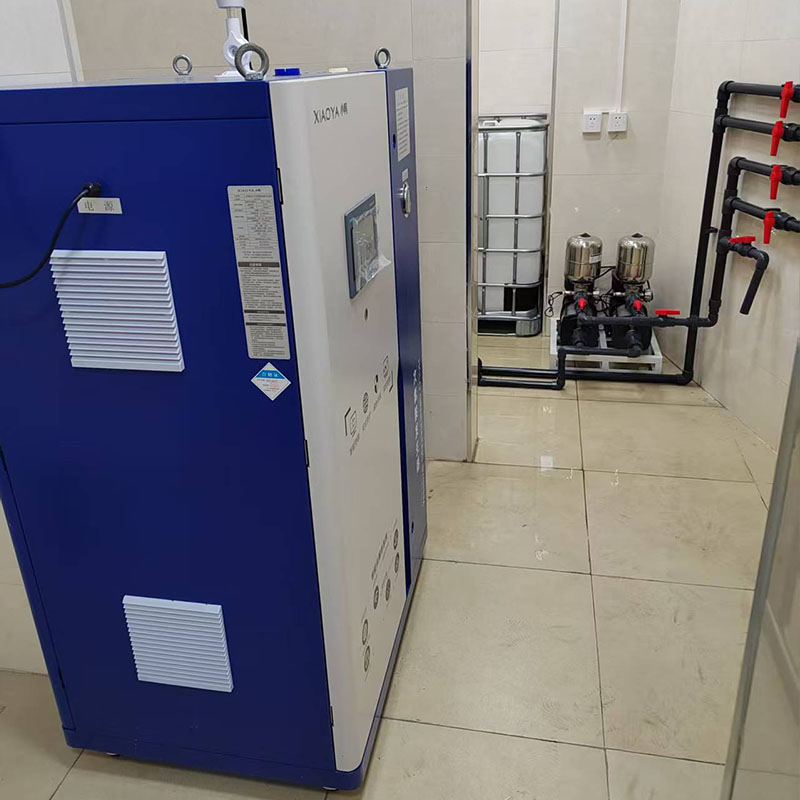
The installed investment should include equipment, delivery, plumbing, electrical work, any necessary water treatment, tanks, dispensing infrastructure, commissioning, and initial training. A low machine price can lose its advantage if the site needs substantial utility modifications.
Operating costs need equally careful boundaries. Include electrolyte, water, electricity, testing supplies, cleaning, calibration, servicing, replacement components, and disposal where applicable. Operator time belongs in the calculation, even when existing staff perform the work.
- Request consumable usage at the concentration you intend to produce.
- Obtain replacement-part prices and the conditions governing service life.
- Include backup disinfectant purchases during downtime.
- Account for unused solution discarded because it no longer meets specifications.
Avoid counting the same benefit twice. Reduced purchasing administration may free staff time, but it is not necessarily a cash saving. Similarly, faster container filling does not eliminate the labor needed to clean surfaces and maintain the required contact time.
Calculate payback using usable output
A practical model distinguishes variable production costs from fixed annual costs. Let V represent annual liters that are both compliant and actually used. Let P be the current avoidable cost per working-strength liter, C the on-site variable cost per usable liter, F the additional fixed annual operating cost, and I the total installed investment.
Annual net savings = V × (P − C) − F
Simple payback in years = I ÷ annual net savings
If annual net savings are zero or negative, the project has no simple financial payback under those assumptions. For a target payback of T years, the required annual usable volume is (I ÷ T + F) ÷ (P − C), provided P exceeds C.
Use conservative, expected, and high-utilization scenarios. Change demand, consumable consumption, maintenance costs, and discarded volume rather than presenting one precise-looking result. For a longer-term investment decision, discounted cash flow should also account for financing assumptions, component replacement, and the expected operating period.
What a high-capacity specification really tells you
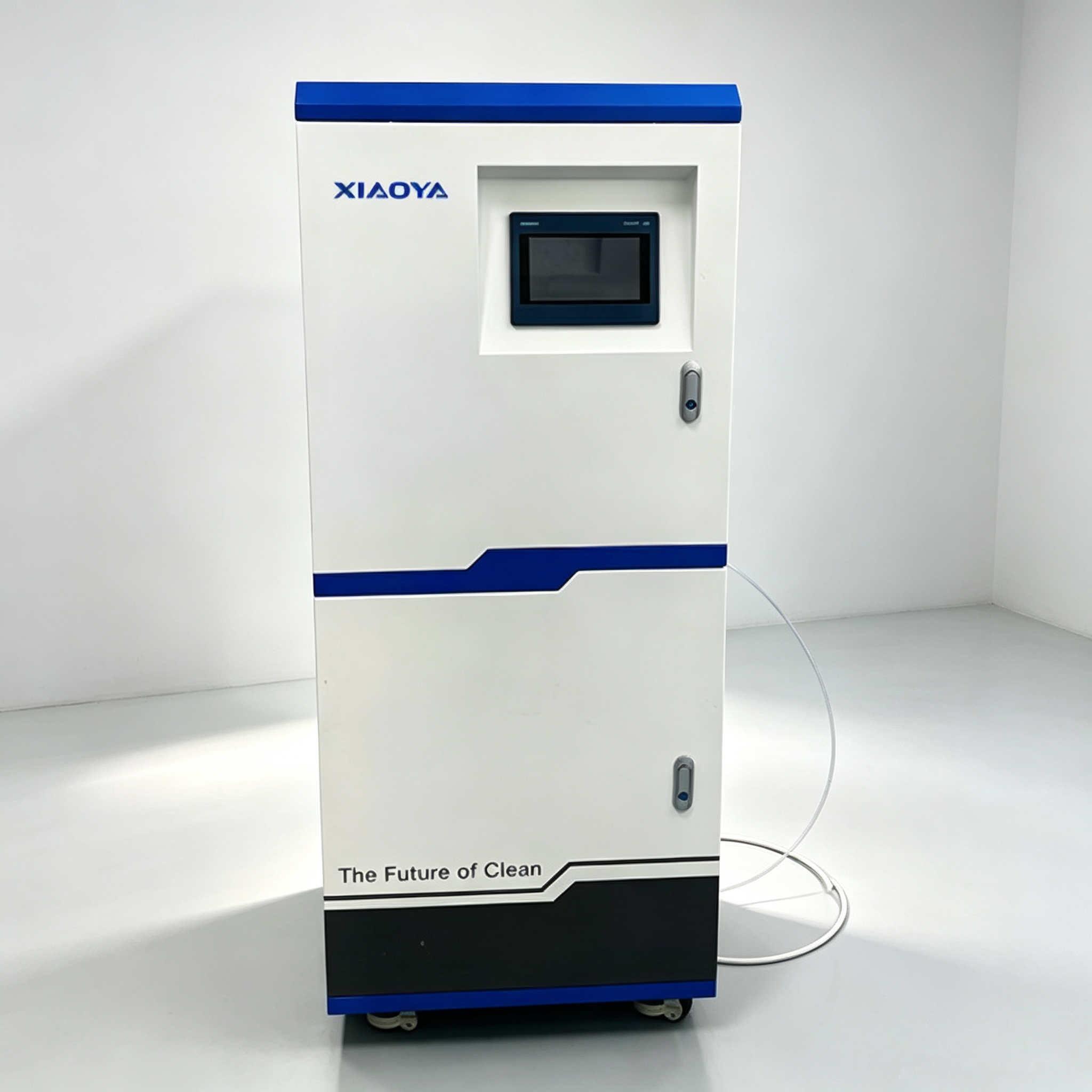
The AQ-P1000 Hypochlorous Acid Generator for Animal Husbandry and Breeding provides a useful example of specifications that deserve closer examination. It is positioned for livestock facilities, including large pig, poultry, cattle, and sheep farms—not automatically for public-building applications.
Its listed parameters include 1,000 L/h production capacity, available chlorine concentration of 10–300 mg/L, pH 6.37, and rated power of 420 W. Capacity and concentration are described as customizable. Before using these figures in a cost model, confirm which operating conditions deliver the required output and whether maximum capacity and the selected concentration are achievable together.
At the listed power and output, the arithmetic implies 0.42 kWh per 1,000 liters. That is a conditional calculation, not a verified whole-system consumption figure. Water treatment, pumps, controls, standby operation, and other auxiliaries may change actual electricity use.
The specified inlet pressure is 0.15–0.25 MPa, while the unit weighs 220 kg and measures 900 × 700 × 1,500 mm. Those details affect placement, handling, and utility preparation. The stated electrolyzer service life of at least 3,000 hours warrants questions about operating conditions, warranty coverage, replacement cost, and service access; it is not a lifetime guarantee for the entire installation.
Automation must protect quality, not just increase output
Modular controls and sensor protection can support dependable production, but procurement teams should verify what the system actually measures. Does it detect low electrolyte, unsuitable water pressure, or an output-quality problem? Can an alarm stop dispensing, and are production records available for review?
Storage and distribution also matter. HOCl solution stability depends on formulation and storage conditions, including temperature, light exposure, and container compatibility. Establish a validated holding period and test the solution at the point of use. Producing large batches that later fail specification is not a saving.
Claims concerning livestock-present disinfection, drinking-water treatment, or disinfection qualifications should not be transferred to occupied public spaces without supporting documentation. Confirm permitted uses, application methods, contact times, ventilation needs, and local requirements for the exact solution and intended process.
Buy against a verified operating plan
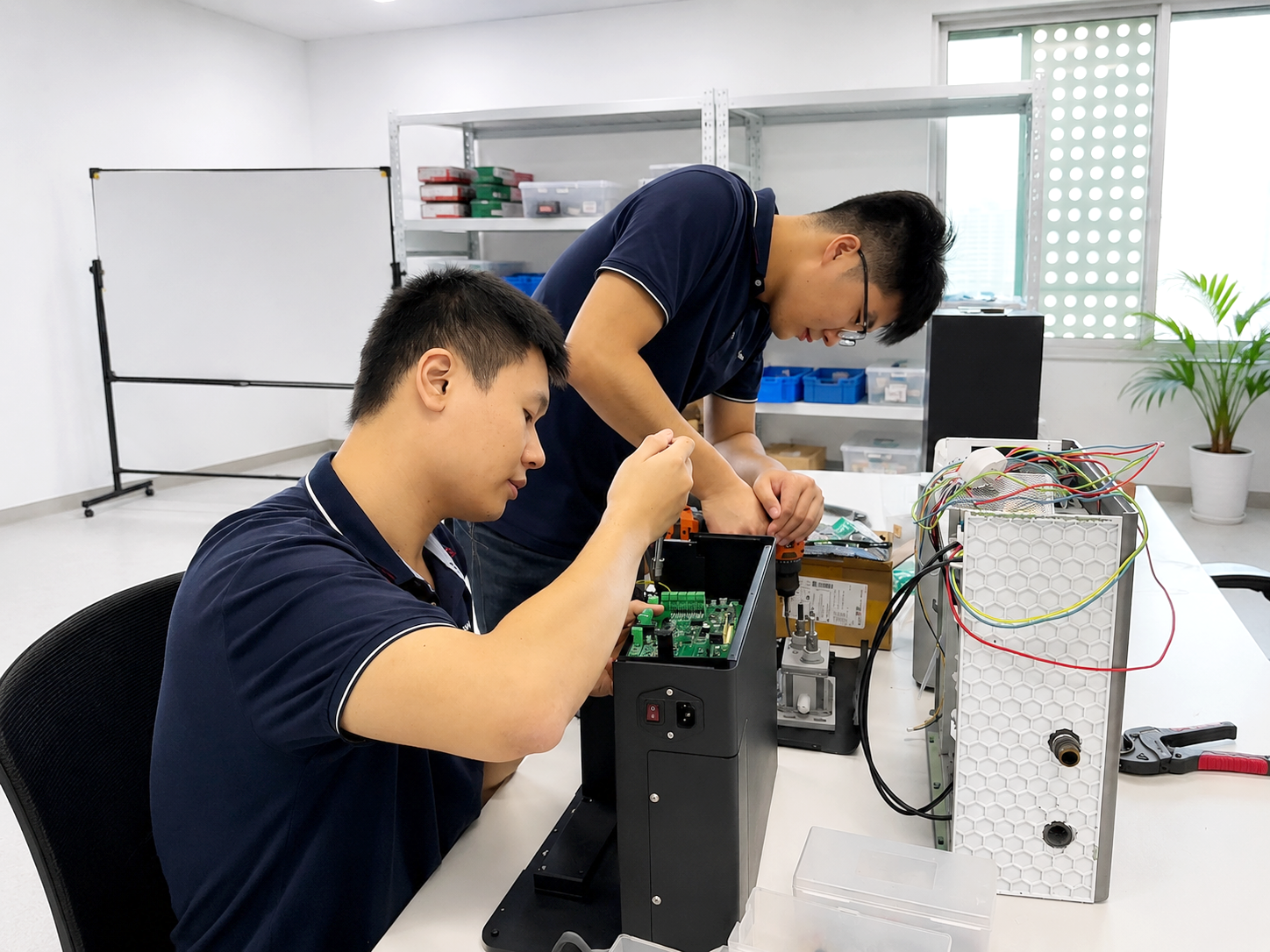
An enterprise integrating R&D, production, and operations across kitchen and bathroom appliances, healthcare and disinfection equipment, clean energy, and small household appliances may offer useful engineering breadth. The procurement value lies in concrete support: application testing, commissioning procedures, spare-parts availability, and responsibility for controls and service—not the breadth of its catalog alone.
Before approval, run a site trial that measures accepted solution volume, consumables, staff time, storage losses, and cleaning-workflow compatibility. Request an installed quotation tied to those conditions. A public facility HOCl generator can repay its installation cost when verified replacement demand supports it; oversized capacity and optimistic savings assumptions cannot make that case.
NEWS
 Accumulating Strength and Reaching New Heights: A Record of the Production Breakthrough of Xiaoya Small Home Appliances' Hypochlorous Acid Generators
 Can a Public Facility HOCl Generator Pay Back Its Installation Cost?
 Public Facility HOCl Storage: Managing Heat, Light, and Shelf Life
- On-Site HOCl vs. Purchased Disinfectant for Municipal Buildings
- Sizing a Public Facility HOCl Generator for Peak Cleaning Demand

Leave us a message

Xiaoya Group was founded in 1979,expert in the electrolyzed water industry.
Get in Touch
*We respect your confidentiality and all information are protected.