news
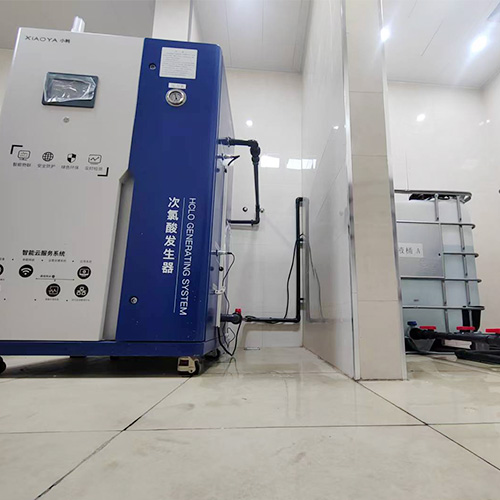
A medical-grade hypochlorous acid generator delivers a safer, more efficient approach to clinical sterilization across healthcare and disinfection settings. Designed for consistent output, automated control, and reliable performance, this advanced solution helps facilities improve hygiene standards while reducing chemical handling risks. For manufacturers and medical institutions seeking scalable sterilization technology, it represents a practical step toward smarter, high-standard disinfection.
Why are medical-grade hypochlorous acid generators gaining attention in automated sterilization?
In healthcare and disinfection operations, the pressure is clear: achieve stable microbial control, reduce operator exposure to harsh chemicals, and keep workflows predictable. A medical-grade hypochlorous acid generator answers these needs by producing disinfectant on site with automated dosing and controllable output.
For buyers in the automation equipment sector, the value is not only in disinfection performance. It also lies in process integration, lower storage risk, easier batch consistency, and better adaptation to multi-scenario use across clinical areas, processing environments, and sanitation stations.
Companies with R&D, production, and operational integration are especially well positioned here. When a supplier understands health care and disinfection appliances alongside household, clean energy, and appliance manufacturing, it can support both technical reliability and scalable delivery.
- On-site generation reduces dependence on transported chemical disinfectants and lowers handling complexity.
- Automated control helps maintain repeatable concentration, pH range, and dosing logic.
- Equipment-based sterilization solutions are easier to standardize across departments or production units.
What makes HOCl suitable for clinical and hygiene-sensitive environments?
Hypochlorous acid, or HOCl, is widely recognized as an effective disinfecting agent because it works quickly at suitable concentrations and can be generated from salt, water, and electricity. In practical sterilization planning, this matters because facilities need a balance between efficacy, operational safety, and manageable residue.
Medical-grade systems focus on controlled generation rather than simple chlorine production. The difference is important. Stable output, adjustable concentration, and precise pH management can influence usability in surface disinfection, equipment sanitation support, and workflow compliance.
Which application scenarios benefit most from automated hypochlorous acid generation?
The strongest use cases are environments where hygiene standards are high and manual chemical preparation creates risk. Clinical institutions, disinfection service providers, and automated sanitation lines benefit when disinfectant can be produced on demand and matched to operational volumes.
The following table compares common application scenarios and the operational priorities typically linked to a medical-grade hypochlorous acid generator.
This comparison shows that the purchase decision should be based on workflow fit, not only on output volume. In many cases, the right automated sterilization system is the one that simplifies standard operating procedures and reduces process variability.
Cross-industry relevance matters
An enterprise active in kitchen and bathroom appliances, health care and disinfection appliances, clean energy, and small household appliances often brings a useful engineering advantage: it understands both device reliability and user-facing operating conditions. That matters when sterilization equipment must work in real environments, not just under lab assumptions.
This is also why some buyers review adjacent-use systems during evaluation. For example, a solution such as Food Hypochlorous AcidGenerator / table salt (NaCl) may be examined as a reference point for generation logic, cleaning design, and consumable efficiency, even when the final requirement is oriented to clinical or disinfection applications.
What technical indicators should buyers evaluate first?
When selecting a medical-grade hypochlorous acid generator, many teams focus only on concentration. That is not enough. Stable sterilization performance depends on a combination of output, pH control, oxidation-reduction potential, service life, cleaning method, and utility consumption.
The table below summarizes technical points that often affect procurement quality and long-term operating efficiency.
A useful benchmark in this category is a system architecture similar to model XY-SAEW-100, which features 100L/H output, adjustable pH and chlorine concentration, and a membrane-based electrolysis structure. These indicators help buyers estimate whether a unit can support stable sterilization under repeated daily use.
Parameters should be matched to the process, not chosen in isolation
A facility handling multiple sanitation tasks may need adjustable operation rather than a fixed-output machine. For example, a system able to vary pH and concentration can support different cleaning and disinfection routines more effectively than a rigid single-mode unit.
- High-use sites should review electrolytic cell life and cleaning intervals before comparing purchase price.
- Facilities with sensitive workflows should ask about automated flushing and startup consistency.
- Projects involving integrated equipment should confirm voltage, power demand, drainage, and control interface needs.
How does on-site HOCl generation compare with traditional disinfection supply models?
A medical-grade hypochlorous acid generator is often compared with purchased liquid disinfectants or manually diluted chlorine-based products. The best choice depends on operating scale, compliance requirements, labor structure, and tolerance for chemical logistics.
The comparison below helps clarify where automated generation offers practical value and where buyers should verify internal conditions first.
For medium and large operations, the automation advantage becomes more visible over time. Savings are not limited to chemicals. They may also come from fewer handling steps, better traceability, and reduced interruption caused by inconsistent preparation.
What should procurement teams ask before placing an order?
Procurement problems usually come from unclear application boundaries. A buyer asks for a medical-grade hypochlorous acid generator, but the real need may involve several use points, varying flow demand, or strict installation constraints. Early clarification avoids costly mismatch.
Practical selection checklist
- Confirm target use: surface disinfection, process sanitation, supporting sterile workflows, or mixed-use deployment.
- Define required output per hour and daily usage peaks, not just nominal demand.
- Check whether concentration and pH need to be adjustable for multiple operating modes.
- Review maintenance design, including flushing, self-cleaning, and acid cleaning steps.
- Ask about delivery scope: machine only, integrated skid, or customized automation package.
If the project also touches food-contact sanitation or shared hygiene infrastructure, it can be useful to assess generation platforms derived from broader application experience. In that context, Food Hypochlorous AcidGenerator / table salt (NaCl) illustrates how low salt consumption, customizable dimensions, and membrane-based electrolysis can support site-specific engineering decisions.
Compliance and process validation considerations
Suppliers should be asked to explain how the equipment supports routine validation, concentration checks, cleaning schedules, and operating records. Even when exact certification needs vary by market, buyers generally benefit from systems built around traceable process parameters and repeatable operating logic.
This is where an integrated manufacturer can add value. R&D capability helps adapt the equipment. Production capability helps maintain consistency. Operational experience helps align the solution with actual user constraints, not only technical drawings.
FAQ: common questions about medical-grade hypochlorous acid generators
How do I know if a generator is suitable for clinical sterilization support?
Start with control capability. A suitable unit should offer stable output, defined concentration adjustment, manageable pH settings, and a cleaning strategy that supports repeated operation. It should also fit your facility’s water, power, drainage, and maintenance conditions.
Is higher chlorine concentration always better?
No. The right concentration depends on the use case, contact time, material compatibility, and process controls. Procurement teams should evaluate concentration range together with pH management and application requirements rather than assuming that maximum output equals better sterilization quality.
What operating costs should be reviewed beyond machine price?
Look at salt consumption, electricity use, membrane and cell life, cleaning frequency, downtime risk, and labor input. For example, a design using only purified water and food-grade salt with moderate utility demand may improve lifecycle efficiency compared with a system that appears cheaper upfront but is harder to maintain.
Can one system serve both healthcare and adjacent hygiene applications?
Sometimes yes, but only after confirming concentration range, hygiene protocols, material compatibility, and site governance. Shared-platform thinking can reduce complexity, yet each application area should still be reviewed against its own operating standards and risk profile.
Why choose us for automated hypochlorous acid generation projects?
Buyers rarely need a generic machine. They need a workable sterilization solution that fits output targets, installation limits, and process expectations. With experience across kitchen and bathroom appliances, health care and disinfection appliances, clean energy, and small household appliances, we approach projects from both equipment engineering and application reality.
You can contact us for parameter confirmation, model selection, customizable dimensions, expected delivery cycle, utility requirements, sample discussion, and quotation communication. If your project involves automated disinfection lines, cross-scenario sanitation, or a transition from purchased chemicals to on-site generation, we can help map the technical route before procurement risk becomes production risk.
NEWS
 Public Facility HOCl Storage: Managing Heat, Light, and Shelf Life
 On-Site HOCl vs. Purchased Disinfectant for Municipal Buildings
- Sizing a Public Facility HOCl Generator for Peak Cleaning Demand
- What Can a Hypochlorous Acid Generator Do for Public Facility Cleaning?
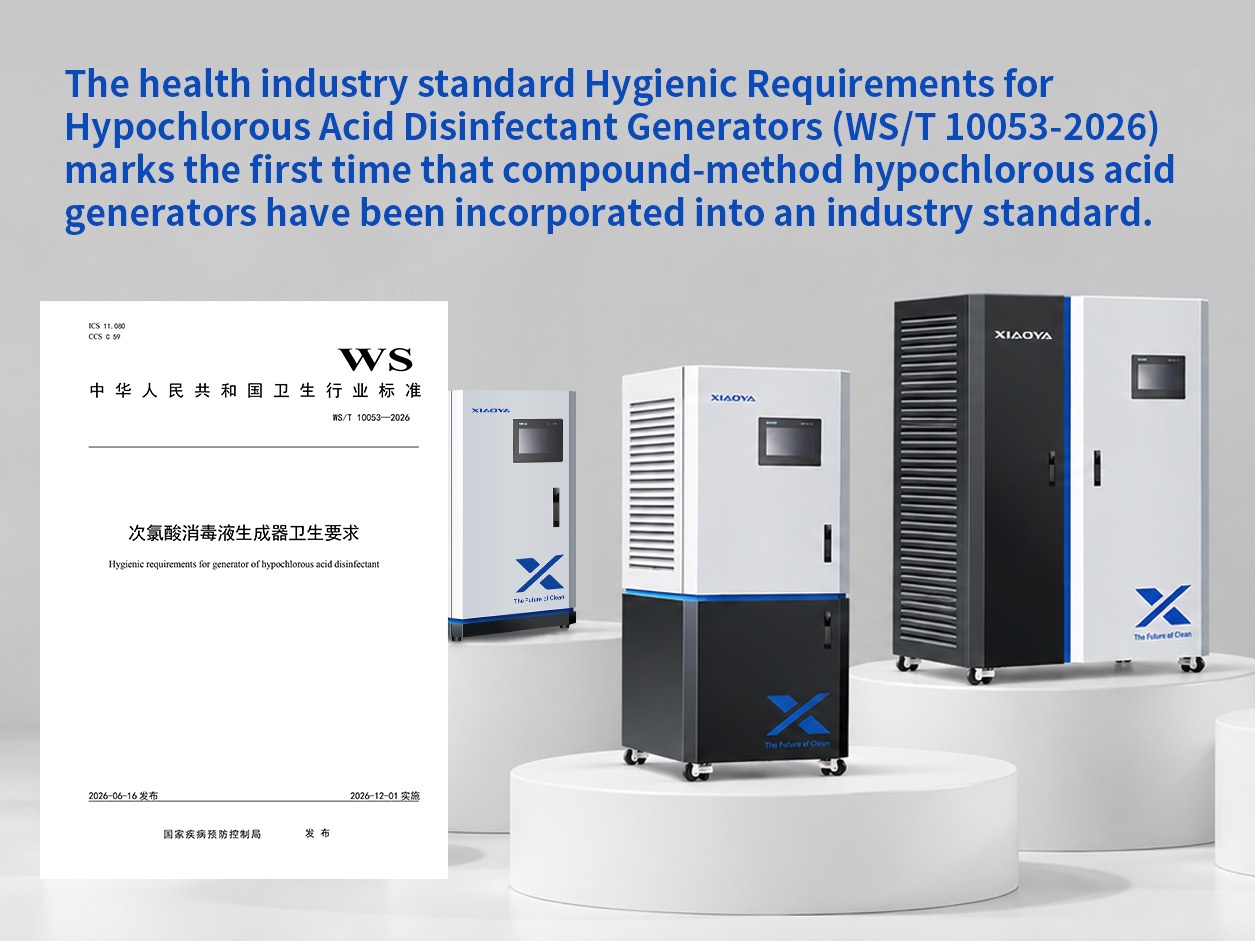
 WS/T 10053-2026 Includes the Compound Method for the First Time: Standard Signals and Market Opportunities for Mass Agricultural Production of Hypochlorous Acid Generators

Leave us a message

Xiaoya Group was founded in 1979,expert in the electrolyzed water industry.
Get in Touch
*We respect your confidentiality and all information are protected.