news
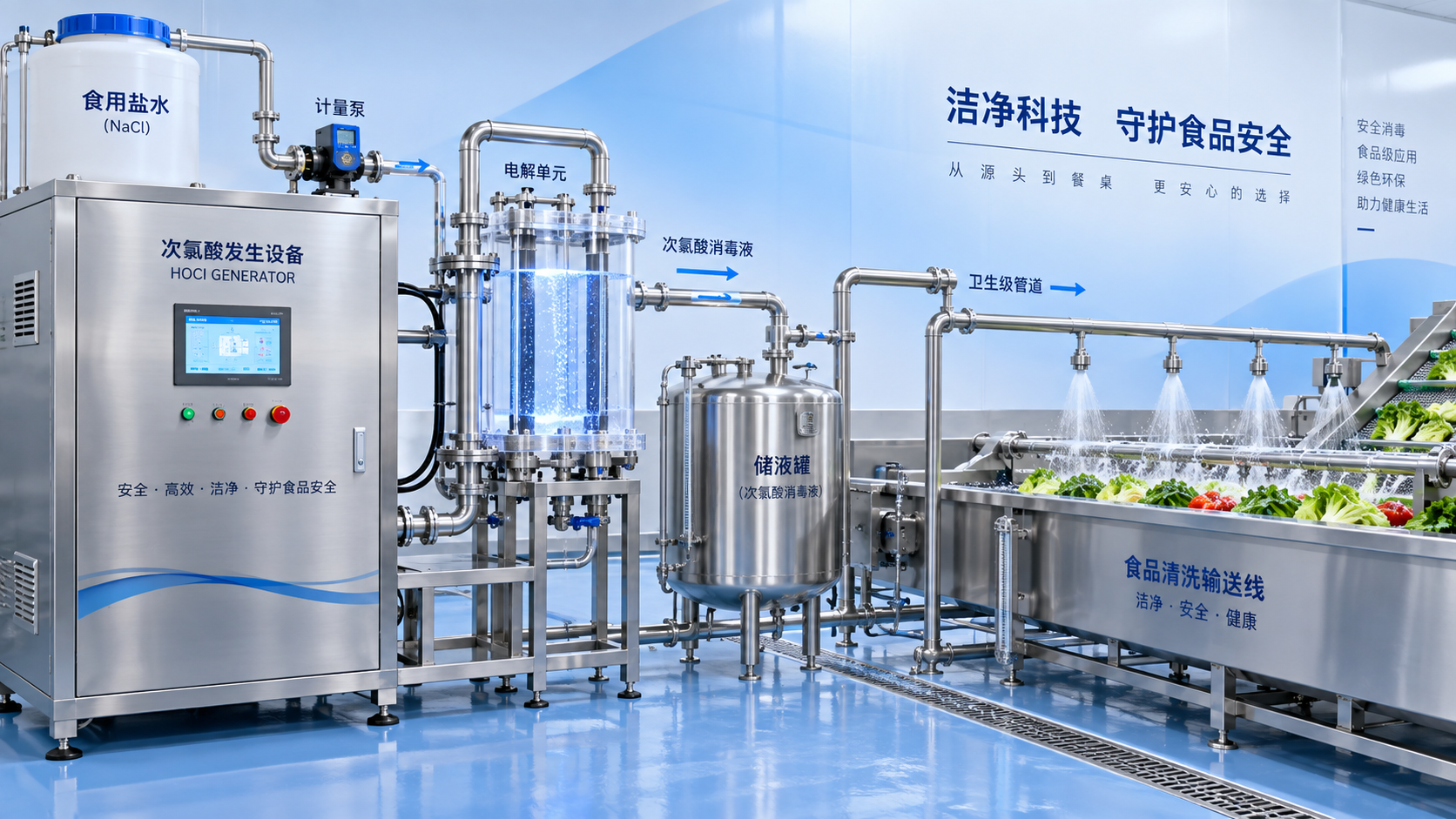
A hypochlorous acid machine is often judged by a simple question at the point of use: “Is the water strong enough to disinfect?” That question matters, but concentration alone does not determine whether the solution will perform as expected. A batch can show available chlorine on a test strip yet lose activity quickly, smell sharply of chlorine, or behave differently after it enters a wash tank, flume, or cleaning circuit.
The practical answer is that a hypochlorous acid machine converts salt, purified water, and electricity into disinfecting water through controlled electrolysis, then manages the resulting chemistry so that a useful share of the chlorine remains as hypochlorous acid (HClO). Operators need to control feed-water quality, salt dosing, flow, pH, concentration, and storage conditions—not merely turn on the machine.
The reaction inside the electrolytic cell
The core of the process is an electrolytic cell fitted with electrodes. When direct current passes through a sodium chloride solution, chloride ions move toward the anode and are oxidized:
2Cl− → Cl2 + 2e−
Chlorine gas is formed at the anode. At the cathode, water is reduced, producing hydrogen gas and hydroxide ions:
2H2O + 2e− → H2 + 2OH− + H2
Once chlorine contacts water, it undergoes hydrolysis:
Cl2 + H2O ⇌ HClO + H+ + Cl−
This reaction creates hypochlorous acid, the principal sanitizing species desired in many applications. HClO is electrically neutral and can interact effectively with microorganisms. It is different from hypochlorite ion (OCl−), which becomes more dominant as pH rises. Both are part of “free available chlorine,” but they do not offer identical practical behavior.
Machine design affects how these reaction products are handled. Some systems separate acidic and alkaline streams; others control the combined solution to produce weakly acidic hypochlorous acid water. The operator should therefore follow the intended process route for the equipment rather than assume that every salt-water electrolyzer produces the same output.
Why pH determines whether the solution is usable
Available chlorine concentration is important, but pH tells you which chlorine species are likely present. In a moderately acidic to near-neutral solution, more free chlorine exists as HClO. As pH moves upward, the equilibrium shifts toward OCl−. A reading that appears acceptable in mg/L may therefore provide less of the intended HClO fraction when pH is too high.
For an operator, the useful target is not “the lowest possible pH.” Excessive acidity can increase odor, material concerns, and handling risk. Instead, the machine should maintain the pH range specified for its sanitation task and process design. In fresh-cut produce processing, a controlled pH range of 5.0–6.5 is commonly practical because it supports a high HClO proportion while remaining suitable for direct water-contact operations when the correct working concentration is used.
pH drift is often a diagnostic clue. A rising pH may point to poor salt-feed control, changes in incoming water chemistry, residual alkaline cleaner in a tank or line, or an incorrect blend of electrolyzed streams. An unexpectedly low pH may require checking feed settings, water supply conditions, and whether the solution is being mixed with incompatible chemicals.
The operating conditions that change output
A stable electrolysis process starts before the cell is energized. Sodium chloride should be suitable for the machine, and the water supply should meet the equipment’s requirement for purity. Minerals, hardness, and contaminants in untreated water can affect conductivity, encourage scale formation, and reduce the consistency of concentration readings. Using the specified purified water also helps protect the electrolytic cell.
Salt is not simply an ingredient to add “more of” when output is low. Too little salt can reduce conductivity and limit chlorine generation. Excess salt may create output outside the desired operating range, increase residue concerns, or interfere with the settings expected by the control system. Automatic dosing systems reduce variability, but they still depend on a correctly prepared salt supply and functioning sensors.
Other variables have immediate effects:
- Electrical current and cell condition: Current drives the reaction, but a scaled, damaged, or aging electrode may not produce the same output at the same setting.
- Water flow rate: Faster flow can lower the contact time within the cell, while slower flow may raise concentration. The correct setting depends on the required volume and target available chlorine.
- Temperature: Heat can accelerate loss of active chlorine after generation. Keep production and storage conditions within the equipment’s stated limits.
- Organic load: Soil, plant debris, proteins, and residues consume free chlorine. Water that tests correctly before use can have less remaining activity after entering a dirty process tank.
- Light and open storage: Hypochlorous acid is not intended for indefinite storage. Exposure to light, heat, air, and contaminants can reduce its usable concentration.
Reading concentration, pH, and ORP together
Three measurements are often displayed or checked during operation: available chlorine concentration, pH, and oxidation-reduction potential (ORP). Each answers a different question. Available chlorine indicates the level of chlorine-based sanitizing species. pH helps indicate the likely HClO/OCl− balance. ORP reflects the oxidizing condition of the solution, but it is influenced by several factors and should not replace concentration testing.
Use calibrated instruments or the test method specified for the process. A sensor panel is valuable for real-time monitoring, but independent verification remains sensible when commissioning a line, changing a target concentration, or investigating inconsistent sanitation results.
When fresh-cut processing creates a difficult demand
Produce washing illustrates why on-site generation must be treated as a controlled process rather than a simple water supply. The solution may be used for raw-material washing, immersion treatment, bubble washers, flumes, CIP circuits, tools, or work areas. Each use has a different organic load and contact condition. Water used to wash heavily soiled produce can consume active chlorine faster than water used for a final equipment rinse.
A system such as the Electrolytic Salt Hypochlorous Acid Water Generator | For Fresh‑Cut Produce Processing is designed to provide controlled on-site output for these tasks. Its stated 50 L/h capacity, adjustable available chlorine range of 50–500 mg/L, and PLC touch-screen monitoring of concentration, pH, and ORP support repeatable operation. The correct setpoint still depends on the actual process stage, water replacement practice, and sanitation procedure.
Do not assume that a concentration suited to pipe cleaning is appropriate for direct produce contact, or that a setting used in a clean recirculating system will remain effective after the water becomes visibly loaded. Measure at the actual point of use. When recirculation is involved, establish a replacement or replenishment routine based on monitored concentration and process conditions.
A practical response when output becomes unstable
When concentration falls below the expected range, begin with the simplest checks: confirm that salt supply is adequate, purified water is reaching the machine, the target flow rate has not changed, and the correct operating recipe is selected. Then compare the machine display with an appropriate external test result. A large difference may indicate a sensor, sampling, or testing issue rather than a generation failure.
Next, inspect the downstream process. Dilution from make-up water, residual water in tanks, organic contamination, or chemical carryover can make an on-specification generator appear weak at the use point. Alkaline detergents are especially relevant because they can raise pH and reduce the proportion of HClO.
Persistent instability warrants inspection of the electrolytic cell, tubing, dosing components, valves, and sensors according to the maintenance instructions. Ruthenium-iridium-coated titanium cells are intended for long service life, but scale, improper feed water, and neglected cleaning can still affect performance. Do not open electrical or gas-handling components while energized, and maintain ventilation appropriate for electrolysis equipment because hydrogen and chlorine-containing gases may be generated within the system.
The most reliable operating habit is to record the selected setpoint, actual concentration, pH, flow rate, and use location together. Those records reveal whether a problem began at generation, during transfer, or after the solution contacted the process water.
NEWS
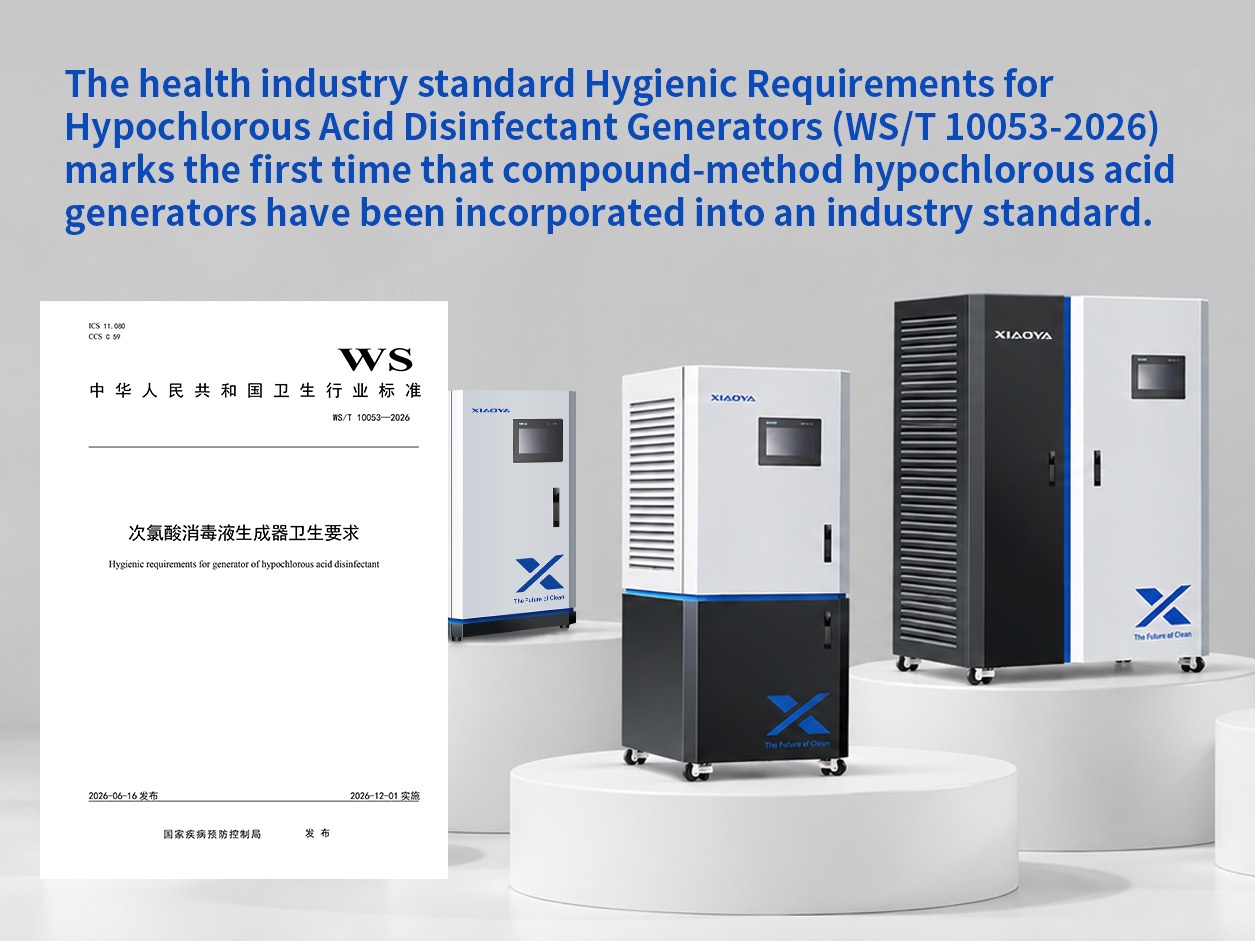
 WS/T 10053-2026 Includes the Compound Method for the First Time: Standard Signals and Market Opportunities for Mass Agricultural Production of Hypochlorous Acid Generators
 Hypochlorous Acid Machine Fundamentals: From Electrolysis to Usable HClO
 Comparing Mobile and Fixed Livestock HClO Generators for Large Farms
- Water Quality Requirements for Livestock Hypochlorous Acid Generation
- Livestock Hypochlorous Acid Generators for Biosecurity at Poultry Farms
Leave us a message

Xiaoya Group was founded in 1979,expert in the electrolyzed water industry.
Get in Touch
*We respect your confidentiality and all information are protected.