news
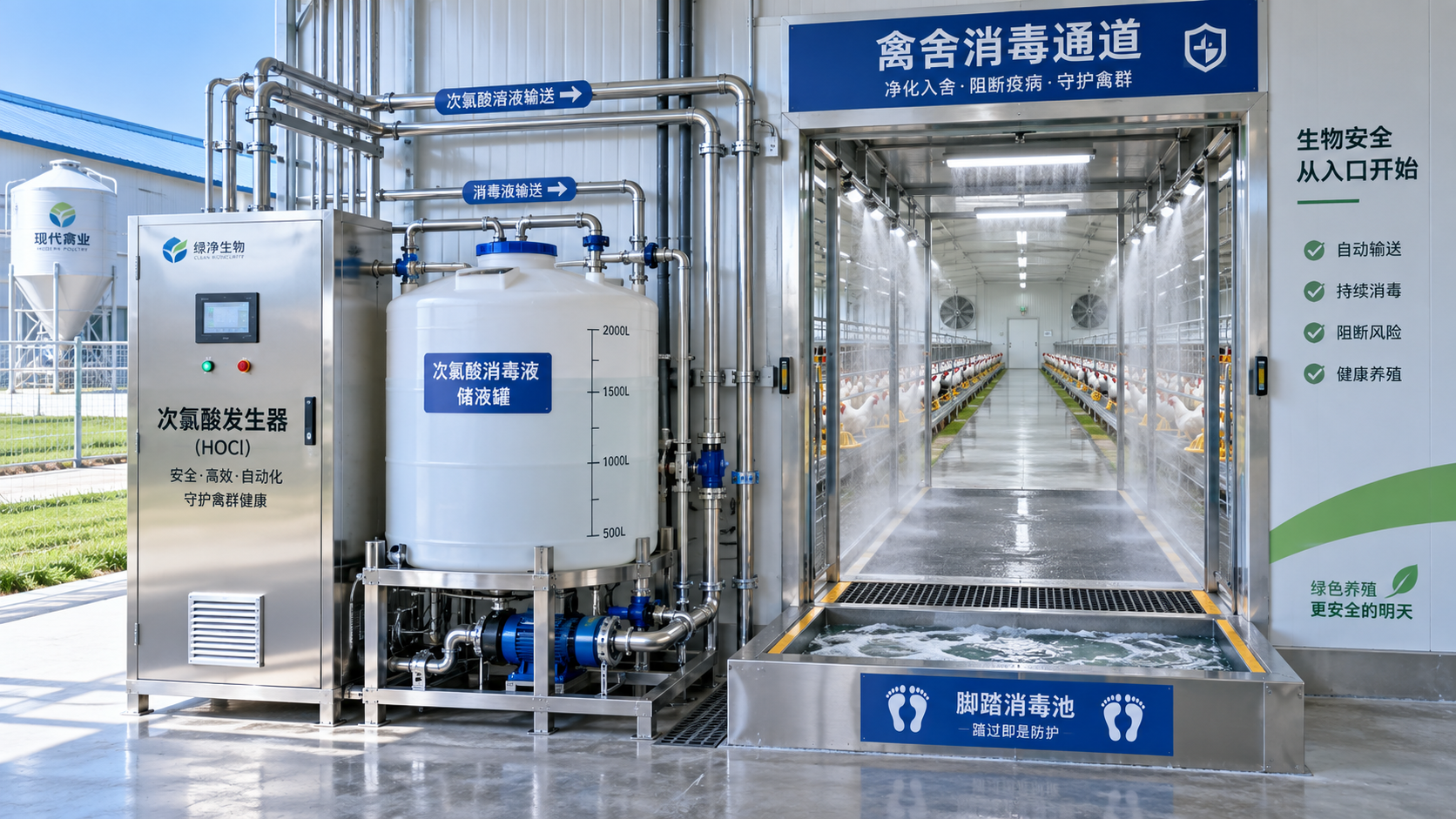
For poultry farms, biosecurity is rarely compromised by one dramatic failure. More often, it is weakened by small gaps: a service cart that is not fully cleaned between houses, a drinker line with persistent biofilm, a hatchery tray returned too quickly to use, or a disinfectant dilution that varies from one shift to the next. For quality control and safety managers, the challenge is to make sanitation repeatable under real farm conditions.
A Livestock Hypochlorous Acid Generator supports that goal by producing hypochlorous acid (HClO) solution on site for routine disinfection and hygiene management. Rather than depending entirely on delivered chemical stocks, farms can generate a controlled disinfectant solution for applications such as housing surfaces, equipment, footbaths, vehicle-contact areas, and water-system hygiene. The value is not simply “more disinfectant”; it is a better chance to build a consistent, documented biosecurity process.
Why poultry biosecurity needs more than a strong chemical
Poultry facilities present a demanding sanitation environment. Organic contamination, dust, feathers, humidity, manure, variable temperatures, and frequent movement between zones can all affect cleaning outcomes. A product that performs well in a laboratory may deliver uneven results in a house where surfaces have not been adequately washed or where application coverage is inconsistent.
This is why safety managers should view disinfection as a chain of controls. Cleaning removes soil and organic load. Disinfection addresses remaining microorganisms at the required concentration and contact time. Drying, traffic control, equipment segregation, and verification reduce the risk of recontamination. A generator-based HClO program belongs within this chain; it is not a substitute for cleaning discipline or well-designed farm zoning.
Hypochlorous acid is the principal antimicrobial species associated with many chlorine-based disinfectant solutions. When generated and managed within the appropriate operating range, it can be useful for broad routine sanitation tasks. Its practical appeal in animal husbandry is that it can support hygiene work in occupied areas when used according to the applicable operating procedure, label directions, ventilation requirements, and local regulations.
Where on-site HClO generation fits in a poultry farm
The best application plan is based on risk points, not on treating every location in exactly the same way. A broiler farm, layer operation, breeder house, and hatchery all have different movement patterns and sanitation priorities. Still, several use cases appear repeatedly.
- House turnaround: After dry cleaning and washing, HClO solution may be applied to floors, walls, cages, partitions, tools, and selected non-sensitive equipment surfaces before restocking.
- Entry and transfer points: Boot-wash areas, footbath stations, loading zones, corridors, and service-room touchpoints need a routine that staff can follow without guesswork.
- Equipment sanitation: Crates, trolleys, collection equipment, feeders, and maintenance tools can carry contamination between areas if cleaning and disinfection are not controlled.
- Odor-management support: In conjunction with manure management, ventilation, and cleaning, hypochlorous acid treatment may help improve the perceived hygiene condition of breeding environments.
- Water-system management: Properly designed dosing and flushing procedures can help address biofilm concerns in drinking-water lines. Water quality should always be verified rather than assumed.
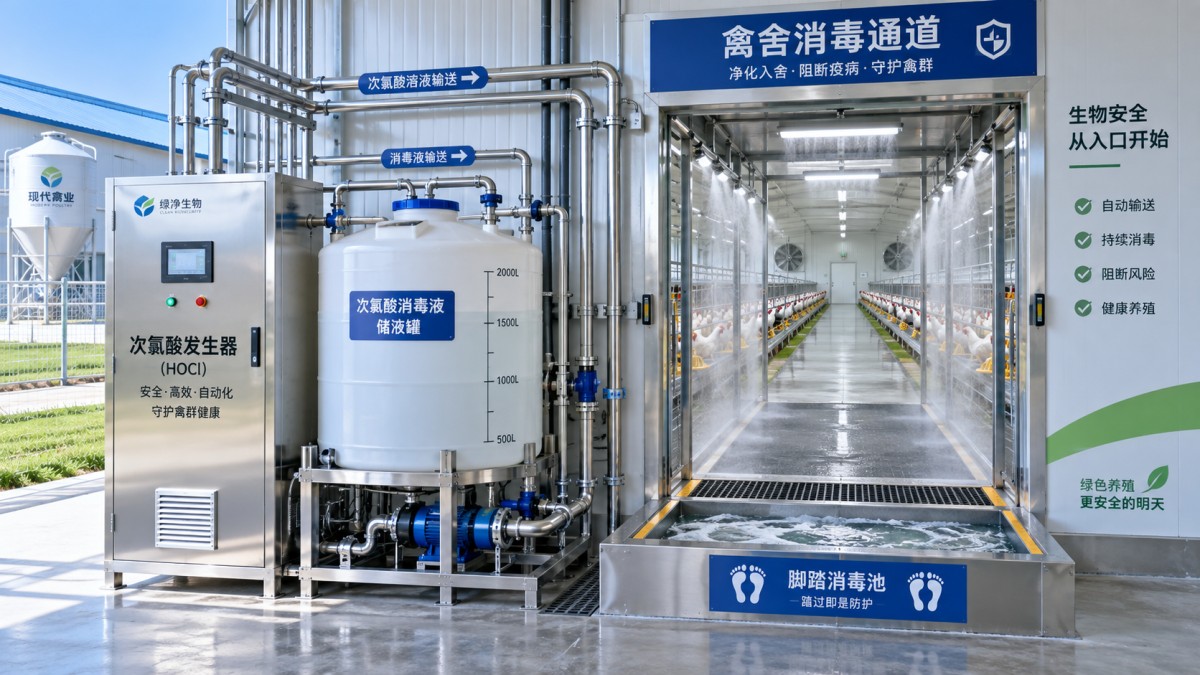
The key distinction is between surface application and water-line use. Surface disinfection requires attention to pre-cleaning, wetting coverage, and contact time. Drinking-water applications require additional controls: source-water quality, line material compatibility, residual monitoring, flushing practices, and animal-welfare oversight. A quality manager should not transfer one operating parameter to every use case without validation.
What a quality control team should evaluate before selecting a generator
Capacity alone does not define a suitable Livestock Hypochlorous Acid Generator. A farm may need a large volume during turnaround but only modest output for daily hygiene. The right system should match the actual peak demand, application methods, storage approach, and staff capability.
Start with a consumption map. Estimate the number of houses, surface area, water-line length, frequency of treatment, spray equipment flow rate, and the volume needed for footbaths or sanitation stations. This prevents a common mistake: selecting a machine based on headline production volume while overlooking the farm’s workflow and replenishment schedule.
Concentration control is equally important. Available chlorine concentration may need to vary by task, and concentration should be checked with an appropriate test method as part of the farm’s verification routine. pH also matters because it affects the balance of chlorine species and therefore the behavior of the solution. Managers should establish clear work instructions stating the intended concentration, application method, contact time, test frequency, and corrective action when readings fall outside the defined range.
Water conditions deserve early attention. Inlet pressure, hardness, suspended solids, and source-water consistency can influence operational stability. If raw water quality fluctuates, pretreatment and filtration requirements should be discussed before installation. This is especially relevant on farms where the generator may operate continuously during high-risk periods.
A practical configuration for larger poultry operations
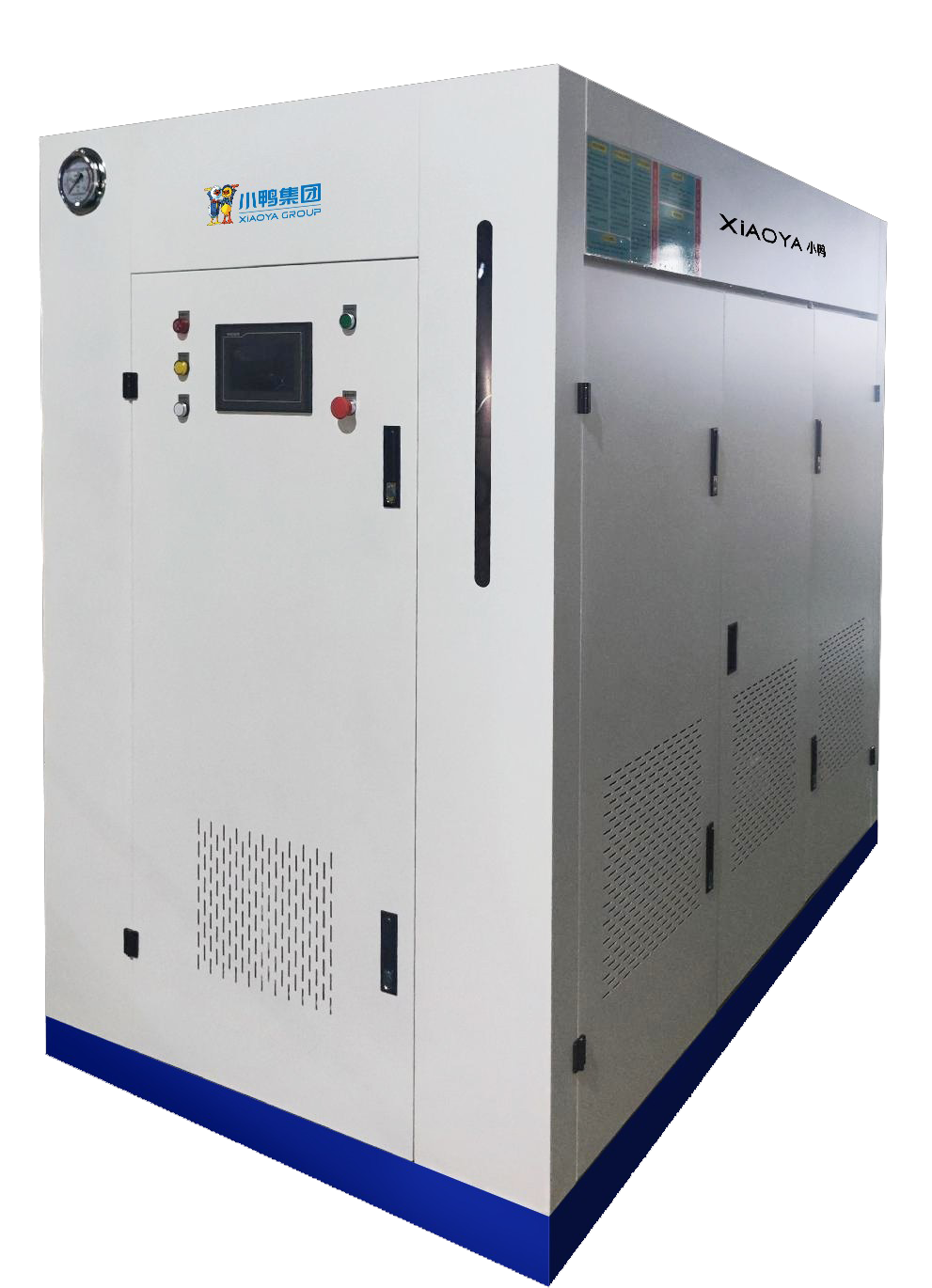
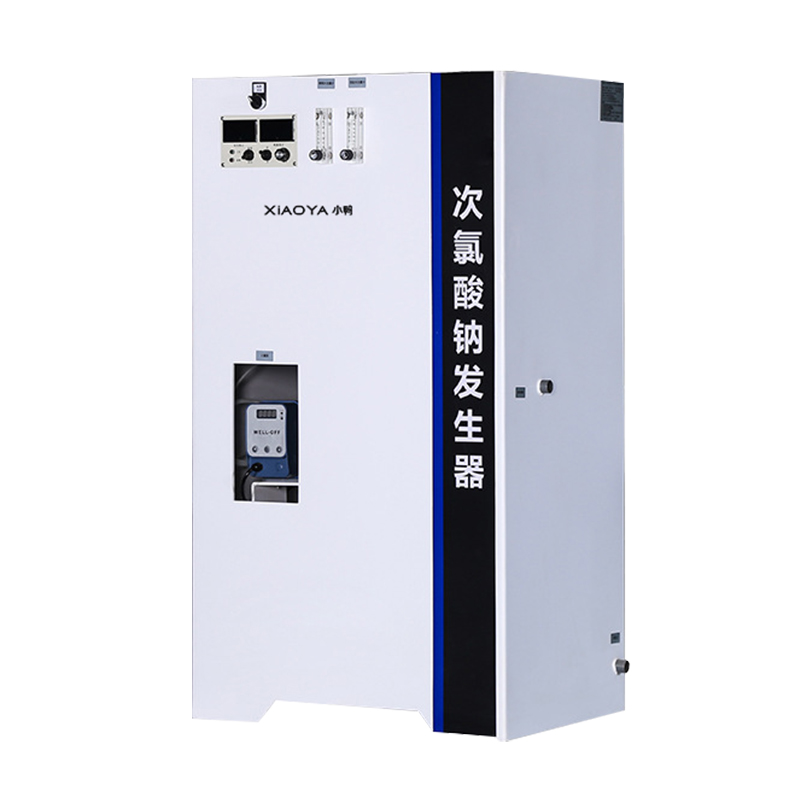
For farms that need a centralized supply, the Hypochlorous Acid Generator for Animal Husbandry and Breeding is designed for livestock settings including chicken farms, pig farms, and cattle and sheep operations. The AQ-P1000 model has a production capacity of 1,000 L/h, with customization available according to customer requirements. This capacity can be relevant where a farm needs to supply multiple sanitation points or support house-turnaround work without repeated manual mixing.
The unit is specified with a pH value of 6.37 and an available chlorine concentration range of 10–300 mg/L, also customizable for application requirements. Its main bactericidal factor is hypochlorous acid. For QC teams, those figures are useful starting points, but they should be translated into farm-specific SOPs rather than treated as a universal setting for every task.
Operational details matter as much as solution chemistry. The AQ-P1000 uses 220 V/50 Hz power with a rated power of 420 W, requires inlet water pressure of 0.15–0.25 MPa, and includes a 5 L electrolyte tank. Its main unit measures 900 × 700 × 1500 mm and weighs 220 kg, so installation planning should account for a stable, ventilated location, drainage, service access, and safe routing to storage or distribution points. The stated electrolyzer service life is at least 3,000 hours; preventive maintenance planning should still include inspection intervals, calibration checks where applicable, and replacement planning for consumable components.
Turning generated solution into a controlled biosecurity program
Automation can reduce manual preparation errors, but it does not remove the need for management control. The most successful programs make responsibility visible. One person may be accountable for checking production status, another for verifying concentration at the point of use, and a supervisor for reviewing records and investigating deviations.
A workable verification routine can include batch or daily concentration checks, pH checks where required, inspection of spray coverage, review of water-line residuals, and periodic microbiological monitoring chosen for the farm’s risk profile. Logs should identify the date, area treated, operator, target setting, actual reading, and any corrective measure. These records are useful during internal audits, customer visits, and disease-response reviews because they show whether a hygiene plan was actually executed.
Staff training should cover more than operating the touchscreen or refilling electrolyte. Employees need to understand why clean-before-disinfect matters, why contact time cannot be shortened merely to speed up a task, and why chemical compatibility must be checked before using solution on metals, electronics, filters, or sensitive materials. Mixing generated solution with other chemicals without an approved procedure should be avoided.
Common mistakes that reduce disinfection performance
One frequent error is applying disinfectant over visibly dirty surfaces and expecting the solution to compensate for insufficient cleaning. Another is treating a generator’s output as inherently stable regardless of storage time, sunlight, temperature, or contamination of containers. Use clean, compatible storage tanks and distribution lines, minimize unnecessary storage where possible, and verify the concentration at the point where staff actually use the solution.
It is also risky to assume that “safe for use around livestock” means no controls are required. Application practices should protect workers and animals from overspray, slippery floors, poor ventilation, or stress caused by unfamiliar equipment and activity. Follow local veterinary, occupational safety, environmental, and disinfectant-use requirements.
For poultry operations seeking stronger routine biosecurity, a Livestock Hypochlorous Acid Generator can offer a practical foundation: on-site production, adjustable output, and a pathway toward more standardized sanitation. The real return comes when the equipment is paired with risk-based procedures, trained people, regular verification, and the discipline to correct small gaps before they become larger biosecurity problems.
NEWS
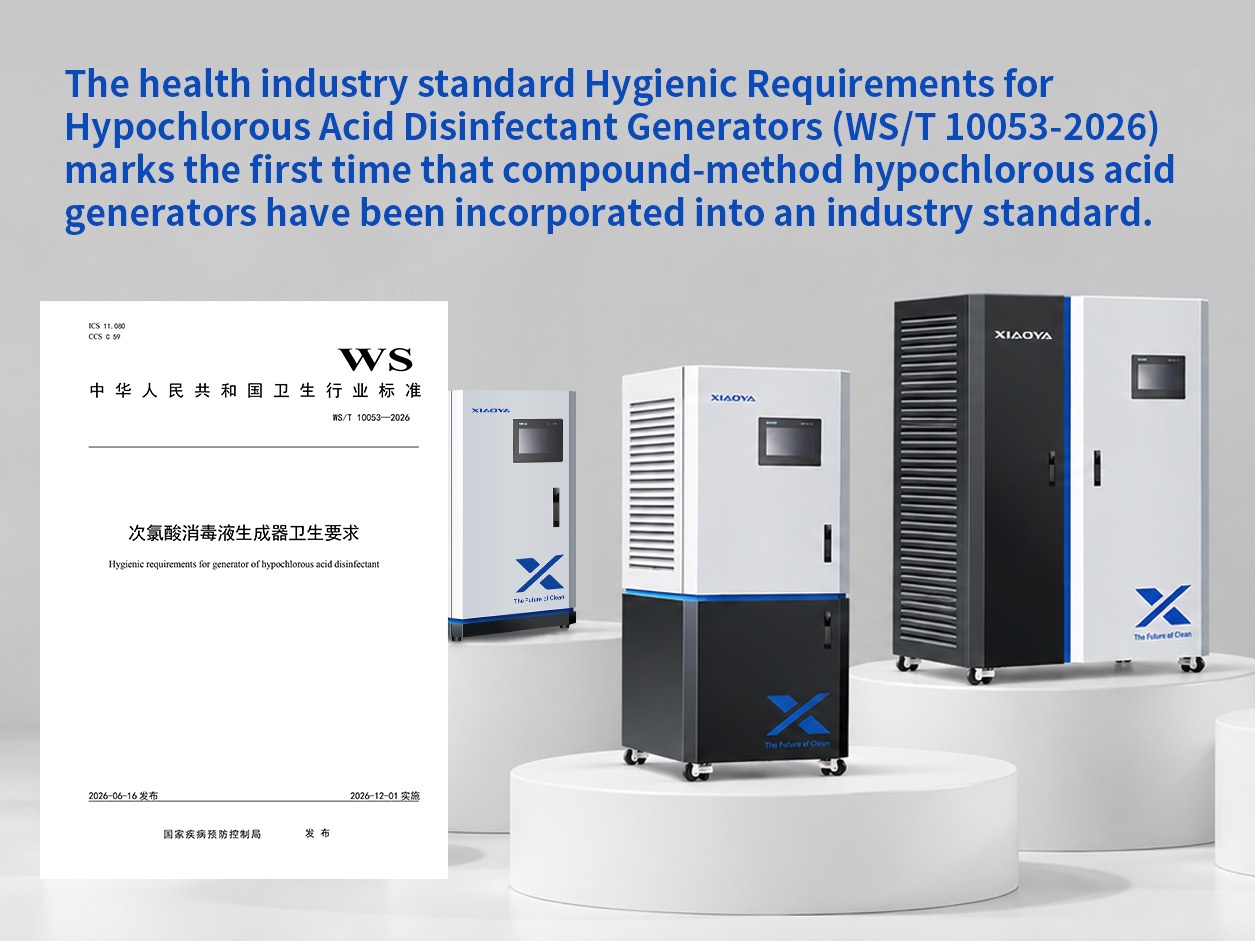
 WS/T 10053-2026 Includes the Compound Method for the First Time: Standard Signals and Market Opportunities for Mass Agricultural Production of Hypochlorous Acid Generators
 Livestock Hypochlorous Acid Generators for Biosecurity at Poultry Farms
 HClO Generator Hygiene Protocols for Veterinary Clinics and Pet Hospitals
 What Concentration Should a Pet Hypochlorous Acid Generator Deliver?
- Pet HClO Generator Use for Odor Control in Kennels and Boarding Areas
Leave us a message

Xiaoya Group was founded in 1979,expert in the electrolyzed water industry.
Get in Touch
*We respect your confidentiality and all information are protected.