





news
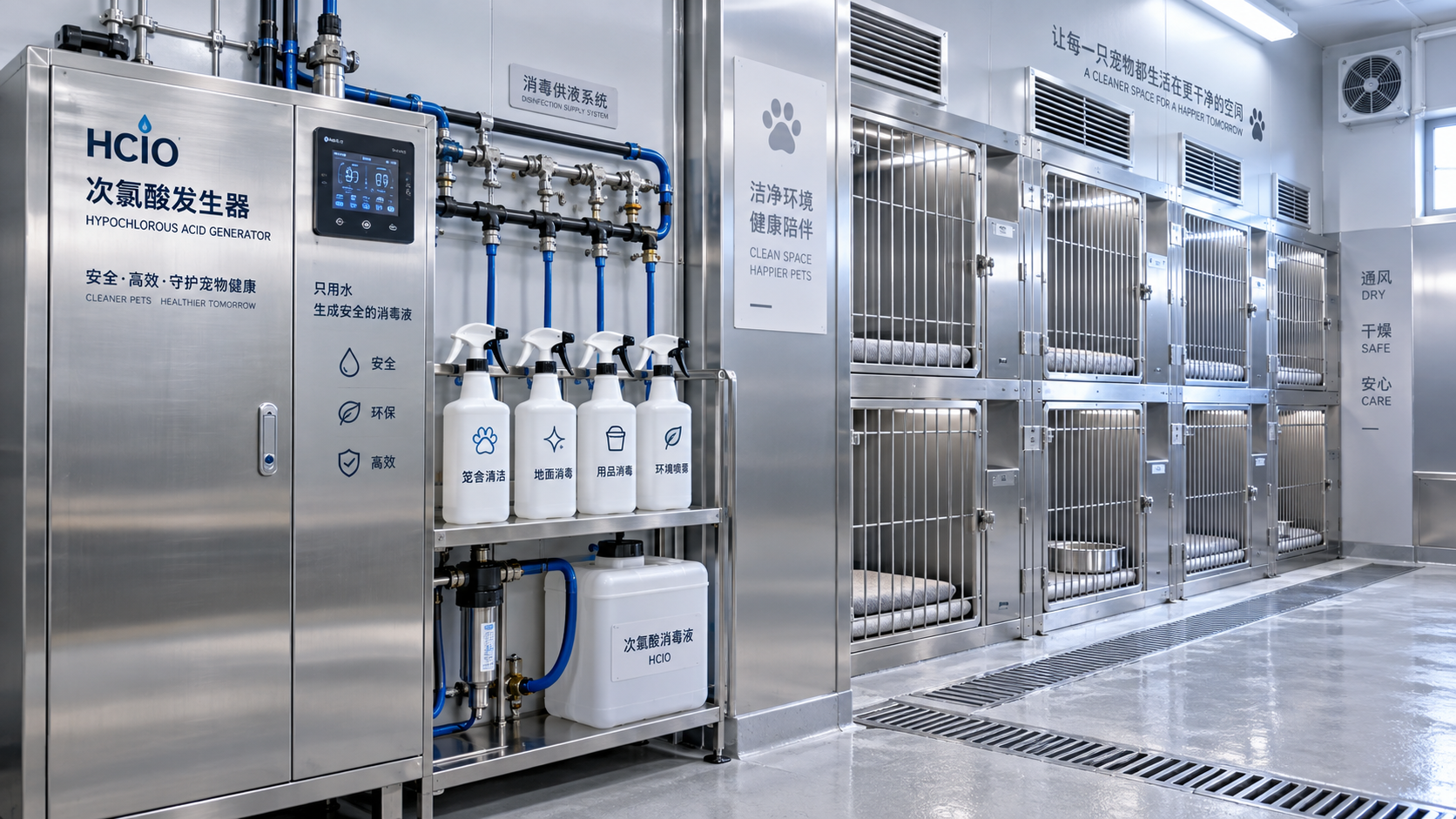
A persistent kennel odor is rarely solved by fragrance alone. In most facilities, the smell comes from a mix of urine residue, organic debris, damp surfaces, poor drying, and microbial activity in drains, flooring seams, bedding areas, and equipment. A Hypochlorous Acid Generator for Pets can support odor control because it produces a cleaning and disinfecting solution on site for regular use. It is useful when it is part of a disciplined cleaning process; it is not a substitute for removing soil, correcting drainage, or improving ventilation.
The practical goal is not to make a boarding area smell strongly “clean.” It is to reduce the sources that create odor while keeping daily routines manageable for staff and comfortable for the animals in care.
Why kennel odors return after cleaning
Odor often returns because the visible mess was removed but the underlying residue was not. Urine can travel into grout lines, textured floors, cage joints, drain covers, rubber mats, and the underside of elevated bedding. Hair, food particles, fecal residue, and moisture give odor-producing microorganisms places to remain active.
This is why spraying a deodorizer at the end of the day can make little long-term difference. Fragrance may mask the smell temporarily, but it does not remove organic loading or consistently sanitize the surfaces where odors develop.
Hypochlorous acid, commonly called HClO, is a chlorine-based disinfecting agent that can be generated from salt, water, and electricity in appropriate equipment. For kennel use, its value is operational: staff can prepare solution when needed rather than depending entirely on stored, ready-made chemicals. Used correctly, it can be applied to hard surfaces, washable kennel components, tools, drains, and other non-porous areas after physical cleaning.
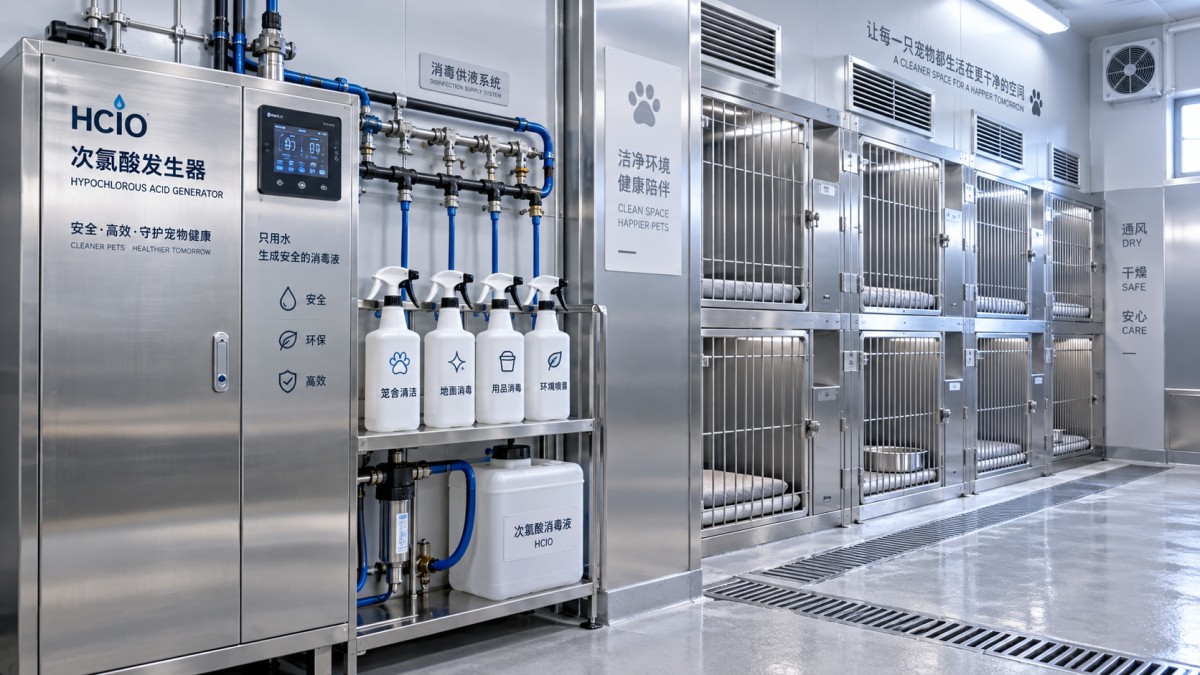
Use HClO after soil removal, not before it
The most common operational mistake is treating hypochlorous acid as a one-step answer. Disinfectants work less effectively when they must pass through heavy dirt, hair, feces, or dried urine. A reliable sequence separates cleaning from disinfection.
- Remove animals and movable items. Take out bowls, bedding, toys, and cleaning tools that need separate washing.
- Dry-remove hair and solid waste. Sweep, vacuum, scrape, or collect debris before wet cleaning. This reduces the organic material carried into drains.
- Wash the surface. Use the facility’s suitable detergent and mechanical action to lift residue, especially around corners, door tracks, drains, and wall-floor joints.
- Rinse where the cleaning product requires it. Residual detergent can interfere with later treatment and may leave a sticky film that traps soil.
- Apply the prepared HClO solution evenly. Cover the intended surface rather than misting only the center of the kennel. Follow the generator and application instructions for dilution, contact time, and compatible materials.
- Allow the area to dry and ventilate. A wet kennel that stays wet can quickly develop its own odor problem, even after disinfection.
For routine turnover cleaning, this process can be adapted to the time available, but the order should remain intact. In high-use boarding areas, targeted cleaning of drainage points and frequently soiled zones matters more than repeatedly treating already-clean wall surfaces.
Where a pet HClO generator helps most
On-demand HClO production is most useful when a facility uses disinfecting solution frequently and needs consistency across multiple cleaning periods. It can support daily kennel turnaround, scheduled deep cleaning, accident cleanup after the visible material has been removed, washable crate components, grooming-area floors, utility sinks, and cleaning equipment.
It can also be useful for odor-prone support areas that are easily missed during routine rounds: drain grates, mop buckets, waste-container surrounds, flooring under racks, and transport carriers. These locations can reintroduce odor into an otherwise clean room.
However, a generator will not fix an odor caused by saturated concrete, leaking plumbing, damaged drain traps, mold inside a wall cavity, inadequate exhaust, or bedding that is not being washed and fully dried. When odor remains strongest in one place after proper cleaning, inspect the building condition before increasing the amount of disinfectant used.
Choose equipment around the workflow
For a small facility, a compact generator may be sufficient if it can reliably supply the volume needed for prepared bottles, mop systems, and scheduled cleaning. Larger boarding operations should look beyond output alone. The better question is whether the system fits the cleaning route: where water is available, where solution will be filled, how it reaches different rooms, and who is responsible for checking it each shift.
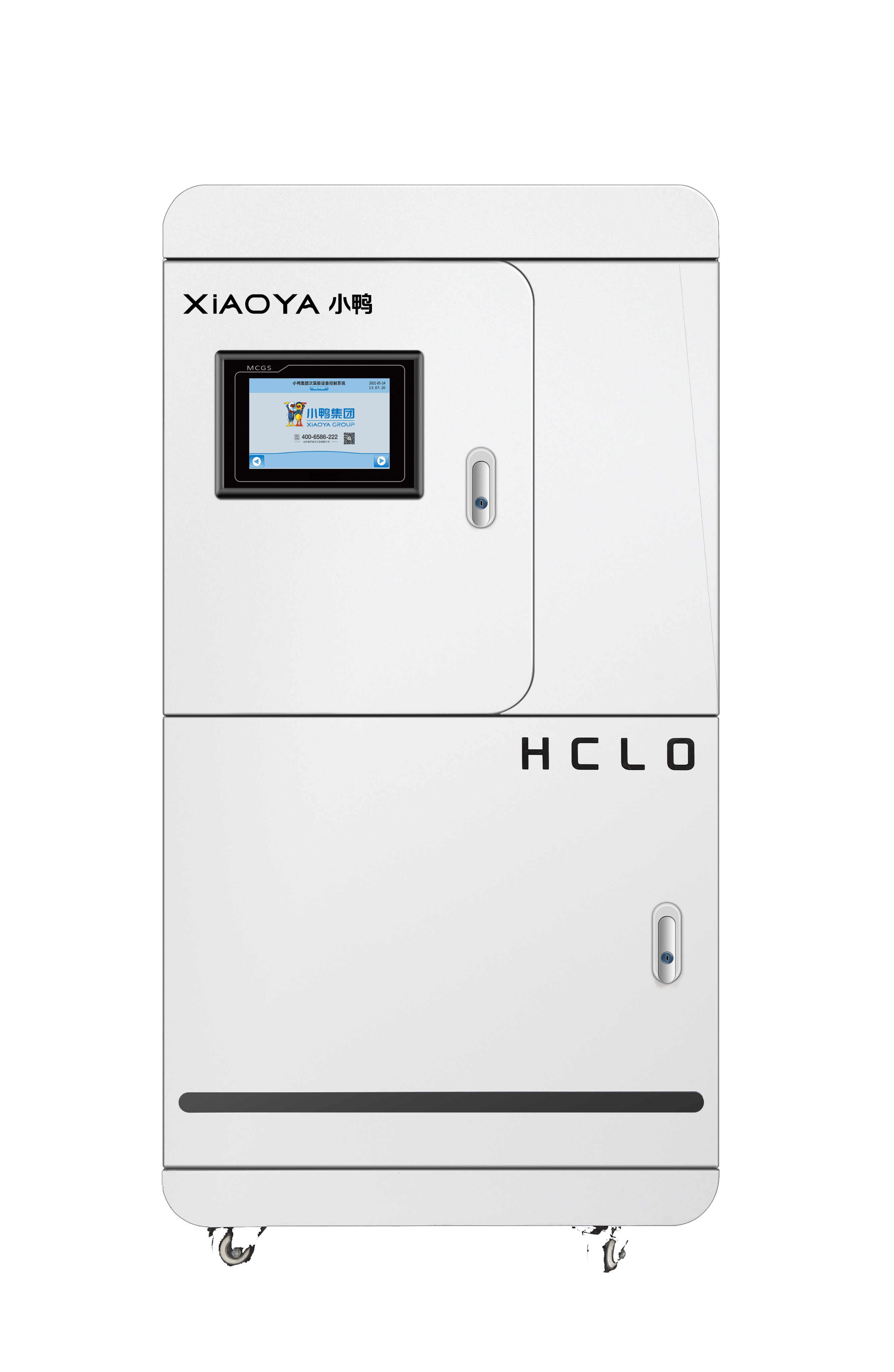
When comparing a Hypochlorous Acid Generator for Pets, focus on practical controls rather than promotional claims:
- Output matched to demand: Estimate solution needed for normal kennel turnover, not only for an occasional deep clean.
- Clear concentration control: Staff need a repeatable way to prepare the concentration required by the facility’s cleaning protocol and surface-use instructions.
- Water and salt requirements: Poor water quality or incorrect salt can affect electrolysis equipment and solution consistency. Use the raw materials specified for the machine.
- Simple verification: Test methods and written batch records help operators avoid using solution that was prepared incorrectly or stored too long.
- Safe filling and storage: Bottles should be labeled, protected from contamination, and kept away from direct light and unnecessary heat.
- Service access: Electrode maintenance, tank cleaning, drainage, and fault reporting should fit the facility’s actual maintenance capability.
Automation is valuable when it makes the correct routine easier to repeat. A touchscreen, timer, or automated production cycle is only helpful when staff also know what to do with the finished solution and how to document the process.
Application method changes the result
Spraying, foaming, mopping, flushing, and low-volume misting are not interchangeable. A handheld sprayer works well for crate doors, wall panels, handles, and localized accident areas, but it can miss rough floor texture and leave uneven coverage. Mopping or foaming can improve contact on floors, provided the mop head is clean and solution is not spread from a dirty area into a clean one.
Drain treatment deserves separate attention. A disinfecting solution can support cleaning of drain covers and accessible surfaces, but it should not be used as a way to ignore accumulated debris or plumbing faults. Remove hair and buildup first. If odor rises from a drain despite cleaning, check water seals, flow, and drainage design.
Fogging or atomization requires more caution. Fine droplets can drift onto animals, feed, bedding, electronics, and areas that were not intended for treatment. It also changes exposure conditions for staff. Do not use room-wide atomization simply because it looks efficient. It should only be part of an established procedure that specifies occupancy, ventilation, equipment settings, and the surfaces being treated.
Material compatibility and animal handling
Hypochlorous acid solutions are often chosen because they can be less harsh in routine hygiene programs than some stronger chemical options. That does not mean every concentration, every material, or every use method is automatically appropriate. Repeated wet exposure can still affect metals, coated parts, fabrics, adhesives, and electronics depending on the solution, concentration, and drying conditions.
Test a small, inconspicuous area before making a new process standard. Pay particular attention to metal cage hardware, floor coatings, rubber seals, printed labels, and automatic feeder components. Keep animals away during active cleaning, prevent access to wet treated surfaces, and return them only after the area is dry and ready for normal occupancy.
Never mix HClO solution with other cleaning chemicals. Mixing disinfectants, acids, ammonia-containing products, or unknown residues can create unsafe conditions or reduce cleaning performance. Dedicated, clearly labeled bottles and a defined cleaning sequence reduce this risk.
Build a routine that can expose the real problem
A useful odor-control program divides tasks by frequency. Staff can spot-clean accidents and disinfect high-touch surfaces during the day, while a scheduled end-of-day routine addresses floors, drains, waste points, and reusable equipment. Weekly work should include areas below beds, behind enclosures, under mobile equipment, and ventilation grilles where hair and dust accumulate.
Keep the checklist short enough to be used. Include the locations that repeatedly produce odor, the preparation date for generated solution, and any equipment issue such as a slow drain or damaged floor seam. This turns odor complaints into actionable maintenance information rather than a vague instruction to “clean more.”
When a larger generator is the wrong choice
High-output industrial HClO equipment designed for cold-chain logistics may be technically capable of producing disinfecting solution, but its intended capacity, configuration, and application procedures may not suit a kennel. For example, the Electrolytic Salt Hypochlorous Acid Water Generator for Cold‑Chain Transportatio is designed around cold-chain disinfection workflows. Its stated 50 L/h production capacity and connection options may be relevant only where a facility has a similarly high, centralized demand and a qualified plan for distribution, dilution, and cleaning application.
For most boarding areas, select equipment based on the daily cleaning volume, room layout, water access, training requirements, and ability to control use at the point of cleaning. More capacity does not automatically mean better odor control. Consistent preparation, thorough soil removal, sufficient coverage, and complete drying are what make the routine work.
Before introducing a generator, identify the two or three places where odor begins, map the current cleaning steps, and correct obvious drainage or ventilation issues. Then choose a system and application method that staff can use accurately every day. That approach produces a cleaner facility without turning odor control into an endless cycle of stronger scents and more chemicals.
NEWS
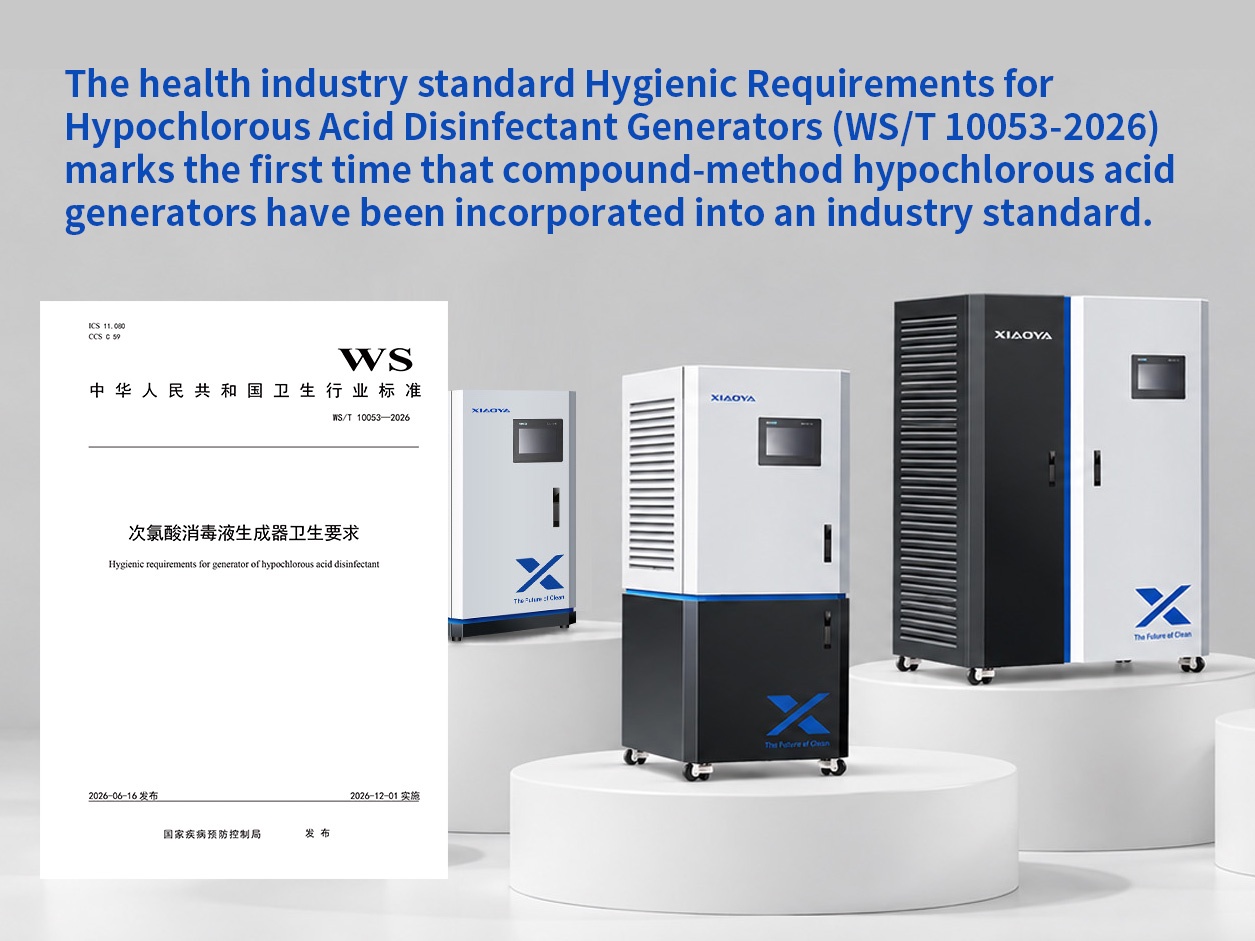
 WS/T 10053-2026 Includes the Compound Method for the First Time: Standard Signals and Market Opportunities for Mass Agricultural Production of Hypochlorous Acid Generators
 Evaluating HClO Generator Lifecycle Costs Beyond the Initial Equipment Price
 HClO Generator pH Control: Why It Determines Disinfection Performance
- Which Safety Features Matter Most When Buying an HClO Generator?
 Troubleshooting Low ORP Readings on a Hypochlorous Acid Machine
Leave us a message

Xiaoya Group was founded in 1979,expert in the electrolyzed water industry.
Get in Touch
*We respect your confidentiality and all information are protected.