news
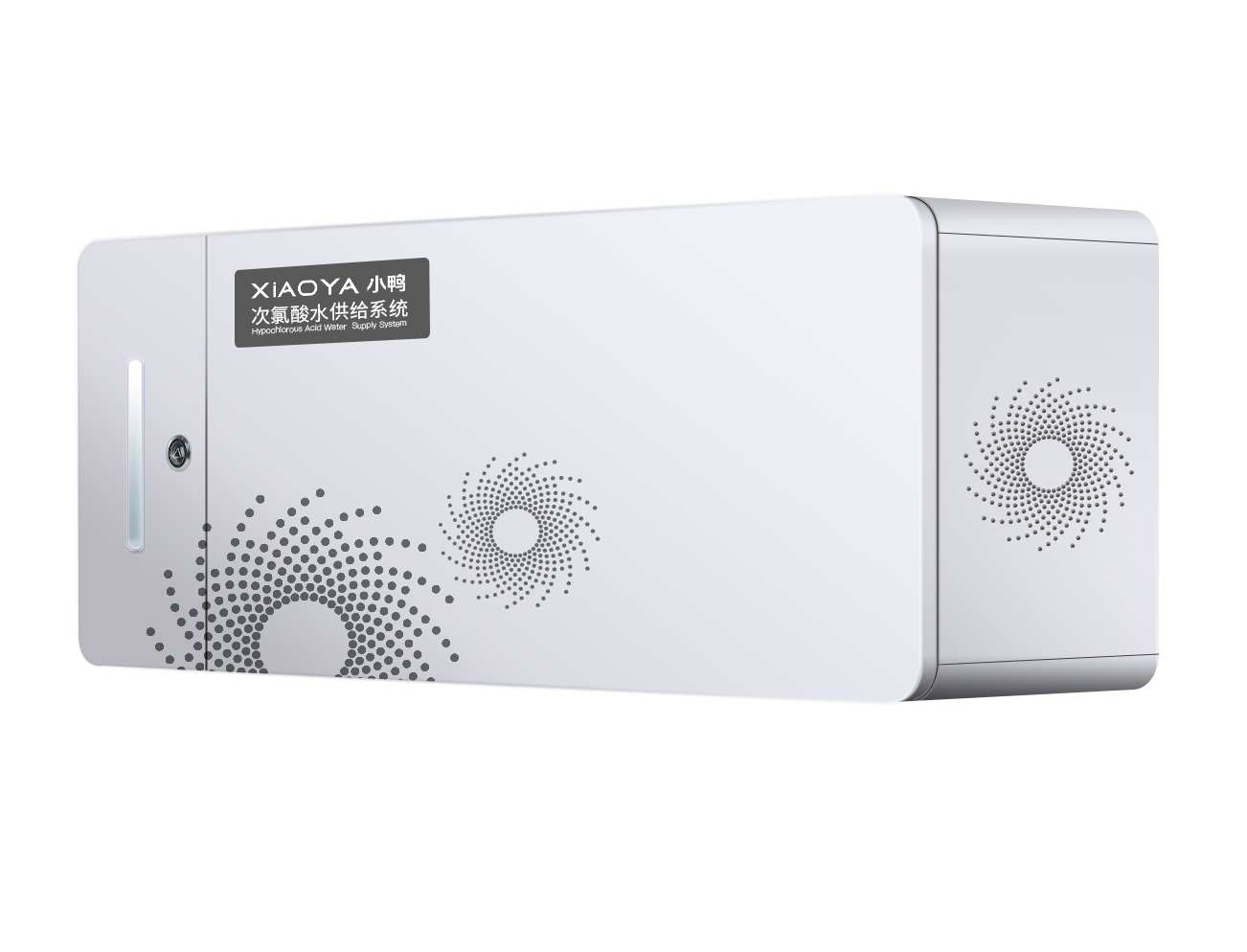
Mobile or Fixed: Start With the Farm's Sanitation Workflow
For a large farm, the better Livestock Hypochlorous Acid Generator is rarely the one with the highest stated output. The choice depends first on where disinfection must happen, how often the demand moves, and whether the farm needs a permanent utility system or a flexible response tool.
Fixed generators generally suit farms with repeatable, high-volume sanitation routines: vehicle entry points, central wash areas, milking facilities, egg rooms, loading bays, or permanently installed spray networks. Mobile systems are more useful where barns are dispersed, production areas change by season, temporary isolation zones are created, or sanitation crews need to work across several locations without building dedicated distribution lines.
The distinction matters because a mobile unit and a fixed installation solve different operational problems. Treating them as interchangeable can lead to either underused infrastructure or a mobile system that is constantly being moved, refilled, and operated beyond its practical duty cycle.
Where Fixed Systems Create Their Value
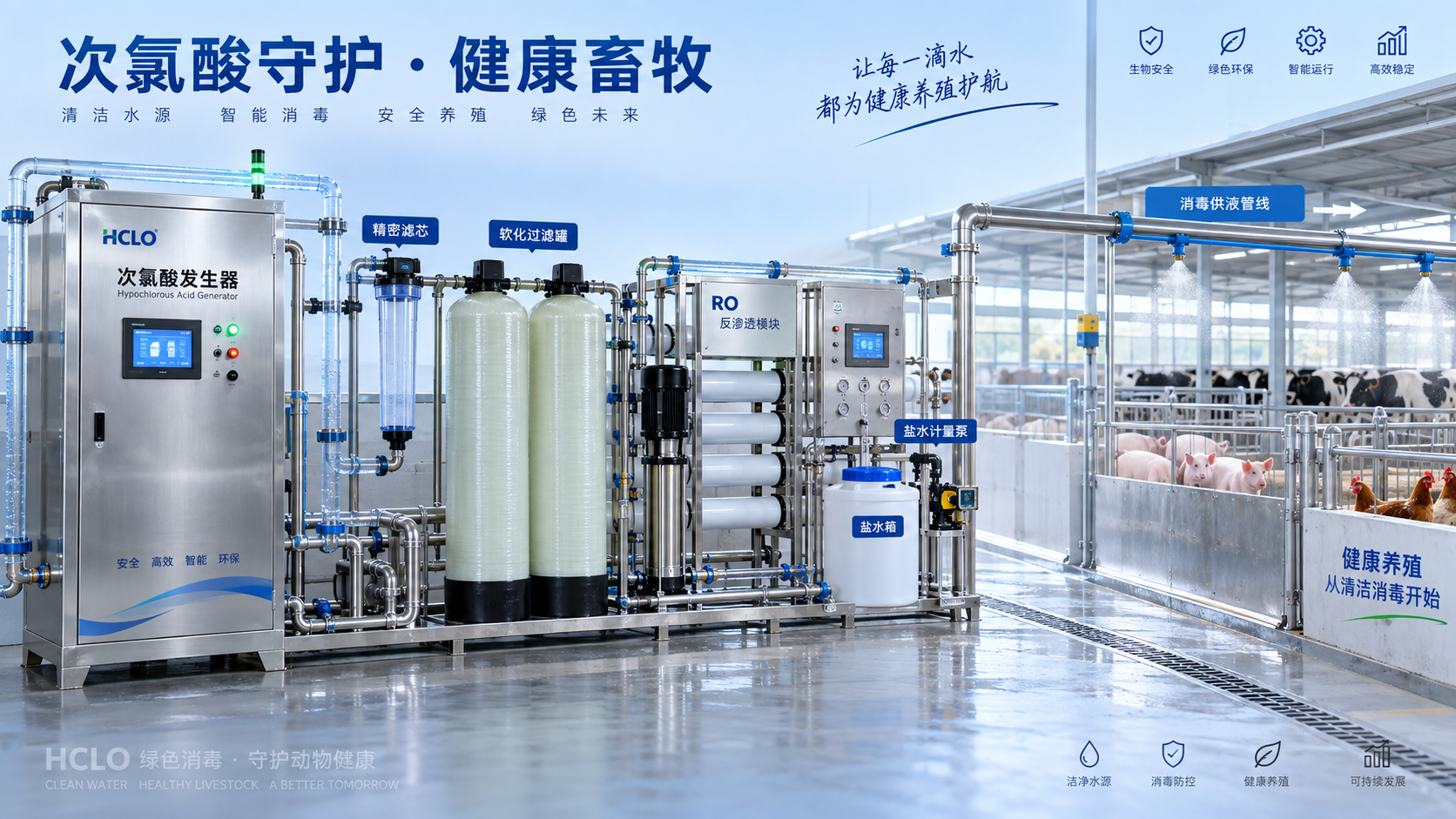
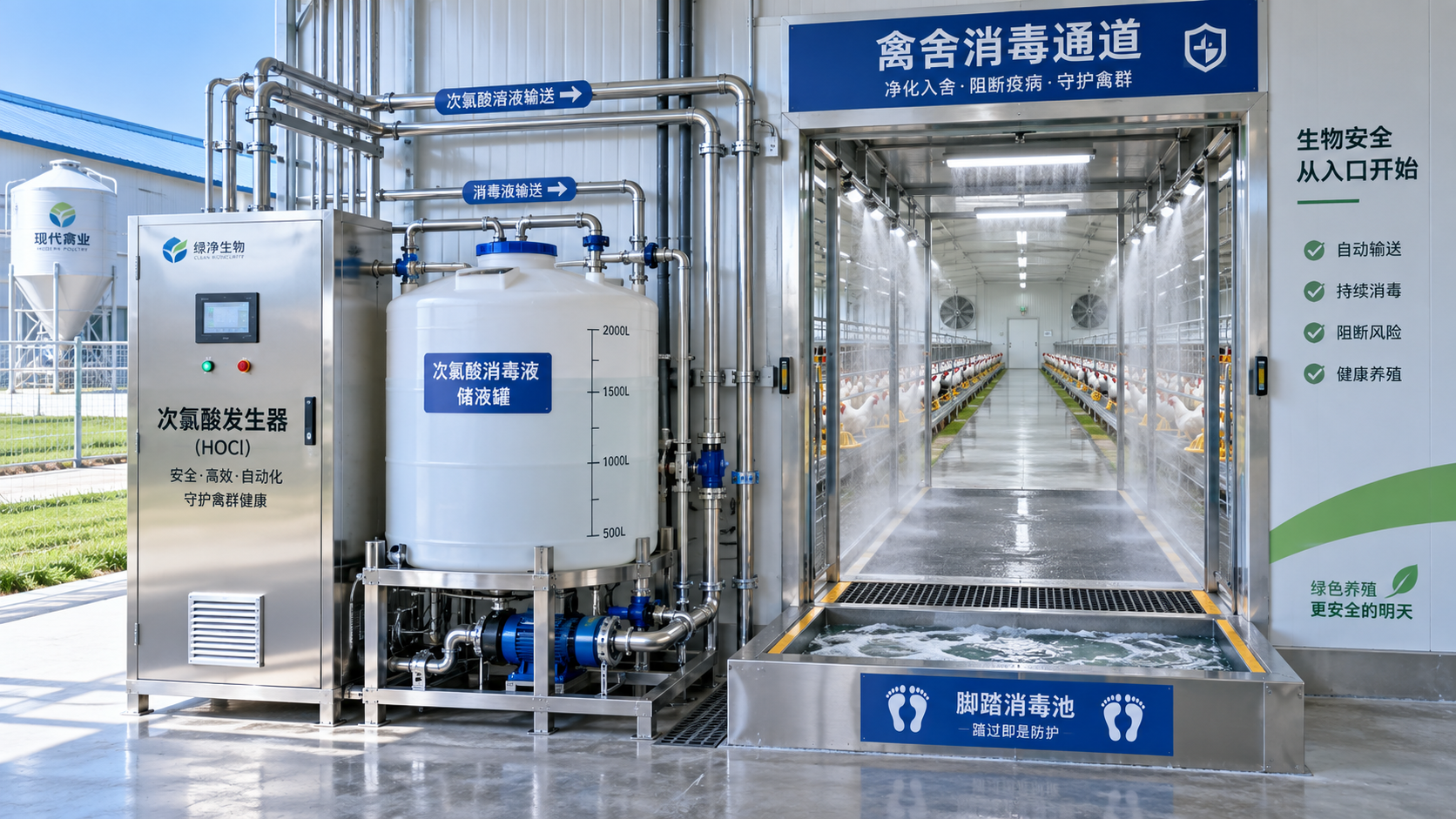
A fixed HClO generation system is normally justified when the farm has a defined, recurring demand for sanitizing solution at one or several connected points. Its main advantage is consistency. Water supply, salt dosing, generation, storage, and delivery can be designed around a known workflow instead of relying on operators to transport solution between areas.
For example, a facility that sanitizes trucks at the same gate every day, cleans equipment in a centralized wash-down room, or supplies spray lines in a stable housing block can benefit from a permanent system. The generator can be located close to water, drainage, power, and chemical-management controls, while distribution lines carry solution to the points of use. This reduces handling steps and makes concentration control easier to standardize.
Fixed installations also fit automation objectives better when sanitation is part of a repeatable process. A farm may need scheduled generation, controlled delivery to several zones, recorded operating parameters, fault alarms, or integration with existing pumps and wash equipment. These functions do not eliminate the need for supervision, but they reduce the dependence on manual preparation during routine operations.
There is a cost to this stability. Installation requires site engineering. Pipe routing, pump sizing, drainage, winter protection, electrical capacity, water quality, and access for maintenance all need attention before purchase. A fixed system can become expensive if the original process map is vague or if the farm expects major changes in building use and traffic patterns.
Business evaluators should therefore ask a simple question: will this generator serve a stable process for several years, or is it being installed because the current sanitation routine is inconvenient? The first case can support a fixed investment. The second may call for a portable or semi-mobile approach while the farm's workflow is still being defined.
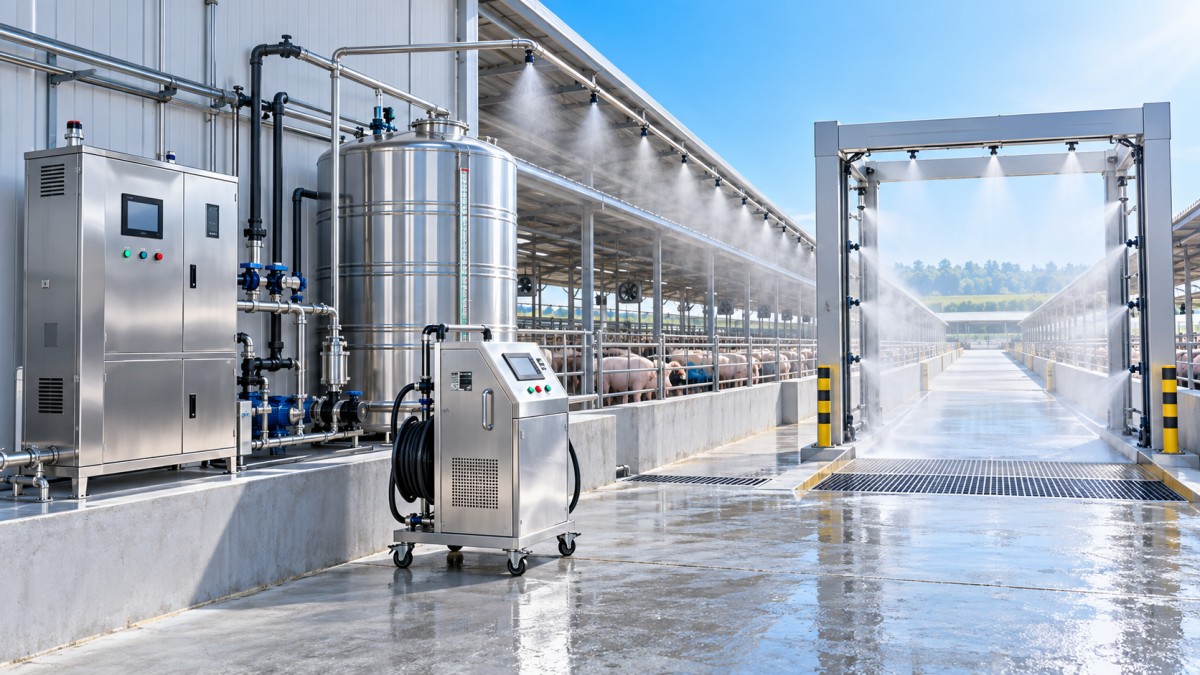
When Mobile Units Are the Better Operational Choice
Mobile generators are often selected for access rather than capacity. They allow sanitation teams to bring HClO production or prepared solution closer to remote barns, calf areas, quarantine spaces, service roads, and temporary work zones. On large sites, this can reduce the delay between identifying a sanitation need and acting on it.
They can also be useful during phased expansion. If a farm is adding housing blocks, changing traffic routes, or building a central wash facility later, a mobile unit can provide interim coverage without committing immediately to permanent plumbing. For contract sanitation teams or multi-site operators, transportability may be more valuable than a highly optimized installation at one location.
Mobility, however, introduces its own discipline. The unit must be moved safely, connected to an appropriate water and power source, protected from damage, cleaned, and replenished. Operators still need a defined method for verifying solution concentration and ensuring that the unit is used at the intended treatment point. A portable chassis does not automatically create an effective biosecurity program.
Another limitation is peak demand. A mobile generator may produce enough solution for scheduled surface treatment, equipment sanitation, or localized response, yet be unable to support simultaneous use at several high-volume points. A farm with multiple barns may find that one mobile unit spends too much time in transit or waiting for generation cycles. In that situation, adding units can be less economical than creating a central fixed supply for core routines.
Capacity Must Be Matched to Use Rate, Not Farm Size
“Large farm” is an incomplete sizing criterion. Two operations with the same animal population can have very different sanitizing-water demand because their layout, cleaning methods, vehicle movement, equipment density, and work schedules differ.
A useful procurement calculation begins with the actual application points. Estimate the solution volume needed per treatment, the number of treatments per shift, the number of zones that may operate at once, and the time available for generation. Then add the demand from cleaning tools, boots, carts, wash-down areas, and other approved uses. The result is a required delivery profile, not merely a daily total.
For fixed systems, consider both generation capacity and buffer storage. A generator may meet daily consumption but still fall short during a short, high-demand period if the storage tank, transfer pump, or pipe network cannot deliver solution at the required flow. For mobile equipment, check whether the tank volume and output rate allow a crew to complete its route without repeated return trips or long waiting periods.
Solution concentration must also be assessed in relation to the actual application. HClO performance is influenced by concentration, pH, contact time, organic load, spray coverage, and water quality. Procurement teams should avoid comparing equipment only by maximum available chlorine concentration. A higher maximum setting does not compensate for poor cleaning practices, inadequate contact time, or inconsistent coverage.
Automation and Records Matter More in Fixed Installations
The automation requirement should reflect the risk and frequency of the process. A generator used occasionally for localized sanitation may need clear controls, reliable alarms, and straightforward maintenance. A system supplying several critical points every day needs more: repeatable dosing, real-time monitoring, operating records, and a practical way to identify deviations before they affect sanitation coverage.
PLC-based controls can be valuable when they provide usable operating information rather than simply adding a touch screen. Concentration, pH, ORP, salt-feed status, water supply, and fault conditions are relevant because they help supervisors verify that the generator is producing within the farm's established operating range. Data export can support internal reviews, particularly where sanitation routines are tied to quality assurance or third-party audit requirements.
Control features should be assessed alongside serviceability. An automated system that requires specialist intervention for routine calibration, cleaning, or troubleshooting can create operational exposure if the farm is distant from technical support. The supplier should be able to explain which maintenance tasks belong to farm staff, which require a trained service technician, and what happens if a sensor, pump, or electrolytic cell fails.
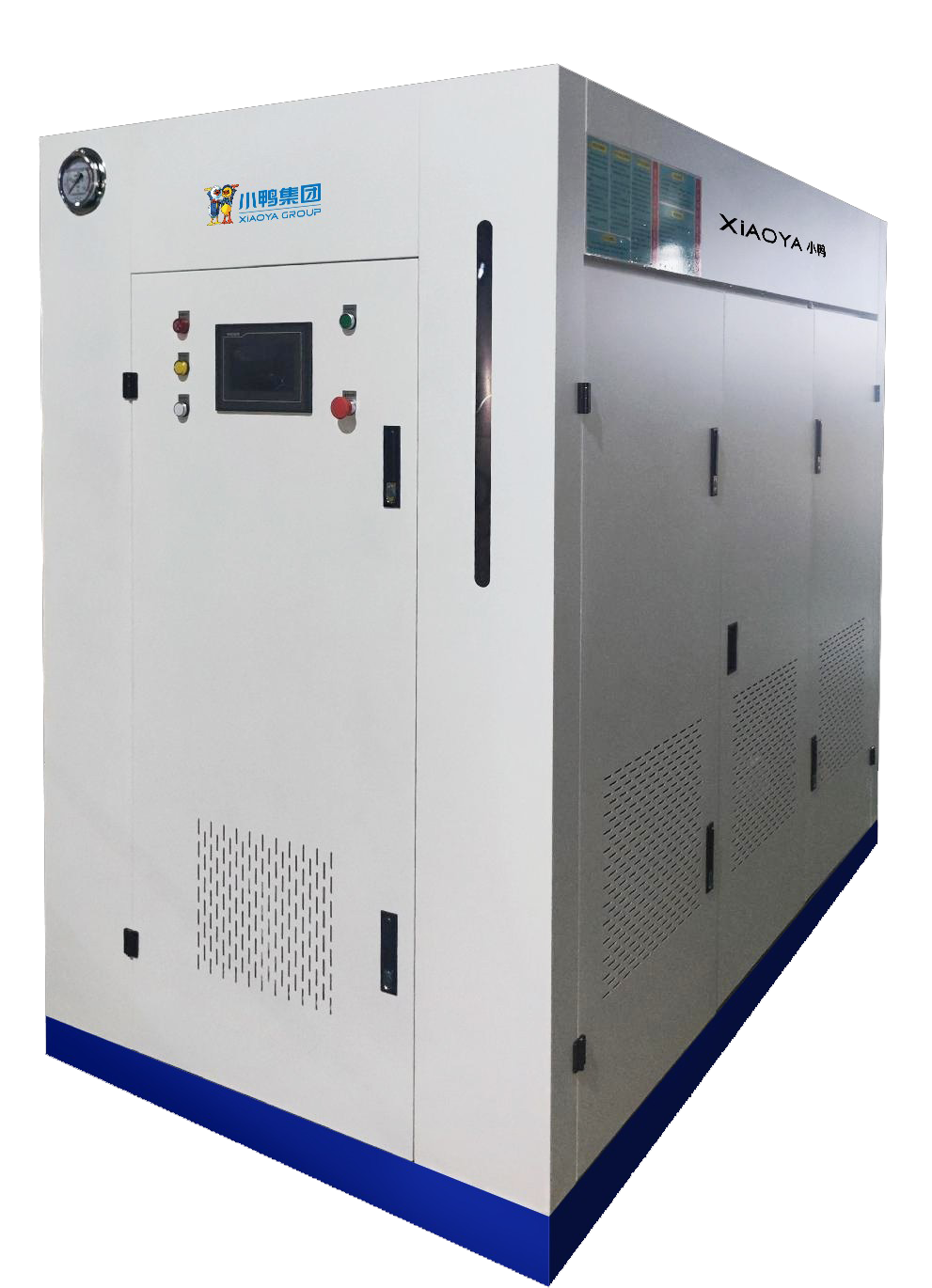
As a reference point for evaluating controls, the Electrolytic Salt Hypochlorous Acid Water Generator | For Fresh‑Cut Produce Processing uses PLC touch-screen monitoring, adjustable concentration, and data export functions. Its 50 L/h output is designed for a different processing application, so it should not be treated as a direct livestock sizing recommendation. It does, however, illustrate the type of operating visibility buyers should examine when comparing on-site HClO generation equipment.
Maintenance, Water Quality, and Downtime Risk
Both mobile and fixed systems rely on the same basic discipline: suitable water, controlled salt input, clean hydraulic components, and proper care of the electrolytic cell. Water hardness, suspended solids, and mineral content can affect scaling and maintenance frequency. A buyer should ask for the acceptable feed-water range and any pretreatment requirement before assuming that an available farm water source is adequate.
Fixed systems may be easier to maintain because they are installed in a protected service area with stable connections and room for access. They can also be easier to inspect routinely. Their downside is concentration of risk: if a central generator is the sole source for several sanitation points, an outage can affect a large portion of the operation.
Mobile units distribute that risk differently. A breakdown may affect one route or one crew, while another unit can potentially be reassigned. Yet mobility increases exposure to rough handling, hose damage, connection errors, weather, and inconsistent cleaning. The right comparison is therefore not “which machine needs less maintenance?” but “which maintenance model can this farm reliably execute?”
A Practical Selection Path
A fixed generator is usually the stronger choice when sanitation demand is centralized, repeated, and tied to permanent infrastructure. It supports standardization, higher throughput, and more integrated automation when the facility layout is stable.
A mobile generator is usually the stronger choice when coverage must follow changing work locations, the site has dispersed buildings, or the farm is expanding in stages. It offers flexibility, but only when crews can manage transport, replenishment, verification, and routine care without disrupting the sanitation schedule.
- Map every use point and identify which ones require daily, high-volume supply.
- Separate peak flow demand from total daily consumption.
- Review water quality, drainage, power availability, and weather exposure before choosing installation type.
- Define who will check concentration, replenish inputs, clean components, and respond to alarms.
- Evaluate backup arrangements for the sanitation points that cannot tolerate generator downtime.
For many large farms, the answer may be a mixed arrangement: a fixed system for central, repetitive sanitation and a mobile unit for remote areas, seasonal work, or response capacity. That decision should follow the farm's operating map, not a generic preference for portability or automation.
NEWS
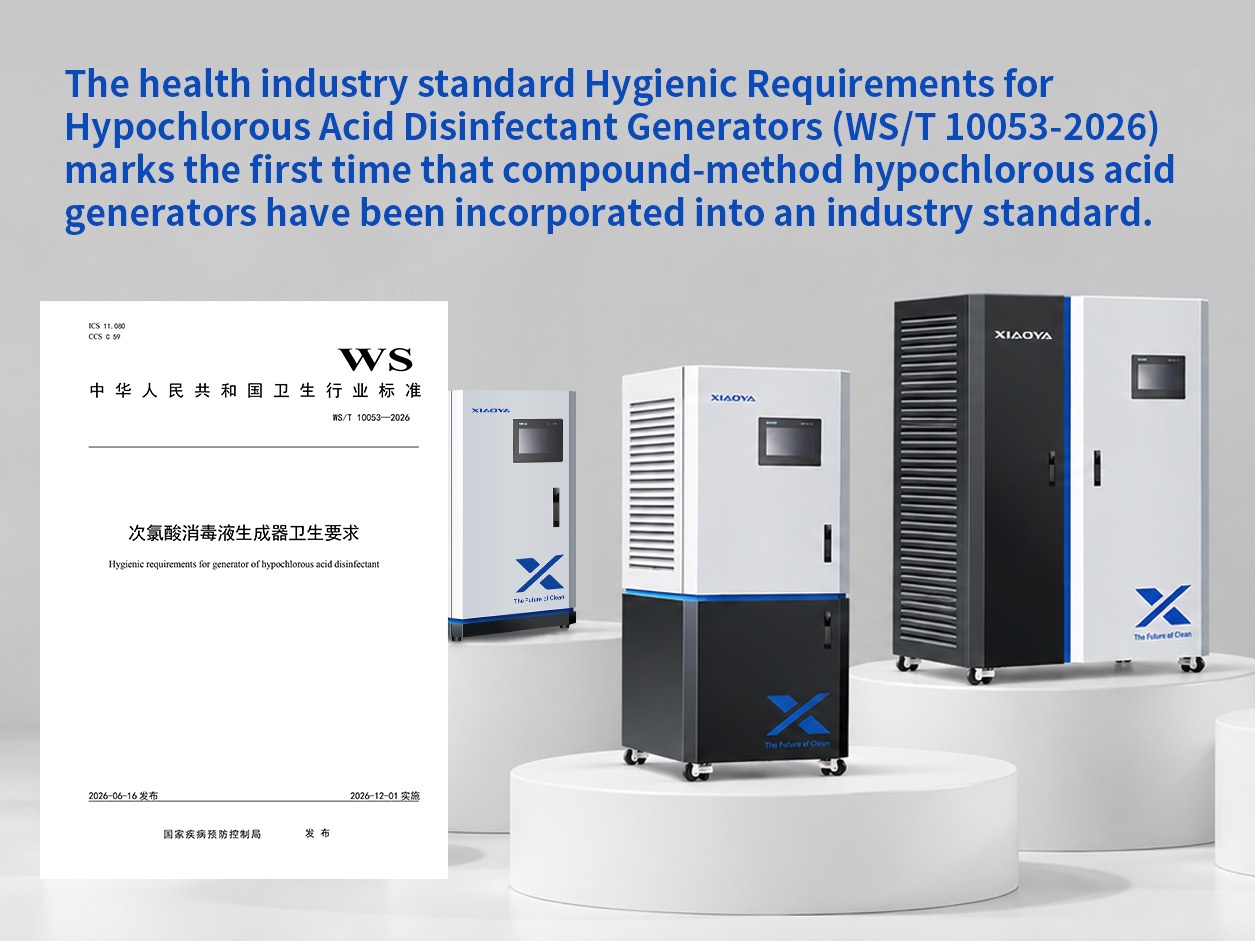
 WS/T 10053-2026 Includes the Compound Method for the First Time: Standard Signals and Market Opportunities for Mass Agricultural Production of Hypochlorous Acid Generators
 Comparing Mobile and Fixed Livestock HClO Generators for Large Farms
 Water Quality Requirements for Livestock Hypochlorous Acid Generation
- Livestock Hypochlorous Acid Generators for Biosecurity at Poultry Farms
 HClO Generator Hygiene Protocols for Veterinary Clinics and Pet Hospitals
Leave us a message

Xiaoya Group was founded in 1979,expert in the electrolyzed water industry.
Get in Touch
*We respect your confidentiality and all information are protected.