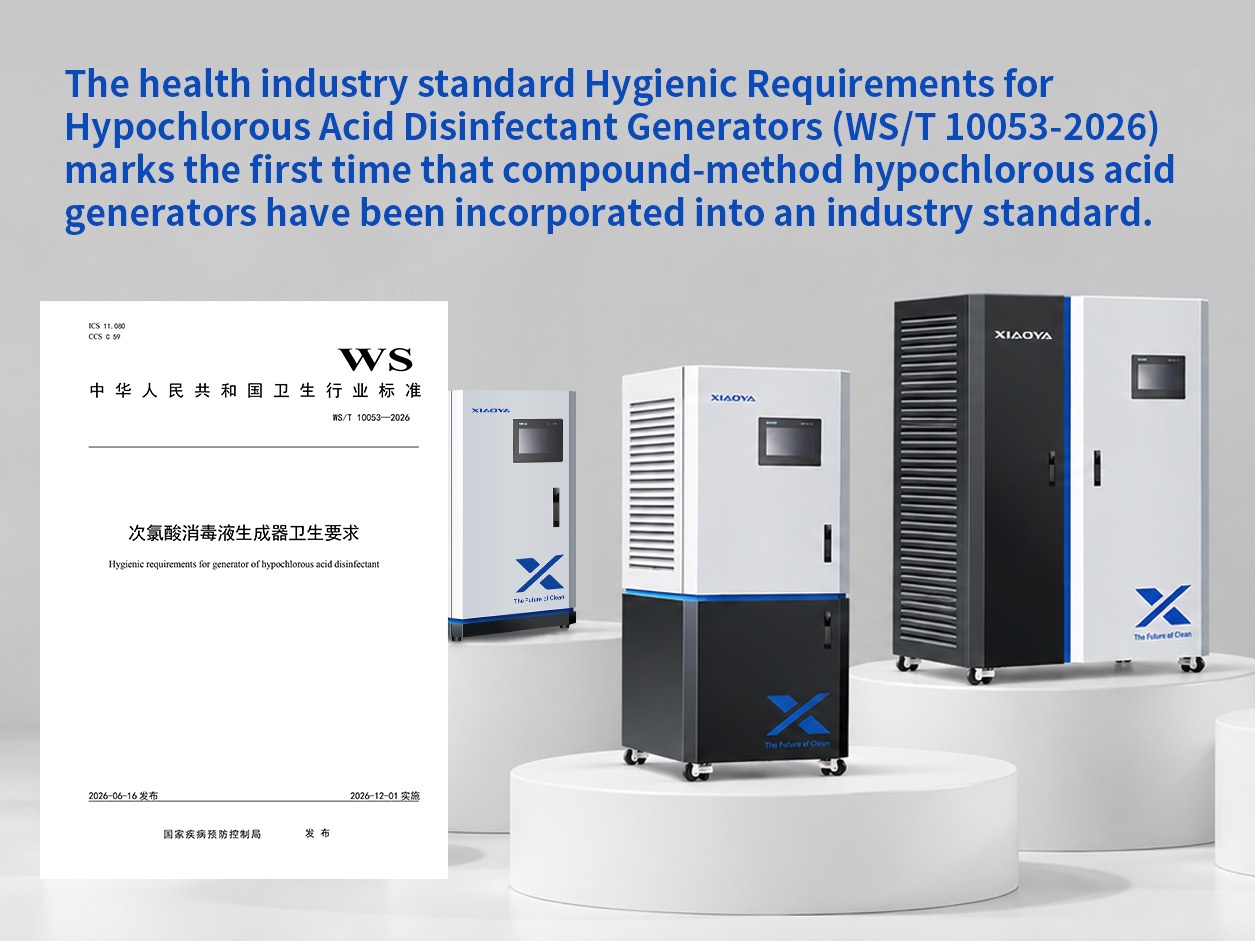
From GB 28234-2020 to the new industry standard: The market is driving the standard, and the standard is validating the market.
WS/T 10053-2026 Hygienic Requirements for Hypochlorous Acid Disinfectant Generators has officially included compound method hypochlorous acid generators into the industry standard for the first time. Viewing this merely as a routine text update underestimates its significance. Compared with the existing national standard framework represented by GB 28234-2020, this shift resembles a route-level adjustment: the compound method is no longer just a technical option in the market, but an officially recognized compliance pathway within the standard system.
The underlying logic directly points to mass production in agriculture.
1. The Essence of the Standard Change: The Compound Method Enters the Standard System from Market Practice
Why did the standard adopt the compound method at this specific moment? The answer lies not in laboratories, but in field applications.
Agricultural requirements for hypochlorous acid water differ significantly from medical disinfection and daily sanitation. Agriculture demands large water volumes, high frequencies, low costs, and scalability. By reacting sodium (or potassium) hypochlorite with acidic substances such as hydrochloric acid, the compound method immediately generates high-purity hypochlorous acid water inside a raw material mixing device. It features on-site preparation, controllable concentration, on-demand generation, and low cost—qualities that perfectly match agricultural mass production.
Therefore, the inclusion of the compound method in WS/T 10053-2026 should not be seen as an isolated technical addition, but rather as an official confirmation of a proven market path. Compared to the existing framework represented by GB 28234-2020, the core signal of this update is clear: the compound method holds superior advantages in agricultural mass production, and the standard system is now providing a compliance basis for this advantage.
2. Market Drives Standard: Validation of Market Maturity Rather Than Standard Priority
Even more noteworthy is the logic behind initiating this standard. It did not appear out of thin air. It followed a clear chain: Growing demand for green agricultural prevention and control $rightarrow$ Adoption of the compound method in mass production scenarios $rightarrow$ Gradual establishment of market awareness $rightarrow$ Initiation of industry standards $rightarrow$ WS/T 10053-2026 incorporating the compound method for the first time.
In other words, market changes drove changes in the industry standard, which in turn will accelerate market releases. Once the standard is clarified, procurement, bidding, certification, channel promotion, and base applications all have a concrete basis. While the market previously hesitated on whether this route was compliant and sustainable, the new standard acts as an official confirmation. The standard serves as a letter of confirmation for market maturity.
Only when market recognition is already established will standards follow. Business opportunities are often hidden within this time gap of "market first, standard confirmation".
3. Why Does Agricultural Mass Production Favor the Compound Method?
In crop cultivation, the application of hypochlorous acid water spans the entire production cycle:
Seed Soaking & Disinfection: Seed activation and germination;
Soil & Facility Disinfection: Alleviating continuous cropping obstacles;
Foliar Spraying During Growth: Preventing fungal diseases such as powdery mildew, gray mold, root rot, and downy mildew, as well as various bacterial and viral diseases;
Post-Harvest Preservation: Extension into cold chain disinfection.
Because hypochlorous acid water decomposes into water and trace salt during sterilization—leaving no chemical residues and causing no soil pollution—it is regarded by the industry as a green plant protection measure capable of partially replacing chemical pesticides. Practical data shows that under specific scenarios, it can substitute 30% to 50% of chemical pesticide usage. However, achieving this replacement in agriculture requires a stable, low-cost, and large-scale supply. The compound method excels in this regard. This is the fundamental reason why the market chose the compound method and why the standard subsequently adopted it.
4. Hypochlorous Acid Water + Silicone Adjuvants: From a Single Product to a Synergistic Solution
While hypochlorous acid water possesses strong bactericidal capabilities, as a water-based formulation, it faces challenges on crop leaves, such as uneven spreading, poor adhesion, and susceptibility to rain wash-off, which affect efficacy. Agricultural silicone adjuvants fill this gap. Mostly non-ionic surfactants like polyether-modified trisiloxanes, they possess extremely low surface tension—able to reduce the surface tension of an aqueous solution to approximately 20.5 mN/m at a dosage of just 0.1%.
Their functions can be summarized as follows:
Reduces contact angle between the liquid and the leaf surface, causing droplets to spread rapidly and uniformly cover both sides of the leaf and hidden areas;
Facilitates systemic absorption of active ingredients through stomata using strong penetration properties;
Enhances rainfastness, minimizing chemical runoff and waste;
Improves overall efficacy by 30% to 50%.
Hypochlorous acid water provides a broad-spectrum, safe, and residue-free bactericidal foundation, while silicone adjuvants ensure uniform coverage, deep penetration, and lasting adhesion. Combined, they form a complete prevention chain of "sterilization + spreading + penetration + persistence," creating a synergistic "1+1>2" control model.
This model is particularly suited for scenarios with high food safety requirements, such as organic farms, greenhouse facilities, and pollution-free cultivation bases, with potential extension to field crops, post-harvest fruit and vegetable preservation, and cold chain transportation.
5. Market Outlook: Industrial Opportunities Unlocked by Standard Changes
From a market perspective, the first-time inclusion of the compound method in WS/T 10053-2026 releases industrial opportunities in at least four key directions:
1. Equipment Side: A compliance window opens for agricultural-grade compound hypochlorous acid generators. High-flow, corrosion-resistant, online precision-controlled, and mobile or fixed equipment are all primed to enter the agricultural mass production market.
2. Agricultural Supplies Side: Shifting from selling standalone products to offering integrated green prevention and control solutions. Combining hypochlorous acid water with silicone adjuvants enables models like per-acre service packages, plant protection bundles, and subscription supplies, enhancing repeat purchases and channel stickiness.
3. Cultivation Side: Reducing pesticide usage while increasing efficiency directly translates to cost savings and price premiums. Replacing 30%–50% of chemical pesticides lowers pesticide residue risks, raising organic certification probability and brand premium margins.
4. Post-Harvest & Cold Chain Side: Fruit and vegetable preservation and cold chain disinfection are immediate expansion scenarios for hypochlorous acid and adjuvant solutions. The market exists not only in the fields, but also across post-harvest and circulation phases.
Furthermore, this direction aligns with policy trends advocating for "chemical pesticide reduction, zero pesticide residues on agricultural products, and green agricultural development," making it a sustainable, long-term track.
Conclusion: The Standard Has Sounded the Gun, the Market is Running
The inclusion of the compound method in WS/T 10053-2026 is not an act of technical self-indulgence, but a direct response to answers already provided by the agricultural mass production market.
Market shifts drove the industry standard update, and the updated standard validates and accelerates market adoption.
The synergistic application of compound hypochlorous acid generators and silicone adjuvants represents more than a product combo—it forms a green protection system spanning pre-production, in-production, and post-production phases.
The standard has sent its signal. Moving forward, whoever takes the lead in deploying compliant equipment, stable solutions, and channel services will secure the next wave of incremental dividends in green agricultural prevention and control.
NEWS
 WS/T 10053-2026 Includes the Compound Method for the First Time: Standard Signals and Market Opportunities for Mass Agricultural Production of Hypochlorous Acid Generators
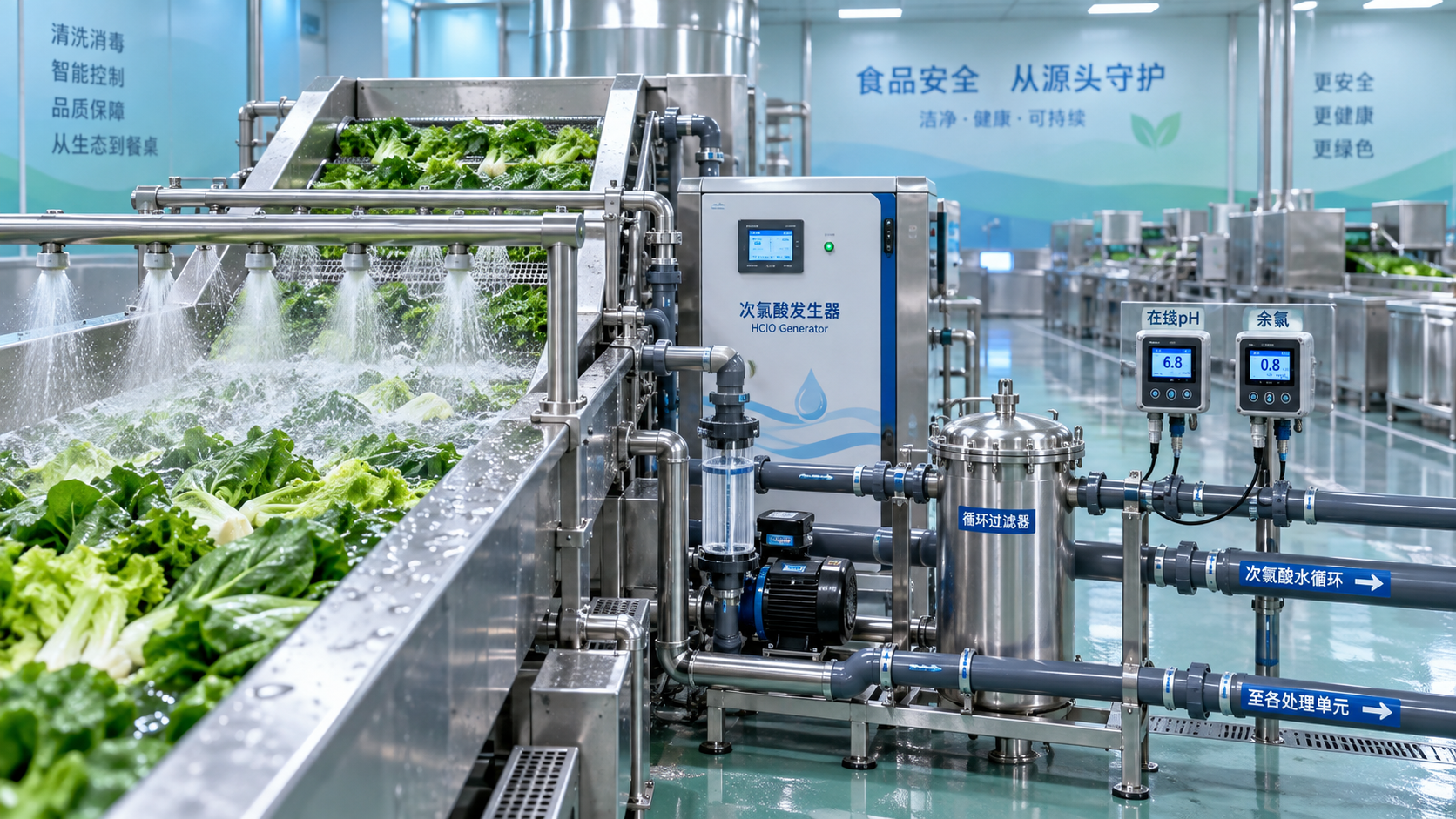
 Food Hypochlorous Acid Generators for Produce Washing: Key Process Controls
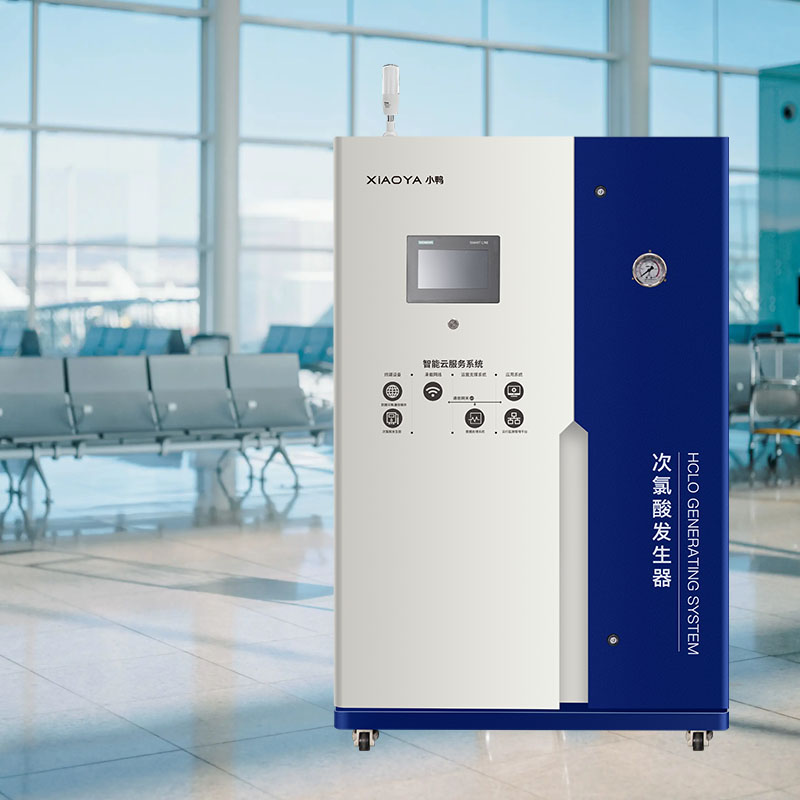
 On-Site HClO Production Versus Ready-Made Disinfectants for Public Facilities
- Disinfection Compliance Checks for Public Hypochlorous Acid Generator Systems
- Public Hypochlorous Acid Generator Maintenance to Prevent Output Instability
Leave us a message

Xiaoya Group was founded in 1979,expert in the electrolyzed water industry.
Get in Touch
*We respect your confidentiality and all information are protected.