news
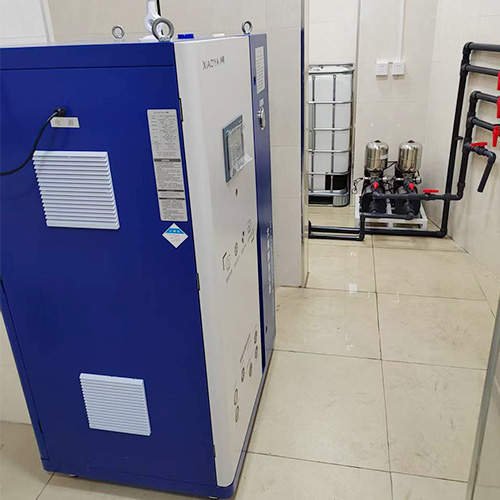
At a hospital cleaning station, a delayed refill can disrupt an entire shift. Yet replacing delivered disinfectant with on-site production is not simply a plumbing upgrade. Integrating a Medical Hypochlorous Acid Generator requires coordination between engineering, environmental services, infection prevention, procurement, and occupational safety. The objective is to make approved cleaning workflows more dependable—not to introduce an unvalidated disinfectant because it is convenient to produce.
For project managers, the central question is whether the generator, its output, and the distribution process can meet the hospital’s requirements consistently. That decision starts with the intended use and ends with evidence from the actual point of dispensing.
Define the clinical boundary before specifying equipment
“Hospital disinfection” is too broad to serve as a project specification. Routine environmental surfaces, isolation rooms, food-service areas, reusable instruments, and patient-contact applications have different requirements. A solution acceptable for one area may be unsuitable for another.
Start with a use-case register identifying surfaces, target organisms, cleaning methods, required contact times, and exclusions. Infection prevention should approve this register before engineering sizes the system. Hypochlorous acid solution should not be assumed suitable for instrument sterilization, high-level disinfection, skin application, or room fogging without specific authorization and supporting evidence.
The term “medical” in a product description does not establish regulatory clearance. Confirm the requirements applicable to on-site disinfectant generation in the project’s jurisdiction, including whether the generated solution is authorized for the intended hospital use. Request efficacy evidence covering the specified concentration, contact time, soil conditions, and organisms of concern. Claims involving spores or outbreak pathogens deserve particular scrutiny.
Size the station around demand, not the generator’s maximum output
A generator can have ample hourly capacity and still leave staff waiting if dispensing, storage, or distribution is poorly designed. Map consumption by shift and location, including routine cleaning, terminal cleaning, and foreseeable demand peaks. Distinguish total daily consumption from the volume needed during the busiest refill period.
A useful preliminary relationship is:
Required production rate = planned solution demand ÷ available production hours.
This calculation needs allowances for maintenance, quality checks, and production interruptions. Storage can buffer peaks, but larger tanks are not automatically better: holding time, light, temperature, and container conditions can affect solution quality. Establish validated storage limits rather than designing around indefinite stockpiling.
Also compare centralized generation with smaller local stations. Centralization may simplify service access, while distributed stations can reduce transport distances. For a hospital with several buildings, the labor required to move filled containers may matter as much as production capacity.
Translate a candidate machine into an installation specification
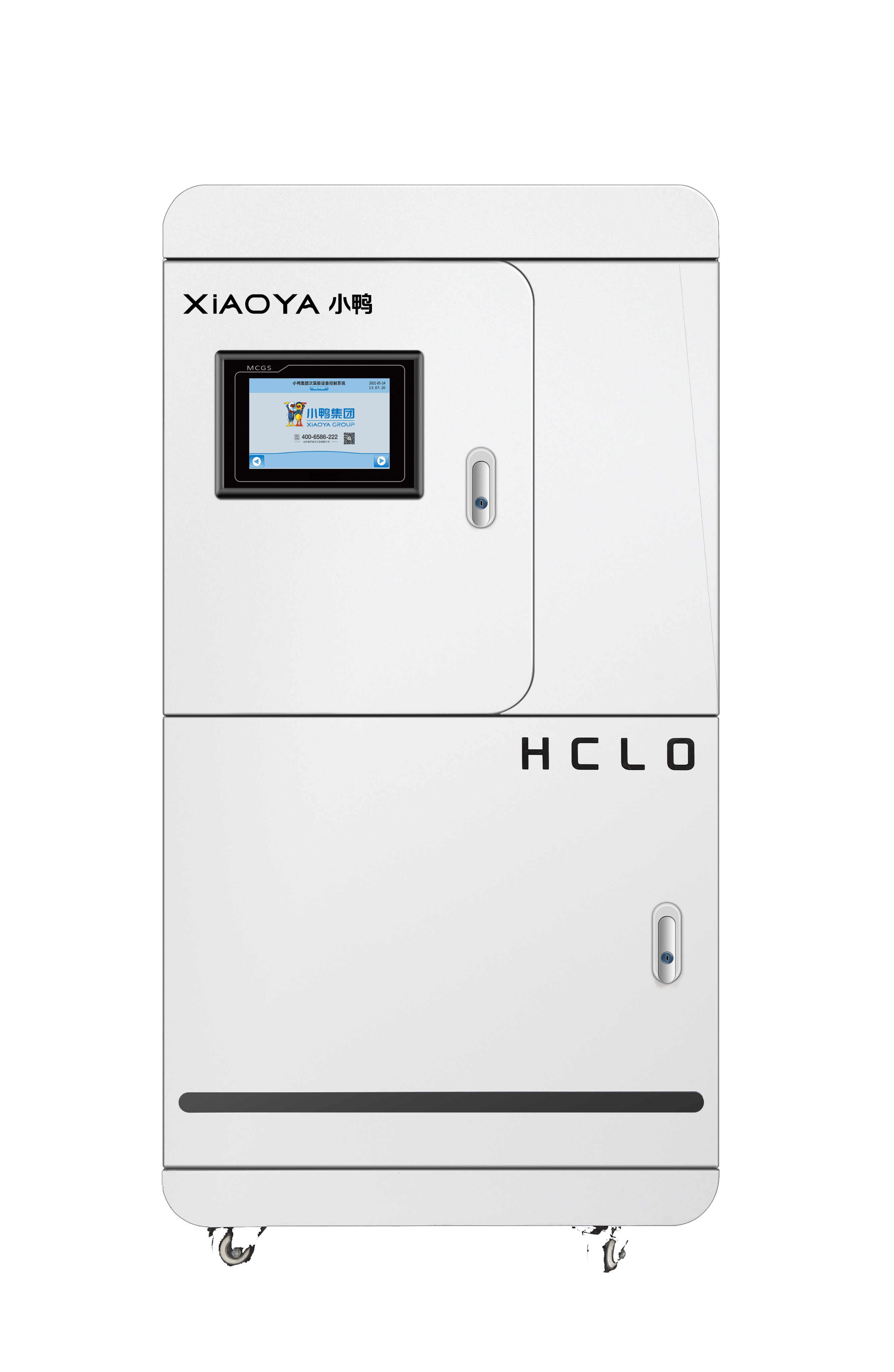
A commercially available reference point is the Hypochlorous Acid Generator for Catering Disinfection, model AQ-P300. Its stated specifications include 120–300 L/h output, customizable available chlorine concentration of 10–200 mg/L, pH of 5.0–6.5, and a 5 L electrolyte tank. These figures help frame an engineering assessment; they do not demonstrate suitability for hospital environmental disinfection.
Because the model is presented for catering applications, any hospital proposal requires a separate review of intended use, regulatory documentation, efficacy evidence, and material compatibility. References to US FDA or GB 14881 should be checked for their exact scope rather than interpreted as blanket medical approval.
The installation specification should also address backflow protection, drainage, leak containment, ventilation requirements, and any necessary water pretreatment. Keep electrolyte handling and electrical equipment away from uncontrolled splash zones. Locate the station where staff can refill containers without blocking circulation or crossing clean and dirty workflows.
Build quality control into the dispensing workflow
The practical value of a Medical Hypochlorous Acid Generator depends on consistent solution quality at the point of use. Available chlorine concentration and pH influence performance, but neither replaces validated efficacy data or the required wet contact time.
Define acceptable operating limits jointly with the manufacturer and infection prevention team. Then specify what happens when output falls outside those limits. A warning on a display is insufficient if staff can continue filling containers with unverified solution.
- Production controls: confirm feed conditions, electrolyte status, and operating parameters before releasing output.
- Independent checks: use a validated method appropriate to the concentration range; establish test frequency through commissioning and risk assessment.
- Release records: retain test results, production time, operator identification, and relevant alarms.
- Exception handling: stop dispensing or segregate suspect solution, investigate the cause, and document release before resuming use.
Automated monitoring can reduce manual work, but verify which sensors, interlocks, logs, and communication interfaces are actually supplied. Do not infer hospital-grade monitoring from a general claim of “intelligent concentration control.” Sensors also need calibration, maintenance, and a defined response when readings are unavailable or unreliable.
Design for the person filling the bottle at the end of a shift
A cleaning station succeeds when its safest workflow is also its easiest. Dispensing should minimize splashes and spills, accommodate approved containers, and prevent confusion between disinfectant and other liquids.
Container labels should identify the solution, intended use, production or fill time, and validated use-by limit. Where containers are reused, specify their cleaning, inspection, and refilling procedure. Avoid uncontrolled topping-up, which obscures solution age and traceability.
Training must connect machine operation with surface practice. Staff still need to remove soil as required, apply enough solution, and keep surfaces wet for the approved contact time. They should know when to use an alternative disinfectant and whom to contact after a failed quality check.
Do not translate catering-oriented claims such as “non-corrosive,” “zero harm,” or “no secondary rinsing” into universal hospital instructions. Confirm compatibility with metals, seals, coatings, electronics, and furnishings. Rinsing requirements and protective measures must follow the applicable product instructions, surface requirements, and workplace assessment. Never mix the generated solution with other chemicals.
Commission the complete process—not just the machine
A successful startup demonstration proves only that equipment runs. Hospital acceptance should show that approved solution reaches users reliably under representative operating conditions.
Begin with installation checks covering utilities, protective systems, drainage, access, and documentation. Challenge operating controls, alarms, shutdown behavior, and recovery after power or water interruption. Then assess performance during realistic refill peaks and verify solution quality after the intended storage and transport period.
Run the initial rollout within a defined, approved area. Review dispensing delays, labeling errors, test failures, operator feedback, and maintenance workload before expanding. Keep an approved alternative disinfectant available throughout commissioning and establish a continuing outage procedure.
Make lifecycle ownership part of the approval decision
Compare the full operating model: utilities, electrolyte, testing supplies, containers, labor, servicing, replacement components, and backup stock. Potential purchasing savings can be offset by distribution work or demanding maintenance requirements.
Choose a supplier able to support the transition from equipment delivery to sustained operation through clear technical documentation, training, spare parts, and service arrangements. Assign named owners for daily checks, calibration, quality review, and breakdown response.
The strongest integration proposal connects approved uses, dependable utilities, controlled dispensing, documented quality, and maintainable automation. When those elements align, on-site HOCl generation can become a practical part of hospital cleaning infrastructure—without asking infection prevention teams to trade confidence for convenience.
NEWS
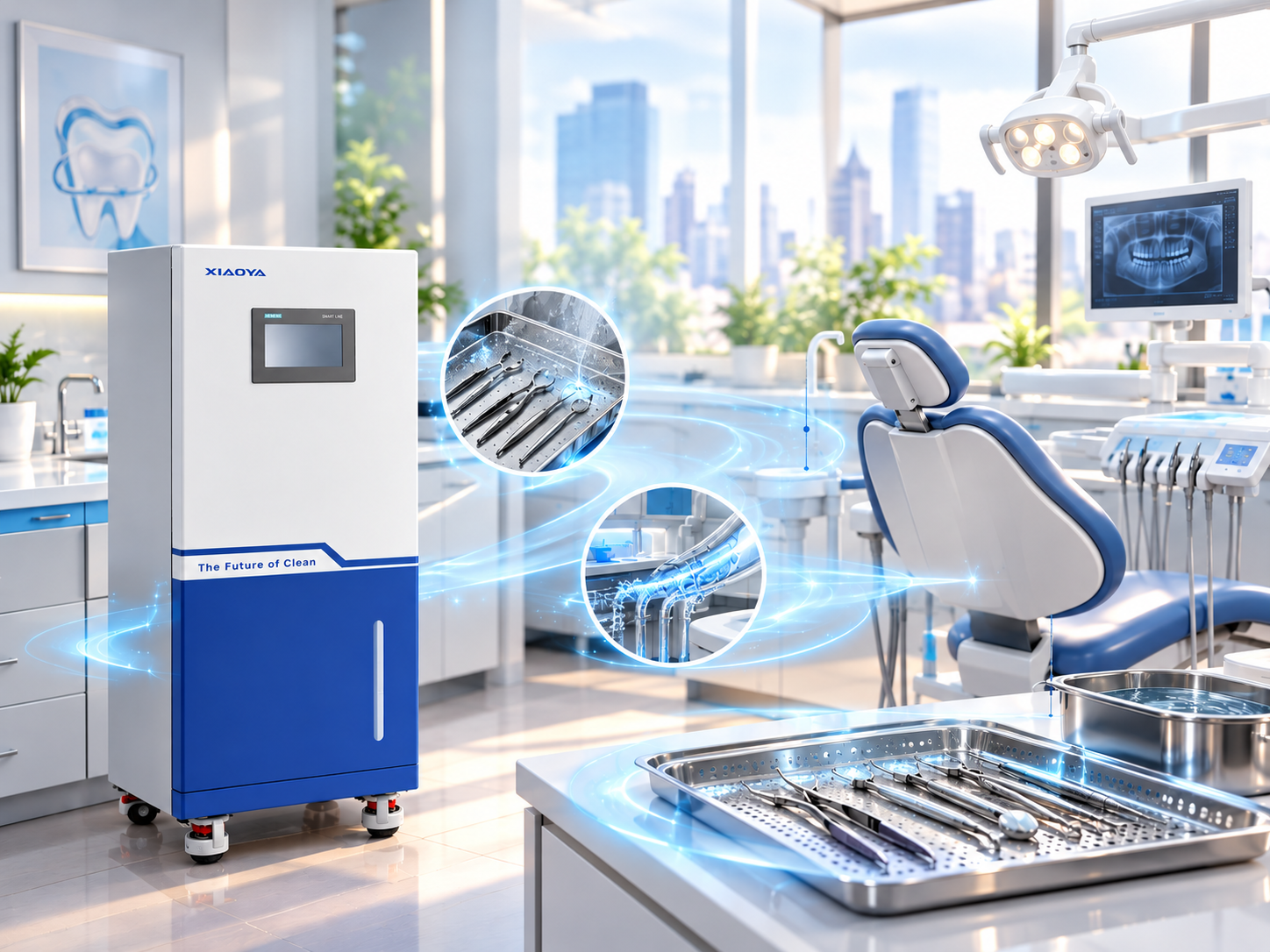
 Disinfection Empowers Orthodontic Safety: Hypochlorous Acid Generators Build a Sterile Defense Line for Dental Instruments
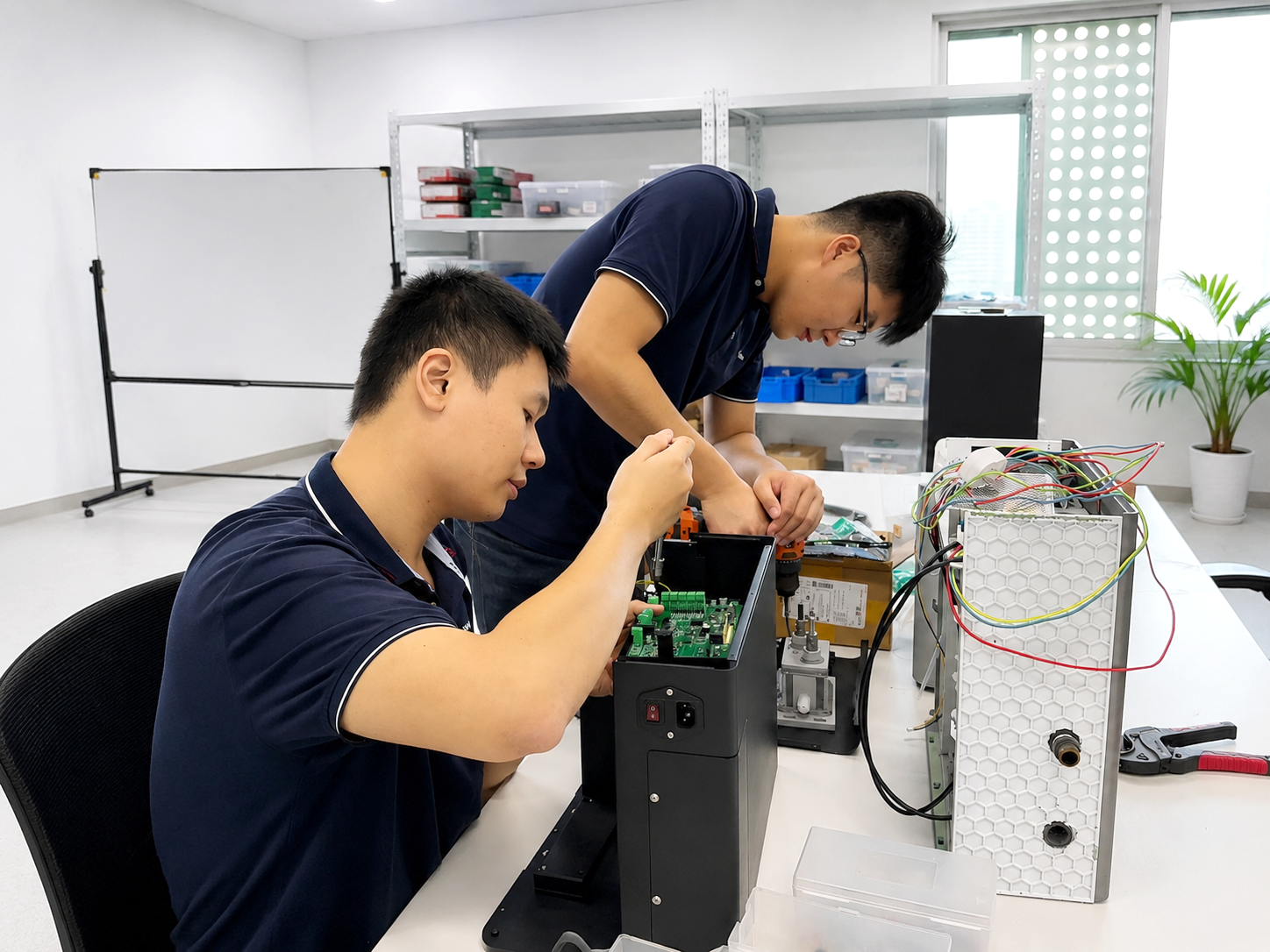
- Accumulating Strength and Reaching New Heights: A Record of the Production Breakthrough of Xiaoya Small Home Appliances' Hypochlorous Acid Generators
 Integrating a Medical HOCl Generator into Hospital Cleaning Stations
 Verifying HOCl Concentration and Contact Time for Hospital Surfaces
 Medical HOCl Generator Claims: What Regulatory Evidence Is Needed?
Leave us a message

Xiaoya Group was founded in 1979,expert in the electrolyzed water industry.
Get in Touch
*We respect your confidentiality and all information are protected.