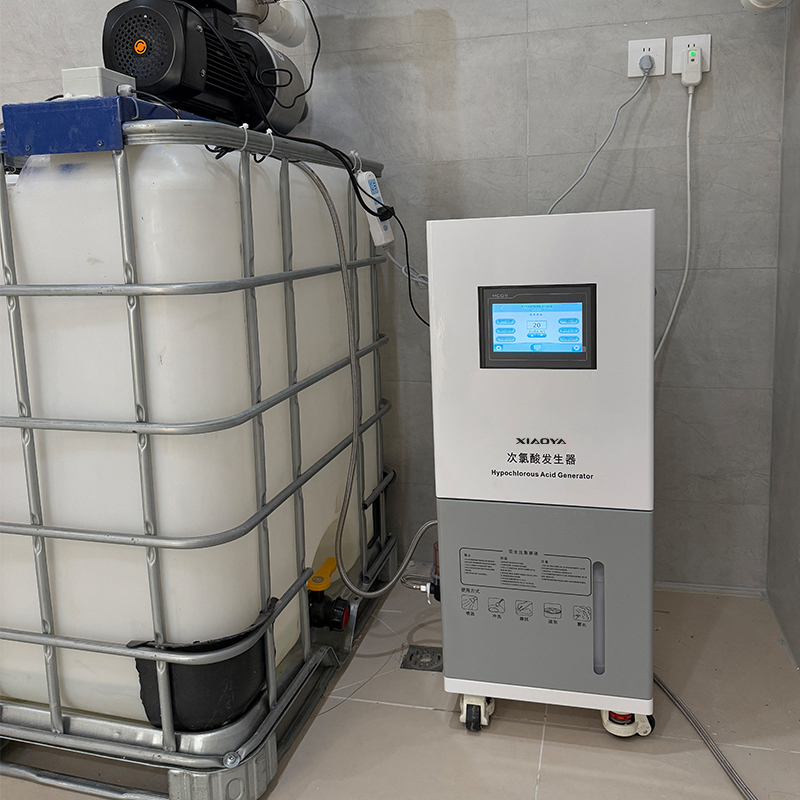
Why component design matters
An on-site hypochlorous acid generation system is not judged by output alone.
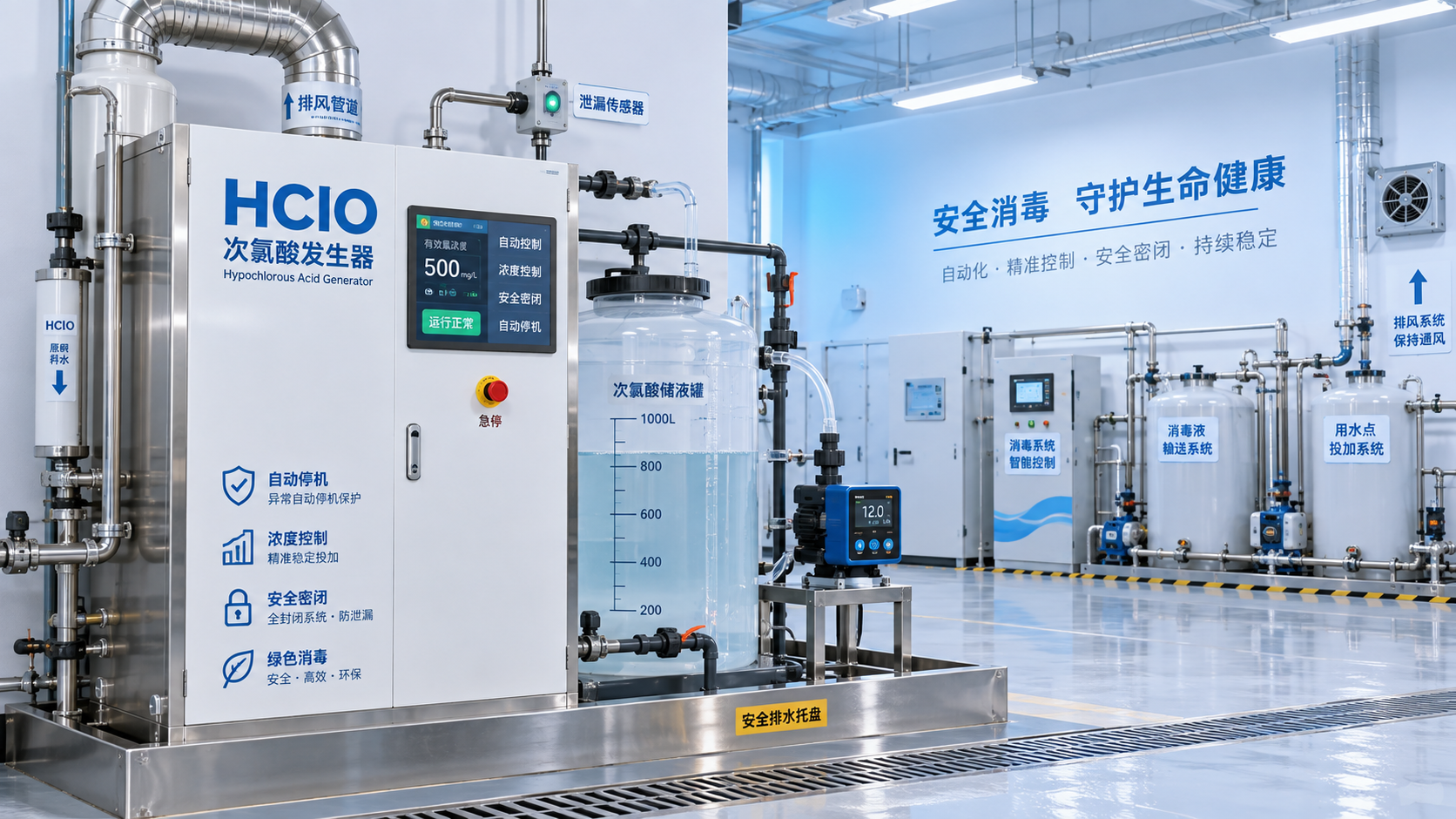
Its real value comes from how the cell, brine section, control unit, and storage section work as one automated process.
That matters in appliance manufacturing, healthcare disinfection, clean-energy support equipment, and compact household systems.
In these settings, stability, service access, and operator safety often matter more than headline capacity.
For an enterprise combining R&D, production, and operation, component-level decisions also affect standardization across multiple product lines.
The system is a controlled electrochemical chain
At a practical level, an on-site hypochlorous acid generation system converts salt solution, water, and electrical energy into a usable disinfecting solution.
Performance depends on reaction conditions staying within a narrow and repeatable range.
If one section drifts, concentration, pH behavior, gas handling, and storage reliability can all change.
This is why technical reviews usually move beyond chemistry and focus on equipment architecture.
A quick functional view
The cell sets the performance ceiling
The cell is the core of the on-site hypochlorous acid generation system because it determines reaction efficiency and operating stability.
Electrode design affects current distribution, heat generation, scaling tendency, and maintenance intervals.
Membrane-free configurations are often attractive where simplicity, compactness, and lower consumable complexity are priorities.
A relevant reference is Sodium Hypochlorite Electrolyzer, which uses membrane-free electrolysis with low-concentration sodium chloride solution.
That approach reduces dependence on added chemical agents and can fit automated disinfection equipment more easily.
Another important point is gas management.
When hydrogen is generated, the ability to remove it quickly from the electrode zone directly affects safety and consistency.
Brine supply is where many systems quietly fail
The brine section looks simple, but it often causes concentration drift, unstable output, and premature fouling.
A reliable on-site hypochlorous acid generation system needs controlled salt dissolution, clean water input, and repeatable dosing.
If brine is too weak, output falls and the control system compensates inefficiently.
If brine is too strong, side effects inside the cell can increase.
In compact appliance-related applications, evaluators usually look for fewer manual adjustments and easier cleaning access.
- Check whether salt concentration is monitored or assumed.
- Review tank and piping materials for corrosion resistance.
- Confirm how the system handles sediment, scaling, and refill errors.
- Verify whether flow remains stable during continuous operation.
Control architecture turns chemistry into automation
In automated equipment, the control unit is not an accessory.
It is what makes the on-site hypochlorous acid generation system predictable at scale.
Power regulation, conductivity feedback, temperature monitoring, tank levels, and alarm logic should all connect into one operating strategy.
This is especially relevant when systems are integrated into healthcare appliances, water treatment equipment, or disinfection devices with varying duty cycles.
A better control design also shortens troubleshooting time.
Clear fault codes, trend data, and interlocks help distinguish feed issues from electrolysis issues.
When hydrogen is a by-product, control logic should also support ventilation, shutdown protection, and safe restart conditions.
Storage is about preservation, not just capacity
The storage section protects product quality after generation.
Even a well-designed on-site hypochlorous acid generation system can underperform if storage conditions accelerate decomposition.
Tank material, light exposure, temperature, venting, and turnover rate all matter.
Short residence time is usually better than oversized storage.
For installations linked to production lines or sanitation routines, matching generation rate to actual consumption is often more efficient than building excess reserve.
That choice also reduces chemical aging and simplifies quality control.
What deserves closer review during evaluation
A useful comparison framework goes beyond nameplate output.
It looks at how each subsystem supports operating reality.
- Map the required disinfectant demand by hour, not by day alone.
- Compare cell design, gas handling, and cleaning frequency together.
- Review whether the brine system tolerates real water quality conditions.
- Check automation depth against maintenance skill available on site.
- Assess storage sizing based on turnover and solution stability.
In some cases, a related electrolytic sodium hypochlorite platform offers useful design clues.
For example, membrane-free electrolysis with push-type hydrogen removal and high-flow circulation can indicate a practical safety-oriented design path.
From component review to system decision
The best on-site hypochlorous acid generation system is usually the one with the fewest weak links between reaction, control, and storage.
A strong evaluation starts by defining output targets, duty cycle, water conditions, safety requirements, and service expectations.
From there, component review becomes more objective.
That makes it easier to compare different architectures, including options such as Sodium Hypochlorite Electrolyzer, within the broader disinfection equipment strategy.
The next useful step is to build a checklist around cell structure, brine quality control, automation logic, and storage protection before moving into final selection.
NEWS
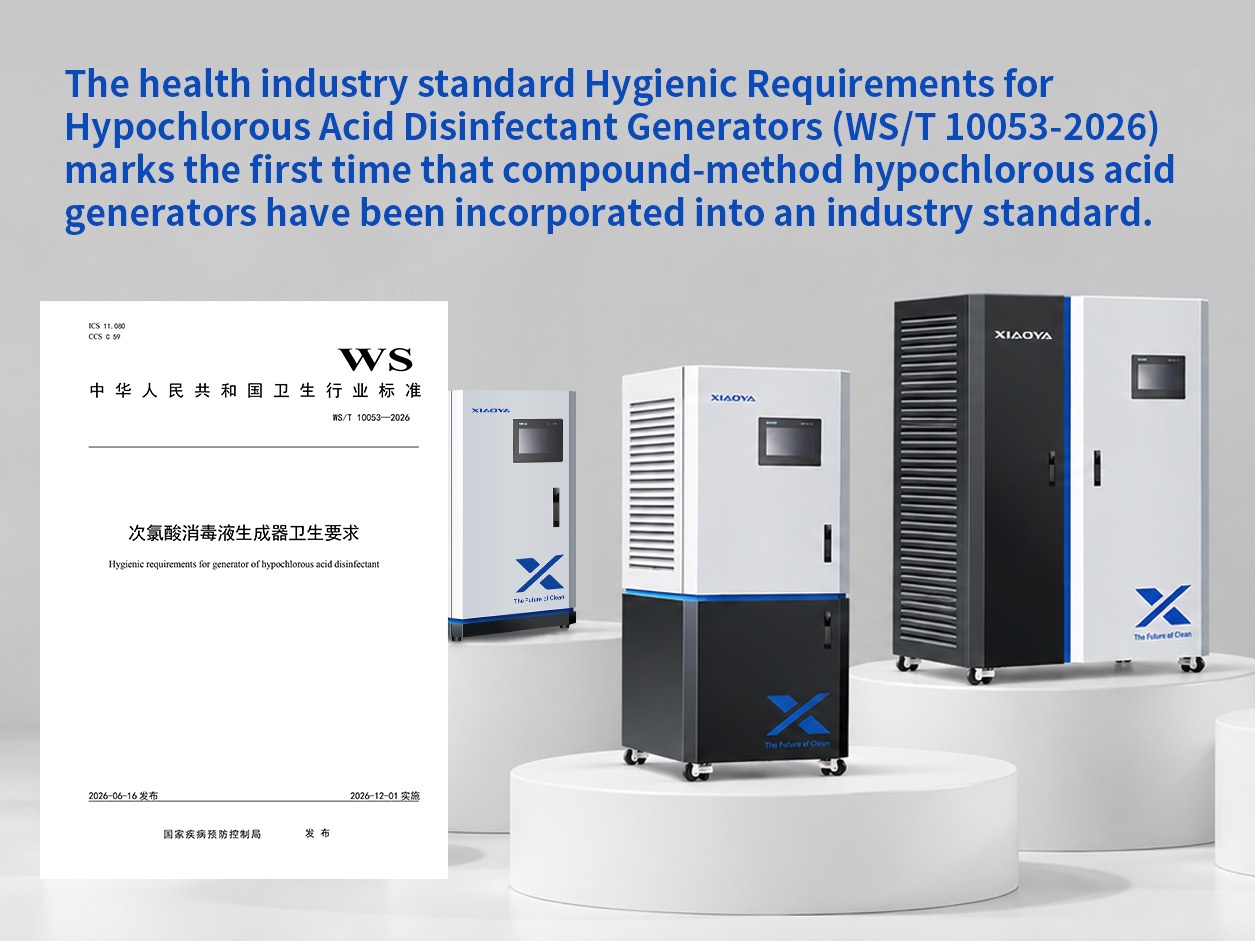
 WS/T 10053-2026 Includes the Compound Method for the First Time: Standard Signals and Market Opportunities for Mass Agricultural Production of Hypochlorous Acid Generators
 Evaluating HClO Generator Lifecycle Costs Beyond the Initial Equipment Price
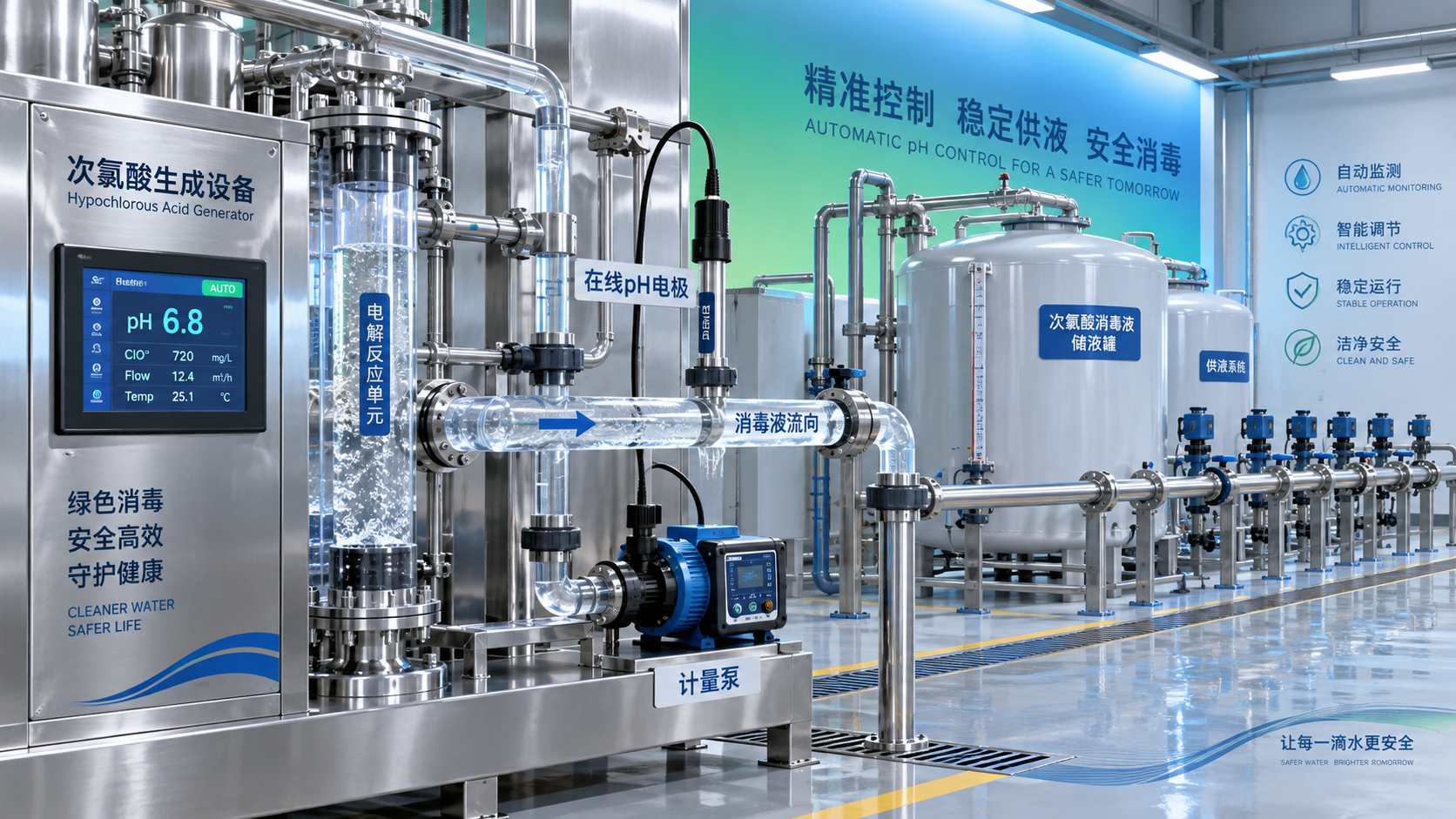
 HClO Generator pH Control: Why It Determines Disinfection Performance
- Which Safety Features Matter Most When Buying an HClO Generator?
 Troubleshooting Low ORP Readings on a Hypochlorous Acid Machine
Leave us a message

Xiaoya Group was founded in 1979,expert in the electrolyzed water industry.
Get in Touch
*We respect your confidentiality and all information are protected.