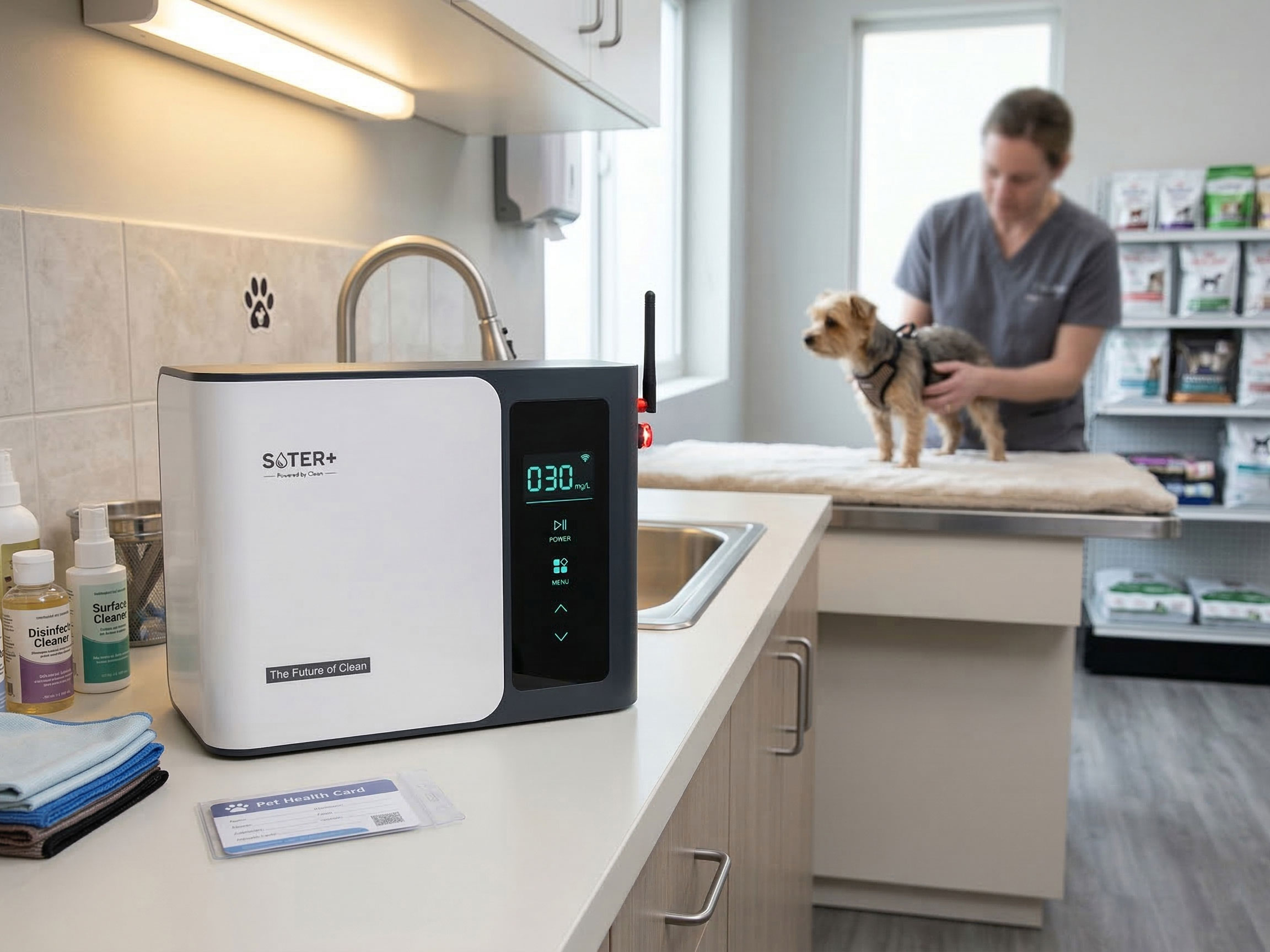
In multi-pet households, the harshness, toxic residue, and germicidal efficiency of disinfection products remain primary concerns for pet owners. Traditional 84 bleach is highly alkaline and damages respiratory tracts; phenolic and quaternary ammonium compounds can cause liver and kidney damage if licked over time; and alcohol is flammable with limited efficacy against fungal spores.
Slightly Acidic Hypochlorous Acid (HOCl), leveraging its natural biomimetic germicidal mechanism and mild physicochemical properties, is fast becoming the standard choice for households, breeding catteries/kennels, and veterinary clinics. It balances professional-grade efficacy with full-scenario practical convenience.
I. Technical Principles: Why HOCl is Inherently Suited for Pet Disinfection
1. Safety Built on Physicochemical Compatibility
With the chemical formula HOCl, within the slightly acidic pH range of 5.5–6.5, 98.5% of the species in the system exist as uncharged, neutral molecules. This perfectly matches the natural pH of canine and feline skin (6.2–7.4). It is non-corrosive and non-irritating to skin and mucous membranes, has no pungent chlorine odor, and is unlikely to trigger stress responses in pets.
After disinfection, it breaks down naturally, leaving behind only water and trace chloride ions—free of halogenated by-products and chemical residues. Its acute oral toxicity meets food-contact safety standards. Even if pets lick floors, food bowls, or bedding, there is no risk of liver or kidney toxicity. Pregnant women, infants, and pets can safely share the disinfected space, achieving true human-pet co-living safety.
2. Broad-Spectrum, High-Efficacy Triple Inactivation Mechanism
HOCl is an innate germicidal factor in the animal immune system that achieves triple inactivation through strong oxidation:
Destroys Bacteria: Penetrates microbial cell membranes and oxidizes intracellular enzyme systems, terminating bacterial metabolism.
Inactivates Viruses: Cleaves viral capsid proteins and nucleic acids, efficiently inactivating stubborn viruses such as feline panleukopenia (FPV), canine parvovirus (CPV), and coronaviruses within 30 seconds.
Inhibits Fungi: Disrupts fungal spore cell walls, suppressing the growth of skin fungi such as ringworm (Microsporum canis) and Malassezia.
At standard concentrations of 80–120 ppm, it achieves a bacterial and fungal kill rate of≥99.99%,rapidly severing transmission pathways for zoonotic diseases.
3. Comparison with Traditional Disinfectants
4. Key Indicators for Professional Selection
Available Chlorine Concentration: 80–100 ppm for daily environments/body surfaces; 100–150 ppm for deep disinfection of isolation areas; 50–80 ppm for food utensils and raw meat handling.
pH Level: Strictly controlled between 5.0 and 6.5 (slightly acidic) to avoid mucous membrane burns caused by high-pH industrial-grade hypochlorite.
Storage Stability: Keep sealed and protected from light. Unopened shelf-life degradation ≤10%,over 12 months; consume within 30 days once opened.
Regulatory Compliance: Must possess disinfectant product registration and pass CMA testing for mucosal irritation, acute toxicology, and microbial inactivation.
II. Four Standardized Disinfection Protocols: Covering Health Risks Across All Life Stages
Scenario 1: Home Environment — Full-House Pathogen Interception
Hard Surfaces (Floors, Cages, Litter Boxes, Food Bowl Stands): Spray daily until fully wet and leave for 3 minutes to take effect. Spray litter boxes immediately after scooping, and perform a deep 10-minute soak in original solution weekly. Small molecules penetrate crevices to eradicate Toxoplasma gondii and Salmonella without damaging metal or plastic materials.
Soft Fabrics (Pet Beds, Pet Clothes, Plush Toys): Spray weekly until damp and allow to air-dry naturally; add original solution during machine washing for washable fabrics. Disinfect daily during pet skin disease outbreaks or isolation periods to penetrate fiber interiors and inactivate fungal spores without aging or bleaching fabrics.
Spatial Air Fogging Disinfection: Close doors and windows, fog the whole house, leave sealed for 30 minutes, and then ventilate. Suspended HOCl droplets capture pathogens and dander allergens in aerosols, reducing the risk of respiratory cross-infection.
Scenario 2: Full-Process Pet Food Hygiene — Food-Grade Safety ControlRaw Ingredient Pretreatment: Soak fresh meat in a 50–80 ppm solution for 2–3 minutes, then rinse thoroughly with running water before processing. Treat thawed ingredients the same way to block cold-chain pathogens.
Equipment & Tools: Spray countertops, knives, and inner walls of food storage containers, let sit for 3 minutes, then rinse. Disinfect transport containers before and after every use to prevent cross-contamination between different ingredients.
Storage & Feeding: Disinfect and dry the inner walls of storage bins before filling; spray warehouse shelves weekly to prevent mold. Periodically disassemble and scrub food bowls and feeders; immediately disinfect the floor and replace food if spilled.
Scenario 3: Gentle Pet Care — Low-Irritation Antimicrobial Care for Mucous Membranes & Wounds
Operational Note: Avoid spraying directly into the eyes and mouth. Use only as an external topical antimicrobial aid; it cannot replace medical treatment.
Post-Outdoor Basic Cleaning: After returning home, spray paw pads, abdomen, and limbs, and wipe down to remove outdoor pathogens from lawns and soil.
Mild Skin Care: For rash or dander areas, apply with a cotton swab under veterinary guidance to inhibit surface harmful bacteria.
Perianal & Oral Care: Wipe the perianal area with hypochlorous acid wipes after defecation. Use a low-concentration diluted solution for gentle oral rinsing if contaminated matter is accidentally ingested.
Postoperative Wound Care: Apply wet gauze compresses to skin surrounding wounds to build a sterile microenvironment, reducing the risk of exogenous bacterial invasion.
Scenario 4: Real-Time Outdoor Disinfection — Blocking Outdoor Pathogens from Entering the Home
Suitable for public environments like parks, vet clinics, and grooming shops. Portable spray bottles are ready-to-use without dilution:
Outdoor Interaction Protection: Carry a portable spray bottle to wipe muzzles and paw pads after pets play or contact unfamiliar animals.
Pre-Entry Disinfection: Spray the pet's torso (avoiding the head) before entering the home, and wipe dry before letting them inside. Spray leashes, pet carriers, and travel bags, then let them air-dry.
Public Place Protection: After veterinary visits or grooming, use your own HOCl spray to disinfect examination tables and grooming tables to reduce cross-infection among pets.
III. Operational Technical Specifications & Contraindications
Incompatibility Rules: Do not mix with soap, laundry detergent, ammonia, or acidic cleaners to prevent breaking the HOCl molecular structure, which drastically reduces germicidal activity.
Storage Requirements: Store sealed at room temperature away from light. Avoid long-term storage in metal containers; light exposure accelerates the decomposition and failure of active chlorine.
Concentration Control: Do not self-formulate high concentrations(>150ppm)for prolonged skin contact with pets to avoid skin dryness/keratin damage.
Usage Details: Rinsing food-contact utensils with clean water after disinfection is recommended. Ensure a full 30-minute sealed exposure time during fogging disinfection to guarantee effective sterilization.
IV. Conclusion
Slightly Acidic Hypochlorous Acid completely overcomes the drawbacks of traditional disinfectants—such as harshness, toxicity, and incomplete sterilization—by leveraging three core technological features: biomimetic germicidal molecules, physiologically matched slightly acidic pH, and zero-residue decomposition.
When paired with four standardized protocols across home environments, pet food, pet body surfaces, and outdoor travel, HOCl comprehensively covers the full-scenario hygiene needs of pet households, breeding facilities, and pet shops. It stands as the premier professional choice for pet disinfection, perfectly balancing ultimate safety with high-efficiency sterilization.
NEWS
 Upgrade in Healthy Living: Hypochlorous Acid Generators Become the New Standard for Luxury Villas
- The Ultimate Solution to Pet Shop Disinfection Challenges! XIAOYA Hypochlorous Acid Generator: Safe Pet Protection with Peace of Mind
 Hypochlorous Acid Generator vs Sodium Hypochlorite Generator
- Hypochlorous Acid Generator Supplier
- Hypochlorous Acid Generator Manufacturer
Leave us a message

Xiaoya Group was founded in 1979,expert in the electrolyzed water industry.
Get in Touch
*We respect your confidentiality and all information are protected.