news
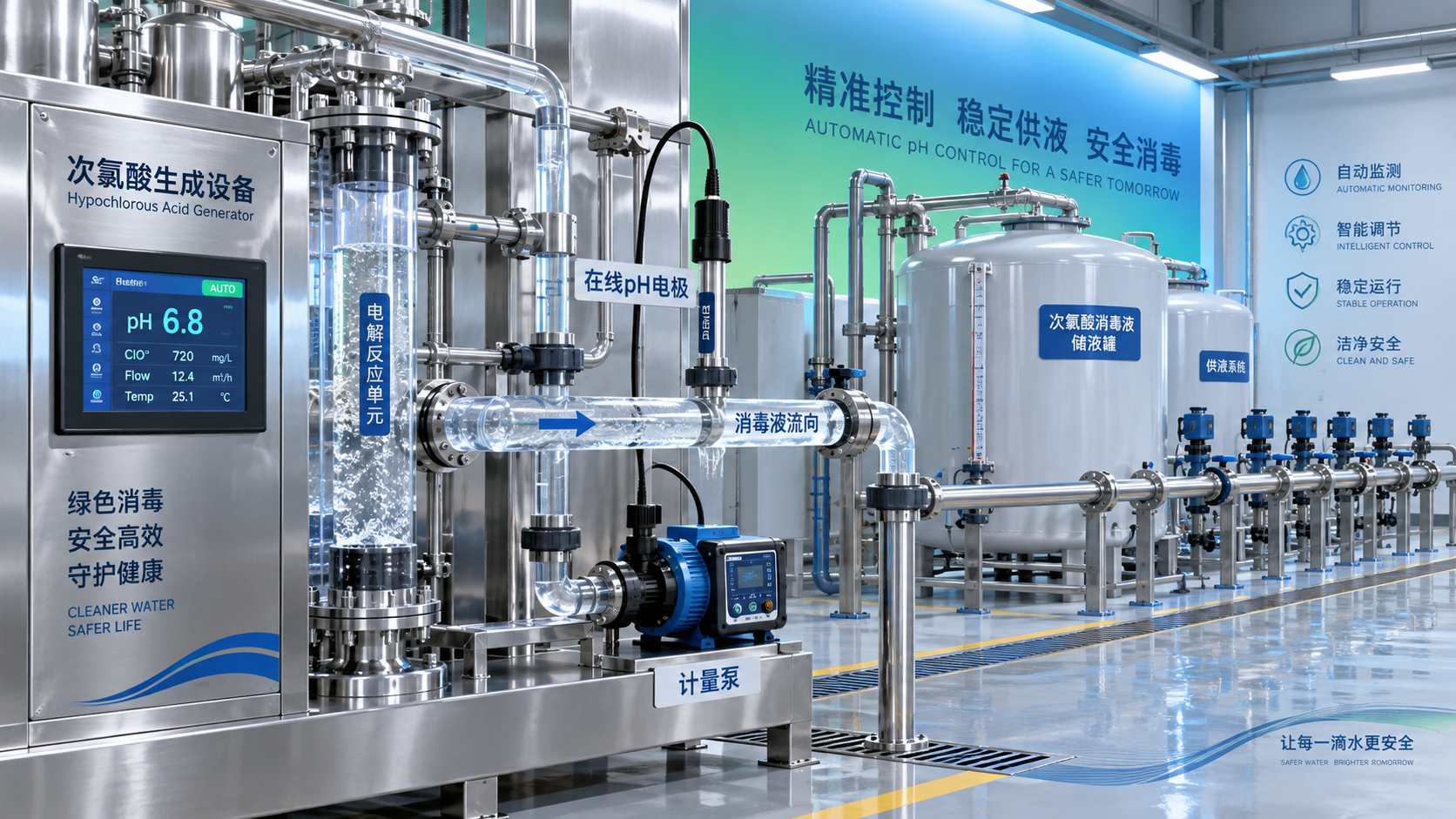
Disinfection performance from an HClO generator is governed by more than the available chlorine reading on a display. pH determines how much of that chlorine is present as hypochlorous acid (HOCl), the species valued for rapid antimicrobial action. A system can produce solution with an apparently acceptable chlorine concentration yet deliver inconsistent results if pH shifts too far from the range that favors HOCl.
For quality-control and safety managers, this makes pH a process-control variable, not a secondary product specification. It affects validation, day-to-day sanitation consistency, worker handling requirements, and the usefulness of concentration measurements. The practical question is not simply whether a generator makes chlorine-based disinfectant; it is whether it can repeatedly maintain the chemical conditions required for the intended disinfection task.
Why pH Changes the Active Chemistry
When chlorine-based electrolysis produces hypochlorous acid in water, the solution exists in an equilibrium between HOCl and hypochlorite ion (OCl-). The balance changes with pH. In a mildly acidic range, a greater proportion remains as HOCl. As pH rises, more converts to OCl-, which is generally less effective for many disinfection applications at comparable available chlorine levels.
This distinction matters because available chlorine concentration measures the total chlorine-based oxidizing capacity represented by the test method. It does not, by itself, show the proportion of the more active HOCl form. Two solutions may have the same concentration reading but different pH values and therefore different disinfection behavior.
At excessively low pH, another concern emerges: chlorine odor and gas-release potential can increase, especially where process control is poor or acidic chemicals are introduced improperly. At excessively high pH, the solution may be more chemically stable in some respects but can require longer contact times or higher dosing to achieve the same sanitation objective. The preferred operating window is therefore a controlled compromise that favors HOCl while remaining suitable for the equipment, workflow, and handling environment.
For many on-site hypochlorous acid applications, a mildly acidic to near-neutral solution is the useful target. The exact acceptance range should be tied to the use case, the required microbial reduction, contact time, organic load, application method, and any relevant local requirements. A fixed “best pH” quoted without those conditions is not an adequate sanitation specification.
A Concentration Reading Alone Is Not a Release Criterion
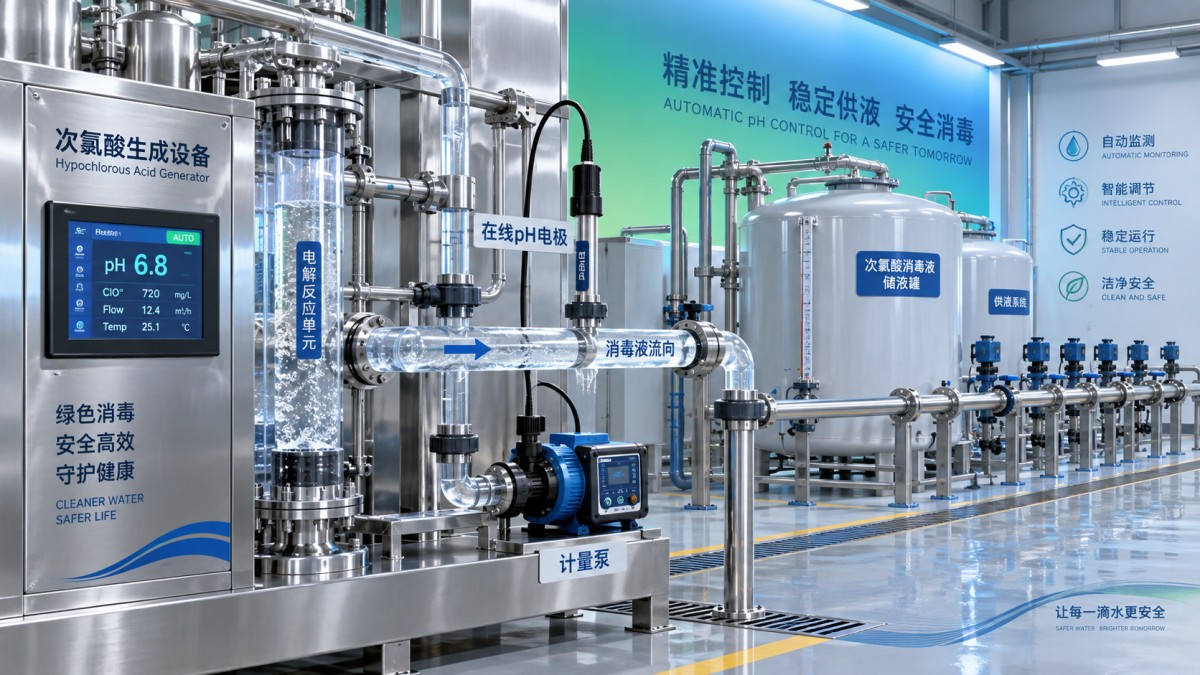
A common control weakness is releasing generated solution based only on available chlorine concentration. That approach can miss pH drift caused by source-water variation, electrolyte dosing errors, electrode aging, residual chemicals in storage tanks, or changes in the generator’s control response.
A more defensible release check links at least three measurements:
- Available chlorine concentration: confirms that the solution is within the intended dosing range.
- pH: indicates whether the active chlorine species distribution remains within the validated operating range.
- Contact time and application conditions: confirm that the delivered solution can act long enough on the actual surface, water, seed, tool, or produce-contact area.
Temperature, water quality, and soil or organic residues may also matter. Organic load consumes oxidizing species. Hardness, alkalinity, and source-water composition can affect electrolysis behavior and buffering capacity. For facilities that rely on generation every day, incoming-water monitoring is often as relevant as testing the finished disinfectant. A system that performs consistently on one water source may need different control settings after a water-supply change.
Quality teams should also distinguish between solution verification at the generator outlet and verification at the point of use. A solution can meet its target immediately after production but shift during storage, dilution, transfer through piping, or recirculation. Open containers, heat exposure, contamination, and long holding times can all undermine the relationship between the original pH setting and the solution actually applied.
What Good Automated pH Control Looks Like
In an automated HClO generator, reliable pH control is a chain rather than a single sensor. The pH probe must be appropriate for the solution, kept clean, calibrated on a defined schedule, and positioned where it represents the relevant process stream. A probe installed in a stagnant section of pipe or exposed to air bubbles may send unstable information to the controller.
The controller also needs a meaningful response path. Depending on the generator design, it may adjust electrolyte feed, water flow, electrolysis current, recirculation, or a combination of these variables. If pH moves outside the validated range, the equipment should have a defined behavior: alarm, inhibit batch release, stop dosing, or divert solution until it is corrected. Merely recording an out-of-range value after product has entered the sanitation process offers little protection.
For a quality system, the following questions are more useful than asking whether a unit has “automatic pH control”:
- What pH range is controlled, and under what water and throughput conditions?
- How is the pH sensor calibrated and how is calibration documented?
- Does the system alarm on drift, and can it prevent out-of-spec solution from being used?
- Can operators review trend data for pH, concentration, flow, and operating status?
- How does the unit compensate for changes in inlet-water pressure or chemistry?
- What happens when the electrolyte supply is low, a sensor fails, or communication is interrupted?
These questions shift the assessment from a nameplate feature to process capability. They are particularly important where sanitation is integrated into an automated line and a failed batch may affect many downstream operations before an operator notices a problem.
pH Targets Must Match the Application
The desired control range depends on how the generated solution will be used. Surface disinfection in a controlled indoor area, irrigation or foliar application in agriculture, seed treatment, and equipment sanitation each impose different demands. Agricultural systems must account for application-water quality, tank mixing, line length, environmental exposure, and possible interaction with fertilizers or other treatment materials.
For example, a generator specified for agricultural planting may operate in a pH range of 5.0 to 6.5 while supplying adjustable available chlorine concentration. That range is consistent with maintaining a substantial HOCl fraction while avoiding an aggressively acidic product. The relevant assessment remains site-specific: managers should verify the final solution after it travels through the actual storage and delivery path, rather than treating the generator outlet reading as the final result.
Where remote operation is used, online status visibility can improve response time, but it should not replace routine verification. A dashboard can show that a unit is running; it cannot by itself prove that the solution remains within the validated pH and concentration limits unless those measurements are maintained, calibrated, and reviewed.
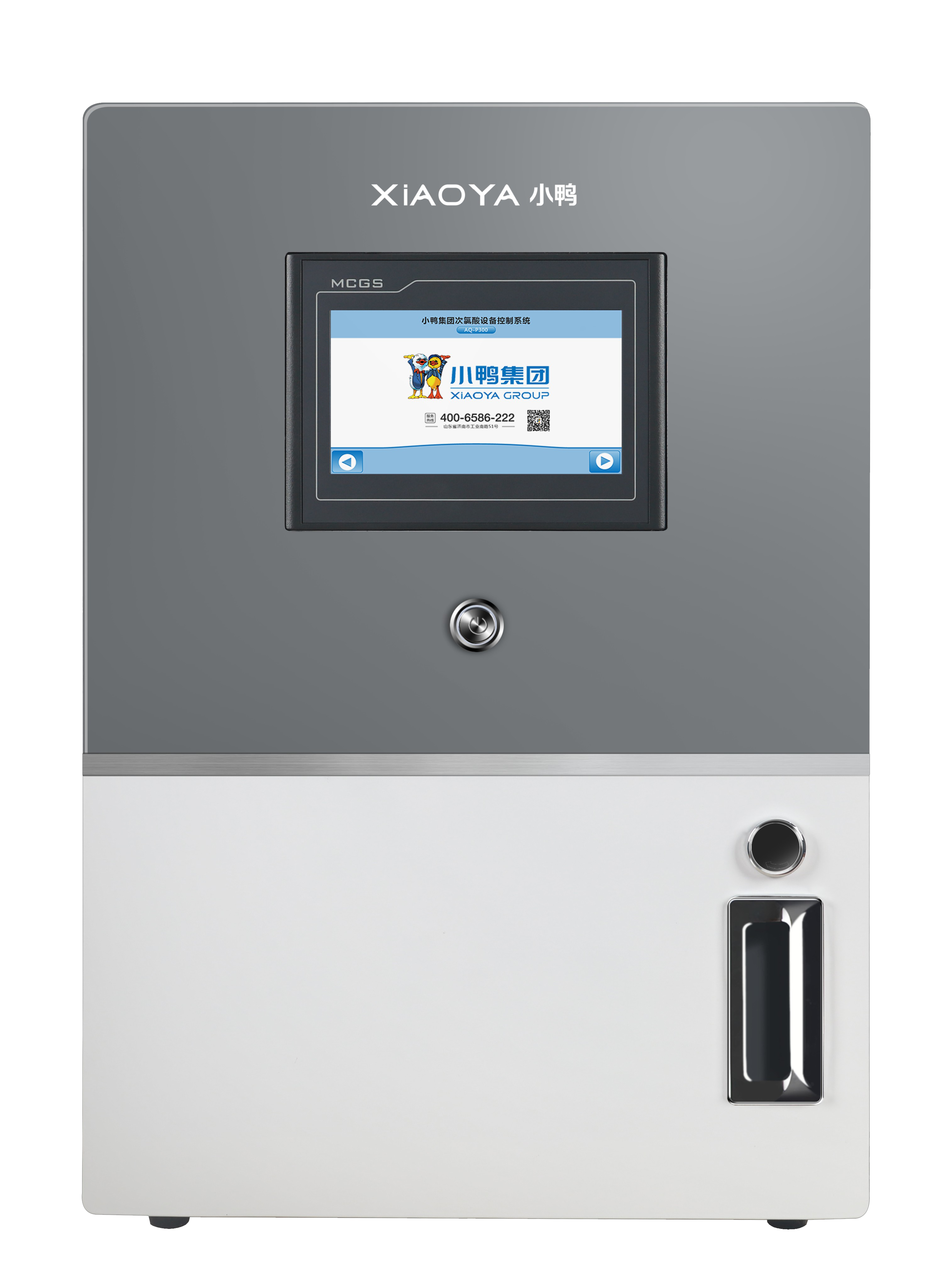
An agricultural system such as the Hypochlorous Acid Generator for Agricultural Planting illustrates the type of specification that should be examined: pH range, adjustable concentration, inlet-water requirements, electrolyzer service life, and real-time operating-status monitoring. These are relevant because they affect whether the target chemistry can be maintained at the required output, not because any one specification guarantees field disinfection performance.
Where pH Control Fails in Routine Operation
Many pH-related failures begin outside the electrolysis cell. Source water may change seasonally or after facility maintenance. An operator may refill an electrolyte tank with the wrong material or concentration. A cleaning chemical can enter a shared line. A pH probe may slowly drift while still showing plausible values. Each failure mode can leave a system apparently operational while the disinfectant chemistry moves away from its validated state.
Storage practices can create another gap. Producing a large volume of solution for later use may be operationally convenient, but holding time should be part of the validated procedure. The facility needs defined container materials, storage conditions, labeling, maximum holding period, and retesting rules. Without these controls, the pH and concentration measured at generation do not establish the condition of the solution when it reaches the user.
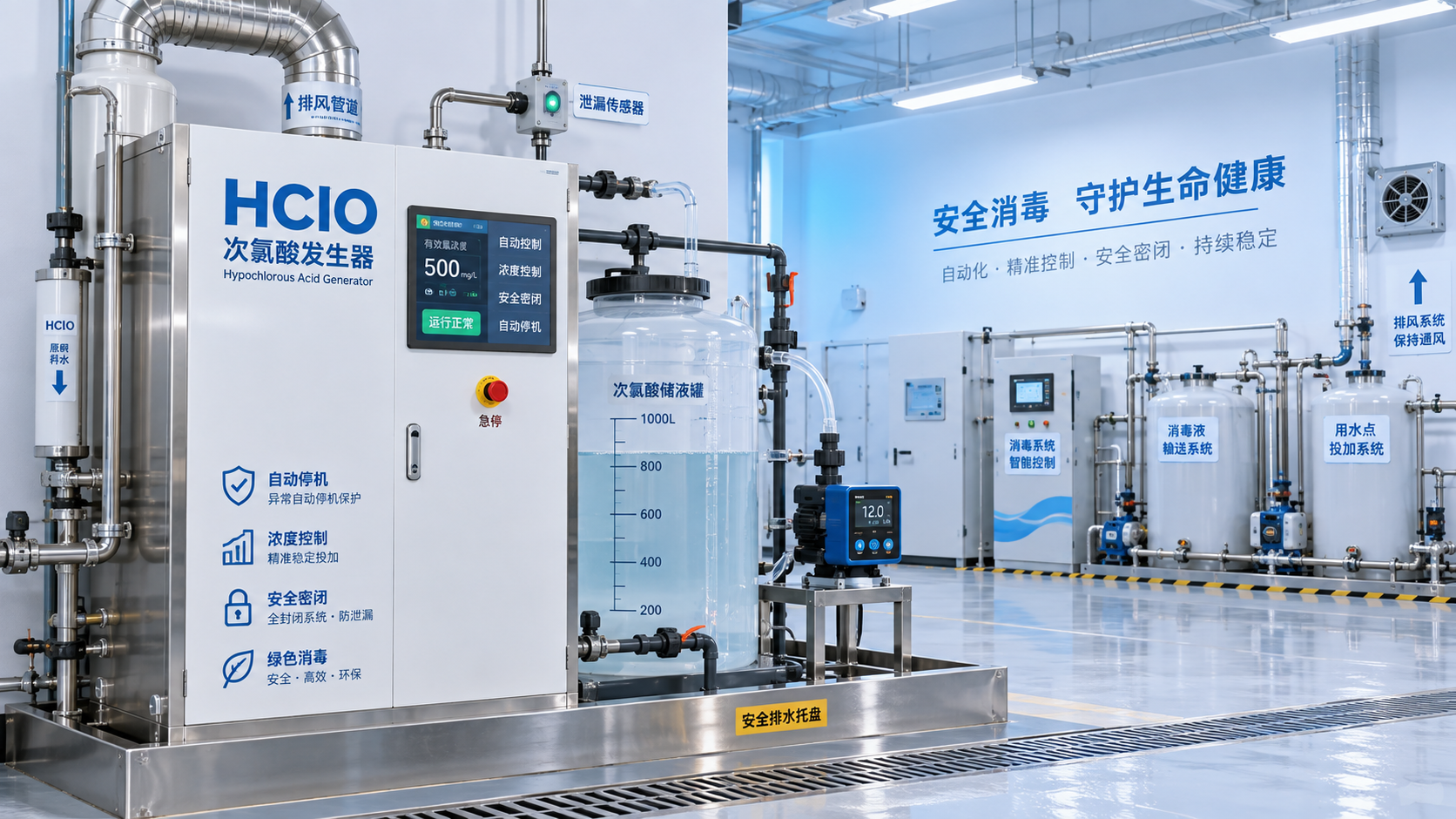
Safety managers should also treat incompatible chemical mixing as a control issue, not simply a training note. Acidifying chlorine-containing solutions outside the designed process can create hazardous conditions. Segregated storage, clear line identification, controlled chemical access, and alarm response procedures are part of maintaining safe pH control.
Turning pH Into a Usable Quality Standard
The most useful specification is a validated operating envelope rather than a single target value. It should define acceptable pH and concentration ranges, sampling points, test frequency, contact-time requirements, response actions for deviations, and the conditions under which solution must be rejected or regenerated. Where the application is critical, records should show both the generator condition and the point-of-use check.
An HClO generator should therefore be evaluated as a controlled disinfection process. Stable output depends on water inputs, electrolysis performance, sensing accuracy, control logic, maintenance, and operator procedures. When pH is managed as part of that system, concentration readings become more meaningful and disinfection performance becomes easier to verify. When it is treated as a minor setting, the facility may be measuring chlorine without knowing whether it has produced the chemistry its sanitation program actually requires.
NEWS
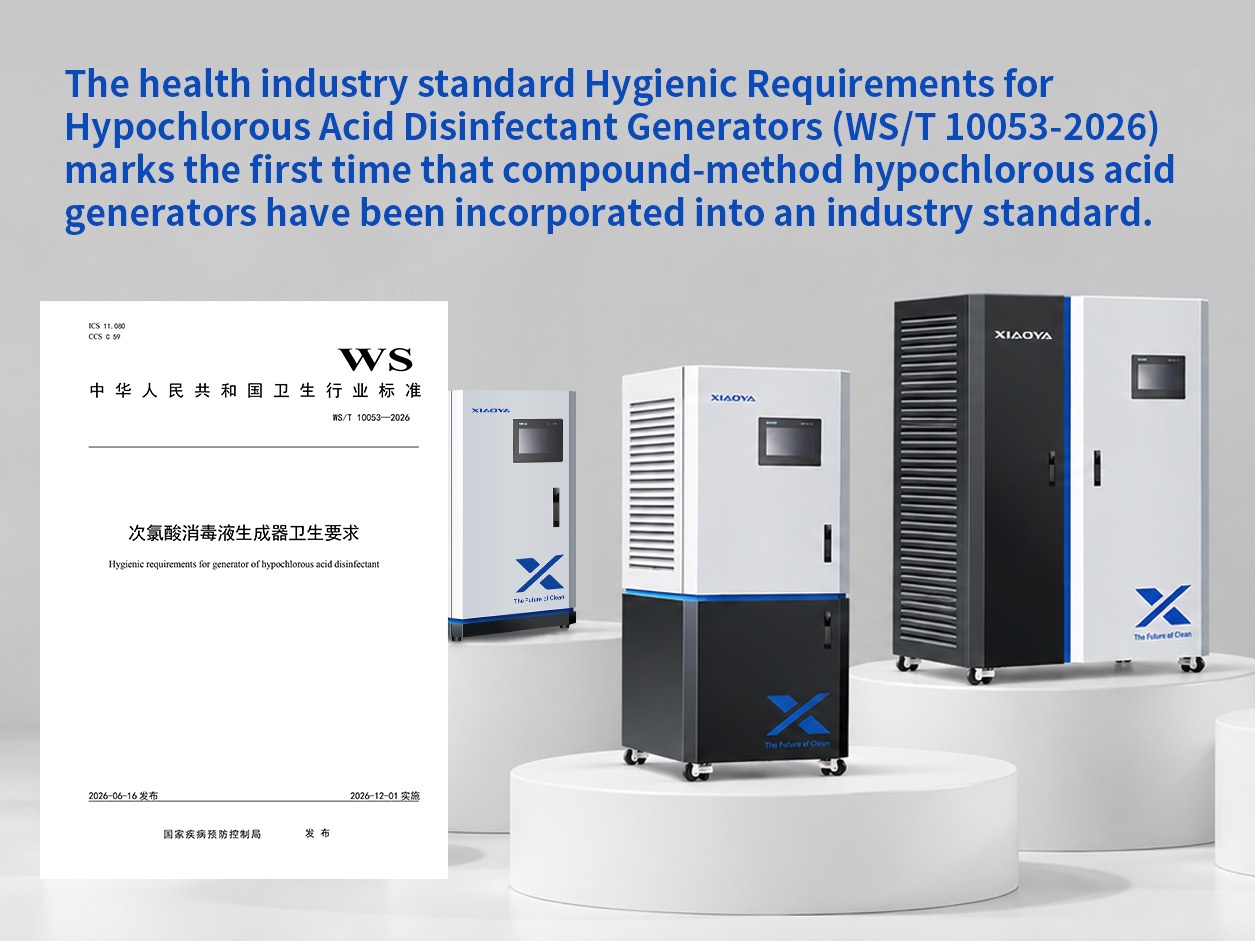
 WS/T 10053-2026 Includes the Compound Method for the First Time: Standard Signals and Market Opportunities for Mass Agricultural Production of Hypochlorous Acid Generators
 HClO Generator pH Control: Why It Determines Disinfection Performance
- Which Safety Features Matter Most When Buying an HClO Generator?
 Troubleshooting Low ORP Readings on a Hypochlorous Acid Machine
- A Buyer’s Checklist for Comparing Hypochlorous Acid Machine Specifications
Leave us a message

Xiaoya Group was founded in 1979,expert in the electrolyzed water industry.
Get in Touch
*We respect your confidentiality and all information are protected.