news
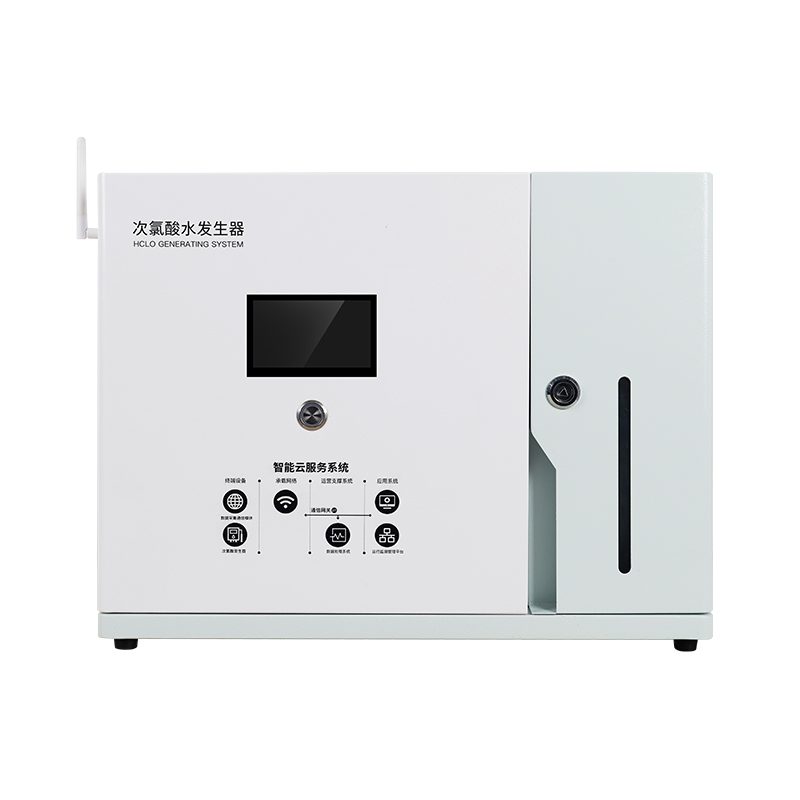
A hypochlorous acid generator can reduce the handling, storage, and dilution burden associated with conventional disinfectants in a grooming facility. It is not, however, a simple replacement for every cleaning chemical. The purchasing decision turns on whether the system can produce a verified solution at the required concentration, in the required volume, and with enough consistency to fit bathing rooms, grooming tables, kennel areas, laundry-adjacent surfaces, and treatment spaces.
The key distinction is between producing hypochlorous acid solution and maintaining a dependable sanitation process. A generator that appears economical on a unit-price basis may create operational risk if staff cannot confirm concentration, if stored solution degrades before use, or if output cannot cover peak cleaning periods. Equipment should therefore be evaluated as part of a facility’s cleaning workflow rather than as a standalone appliance.
Start with the facility’s actual demand profile
Output capacity is often presented in litres per hour, but this specification has little meaning without a usage calculation. Grooming facilities rarely consume disinfectant at a constant rate. Demand is concentrated around opening preparation, between appointments, end-of-day cleaning, accident cleanup, and periods when kennels or bathing stations require repeated turnover.
A useful procurement estimate separates solution into operational uses:
- Ready-to-use spray or wipe solution for grooming tables, tubs, cages, counters, clipper exteriors, and non-porous equipment;
- Volume needed for mop buckets, floor-cleaning equipment, or automated dilution systems where permitted by the product instructions;
- Solution consumed in pre-cleaning support tasks, such as odor-control applications or laundering-related surface cleaning, where the intended use has been validated;
- A reserve volume for unexpected contamination events and busy-day peaks.
Demand should be calculated in litres per shift and litres per day, then compared with the generator’s practical production rate. The practical rate may be lower than the nominal figure when start-up, water treatment, electrolyte replenishment, maintenance, and batch holding time are included. Oversizing is not always prudent either: on-site generated solution has a limited usable life that depends on formulation, storage conditions, light exposure, temperature, and container design. Producing far more than the facility can use promptly can create avoidable waste and concentration uncertainty.
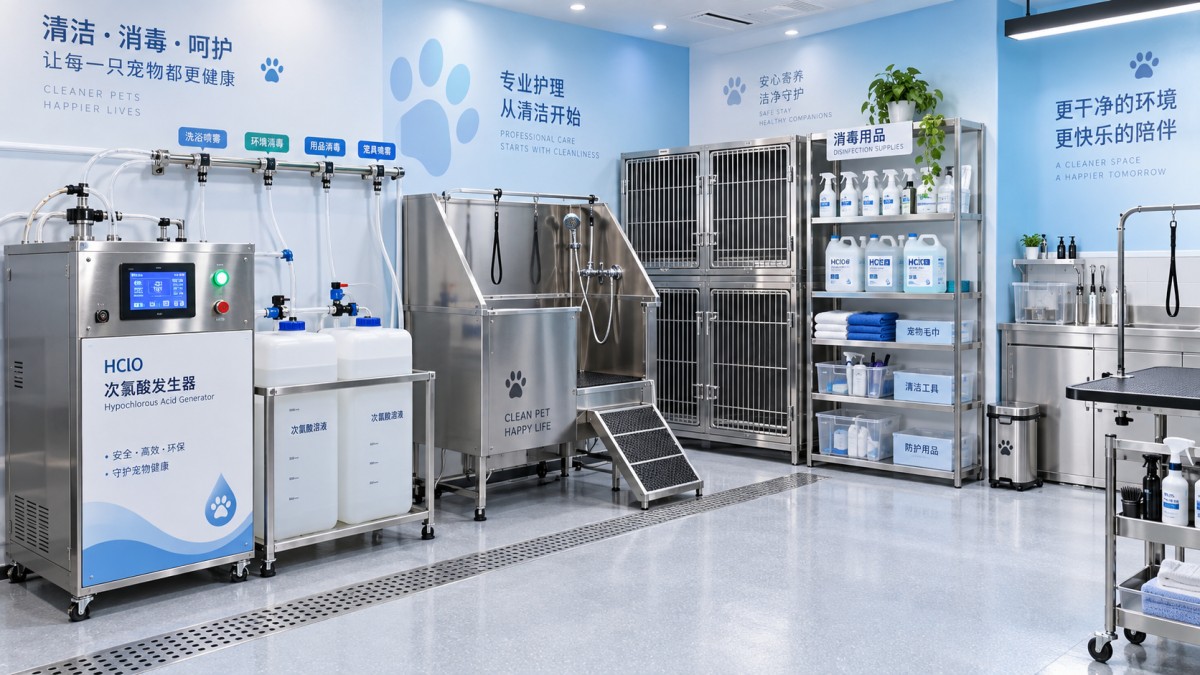
Concentration alone does not define suitability
Hypochlorous acid is commonly valued because it can provide antimicrobial activity at relatively low available chlorine concentrations and is associated with less persistent odor and residue than some conventional chlorine products. Yet a quoted “HOCl concentration” is not enough to establish performance. The relevant purchasing question is whether the generator can reliably achieve and maintain the target solution specification under the local water conditions and intended application method.
Buyers should request documentation showing the adjustable available chlorine concentration range, pH range, recommended use concentration, and any validated contact-time instructions for the intended surfaces. A mildly acidic pH range is generally important because it affects the proportion of chlorine present as hypochlorous acid rather than hypochlorite ion. But a pH number by itself is still not proof of antimicrobial efficacy.
Cleaning and disinfection also remain separate tasks. Hair, dander, grease, shampoo residue, urine, fecal contamination, and biofilm can consume available chlorine or physically shield microorganisms. A generator does not remove the need to wash visibly soiled surfaces before applying a disinfecting solution. Procurement specifications should reflect this operational reality: the facility needs a compatible cleaning process, labeled application instructions, suitable spray bottles or dispensing equipment, and a defined contact period during which surfaces remain wet.
Water quality is a performance and maintenance issue
On-site electrolysis systems depend on the incoming water supply. Hardness, mineral content, conductivity, suspended solids, and source-water variability can influence both solution quality and electrolyzer life. A supplier should be able to state the acceptable inlet-water conditions and identify whether filtration, softening, reverse osmosis, or other pretreatment is required.
This point has direct cost implications. A low-priced generator may require additional water-treatment equipment, recurring filters, periodic descaling, or more frequent cell replacement. Those items belong in the total cost of ownership calculation. Ask for the rated service life of the electrolyzer under stated water conditions, the expected maintenance tasks, and the consequences of operating outside the recommended inlet-water range.
Large industrial models make this distinction particularly clear. For example, the specifications of an Hypochlorous Acid Generator for Agricultural Planting include output of at least 1,000 L/h, adjustable available chlorine from 10 to 300 mg/L, pH 5.0–6.5, and an electrolyzer service life rated at 5,000 hours or more. These parameters may be relevant when assessing electrolysis capability, water requirements, remote monitoring, and cell-life expectations, but that output scale is generally far beyond the daily needs of an individual grooming operation. It should not be treated as a direct fit merely because the chemistry is similar.
Automation is valuable only when it improves control
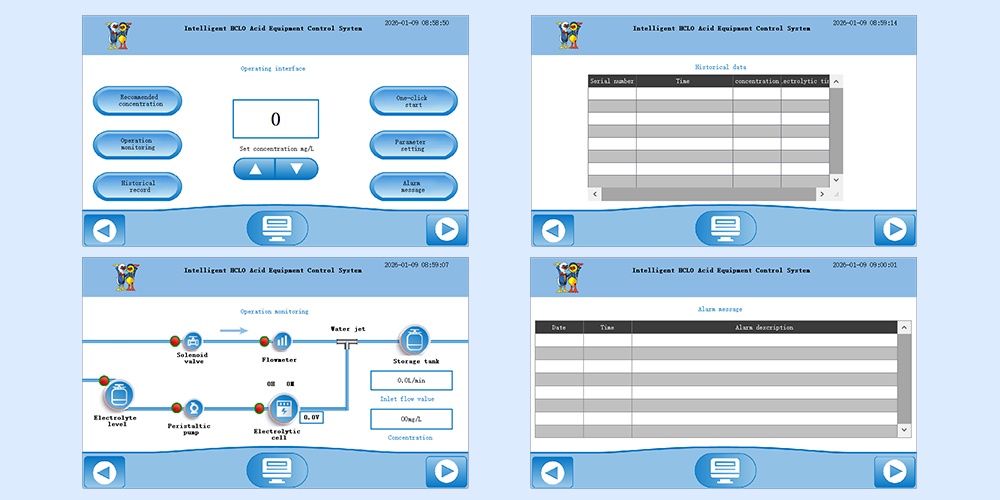
Automation features can reduce staff error, particularly where solution is produced across multiple shifts. Useful functions include programmed batch production, low-electrolyte alerts, fault alarms, automatic flushing where applicable, production logs, concentration monitoring, and remote status visibility. Their value depends on whether they support a clear accountability process.
A system that displays production status but cannot verify key solution parameters offers only partial control. Conversely, a highly automated unit may add unnecessary complexity for a small facility that produces one or two batches per day. The most appropriate configuration is one that makes correct operation easier without creating dependence on specialized technical intervention for routine tasks.
Questions worth placing in the supplier evaluation sheet include:
- Which parameters are measured directly by the unit, and which are inferred from operating settings?
- Can the facility independently test free available chlorine and pH from each batch?
- What happens when water pressure, conductivity, or electrolyte level falls outside the specified range?
- Are fault records exportable for quality audits or maintenance diagnosis?
- Can staff operate the system safely after ordinary training, including cleaning and shutdown procedures?
Verify the sanitation claim, not just the machine specification
One of the more common purchasing errors is assuming that a generator’s technical output establishes a disinfectant claim. It does not. Regulatory requirements for antimicrobial products differ by market, and a solution intended for use on animal-contact surfaces may be subject to product registration, labeling, efficacy substantiation, or local biocidal-product rules. Requirements can also differ between surface disinfection, odor control, wound-related applications, and direct use on animals.
Equipment suppliers should provide clear documentation on the intended use of the generated solution, validated concentration range, contact time, storage instructions, and limitations. Claims involving pathogens, veterinary settings, or direct pet application require particular scrutiny. A solution suitable for a kennel floor or a stainless-steel bathing tub should not automatically be assumed suitable for use on skin, near eyes, on open wounds, or on grooming tools that contact sensitive areas.
Material compatibility should be checked at the same time. Repeated exposure to oxidizing solutions can affect certain metals, coatings, elastomers, adhesives, and electronic components. Grooming facilities often use stainless steel, plastic tubs, coated cages, rubber mats, clippers, dryer housings, and mixed-material fixtures. The purchasing specification should require compatibility guidance for the surfaces and equipment actually in use.
Compare lifecycle cost against the current cleaning process
The financial case is rarely captured by comparing the generator price with the price of bottled chemicals. A complete comparison includes electricity, salt or electrolyte, water treatment, replacement cells, filters, test supplies, storage containers, labor for production and testing, cleaning downtime, service visits, and the disposal or handling requirements of displaced chemicals.
There is also a service-risk dimension. A grooming facility may be able to operate temporarily without a new table or dryer, but an unavailable sanitation system can disrupt daily hygiene routines. Procurement terms should address spare-parts availability, electrolyzer lead time, remote diagnostic support, warranty exclusions related to water quality, installation commissioning, and local electrical compatibility. For imported equipment, confirm voltage, frequency, plug configuration, documentation language, and whether replacement parts can be supplied without extended border delays.
A workable selection standard
The strongest choice is not necessarily the generator with the highest output or the widest concentration range. It is the system that can produce an appropriately specified solution consistently, at volumes aligned with real daily demand, using available water and electrical infrastructure, while allowing staff to verify performance and follow compliant use procedures.
Before issuing a purchase order, require a written technical submittal covering output at the intended concentration, water-quality limits, consumables, cell life, cleaning and maintenance requirements, solution testing methods, storage guidance, safety controls, warranty conditions, and the evidence supporting the proposed sanitation use. That documentation turns a Hypochlorous Acid Generator for Pets from a promising appliance into a controllable part of the facility’s hygiene system.
NEWS
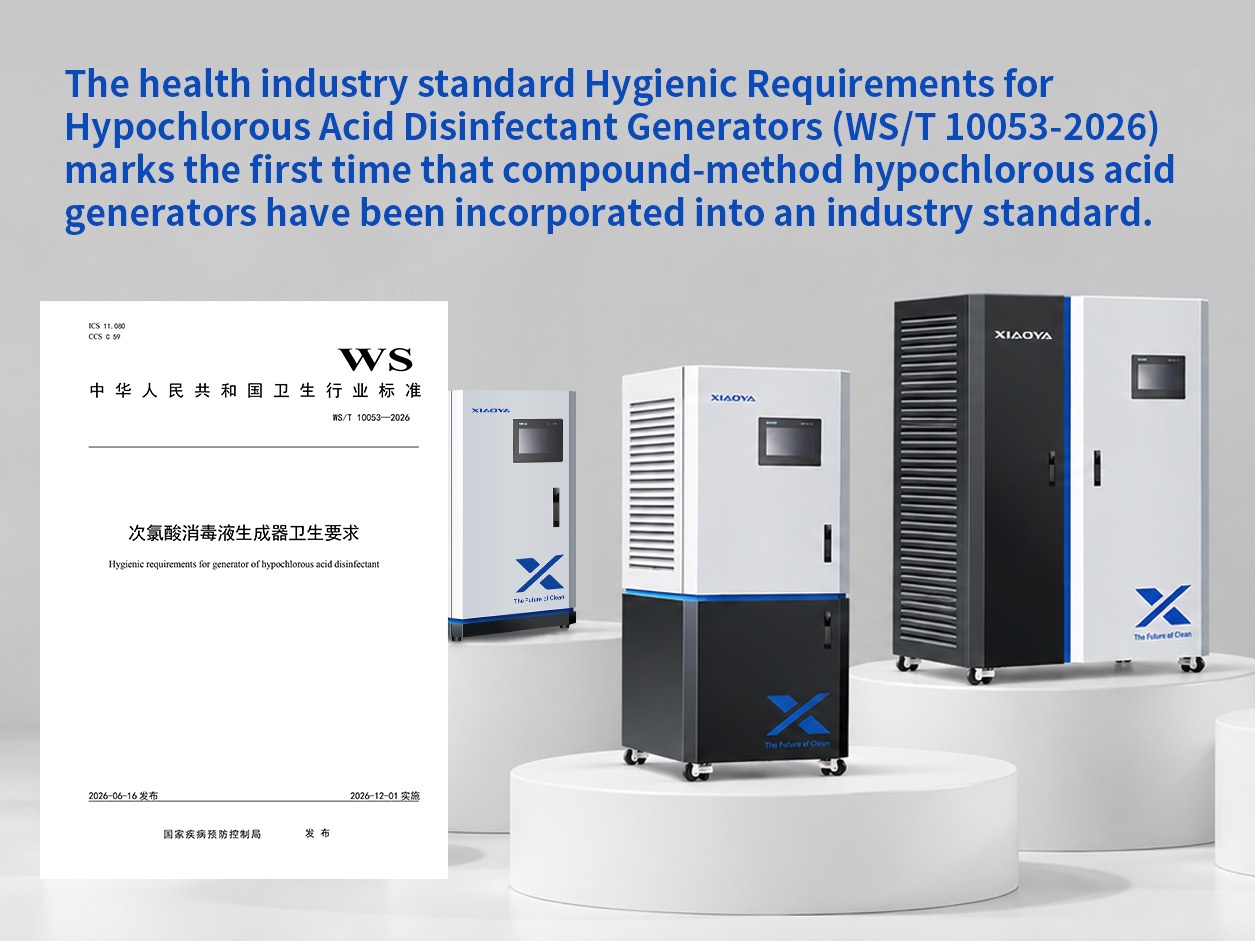
 WS/T 10053-2026 Includes the Compound Method for the First Time: Standard Signals and Market Opportunities for Mass Agricultural Production of Hypochlorous Acid Generators
 Choosing a Hypochlorous Acid Generator for Pets in Grooming Facilities
 Calculating Water, Salt, and Labor Costs for Food HClO Generation
 Food HClO Generator Validation: What Records Should Quality Teams Keep?
- Can a Food Hypochlorous Acid Generator Reduce Cross-Contamination Risks?
Leave us a message

Xiaoya Group was founded in 1979,expert in the electrolyzed water industry.
Get in Touch
*We respect your confidentiality and all information are protected.