news
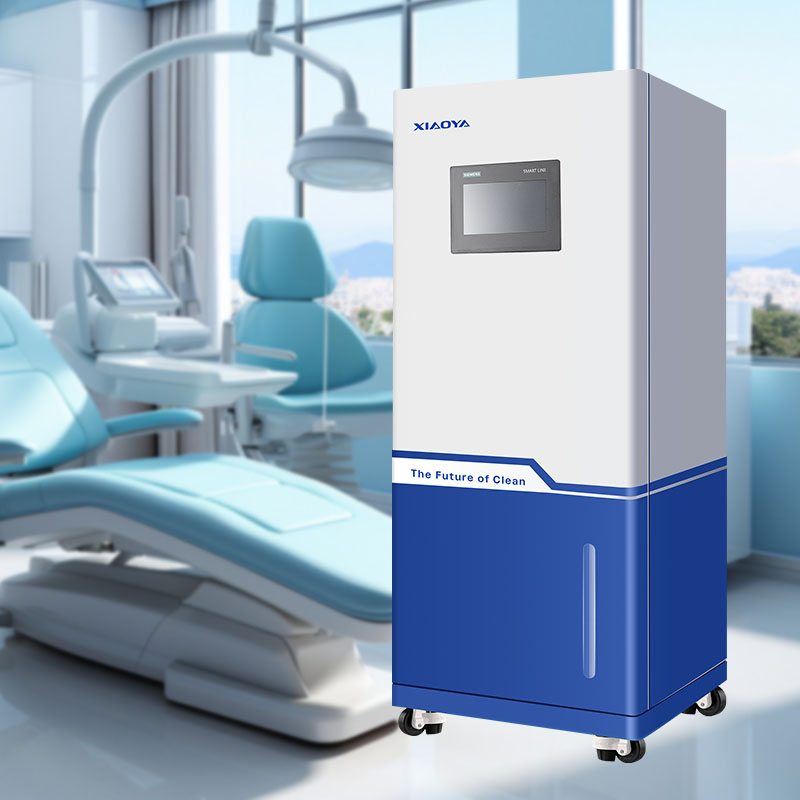
Why does the quoted price for a Dentistry Hypochlorous AcidGenerator vary so much?
Because you are rarely comparing the same scope. A low quote may cover only the core generator, while a higher one may include water pretreatment, dosing control, enclosure quality, installation support, operator training, spare parts, and documentation for validation. For procurement teams, the first useful question is not “Which supplier is cheaper?” but “What exactly is included in the delivered system?”
With a Dentistry Hypochlorous AcidGenerator, price differences often come from build consistency and control architecture. Suppliers with stronger R&D and production capability usually spend more on component matching, process stability, and repeatable output. That raises upfront cost, but it can reduce the hidden expense of unstable disinfectant concentration, frequent recalibration, or avoidable downtime.
Which cost items matter more than the machine price itself?
In many purchases, the equipment price is only the visible part of the budget. The more useful figure is total cost of ownership over the expected service period.
If you compare suppliers on unit price alone, you can end up buying a system that is expensive to keep running.
Does water quality really affect the investment level?
Yes, often more than expected. A Dentistry Hypochlorous AcidGenerator depends on stable input conditions. If the incoming water has variable particulate load or inconsistent quality, the system may need pretreatment before generation or before related sterilization steps. That means extra hardware, more maintenance, and a different replacement schedule for wear parts.
This is where buyers sometimes miss a practical cost connection. A supplier may quote attractively on the generator but leave water conditioning outside the package. In dental environments where reliability matters, that gap can show up later as emergency retrofits. For example, if your setup also requires upstream purification and sterilization support, a unit such as Duckling ultrafiltration water purification and sterilization device XYCL-1000 may be relevant to evaluate because its stated role is ultrafiltration water purification and sterilization, with a 1000L/H ultrafiltration flow rate and a sterilization rate above 99.9%. That does not replace generator due diligence, but it shows why pretreatment and hygiene control should be budgeted as part of the system, not as an afterthought.
How should procurement judge whether higher automation is worth paying for?
Look at labor risk and output consistency. If the device will be used frequently, across shifts, or in multiple operator hands, automation usually pays back through fewer manual adjustments and fewer process deviations. Features such as real-time monitoring, alarm logic, and controlled dosing are not just “nice to have” items when disinfection performance must stay repeatable.
On the other hand, if usage volume is low and the workflow is tightly supervised, a simpler system may be enough. The right question is: what is the cost of one quality failure, one interruption, or one service call caused by manual error? In procurement terms, automation is justified when it lowers operational variance more than it raises capital cost.
What documents should be requested before comparing suppliers?
Ask for documents that let you compare both cost and operating burden, not just performance claims:
- Detailed quotation with clear inclusion and exclusion boundaries
- Consumables list with expected replacement cycle
- Utility requirements such as water quality, power, drainage, and ventilation if applicable
- Operation and maintenance manual or at least a maintenance schedule summary
- Commissioning scope and training scope
- Spare parts availability and service response commitment
Without these, procurement cannot calculate lifecycle cost in any serious way. This is also the fastest way to spot quotes that look complete but are actually partial.
Where do buyers most often underestimate operating cost?
Usually in maintenance intervals, replacement parts, and service disruption. Buyers tend to focus on chemical generation capacity and overlook the support systems around it. Filters, lamps, membranes, and electrode-related wear all affect cost over time, especially when local water conditions are not ideal.
A related mistake is treating every component as if it has the same service profile. It does not. In associated purification equipment, for instance, replacement timing can be very specific. The XYCL-1000 information lists a hollow fiber PVC ultrafiltration membrane filter element, a 3 to 5 year service life depending on incoming water quality, and a UV-C 254nm lamp designed for 8000 hours with recommended replacement after 7200 hours. Numbers like these are useful because they show what procurement should ask from any supplier: actual replacement logic tied to usage conditions, not vague “long life” language.
Is the cheapest supplier automatically the riskiest choice?
Not automatically, but low pricing needs a harder review. Sometimes a supplier is efficient and genuinely competitive. Sometimes the price is low because the quote excludes installation, monitoring functions, validation support, or local service. A Dentistry Hypochlorous AcidGenerator used in a clinical hygiene setting should be judged on stable output, maintainability, and documentation discipline, not on purchase price alone.
A good procurement test is simple: ask each bidder to state annual maintenance assumptions, major consumables, and operator involvement in writing. Once those items are standardized, the lowest-cost option often changes.
What is a practical way to compare bids fairly?
Build the comparison around operating reality. A short scoring sheet usually works better than a long technical spreadsheet.
- Confirm the same delivery scope for every bid.
- Separate capital cost from annual running cost.
- Score water input requirements against your site conditions.
- Check what data, alarms, and controls are included.
- Price in downtime risk by reviewing service lead times and spare part access.
That approach keeps the decision grounded. For procurement, the right investment is usually the one that delivers predictable disinfection performance with the fewest operational surprises, even if it is not the lowest line-item quote.
NEWS
 Upgrade in Healthy Living: Hypochlorous Acid Generators Become the New Standard for Luxury Villas
- The Ultimate Solution to Pet Shop Disinfection Challenges! XIAOYA Hypochlorous Acid Generator: Safe Pet Protection with Peace of Mind
 Hypochlorous Acid Generator vs Sodium Hypochlorite Generator
- Hypochlorous Acid Generator Supplier
- Hypochlorous Acid Generator Manufacturer
Leave us a message

Xiaoya Group was founded in 1979,expert in the electrolyzed water industry.
Get in Touch
*We respect your confidentiality and all information are protected.