news
Common Maintenance Issues in Dentistry Hypochlorous AcidGenerator Systems
The first warning sign in a dental clinic is rarely a complete shutdown. More often, a Dentistry Hypochlorous AcidGenerator starts drifting quietly: the solution still looks normal, the unit still runs, but disinfection consistency becomes harder to trust. In treatment rooms where instrument turnover is tight and waterline hygiene is under daily pressure, that kind of drift matters more than a dramatic fault alarm. Maintenance problems in these systems are usually not about one failed part. They come from the interaction between feed water quality, dosing stability, operating habits, and the reality that dental facilities do not run like laboratories.
Scaling is one of the most common causes behind unstable output. Clinics in hard-water areas often focus on the generator itself and overlook what minerals are doing upstream. Once calcium or magnesium deposits begin to build in the electrolytic cell, flow passages narrow, electrical efficiency changes, and the produced concentration can swing more than operators expect. This is especially common in smaller practices where the unit runs intermittently rather than at a smooth, predictable load. Intermittent starts and stops tend to leave more opportunity for deposits to settle. If a site is using municipal water with seasonal variation, the maintenance interval that worked for six months may stop being enough during another part of the year.
The practical mistake here is assuming poor disinfection performance always means the chemistry has failed. Sometimes the chemistry is fine, but the system is losing control because the cell is fouled. When technicians inspect these units on site, they often find that output inconsistency is tied to water pretreatment discipline more than to the core generator hardware. That is why maintenance planning should begin with the water source, not with replacement parts.
Sensor faults create a different kind of risk because they can look like a process problem. Conductivity sensors, flow sensors, or concentration monitoring components may drift after long exposure to disinfectant, mineral residues, or inadequate cleaning. In a dental environment, where staff are trained to keep workflows moving, operators may respond by adjusting settings repeatedly to chase the reading. That can make things worse. A generator that appears to be underproducing may actually be responding to a false low reading, leading to overcorrection, unnecessary consumable use, or accelerated component wear.
This is why routine verification matters more than a simple visual inspection of the screen. If a clinic has already ruled out water supply issues and salt or feed conditions are stable, a sudden mismatch between expected and actual output should raise suspicion around sensing and calibration rather than around the entire machine. In service-heavy healthcare and disinfection appliance manufacturing, companies that integrate R&D, production, and operation usually learn this lesson early: automated equipment becomes unreliable when users trust displayed values without checking whether the sensing environment is still clean and stable.
Where clinic conditions change the maintenance pattern
A single-chair clinic and a multi-room dental center may use similar hypochlorous acid generation principles, but they do not create the same maintenance burden. Low-throughput sites often struggle with stagnation. If generated solution sits too long in storage or circulation lines, the issue is not only reduced freshness; it can also leave residues or create misleading assumptions about what the generator produced versus what finally reached the point of use. Larger clinics usually face the opposite problem. Their systems cycle more often, and maintenance pressure shows up as pump wear, dosing instability, or filter loading rather than prolonged idle periods.
Installation position also affects service life more than many buyers expect. Units placed in cramped sterilization rooms or utility corners are often exposed to heat, splashing, chemical vapors, and poor ventilation. None of that sounds dramatic until connectors corrode, tubing hardens, or access for cleaning becomes so inconvenient that maintenance gets postponed. On paper, the generator may meet the site requirement. In practice, if the technician cannot reach the cell, filters, or sensor points without partial disassembly of surrounding equipment, maintenance quality drops quickly.
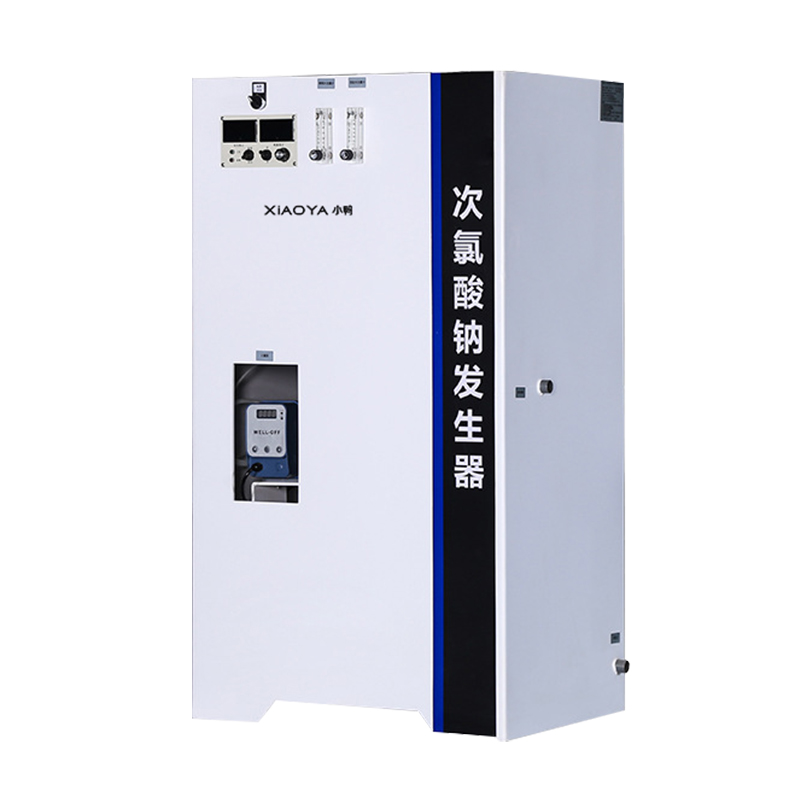
That is one reason compact public-health disinfection platforms such as Hypochlorous Acid Generator for Public Health (AQ-P1000) tend to be evaluated not only on output capability, but on whether the layout supports predictable cleaning, inspection, and component replacement in real service conditions. In automated disinfection equipment, maintainability is part of performance, not an afterthought.
The recurring problem of inconsistent concentration
When dental teams report that the generated solution seems weaker on some days and stronger on others, the root cause is often spread across several small variables rather than one major defect. Feed salt concentration may not be prepared consistently. Water pressure may fluctuate when other equipment is drawing from the same line. Filters may be partially clogged, reducing stable flow through the electrolytic section. Even routine cleaning can introduce problems if residues from incompatible chemicals are left in the system.
A useful field check is to separate the problem into three questions: is the incoming water stable, is the electrolysis path clean, and is the control system reading correctly? If those three are not checked in order, maintenance becomes trial and error. Many avoidable service calls come from replacing pumps or boards before confirming whether the upstream water treatment cartridge has already reached the end of its practical life.
For dental use, consistency usually matters more than headline capacity. A system with modest output but stable process control is easier to manage than a higher-capacity unit that becomes sensitive to minor changes in feed conditions. That is a frequent point of confusion when users compare models across healthcare and small appliance-oriented manufacturers. The design philosophy may look similar, yet the day-to-day maintenance burden can be very different.
What operators often miss during routine upkeep
Some maintenance failures are procedural. Staff clean the exterior and assume the system is being maintained. Filters are inspected but not replaced on schedule because they do not look severely blocked. Alarm logs are cleared without noting whether a fault is repeating under the same operating condition. In a busy clinic, these shortcuts are understandable, but they remove the pattern recognition that prevents downtime.
The most useful maintenance record is usually not a long service report. It is a short operating history that tracks water source changes, filter replacement dates, cleaning intervals, unusual odors, flow irregularities, and any mismatch between displayed status and actual disinfection performance. Once those notes exist, recurrent faults become easier to interpret. Without them, every visit starts from zero.
There is also a purchasing-side misunderstanding that shows up later as a maintenance complaint. Some sites choose a generator based mainly on nominal capacity or cabinet size, then discover the local utility conditions are not suitable for stable operation without added pretreatment or stricter upkeep. A unit such as the Hypochlorous Acid Generator for Public Health (AQ-P1000) may fit well where operators need an integrated automated disinfection platform, but selection still has to be matched to the clinic’s actual water conditions, maintenance discipline, and expected daily duty cycle.
If a dental facility wants fewer interruptions, the most effective next step is usually not to ask whether the generator is advanced enough. It is to inspect whether the site can support stable feed water, accessible installation, scheduled cleaning, and basic verification of output. Most maintenance issues in Dentistry Hypochlorous AcidGenerator systems start there, long before a major component fails.
NEWS
 Upgrade in Healthy Living: Hypochlorous Acid Generators Become the New Standard for Luxury Villas
- The Ultimate Solution to Pet Shop Disinfection Challenges! XIAOYA Hypochlorous Acid Generator: Safe Pet Protection with Peace of Mind
 Hypochlorous Acid Generator vs Sodium Hypochlorite Generator
- Hypochlorous Acid Generator Supplier
- Hypochlorous Acid Generator Manufacturer
Leave us a message

Xiaoya Group was founded in 1979,expert in the electrolyzed water industry.
Get in Touch
*We respect your confidentiality and all information are protected.