news
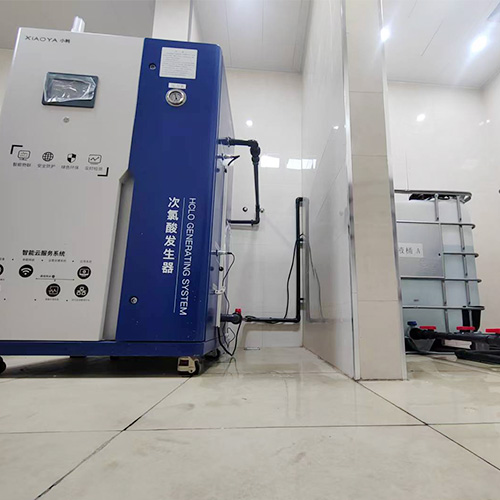
What Buyers Should Really Check Behind a Dentistry Hypochlorous AcidGenerator
The easy mistake is to treat certifications as a quick filter: certified means acceptable, uncertified means risky. In practice, a Dentistry Hypochlorous AcidGenerator sits at the intersection of electrical safety, disinfection performance, water-contact materials, and in some cases medical or dental workflow compliance. That means no single certificate tells the whole story. A serious procurement review looks at whether the claimed certification matches the product’s actual use, output characteristics, and the market where it will be installed.
For dental applications, buyers usually care about one question more than anything else: can this equipment generate hypochlorous acid solution consistently enough, and safely enough, for repeated use around instruments, surfaces, water-contact environments, or clinical hygiene procedures? Certifications matter because they help answer that question indirectly. They do not replace technical validation, but they do reduce uncertainty around manufacturing discipline, electrical design, material safety, and regulatory fit.
The First Distinction: Product Safety Is Not the Same as Disinfection Approval
This is where many sourcing decisions go off track. A machine may have electrical compliance marks and still lack clear support for its disinfectant application. Conversely, a supplier may emphasize the chemistry of hypochlorous acid while being vague about equipment-level compliance. For a Dentistry Hypochlorous AcidGenerator, those are two different layers of risk.
Electrical and machinery certifications address whether the generator itself is built safely. Disinfection-related registrations or supporting test documents address whether the produced solution is suitable for the intended hygiene task. In procurement terms, both matter, but they answer different questions. One protects the facility and operator from equipment failure or noncompliant installation; the other helps determine whether the generated solution can reasonably fit the dental sanitation protocol being considered.
Which Certifications Usually Matter Most
The exact list depends on the destination market, but several categories consistently deserve attention:
- Electrical safety certification, such as CE for relevant EU conformity pathways or UL/ETL-type evidence for the US market where applicable.
- EMC compliance, because automated generators with control systems, pumps, and electrolysis modules should not create avoidable electromagnetic issues in equipment-dense environments.
- Material safety for wetted components, especially when generated solution will contact pipelines, tanks, nozzles, or application tools used in hygiene-sensitive settings.
- Factory quality management certification such as ISO 9001, which does not prove disinfection efficacy but does tell you something about process control and traceability.
- Where relevant, claims tied to FDA registration, local disinfectant rules, or region-specific sanitation standards. These should be checked carefully, because “FDA” is often used loosely in the market.
That last point deserves caution. In many listings, “FDA certified” appears as a broad selling phrase, but procurement teams should ask what that actually means. Is it establishment registration, device listing, food-contact relevance, or something else entirely? The term is not interchangeable with product approval. If the supplier cannot explain the scope, it should not be treated as a decision-grade compliance claim.
Standards Need to Match the Use Case
A dental environment sounds clinical, but the equipment category may still be closer to automated disinfection equipment than to a regulated dental device. That distinction changes what buyers should request. If the generator is used to prepare disinfectant for environmental cleaning, staff hygiene, or certain noninvasive sanitation workflows, the documentation package may look very different from what would be required for a chairside therapeutic device.
This is why standards from adjacent sectors can still be useful, as long as their relevance is understood correctly. For example, some manufacturers also build systems for large hygiene-driven operations such as catering and food processing. A unit like Hypochlorous Acid Generator for Catering Disinfection may reference standards such as GB 14881 alongside US FDA-related claims. That does not automatically make it a dental product, but it may indicate experience with controlled disinfection output, hygiene-focused design, and multi-scene deployment. Buyers should read those signals as evidence of manufacturing background, not as a substitute for application-specific validation.
Performance Documents Matter More Than Marketing Claims
For hypochlorous acid generation equipment, certification alone is rarely enough. The useful documents are often the less glamorous ones: test reports on available chlorine concentration, pH range, output stability, material compatibility, and key component life. These parameters directly affect whether the solution generated is reproducible and whether the machine can hold that performance over time.
A buyer comparing offers should ask for the operating window, not just the headline claim. If a system can produce 10–200 mg/L available chlorine, that range only becomes meaningful when paired with control precision, pH consistency, and intended application guidance. A slightly acidic range such as pH 5.0–6.5 is often associated with hypochlorous-acid-dominant performance, but the procurement decision should still look at how the machine maintains that range in real operation. Electrolyzer life, inlet water pressure requirements, and power stability are not side details; they affect lifecycle cost and day-to-day usability.
A Few Claims That Deserve Extra Scrutiny
“Residue-free,” “non-corrosive,” and “no secondary rinsing” are common claims around hypochlorous acid systems. They may be directionally true under certain concentrations and applications, but they should not be read as universal statements. In dental purchasing, concentration, contact time, material compatibility, and local cleaning protocol still determine whether a generated solution is appropriate. Stainless steel, polymers, seals, and tubing do not all react the same way over prolonged exposure.
The same applies to broad-spectrum disinfection language. What matters is not whether the phrase appears on a brochure, but whether the supplier can support the claim with a test basis relevant to your intended workflow. Procurement teams do not need academic over-documentation for every project, but they do need enough evidence to connect the claimed output to the use scenario.
How Experienced Buyers Usually Make the Call
In practice, strong buyers tend to screen a Dentistry Hypochlorous AcidGenerator in three layers. First, they verify legal-market entry basics: safety marks, conformity documents, and manufacturer identity. Second, they review technical stability: output range, pH control, power requirement, water pressure, and key component durability. Third, they test fit-for-purpose logic: where exactly will this solution be used, and what evidence supports that use?
That approach also helps when reviewing equipment from broader automated-disinfection manufacturers whose portfolio spans healthcare, household appliances, and hygiene systems. If a supplier has experience integrating R&D, production, and operation across multiple appliance and disinfection categories, that can be a useful sign of engineering capability. Still, the purchase should come down to document clarity and application fit, not portfolio breadth alone. Even a well-built system with industrial-grade characteristics, such as customizable output, controlled chlorine concentration, and durable electrolysis components, only becomes a good procurement decision when its certification package aligns with the intended dental workflow.
The practical takeaway is straightforward: ask which certification covers the machine, which document supports the generated disinfectant characteristics, and which claims are tied to the actual market of sale. When a supplier can answer those three questions precisely, the certification discussion becomes useful. When they cannot, the labels are mostly decoration.
NEWS
 Upgrade in Healthy Living: Hypochlorous Acid Generators Become the New Standard for Luxury Villas
- The Ultimate Solution to Pet Shop Disinfection Challenges! XIAOYA Hypochlorous Acid Generator: Safe Pet Protection with Peace of Mind
 Hypochlorous Acid Generator vs Sodium Hypochlorite Generator
- Hypochlorous Acid Generator Supplier
- Hypochlorous Acid Generator Manufacturer
Leave us a message

Xiaoya Group was founded in 1979,expert in the electrolyzed water industry.
Get in Touch
*We respect your confidentiality and all information are protected.