news
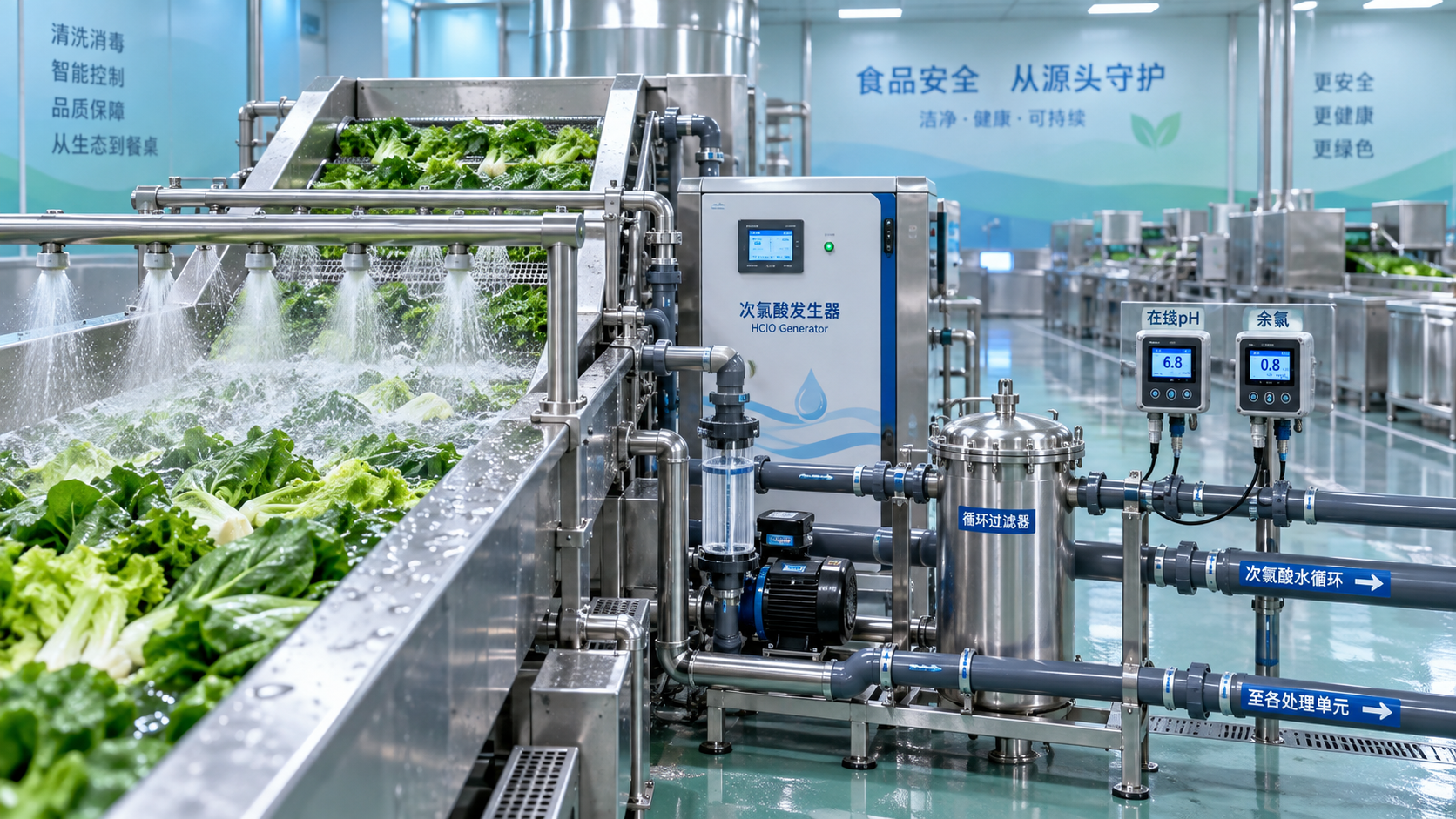
Reliable produce washing starts with controlling the sanitizer at the point of use. A Food Hypochlorous Acid Generator produces hypochlorous acid water on site, avoiding the uncertainty that can arise when a prepared solution loses strength during storage or transfer. Generation alone, however, does not establish a stable wash process. The delivered concentration, pH, organic load, water condition, product flow, and sanitation of the wash equipment all affect whether the intended treatment reaches the produce surface.
For leafy greens, berries, root vegetables, and firm produce, the wash system must be treated as a controlled process rather than a single chemical addition step. Produce geometry, soil carryover, waxy skins, cut surfaces, and water recirculation determine where treatment can be effective and where contamination can persist.
Control the Active Hypochlorous Acid Fraction
Available chlorine concentration is useful for monitoring the solution, but it does not describe the full antimicrobial condition by itself. Hypochlorous acid (HClO) is the desired active species in slightly acidic to near-neutral water. When pH drifts upward, a greater portion of the chlorine chemistry shifts toward hypochlorite ion, which has different activity and process behavior. A concentration reading that appears acceptable can therefore give a misleading picture when pH is outside the validated operating window.
Measure both available chlorine and pH at the wash point, after the solution has passed through relevant piping, mixing zones, and any recirculation loop. Testing only at the generator outlet can miss dilution from make-up water, decomposition in a holding tank, or loss caused by contact with accumulated organic matter.
Probe placement matters. A sensor located immediately beside an injection point may report a value that the product stream never receives uniformly. In immersion tanks, take samples from more than one location when mixing is uncertain. In spray systems, verify the solution at representative nozzles, especially at the end of a manifold where pressure loss or blocked filters can change delivery.
Match Concentration and Contact Time to the Wash Configuration
A higher concentration does not automatically compensate for poor contact. Produce that moves rapidly beneath an uneven spray pattern can leave the washer with only partial wetting. Likewise, a deep immersion tank may create a long nominal residence time while floating leaves, air pockets, or overloaded baskets prevent solution access to all surfaces.
Define contact time from the moment the product is fully wetted until it leaves the treatment zone. Conveyor speed, belt loading, pump flow, tank level, spray angle, and product agitation all influence that interval. A process that is stable with whole apples may need reassessment for loose spinach, where overlapping leaves form protected surfaces and increase the organic burden in the water.
- Spray washing requires verified nozzle coverage, sufficient pressure for consistent pattern formation, and a method to identify plugged or misaligned nozzles.
- Immersion washing needs active circulation or agitation that reaches product layers without causing bruising, leaf damage, or excessive turbulence that redistributes debris.
- Flume systems should distinguish between transport water and the intended treatment zone; rapid product movement through a channel may reduce actual exposure below the calculated tank retention time.
Validation should use the worst expected loading condition rather than an empty or lightly loaded line. The critical question is whether the selected concentration and exposure are maintained when the washer is receiving soil, plant tissue, and process water at normal production rates.
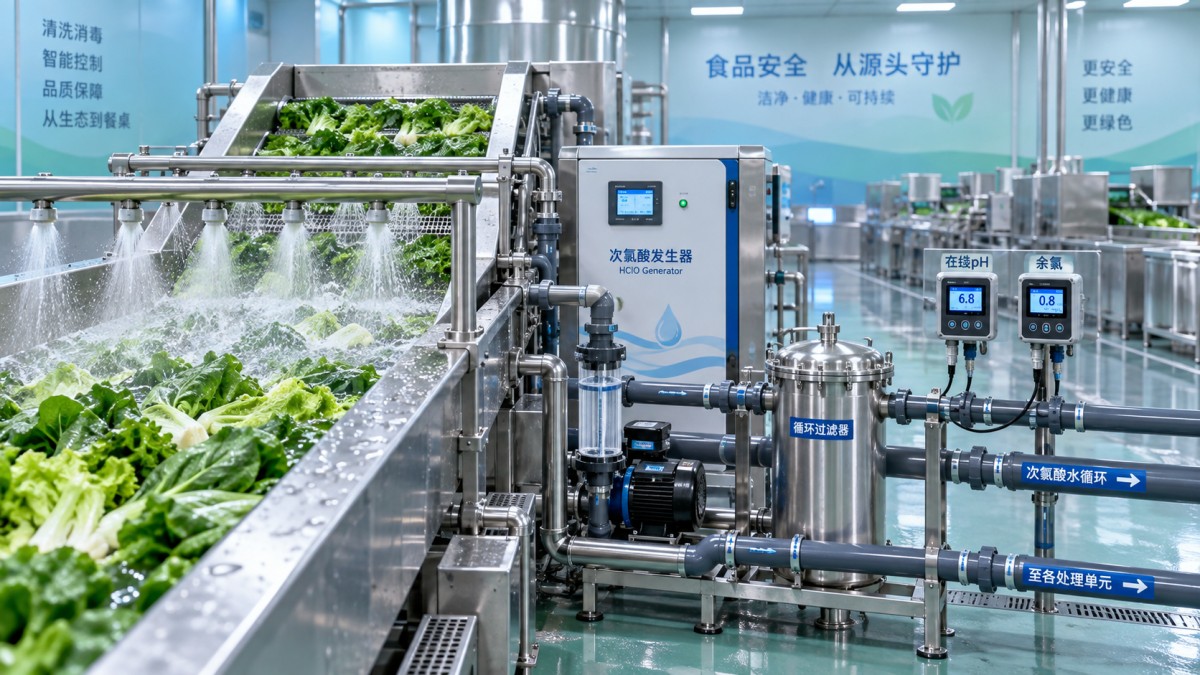
Organic Load Changes the Meaning of a Stable Generator Reading
Hypochlorous acid reacts with organic material. Soil, leaf fragments, juice, proteins, and other residues can consume available active species before the solution contacts later product. This is especially important in recirculated wash water, where the generator may continue producing solution at its setpoint while the tank condition deteriorates between water changes.
Turbidity, visible debris, unusual foam, and increased filter loading are process signals rather than merely housekeeping concerns. They indicate that the water may be carrying material that interferes with sanitizer performance. Screening and filtration remove physical solids, but they do not restore depleted hypochlorous acid on their own. Fresh make-up water, controlled bleed-off, and replacement schedules should be tied to actual process conditions and verified concentration at the point of treatment.
Pre-rinsing heavily soiled produce can reduce sanitizer demand in the main wash stage. The separation is useful only when the pre-rinse does not create uncontrolled cross-contamination through poorly managed water flow. A dirty-water stage should remain hydraulically separate from the final treatment stage, with drainage and overflow arranged to prevent backflow.
Water Quality and Generator Feed Conditions
Source water affects both generation consistency and the condition of the washing system. High hardness can contribute to scale on electrolyzer surfaces, valves, and nozzles. Suspended solids can shorten filter life and interfere with flow control. Water chemistry outside the equipment's intended feed range can alter pH, reduce output stability, or accelerate maintenance needs.
Feed-water pressure should remain within the equipment specification during production, not merely during commissioning. Pressure variation can change generator flow, cause unstable dosing, or interrupt the balance between generation and demand. Where the process depends on continuous treatment, a low-pressure alarm, flow confirmation, and a defined response to generator faults are more meaningful controls than relying on a scheduled visual inspection.
Electrolyte handling also deserves a controlled routine. Incorrect concentration, depleted supply, contaminated tanks, or inconsistent replenishment can affect output. The electrolyte tank, feed lines, and dosing components should be kept clean and protected from accidental substitution with incompatible chemicals.
Equipment Hygiene Cannot Be Separated from Produce Hygiene
A clean generator feeding a poorly cleaned washer does not create a hygienic process. Biofilm, mineral scale, damaged gaskets, worn brushes, stagnant hose sections, and poorly drained tanks can shelter residues from the treatment solution. These locations may continuously introduce contamination into otherwise controlled wash water.
Break down and inspect spray headers, strainers, filters, tank corners, conveyor supports, return lines, and low points where water remains after shutdown. Cleaning frequency should reflect the product type and run length. Leafy products often create more debris accumulation than smooth, whole produce, while cut produce can release juice that increases the chemical demand of the water.
After cleaning, rinse thoroughly before restarting the hypochlorous acid process. Residual detergents or other cleaning agents can alter water chemistry or consume active chlorine. The restart condition should include confirmation that the tank is filled with suitable water, circulation is established, and the measured treatment solution is within the approved process range.
Use Measurements That Reveal Process Drift
Recording a generator setpoint is not the same as demonstrating control. Useful records connect the generator output with the actual wash condition: available chlorine, pH, water temperature where relevant, flow or pressure, wash-tank level, and observations of organic loading. Trend changes often reveal a developing issue before a value crosses a limit. For example, increased chemical demand accompanied by frequent filter blockage points toward incoming product soil or inadequate pre-rinse performance, whereas steady concentration at the generator outlet but low values in the tank suggests dilution, poor mixing, or excessive recirculation load.
Handheld test methods should be verified against known references and used according to their stated measurement range. Samples need to be tested promptly because hypochlorous acid can change after collection. Sampling containers must be clean and free from detergent residues; otherwise, the result may reflect the container rather than the wash water.
Automated systems should also have a practical response when measurements fall outside the approved range. Continuing production while waiting for a tank to recover can create a period of uncertain treatment. Depending on the process design, the appropriate response may involve pausing product entry, diverting product, replacing water, correcting feed conditions, or cleaning the affected circuit before restarting.
Assess Equipment Specifications Against the Actual Duty
Capacity must be matched to peak water demand, not only average production volume. A generator that produces sufficient solution for a low-flow rinse may be undersized for simultaneous tank replenishment, spray manifolds, and sanitation make-up. Holding volume, pipe length, and response time also affect how quickly a corrected solution reaches the washer after a process upset.
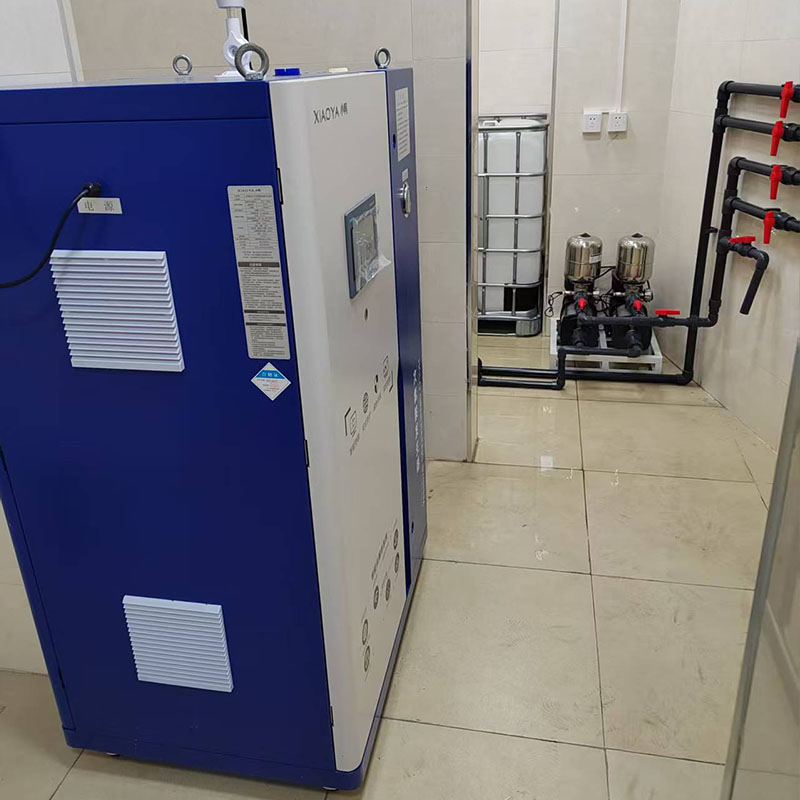
For installations that require slightly acidic to near-neutral hypochlorous acid water, equipment such as the Hypochlorous Acid Generator for Meat Product Disinfection and Fresh-keeping illustrates parameters that should be reviewed in relation to the wash line: a pH range of 5.0 to 6.5, customizable available chlorine concentration from 10 to 120 ppm, production capacity of 160 to 300 L/h, inlet-water pressure requirements, and electrolyzer service life. Those values are not a produce-wash recipe; the appropriate setpoints must be established for the produce type, wash design, local requirements, and validated process conditions.
A controlled produce-washing system maintains the treatment condition where the produce is exposed, removes the factors that consume or block the solution, and detects drift before it becomes a sanitation gap. That approach turns on-site hypochlorous acid generation into a repeatable part of the wash process rather than an isolated piece of equipment.
NEWS
 Food Hypochlorous Acid Generators for Produce Washing: Key Process Controls
 On-Site HClO Production Versus Ready-Made Disinfectants for Public Facilities
- Disinfection Compliance Checks for Public Hypochlorous Acid Generator Systems
- Public Hypochlorous Acid Generator Maintenance to Prevent Output Instability
- What Output Capacity Does a Public HClO Generator Need for Large Venues?
Leave us a message

Xiaoya Group was founded in 1979,expert in the electrolyzed water industry.
Get in Touch
*We respect your confidentiality and all information are protected.