news
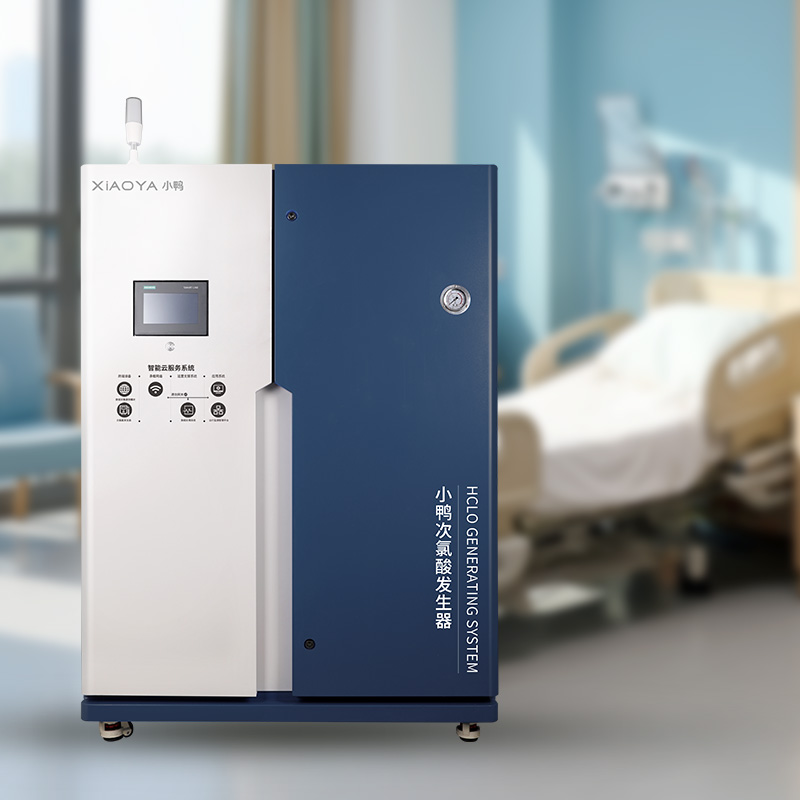
As hospitals face stricter hygiene standards, hclo water treatment for hospitals is gaining attention as a practical and efficient solution for safer sanitation. For researchers comparing disinfection technologies, automated HClO systems offer a compelling balance of effectiveness, operational control, and adaptability across medical environments. This article explores how advanced equipment and integrated production expertise support reliable hygiene management in modern healthcare facilities.
Understanding hclo water treatment for hospitals
In healthcare settings, hclo water treatment for hospitals usually refers to the controlled generation and use of hypochlorous-acid-based disinfecting water for surface sanitation, environmental hygiene, and selected water-related disinfection tasks. The core value lies in combining broad antimicrobial performance with easier on-site preparation, especially where hospitals need stable daily output across multiple departments and shifts.
Hospitals are under pressure to maintain cleaner wards, safer outpatient areas, and more reliable infection-control routines 24 hours a day. In many facilities, sanitation is no longer limited to a single cleaning room or a few portable units. It may involve centralized generation, automated dosing, circulation management, and repeatable concentration control within typical operating bands such as 10–200 ppm, depending on the application.
For information researchers, the important point is that this topic sits at the intersection of hygiene performance and automation equipment. A modern system is not only about disinfection chemistry; it is also about production consistency, operator safety, maintenance intervals, and integration with broader healthcare and disinfection appliance manufacturing capabilities.
Why the topic is receiving more attention
Stricter hygiene protocols often increase the frequency of cleaning cycles from a few times per day to repeated treatment across high-touch points, treatment rooms, utility spaces, and public zones. That raises demand for equipment that can deliver predictable disinfectant output without creating unnecessary logistics burdens from frequent chemical transport or complicated manual mixing.
This is where automated generation equipment becomes relevant. In the automation equipment sector, system stability, flow control, and safe gas management matter as much as chemistry. Facilities reviewing hclo water treatment for hospitals therefore tend to compare not only efficacy, but also startup time, replenishment cycles, and compatibility with existing sanitation workflows.
An enterprise with integrated R&D, production, and operation across healthcare and disinfection appliances can support this need more effectively. That kind of manufacturing background helps shorten coordination cycles between design, equipment production, and application adaptation, often improving implementation within a 4–12 week project window depending on scale.
Industry background and hospital hygiene priorities
Hospitals are not uniform environments. A small clinic, a general hospital, and a specialized treatment center can have very different sanitation loads, water usage profiles, and operational constraints. For that reason, hclo water treatment for hospitals should be assessed by department type, cleaning frequency, and the degree of automation needed for day-to-day management.
Current attention is also linked to practical issues: labor efficiency, traceable operating parameters, and reduced dependence on multiple external chemical products. In high-traffic areas, cleaning may occur every 2–4 hours, while back-of-house treatment areas may require scheduled replenishment across each 8-hour or 12-hour shift. Systems that simplify these cycles are increasingly valuable.
The table below summarizes how different hospital zones typically evaluate disinfection water systems from an operational perspective.
This overview shows that selection decisions are rarely based on chemistry alone. In practice, hospitals tend to prioritize systems that align with sanitation schedules, staff training capacity, and installation conditions. That is why automated equipment design remains central to successful hclo water treatment for hospitals.
What researchers should compare
When evaluating solutions, researchers often compare concentration stability, output continuity, maintenance frequency, and safety controls. It is also useful to review whether the system can support decentralized use points or a central generation model, especially in hospitals with 3–10 major sanitation zones.
Another consideration is how the supplier’s manufacturing profile affects reliability. A company active in kitchen and bathroom appliances, healthcare and disinfection appliances, clean energy, and small household appliances may have stronger multidisciplinary production experience in fluid control, electrolysis design, and equipment assembly.
That cross-industry capability can be useful where hospitals expect equipment that is not only hygienically effective but also robust in daily operation, compact in footprint, and practical for routine servicing.
Application value and equipment integration
The practical value of hclo water treatment for hospitals is closely linked to how the disinfecting solution is generated and managed. Automated systems can reduce manual dilution steps, improve output consistency, and support repeatable sanitation routines. In facilities with multiple cleaning teams, that consistency becomes important for both operational control and staff coordination.
One relevant equipment direction is the Sodium Hypochlorite Electrolyzer, which is used in electrolytic sodium hypochlorite generators, water treatment equipment, and electrolytic disinfection devices. It applies membrane-free electrolysis to a low-concentration sodium chloride solution to produce sodium hypochlorite solution, avoiding the need for additional chemical agents during generation.
For healthcare applications, this matters because on-site generation can support controlled supply over recurring cycles, whether the requirement is several liters per hour or a larger distributed sanitation demand. The system design also includes push-type hydrogen removal technology, helping hydrogen evolve rapidly on a compact composite electrode surface and discharge with a high-flow circulating solution.
Operational benefits in automated environments
- Reduced manual chemical handling can simplify sanitation preparation in 2-shift and 3-shift hospital operations.
- Membrane-free electrolysis can lower component complexity in comparison with systems that require more specialized replacement parts.
- High-flow circulation and hydrogen removal design support safer continuous running and more stable equipment management.
- Integrated production expertise helps align equipment design with practical service needs, spare part planning, and installation constraints.
These benefits do not mean one setup fits every facility. Instead, they show why equipment architecture should be part of the evaluation. In hospital environments, reliable generation, manageable maintenance, and consistent output are often more important than headline claims alone.
Typical hospital use directions and evaluation points
To make hclo water treatment for hospitals useful in practice, decision-makers should link the system to specific use directions rather than treating it as a generic disinfectant resource. Common applications include environmental surface disinfection support, sanitation water preparation, and integration into broader disinfection device workflows.
The table below organizes representative use directions and the related equipment evaluation focus. This helps researchers move from concept-level understanding to implementation-level review.
A structured review usually reveals that the right solution depends on volume demand, operator workflow, and service planning. In many cases, pilot assessment over 2–6 weeks can help clarify whether centralized generation or localized deployment is the better fit.
Researchers should also note that hospital adoption decisions often include practical questions beyond disinfection effect: salt solution preparation, drainage arrangement, ventilation considerations, and preventive maintenance frequency. These details influence operating continuity just as much as core electrolysis performance.
Because of that, evaluating hclo water treatment for hospitals as an automation project rather than only a chemical choice leads to better planning and more realistic implementation expectations.
Practical guidance for assessment and implementation
A practical assessment should begin with demand mapping. Define how many departments will use the system, expected daily consumption, concentration range, and whether operation will be continuous or batch-based. For many healthcare facilities, the first review can be completed through 5 core checkpoints within 1–2 planning meetings.
Those checkpoints usually include sanitation scope, installation environment, utility conditions, operator training level, and maintenance support expectations. This approach helps prevent under-sizing, over-sizing, or selecting equipment with a service model that does not match the hospital’s workflow.
The following sequence is often effective for early-stage decision-making:
- Clarify target use cases, such as sanitation room supply, floor cleaning support, or distributed disinfection stations.
- Estimate operating volume by shift, day, and peak usage period rather than relying on a single average number.
- Review equipment parameters including electrolysis method, gas handling, circulation design, and service accessibility.
- Confirm supplier support for customization, delivery scheduling, and installation coordination.
Why choose us for project discussion
Our manufacturing background combines R&D, production, and operation across healthcare and disinfection appliances, kitchen and bathroom appliances, clean energy, and small household appliances. That structure supports a practical understanding of how automated disinfection equipment must perform in real operating environments, not just in isolated technical descriptions.
If you are researching hclo water treatment for hospitals, we can discuss parameter confirmation, equipment selection logic, delivery cycle expectations, and custom solution options based on your sanitation scenario. We can also help review application fit for electrolytic disinfection devices and water treatment equipment using membrane-free electrolysis concepts.
Contact us to discuss output requirements, installation conditions, sample support, quotation communication, and project planning details. For teams comparing automated disinfection generation methods, an application-based review is often the fastest route to selecting a safer and more workable hospital hygiene solution.
NEWS
 Upgrade in Healthy Living: Hypochlorous Acid Generators Become the New Standard for Luxury Villas
- The Ultimate Solution to Pet Shop Disinfection Challenges! XIAOYA Hypochlorous Acid Generator: Safe Pet Protection with Peace of Mind
 Hypochlorous Acid Generator vs Sodium Hypochlorite Generator
- Hypochlorous Acid Generator Supplier
- Hypochlorous Acid Generator Manufacturer
Leave us a message

Xiaoya Group was founded in 1979,expert in the electrolyzed water industry.
Get in Touch
*We respect your confidentiality and all information are protected.