news
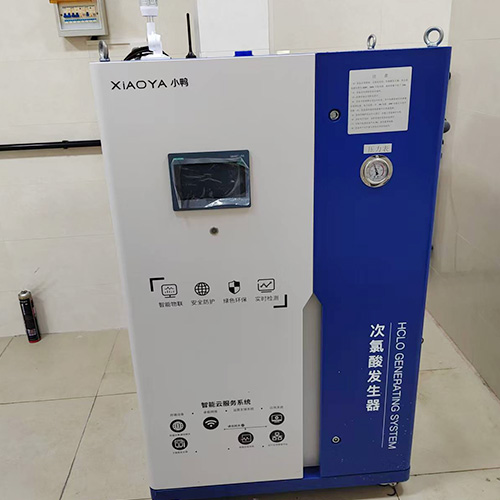
In hospital environments, inconsistent disinfection performance can quickly become a serious maintenance concern. For after-sales service teams working with hclo water treatment for hospitals, unstable results often trace back to water quality fluctuations, dosing errors, equipment calibration, or inadequate system upkeep. Understanding these root causes is essential for restoring reliable output, protecting hygiene standards, and ensuring every component of the system operates as intended.
Why does hclo water treatment for hospitals become unstable?
For after-sales maintenance personnel, the first challenge is separating chemical issues from automation issues. In many hospital projects, inconsistent output is not caused by a single failure. It usually develops through 3 linked stages: feed water variation, dosing drift, and control response delay. When these stages overlap, the system may still appear to be running normally while disinfection performance drops.
Hospital water systems are also more sensitive than ordinary commercial applications because demand patterns change throughout the day. Peak use may occur in wards, operating support areas, and cleaning stations within short 2–4 hour windows. If the equipment cannot respond quickly to changing flow, residual concentration and contact effectiveness may become inconsistent.
In the automation equipment sector, stable disinfection depends on the coordination of sensors, pumps, valves, pretreatment units, and control logic. A company that integrates R&D, production, and operation is often better positioned to diagnose cross-system faults, especially when the root cause sits between mechanical design and control programming rather than in a single component.
For teams maintaining hclo water treatment for hospitals, the practical goal is not just to restart the machine. The goal is to restore repeatable output over daily, weekly, and monthly operating cycles.
- Check whether raw water conductivity, hardness, and turbidity changed during the last 7–30 days.
- Review dosing pump stroke, injection timing, and calibration records.
- Confirm whether PLC alarms were bypassed, delayed, or improperly reset.
- Inspect maintenance intervals for filters, membranes, and sensors.
The most common root causes in service calls
Field service records usually point to 4 high-frequency fault groups. First, poor pretreatment allows hardness, suspended solids, or oxidant-sensitive contaminants to interfere with stable generation and dosing. Second, sensor drift creates false readings, which leads operators to overcorrect. Third, pump wear or air ingress changes the actual injection volume. Fourth, scaling and biofilm in pipelines reduce effective delivery even when the main unit reads normal.
The table below helps maintenance teams prioritize troubleshooting for hclo water treatment for hospitals without wasting time on low-probability causes first.
A structured fault path reduces repeated visits and lowers the risk of replacing healthy parts. For hospitals, this matters because downtime pressure is high and maintenance windows are often limited to late-night or low-load periods.
Which technical points should after-sales teams verify first?
The fastest way to stabilize hclo water treatment for hospitals is to verify the input side before adjusting the output side. Many teams start from the dosing cabinet, but the better sequence is raw water, pretreatment, measurement, dosing, then distribution. This 5-step path prevents false conclusions and shortens diagnosis time.
Pretreatment has a major effect on consistency. If the system uses reverse osmosis, ultrafiltration, nanofiltration, or softening upstream, each stage must operate within its intended load range. In automated water systems, even small untreated hardness or suspended solids can gradually disturb downstream performance over 2–6 weeks rather than causing an immediate shutdown.
For facilities that need integrated upstream support, Water Treatment Equipment can be relevant when the root problem is not the disinfectant generation module itself but unstable feed water quality from a larger treatment chain. This is especially important in hospitals, hotels, schools, and similar high-hygiene applications.
Automation also matters. PLC intelligent control, fully automatic operation, and remote guidance can help service teams compare setpoint changes, alarm histories, and dosing responses without waiting for a full manual teardown.
Key checkpoints for stable automated operation
Before replacing components, verify these checkpoints in order. This method is more efficient for service teams handling multiple sites and urgent hospital calls.
- Compare raw water records across at least 3 sampling times in one day.
- Inspect filter differential pressure and service life history for the last 1–3 months.
- Calibrate conductivity, flow, and residual monitoring instruments according to site practice.
- Test dosing pump repeatability under low, medium, and peak flow conditions.
- Review PLC parameter changes after the last maintenance or power interruption.
How upstream water treatment affects downstream disinfection
When feed water quality changes often, the best corrective action may be upstream optimization rather than repeated chemical adjustment. Systems built with reverse osmosis, ultrafiltration, softening, or EDI sections can create more stable water conditions for sensitive hospital disinfection applications. Depending on the project, membrane service life may reach up to 3 years, desalination rate may reach up to 98%, and water recovery rate may exceed 65%, but the actual value depends on source water and maintenance discipline.
The table below shows which technical checks are most useful when hclo water treatment for hospitals delivers inconsistent results.
These checks help after-sales engineers decide whether the issue is chemical, hydraulic, electrical, or control-related. That distinction is critical for reducing return visits and avoiding unnecessary spare-part use.
How should maintenance teams judge repair, upgrade, or replacement?
Not every unstable hospital system needs a full replacement. A good decision usually depends on 3 factors: how often the problem repeats, whether the pretreatment is adequate, and whether the control system still supports accurate adjustment. If failures appear more than once per month, or if site staff regularly make manual corrections to maintain performance, the cost of repeated service may exceed the cost of an upgrade.
For service teams supporting international or cross-regional projects, replacement decisions also depend on spare parts availability and response time. Fast global delivery of spare parts, remote video guidance for installation, and 24-hour online response can significantly reduce operational risk for hospitals that cannot tolerate long interruptions.
A manufacturer with integrated design, manufacturing, installation, commissioning, and after-sales capability can usually shorten the handoff between diagnosis and correction. That matters in automated disinfection and water treatment because control updates, mechanical changes, and operator training often need to happen together within 1 service cycle.
Where source water is complex or variable, customized solutions are often more cost-effective than repeated generic repairs. This is one reason many buyers and maintenance teams review conductivity, raw water quality, and target output together before approving replacement scope.
A practical decision framework
- Choose repair when the fault is isolated, calibration drift is recent, and upstream water quality remains within the original design range.
- Choose upgrade when alarms, dosing mismatch, or flow instability recur over 2–3 maintenance cycles.
- Choose replacement when pretreatment is undersized, automation is outdated, and total intervention time keeps expanding.
If the broader water line needs review, a second look at Water Treatment Equipment may help align disinfection stability with pretreatment capacity, especially for hospital projects that also require reclaimed water reuse, municipal drinking water support, or pharmaceutical-grade process consistency.
FAQ for after-sales teams handling hclo water treatment for hospitals
How often should key instruments be checked?
A practical routine is daily trend review, weekly functional inspection, and quarterly calibration for core measuring points, depending on hospital usage intensity. If the site has frequent flow swings or repeated manual intervention, shorten the review cycle to every shift until readings stabilize.
Can inconsistent results come from the pipeline instead of the main unit?
Yes. Dead legs, low-flow branches, fouled endpoints, and poor recirculation are common hidden causes. In hclo water treatment for hospitals, endpoint hygiene can fail even when the machine outlet reading looks acceptable. That is why pipeline inspection should be part of any serious service plan.
When should a hospital ask for a custom solution?
Customization is recommended when raw water quality changes by season, when usage peaks are uneven across departments, or when the facility combines multiple treatment goals in one line. In those cases, standard settings may not provide stable long-term output.
What standards and management points matter most?
For procurement and service evaluation, teams usually focus on documented quality processes, environmental management, occupational safety management, traceable commissioning, and operator training. Common management references include ISO9001, ISO14001, and ISO45001. These do not replace site validation, but they support more controlled delivery and after-sales execution.
Why choose us when hospital water disinfection performance is hard to stabilize?
For after-sales maintenance teams, the real value is not just equipment supply. It is the ability to connect diagnosis, pretreatment review, automation adjustment, spare-parts support, and operator training into one service chain. Our background in kitchen and bathroom appliances, health care and disinfection appliances, clean energy, and small household appliances supports a practical engineering mindset where reliability and manufacturability matter together.
Because we integrate R&D, production, and operation, we can help evaluate whether your issue comes from raw water fluctuation, dosing mismatch, membrane performance, PLC settings, or site maintenance routines. That is especially useful when hclo water treatment for hospitals has recurring instability and the problem spans several subsystems.
You can contact us for 6 practical topics: parameter confirmation, product selection, delivery cycle planning, customized solution review, certification requirement matching, and quotation communication. If your project is urgent, remote commissioning guidance, technical training, and spare-parts planning can also be discussed early to reduce service interruption risk.
If you are troubleshooting a current hospital site, send the raw water profile, flow range, alarm history, and maintenance records from the last 30 days. That information makes it easier to judge whether the best next step is recalibration, process optimization, or a broader treatment upgrade.
NEWS
 Upgrade in Healthy Living: Hypochlorous Acid Generators Become the New Standard for Luxury Villas
- The Ultimate Solution to Pet Shop Disinfection Challenges! XIAOYA Hypochlorous Acid Generator: Safe Pet Protection with Peace of Mind
 Hypochlorous Acid Generator vs Sodium Hypochlorite Generator
- Hypochlorous Acid Generator Supplier
- Hypochlorous Acid Generator Manufacturer
Leave us a message

Xiaoya Group was founded in 1979,expert in the electrolyzed water industry.
Get in Touch
*We respect your confidentiality and all information are protected.