




news
When evaluating hypochlorous acid generator price, buyers often focus only on the upfront cost, but long-term value matters just as much. From production capacity and automation level to material quality and maintenance needs, several factors shape a truly hclo water treatment cost-effective solution. For procurement teams and end users alike, understanding these price drivers is the first step toward choosing reliable equipment that balances performance, safety, and return on investment.
Which factors influence hypochlorous acid generator price the most?
In automated equipment purchasing, the biggest pricing difference usually comes from system architecture rather than appearance. A compact unit and an industrial-grade generator may both produce hypochlorous acid water, yet their control logic, component life, and continuous-duty capability are very different. For buyers in hospitals, clinics, and rehabilitation centers, price should be judged across at least 5 dimensions: output, concentration range, automation level, component durability, and compliance suitability.
Production capacity is often the most visible driver. A generator designed for tens of liters per hour serves a very different workflow than equipment capable of 500–1000 L/h or more. Higher output usually requires a larger electrolyzer, more stable power management, stronger pumps, and tighter water inlet control. These changes directly affect manufacturing cost, but they also affect whether the machine can support multi-point disinfection in busy medical environments.
Automation level is another major variable. Manual systems may look cheaper at quotation stage, but PLC-based control, touch interfaces, sensor integration, and remote management often reduce operator error and labor burden over 12–36 months of use. In automated equipment industries, this difference matters because procurement is not only about machine purchase; it is about process stability and operational predictability.
Material selection also shapes hypochlorous acid generator price. Corrosion-resistant pipelines, acid-alkali-resistant accessories, and industrial-grade control parts cost more than entry-level alternatives. However, in applications involving frequent disinfection cycles, chemical contact, and long operating hours, cheaper materials can lead to earlier replacement, unstable output, and avoidable maintenance downtime.
Core price drivers buyers should compare first
Before requesting quotations from different suppliers, it helps to compare the underlying cost logic in a structured way. The table below summarizes the main variables that commonly explain why one hypochlorous acid generator price is higher than another in the automation equipment market.
This comparison shows why two machines that seem similar can have very different ownership economics. In practice, buyers who compare only initial quotation often miss the cost impact of labor, maintenance frequency, concentration stability, and control integration.
Why automation raises price but may lower total cost
For R&D-to-production enterprises serving health care and disinfection appliance sectors, automation is not an added decoration. It is a functional investment. Siemens PLC control, remote data visibility, and sensor-based monitoring can reduce manual adjustment steps from several repeated interventions per shift to a more standardized process. Over 6–12 months, this often improves consistency enough to justify the higher initial budget.
- Automated control helps keep concentration and pH within usable operating targets for repeated disinfection routines.
- Remote access can reduce unnecessary on-site inspections, especially in multi-department facilities.
- Sensor integration allows earlier detection of abnormal conditions before they develop into service interruptions.
- Touchscreen interfaces shorten operator training time, often from several sessions to a clearer 1–2 stage onboarding process.
For procurement teams under budget pressure, the key question is not whether automation increases price. It does. The better question is whether that increase lowers operational risk and daily management cost across the intended service cycle.
How do specifications and application scenarios change the cost structure?
A meaningful hypochlorous acid generator price analysis must connect technical specifications with real use scenarios. Medical disinfection is not a single use case. Hospitals, clinics, physical examination centers, and rehabilitation centers differ in water consumption rhythm, operator skill level, deployment space, and disinfection frequency. As a result, the most suitable configuration is rarely the cheapest standard configuration.
For example, a system operating at 220V/50Hz with rated power around 420W may be attractive because it fits common power infrastructure while keeping energy demand controlled. Yet the cost equation changes if buyers also require remote control through 4G, IoT modules, ORP and pH detection, and future connection to other equipment. Expandability adds cost, but it also protects the project from early obsolescence.
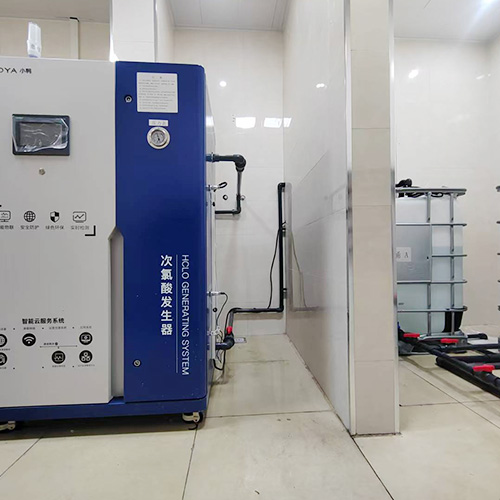
One relevant reference in the medical field is Hypochlorous acid generator for medical disinfection. In a configuration such as model AQ-P1000, buyers may look at a generation capacity of 1000 L/h, a pH value of 6.37, an available chlorine concentration range of 10–300 mg/L, and main component service life where the electrolyzer is rated for at least 3000 hours. These figures matter because they connect price to real throughput, disinfection suitability, and maintenance planning.
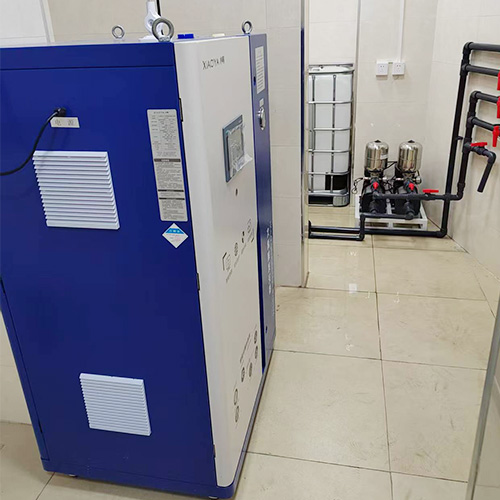
Application conditions also affect supporting cost. Inlet water pressure requirements such as 0.15–0.25 MPa may require upstream water regulation in some buildings. Unit weight around 220 kg and dimensions near 9007001500 mm influence transportation, installation route, and placement planning. These site-related factors do not always appear in basic quotations, but they change the actual project budget.
Scenario-based specification matching
Instead of asking for the lowest hclo water treatment cost-effective solution in general terms, buyers should match configuration to use frequency and site complexity. The table below provides a practical scenario comparison for purchasing discussions.
This table highlights a common procurement mistake: selecting by nominal output alone. In real medical environments, price should reflect not only liters per hour, but also control depth, installation fit, and the number of operating points the unit must support.
What buyers should verify in the parameter sheet
- Check whether concentration is adjustable within the required range, such as 10–300 mg/L, instead of fixed at one output level.
- Confirm power supply compatibility, for example 220/50, to avoid extra electrical modification cost.
- Ask for main component service life, especially electrolyzer replacement expectations after 3000 h or more.
- Review installation boundaries such as water pressure, machine dimensions, and drainage support before purchase approval.
For both procurement officers and end users, these checks help separate a low sticker price from a sound operational investment.
What makes one supplier more cost-effective than another?
Supplier capability has a direct effect on hypochlorous acid generator price because engineering depth changes the type of machine delivered. An enterprise integrating R&D, production, and operation is usually better positioned to control design consistency, customize configurations, and support post-sale adjustments than a trading-only seller. In automation equipment, this difference affects both price transparency and project execution reliability.
Companies active across kitchen and bathroom appliances, health care and disinfection appliances, clean energy, and small household appliances often bring cross-sector manufacturing discipline into medical disinfection equipment. That usually translates into better process control, supply chain coordination, and a more practical understanding of user-facing operation. It does not automatically mean a lower quotation, but it can mean fewer hidden compromises in assembly and testing.
Cost-effectiveness should also include response speed. If a supplier can clarify 3 categories quickly—technical adaptation, delivery schedule, and service boundaries—the buyer can reduce project delay risk. Typical lead time for standardized automated equipment may fall into a 2–6 week range depending on configuration depth, while custom integration can extend further. That timeline has cost implications for facilities under renovation or urgent deployment plans.
Another pricing variable is customization. Buyers often request concentration adjustment, flow adaptation, remote visibility, or integration with existing disinfection or water systems. A supplier with modular engineering capability can often configure these functions more efficiently than one relying on ad hoc modification. This matters because poorly planned customization may create future maintenance problems and higher downtime cost.
A practical supplier evaluation checklist
Before comparing quotations, use a structured review process. This reduces the chance of selecting a lower-priced machine that later requires more operator effort or replacement parts.
- Review whether the supplier can explain the relationship between capacity, concentration, pH control, and application scenario in clear technical language.
- Confirm whether control systems are industrial-grade and whether remote functions, sensors, or PLC architecture are native features or later add-ons.
- Ask about consumables, main component life, and expected maintenance nodes over the first 12 months and the first 3000 operating hours.
- Check whether the supplier can support parameter confirmation, site matching, commissioning guidance, and post-install adjustment.
These 4 steps are simple, but they often reveal whether a quoted hypochlorous acid generator price reflects engineering value or only a basic hardware sale.
Why service structure matters in automated equipment procurement
In medical and disinfection-related use, equipment is rarely judged only on day-one performance. Service readiness affects real cost. Buyers should understand whether the supplier can guide installation conditions, provide operation training, and support fault screening remotely. Even 1–2 avoided service interruptions can protect a meaningful share of the project’s practical value, especially where continuous sanitation is part of daily workflow.
This is where product design features such as IoT modules, ORP and pH detection, and remote operation become relevant to price discussions. They are not only technical features; they are service enablers that can shorten diagnosis time and simplify routine management.
How should buyers calculate total cost instead of only purchase price?
A realistic cost review should cover at least 4 layers: initial equipment cost, installation adaptation, operating inputs, and maintenance or replacement intervals. This broader view is essential for any hclo water treatment cost-effective solution because low purchase price can be offset by unstable concentration, frequent maintenance, higher labor involvement, or earlier component wear.
For procurement teams, the simplest approach is to compare a 12–24 month use horizon. Estimate expected daily or weekly output demand, assign an approximate operating schedule, and then ask how often the machine will need inspection, consumable refill, or component attention. A system with a more stable control structure may cost more at purchase but reduce hidden costs from manual correction and inconsistent disinfection output.
End consumers and facility operators should also think about usability cost. If operation depends on repeated manual settings, cross-shift errors become more likely. By contrast, automatic control with a user-friendly interface can reduce training burden and routine handling complexity. Over time, this affects practical return on investment as much as power consumption does.
When reviewing equipment similar to the AQ-P1000 category, users may value characteristics such as high-flow production, customizable concentration, residue-free output, and long-term use without creating drug-resistant strains. These advantages are relevant not only to performance but also to replacement strategy, environmental handling, and user acceptance in sensitive medical settings.
Cost categories that should appear in procurement comparison
Many procurement sheets leave out several cost items that later become operational problems. The table below offers a clearer way to compare true ownership cost before final supplier selection.
This method helps buyers identify where a low quotation may simply shift cost into installation, operator time, or shorter maintenance cycles. For budget decisions, that is often more useful than comparing price alone.
Common low-price traps
- Capacity is advertised broadly, but stable output at target concentration is not clearly defined.
- Basic control panels are offered without explaining the extra labor needed for repeated monitoring.
- Component life is not discussed, making long-term budgeting difficult after the first 6–12 months.
- Site requirements such as inlet pressure and equipment dimensions are reviewed too late, causing installation delay.
Avoiding these issues usually improves return on investment more effectively than negotiating only for a lower purchase order total.
What do procurement teams and end users ask most often?
Search behavior around hypochlorous acid generator price is often practical rather than theoretical. Buyers want to know what is suitable for their site, how to judge fair pricing, and which functions are genuinely worth paying for. The questions below reflect the most common decision points in automated medical disinfection equipment selection.
How do I know what capacity I actually need?
Start with daily disinfection frequency, the number of use points, and whether generation is centralized or local. A small clinic may focus on moderate periodic output, while a hospital department may require sustained supply across several time blocks each day. As a practical rule, buyers should map demand in 3 layers: peak-hour use, average daily use, and possible future expansion within 12–24 months.
Is higher concentration always better?
No. What matters is suitability and controllability. A customizable range such as 10–300 mg/L is often more valuable than a fixed high number because different medical disinfection tasks may require different operating conditions. Overpaying for a concentration level that is rarely used does not improve cost-effectiveness. Stable adjustment and repeatable output are more important.
How important are remote control and sensors?
In single-point, low-frequency use, they may be optional. In multi-room or management-sensitive environments, they can be highly practical. Remote functions through mobile phone or computer, plus ORP and pH detection, help reduce manual checks and support more predictable operation. If the equipment will run frequently or support more than one department, these functions can justify their added cost.
What compliance or safety points should be discussed before purchase?
Buyers should ask whether the product is positioned for medical disinfection use, whether the generated water is free from unwanted by-products such as ozone, hydrogen peroxide, chlorate, and perchlorate as stated by the supplier, and whether accessory materials are corrosion-resistant and suitable for the intended environment. It is also wise to confirm documentation scope, operating guidance, and any applicable local implementation requirements before order finalization.
Quick decision summary for busy buyers
- If usage is frequent, prioritize stable automation over the lowest initial quotation.
- If the site is medical or care-related, focus on safety profile, residue control, and operation simplicity.
- If expansion is likely within 1–2 years, choose a modular system that can integrate with other equipment.
- If procurement time is short, clarify delivery scope, commissioning support, and site requirements before price comparison.
These checkpoints help both professional buyers and end users move from vague price questions to workable selection criteria.
Why choose us for project evaluation and next-step consultation?
For buyers comparing hypochlorous acid generator price, the real challenge is rarely finding a quotation. The harder task is confirming which configuration matches the actual disinfection workflow, site conditions, and future automation goals. With experience across health care and disinfection appliances, clean energy, small household appliances, and other manufacturing segments, we support projects from R&D and production to practical delivery coordination.
If you need a solution for hospitals, clinics, rehabilitation centers, or physical examination centers, we can help review key items such as generation capacity, concentration range, power compatibility, water pressure conditions, remote control requirements, and modular expansion options. For buyers considering the second-stage fit between budget and application, this is often more valuable than a simple list price.
You can contact us to discuss 6 practical topics: parameter confirmation, product selection, delivery timing, customized scheme planning, certification-related document scope, and quotation communication. If your team is comparing different system levels, we can also help identify whether PLC control, IoT monitoring, or sensor integration is necessary for your use frequency and management model.
If you want to evaluate a medical disinfection project in a more accurate way, share your target application, expected output range, operating schedule, and installation conditions. We can help you narrow the right specification path, reduce avoidable cost, and assess whether a solution like the Hypochlorous acid generator for medical disinfection fits your operational and procurement goals.
NEWS
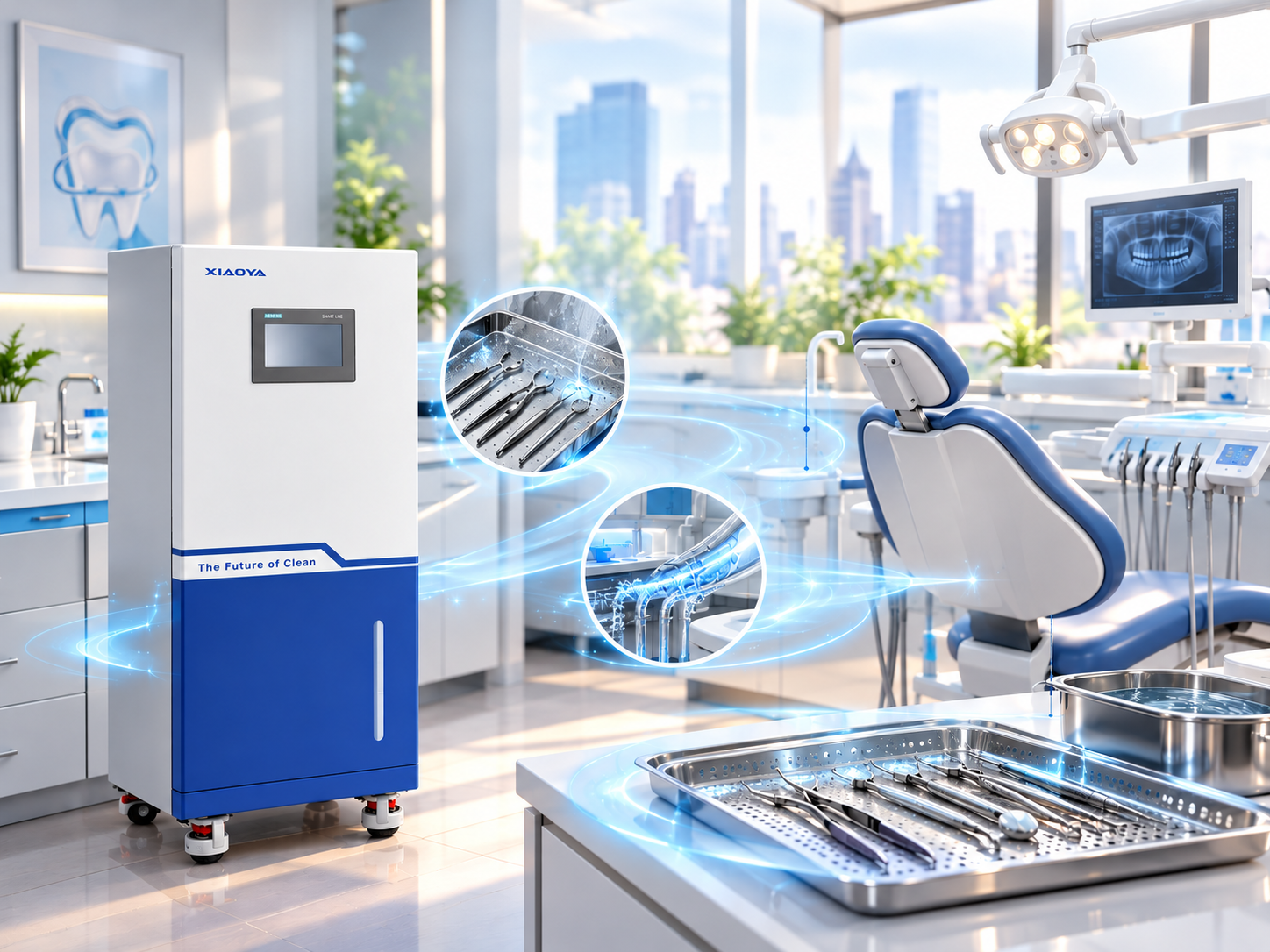
 Disinfection Empowers Orthodontic Safety: Hypochlorous Acid Generators Build a Sterile Defense Line for Dental Instruments
- Accumulating Strength and Reaching New Heights: A Record of the Production Breakthrough of Xiaoya Small Home Appliances' Hypochlorous Acid Generators
 How Do HOCl Generators Turn Salt and Water into Cleaning Solutions?
 Medical HOCl Generator Procurement: Service, Training, and Traceability
- Integrating a Medical HOCl Generator into Hospital Cleaning Stations
Leave us a message

Xiaoya Group was founded in 1979,expert in the electrolyzed water industry.
Get in Touch
*We respect your confidentiality and all information are protected.