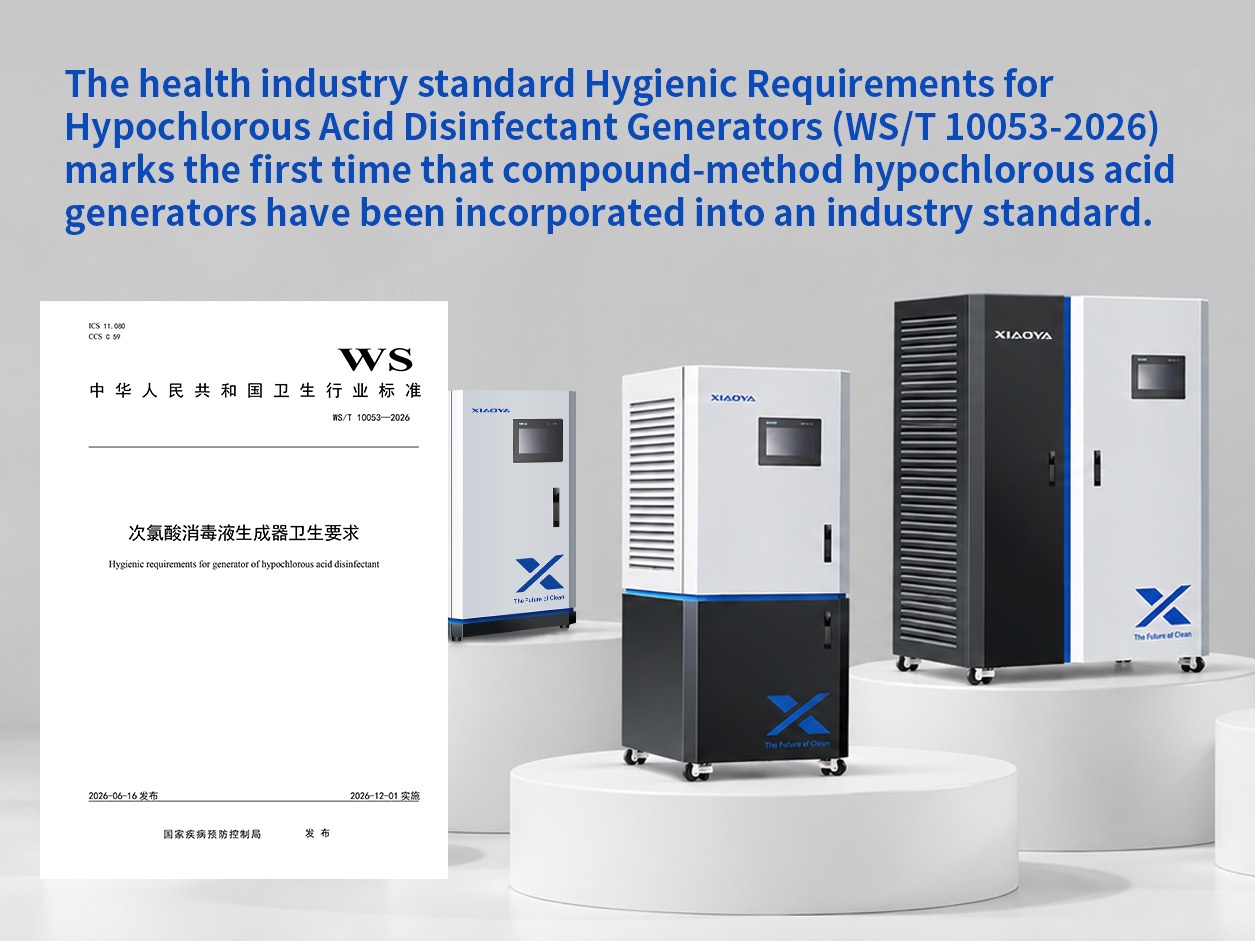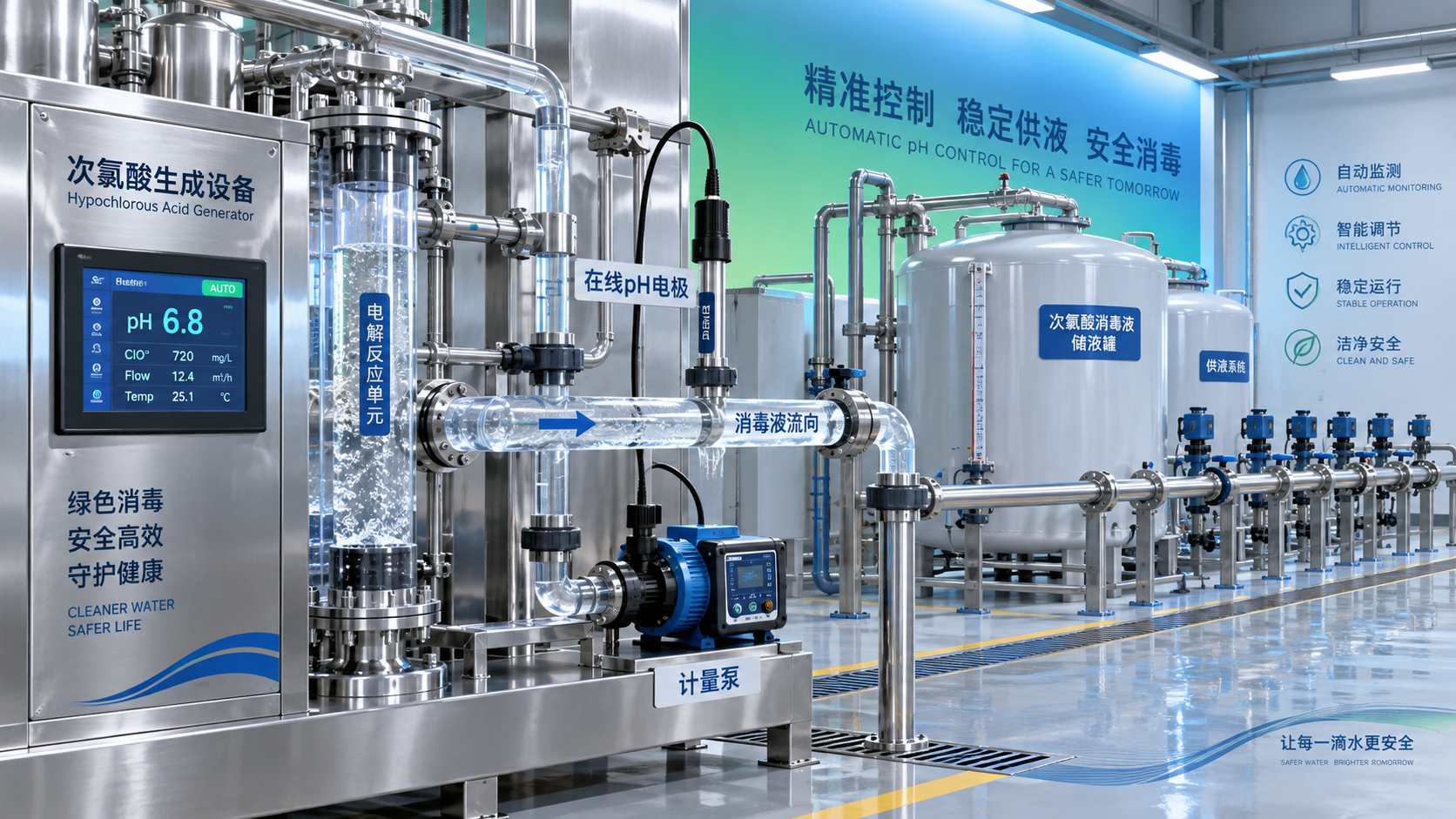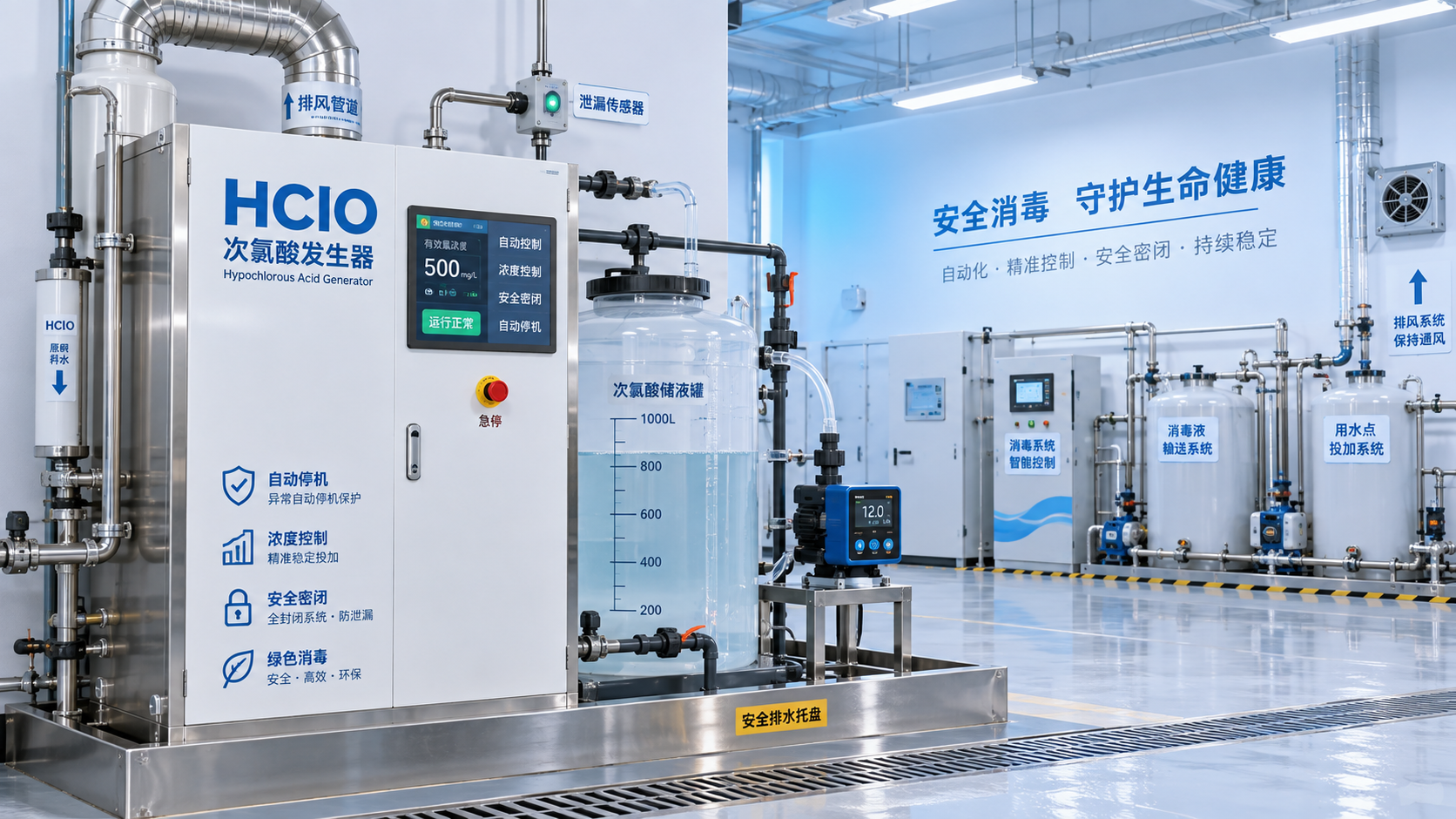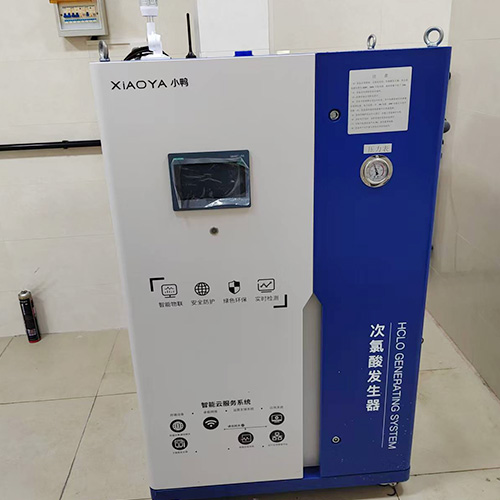
The Power of HOCL in Enhancing Livestock and Dairy Farming
A common challenge in livestock and dairy farming is that hygiene problems rarely stay small for long. A damp milking area, poorly cleaned water lines, residue on feeding tools, or high-touch surfaces in animal housing can quickly turn into a cycle of odor, contamination risk, extra labor, and pressure on daily operations.
Many farm operators looking into HOCL are not chasing a trend. They are trying to solve a practical issue: how to keep barns, milking spaces, and processing-related contact areas cleaner without making the workflow heavier or introducing cleaning routines that are hard to repeat consistently. When HOCL is used properly, it can help make sanitation more manageable and better aligned with modern automated equipment and health-focused farm management.
Why hygiene issues become operational problems so quickly
In animal agriculture, sanitation is connected to far more than appearance. When surfaces, pipelines, footwear stations, transport tools, and work zones are not cleaned well enough, the problem spreads into labor efficiency, equipment reliability, and animal care routines. Even a farm with good people and decent procedures can struggle if disinfection steps are too slow, too harsh for regular use, or too inconsistent between shifts.
Livestock and dairy farming environments are especially demanding because they combine moisture, organic matter, frequent movement, and repeated human contact. Cleaning a space is one task; keeping it acceptably hygienic through a full working day is another. This is where many operations begin rethinking the difference between basic washing, occasional deep disinfection, and a routine sanitizing method that is practical enough to use often.
HOCL gets attention in this setting because it fits a real operational need. It is commonly considered when farms want a disinfection option that supports routine hygiene work in animal housing, milking areas, entry points, tools, and some water-related or surface-related applications, depending on internal protocols and equipment compatibility.
Common misunderstandings before adopting HOCL in livestock and dairy farming
One common misunderstanding is assuming that any disinfectant is good enough as long as it is strong. In practice, strength alone does not create a usable hygiene system. If a product is difficult to apply, unpleasant for staff to handle, or disruptive to workflows, it often gets used unevenly. Uneven use is one of the biggest reasons sanitation plans look good on paper but fail in day-to-day farm conditions.
Another mistake is treating HOCL as a standalone fix. It is better understood as part of a cleaning and control process. Organic matter still needs to be removed. Contact surfaces still need attention. Application methods still need to match the area being treated. If a farm skips these basics, even a promising disinfection method will underperform.
A third misunderstanding is focusing only on the liquid itself and ignoring delivery, temperature, and system design. In real operations, the effectiveness of a hygiene routine often depends on how reliably the disinfectant can be produced, stored, distributed, or paired with cleaning equipment. That is why the discussion around HOCL often expands into automation, heating, steam support, and integrated sanitation workflows.
How to judge whether HOCL fits your farming workflow
If you are evaluating HOCL for livestock and dairy farming, the first useful question is not whether it sounds advanced. The real question is where hygiene friction exists today. For some farms, the weak point is milking equipment surroundings and floor sanitation. For others, it is boot wash entry control, transport carts, calf housing tools, or repeated cleaning of walls and touch surfaces in enclosed areas.
A practical evaluation usually starts with a short checklist:
- Identify the zones where contamination risk tends to build up fastest.
- Separate cleaning needs into pre-cleaning, routine sanitizing, and deeper periodic treatment.
- Review whether current methods are hard to repeat, too labor-intensive, or poorly matched to the equipment already in use.
- Check whether your application method supports stable, consistent coverage.
- Consider whether support systems such as heated water, steam, or automated circulation could improve the overall sanitation process.
This last point matters more than many teams expect. In farms with larger throughput or multiple hygiene zones, the bottleneck is often not the disinfectant choice alone. It is the inability to maintain stable cleaning conditions across time, temperature, and workload.
Where thermal support can improve HOCL-related sanitation routines
Although HOCL is often discussed as a chemical or electrochemical hygiene topic, the surrounding equipment ecosystem has a direct effect on whether the process works smoothly. In dairy and livestock settings, hot water and steam remain important for pre-cleaning, residue removal, line sanitation support, and surface preparation before a disinfecting stage. If those steps are weak, the hygiene routine becomes less dependable.
That is where compact thermal equipment may become part of the solution path. For farms or processing-adjacent agricultural facilities that need efficient steam support without building an oversized utility setup, Thermal Engine can fit as a supporting component in the broader sanitation workflow. Its listed features, such as composite superconducting heat pipe steam generation technology, flameless combustion, condensation waste heat recovery, and intelligent real-time monitoring, suggest a design aimed at stable heat generation with attention to energy use and operating control.
From a practical standpoint, this kind of equipment is relevant when operators need repeatable steam or heat support for cleaning stages around livestock and dairy farming equipment, rooms, or service areas. The compact footprint, no-boiler-room positioning, and distributed installation suitability may be useful in sites where space planning is tight and utility layouts need flexibility. That does not replace correct HOCL handling, but it can strengthen the full cleaning chain that HOCL depends on.
A workable step-by-step approach for using HOCL more effectively
Many sanitation problems do not come from choosing the wrong concept. They come from trying to use the right concept with the wrong sequence. A more reliable approach is to treat HOCL as one stage in a controlled hygiene routine.
- Map the farm by risk zones. Separate animal housing, milking-related areas, feed-contact tools, personnel entry points, transport tools, and utility zones. Each area has different cleaning frequency and exposure patterns.
- Remove visible soil first. Dirt, manure, feed residue, and biofilm-related buildup reduce the value of any disinfecting step. Mechanical cleaning and washing are still foundational.
- Standardize the application method. Decide whether the area is best handled by spray, wipe, circulation-related application, or another controlled method already accepted in your process. Inconsistent application leads to inconsistent results.
- Control the supporting conditions. Where grease, protein residue, or stubborn deposits are part of the problem, hot water or steam-assisted cleaning may improve surface preparation before HOCL is applied.
- Set repeatable timing. Hygiene fails when it depends on memory. Link HOCL use to shift changes, milking cycles, zone turnover, or cleaning windows that already exist in the workflow.
- Train for handling and limits. Staff should know what HOCL is meant for, what it is not meant for, and which surfaces or systems require specific compatibility checks.
- Review outcomes operationally. Instead of looking for dramatic claims, track whether odor control, visible cleanliness, workflow consistency, and cleaning effort become easier to manage over time.
This process may sound basic, but farms often improve results simply by making the routine easier to repeat. The most useful sanitation method is usually the one that gets applied correctly, at the right interval, in the right location, with the right preparation.
What to look for when choosing equipment around the sanitation process
If your goal is to strengthen hygiene in livestock and dairy farming, do not evaluate products in isolation. Look at the chain: water treatment, pre-cleaning, temperature support, steam availability, disinfection method, operator control, and maintenance burden. A system that looks efficient in one specification sheet can still create daily friction if it is oversized, hard to place, or costly to maintain.
For example, when thermal support is needed, details such as real-time monitoring, combustion adjustment range, low power consumption, compact dimensions, and reduced maintenance demands are not just technical extras. They affect whether a team can operate the cleaning routine consistently. The listed models for the linked thermal equipment also show practical distinctions such as rated steam capacity, outlet sizes, and overall dimensions, which are the kinds of factors operations teams should compare against site layout and cleaning demand rather than selecting by headline features alone.
The better decision usually comes from matching the hygiene goal to the workflow. Small or distributed installations may value compact placement and simpler utility planning. Higher-use areas may care more about stable steam availability and heat recovery efficiency. The right answer depends less on marketing language and more on how the sanitation task actually happens on the farm.
Common Questions
Is HOCL enough on its own for livestock and dairy farming sanitation?
Usually, no. HOCL is more effective when it is part of a sequence that includes removal of organic matter, proper surface preparation, and a repeatable application process. It should support a hygiene routine, not replace cleaning basics.
Where is HOCL most useful on a farm?
It is often considered for high-contact surfaces, entry control points, tools, service zones, and areas that need frequent routine sanitizing. The exact use depends on the farm's process design, material compatibility, and internal handling rules.
Why does thermal or steam equipment matter if the topic is HOCL?
Because many sanitation failures start before the disinfecting step. If residue is not removed well, or if surfaces are not prepared properly, the disinfectant stage becomes less reliable. Heat and steam can improve the cleaning side of the process.
Does a compact steam unit make sense for automated farming environments?
It can, especially where space is limited and cleaning needs are spread across several zones. A compact option such as Thermal Engine may be relevant when operators want nearby or distributed installation and more control over routine thermal cleaning support.
What is the biggest mistake when introducing HOCL?
The biggest mistake is expecting a material change without changing the process. Clear zoning, staff instructions, timing, and surface preparation usually matter just as much as the product choice.
Closing Thoughts
The power of HOCL in enhancing livestock and dairy farming comes from its fit with real operational needs: repeatable hygiene, lower process friction, and cleaner day-to-day management in demanding environments. But the farms that get the most value from it are usually the ones that treat it as part of a complete sanitation routine rather than a quick fix.
If you are reviewing your current setup, start with the areas where cleaning is hardest to maintain consistently. Then look at whether your supporting equipment, including hot water or steam capability, is helping or getting in the way. That is often where a practical improvement becomes visible.