news
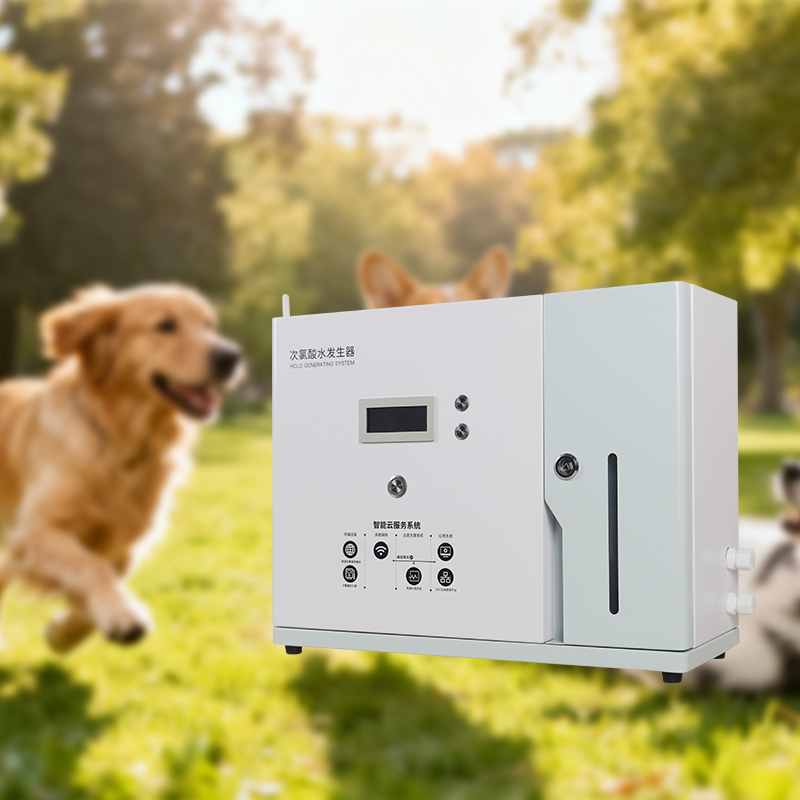
Chinese manufacturers of hypochlorous acid generators are drawing more attention from importers, processors, and equipment integrators for a practical reason: the technology now sits at the intersection of food safety, hygiene automation, labor reduction, and compliance pressure. In the past, buyers often treated hypochlorous acid generation as a niche disinfection solution. That view is changing. As processing environments become more regulated and customers demand cleaner, more controllable sanitation systems, Chinese suppliers are no longer competing only on price. The more serious manufacturers are competing on engineering integration, concentration stability, production scalability, and export readiness.
For buyers evaluating this segment, the real question is not whether hypochlorous acid can disinfect effectively. That is already widely understood in many industrial sanitation applications. The more important judgment is whether a given manufacturer can deliver a system that performs consistently under real operating conditions, fits the target process flow, and meets the documentation and validation requirements of the destination market.
Why this category matters now
Hypochlorous acid generators have become relevant across multiple sectors because they answer several operational needs at once. In food processing and healthcare-related disinfection, users want stronger microbial control without introducing excessive chemical residues, difficult handling procedures, or unstable supply chains for consumable disinfectants. In automated manufacturing environments, on-site generation also reduces storage dependence and gives operators more control over concentration and usage frequency.
That is one reason Chinese manufacturers have expanded quickly in this field. Many of them come from broader appliance, sterilization, water treatment, or automation-equipment backgrounds. This matters because buyers are not only purchasing an electrochemical unit. They are purchasing a combination of fluid control, electrode technology, dosing logic, housing design, power management, and after-sales operability. Manufacturers with experience in kitchen and bathroom appliances, health and disinfection equipment, and small appliance production often have stronger capabilities in mass production discipline, component integration, and cost control than firms entering the category from pure trading backgrounds.
What separates capable Chinese manufacturers from low-end suppliers
The market is uneven. Some suppliers can provide reliable systems with traceable production and export documentation. Others are essentially assembling standard components without deep control over electrode life, concentration consistency, or corrosion resistance. For overseas buyers, this distinction is more important than catalog appearance.
A capable manufacturer usually shows strength in several areas:
- In-house R&D rather than only outsourced assembly
- Stable control of pH and available chlorine concentration
- Ability to adapt output to different application scenarios
- Clear testing procedures for durability and sterilization performance
- Manufacturing discipline that supports batch consistency
- Export familiarity with certification, labeling, and technical files
Many buyers make the mistake of comparing only nominal production capacity. In practice, capacity tells only part of the story. A system rated at a certain liters-per-hour output may still underperform if the local water quality fluctuates, if electrolyte management is weak, or if the concentration drifts during continuous use. For sanitation-sensitive industries, concentration stability and process compatibility are usually more valuable than headline output.
The shift from “equipment purchase” to “process solution”
One notable change in the market is that serious buyers increasingly evaluate hypochlorous acid generators as process equipment rather than standalone appliances. This is especially true in meat processing, cold-chain handling, fresh produce sanitation, and institutional disinfection systems.
In these sectors, the equipment must fit a real workflow: spray bars, soaking tanks, conveyor wash sections, fogging systems, rinse stations, or packaging area sanitation. The generator is only one part of a larger hygiene control system. That is why manufacturers with integrated production and application knowledge are gaining credibility. They can discuss not only the machine itself, but also contact time, concentration range, water pressure, operating rhythm, and maintenance requirements.
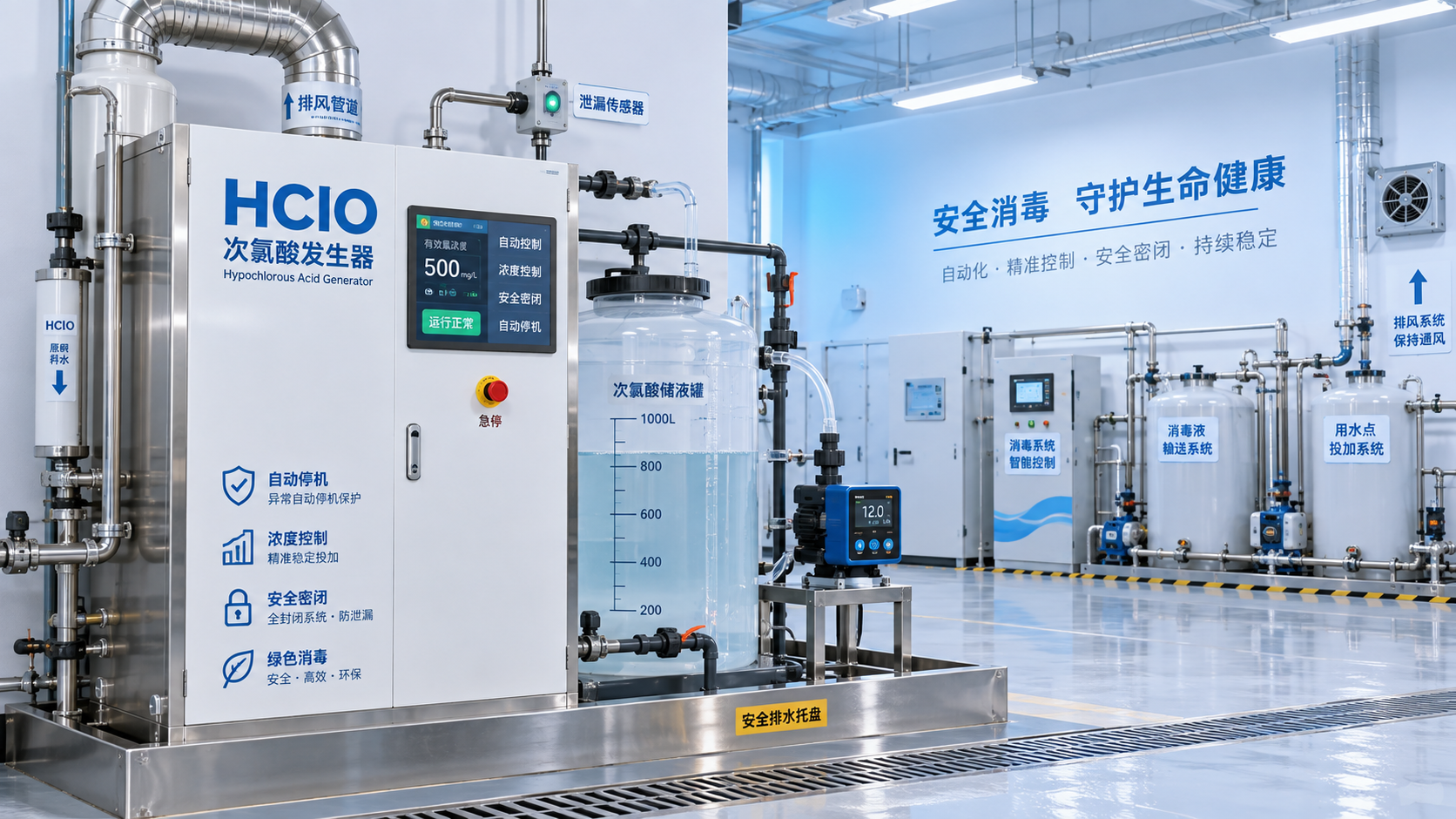
A useful example is the Hypochlorous Acid Generator for Meat Product Disinfection and Fresh-keeping, designed for poultry and livestock slaughtering and processing, deep processing of meat products, and cold chain storage and distribution. In practical terms, this kind of equipment is not judged only by sterilization claims. Buyers will want to know whether it can deliver slightly acidic or neutral hypochlorous acid water consistently enough for soaking, rinsing, spraying, or atomization, while fitting continuous production schedules. In meat applications, that consistency matters because sanitation failure and excessive treatment are both costly.
Why food-related applications are a major growth area
Among the most commercially important applications, food processing stands out because it combines regulatory sensitivity with measurable return on investment. Meat processors, in particular, face pressure to reduce microbial load, maintain product appearance, extend shelf life where feasible, and support audit requirements from both domestic and export customers.
Hypochlorous acid systems are attractive here because they can be applied across multiple stages of the chain, from slaughter and cutting environments to deep processing and cold-chain circulation. The appeal is not simply “better disinfection.” It is the possibility of achieving sanitation with lower residue concerns and less impact on product quality when the system is properly configured.
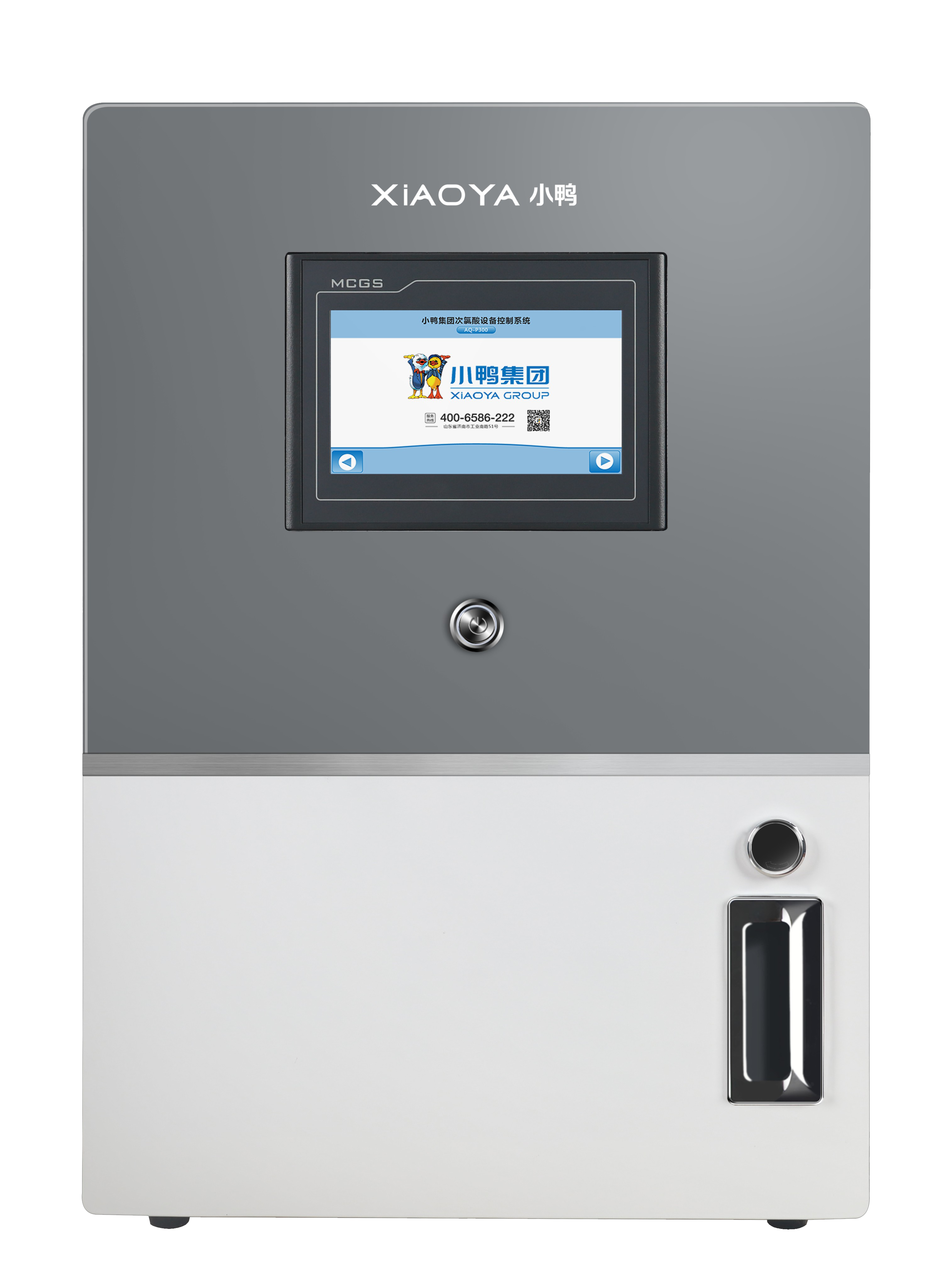
For instance, equipment in the AQ-P300-W class typically targets moderate industrial throughput, with production capacity in the 160–300 L/h range, pH control around 5.0–6.5, and available chlorine concentration adjustable according to the scenario. That adjustability is commercially important. A processor may not need the same concentration for carcass rinsing, equipment surface sanitation, and cold-room environmental treatment. Systems that allow practical concentration matching are more useful than one-setting equipment sold on a generic sterilization claim.
Compliance and certification: what buyers should actually check
Certification language is often used loosely in this market, so procurement teams should be careful. Mentions of CE, FDA-related acceptance, USDA relevance, or references to Japanese and WHO frameworks should be read precisely, not as blanket proof that any machine is approved everywhere. Different markets care about different aspects: electrical safety, materials safety, disinfectant application scope, food-contact suitability, and local registration requirements may all be separate issues.
If a supplier cites certifications or recognition related to CE, the US FDA, USDA, Japan’s Ministry of Health, Labour and Welfare, or the World Health Organization, buyers should request the exact basis of those claims and confirm what is certified: the machine, the generated solution, a component, a test report, or an application reference. Where details are unclear, the correct position is 【待核实】.
This is especially relevant for distributors and OEM importers. A manufacturer may be technically competent yet still be a poor fit if it cannot provide the documents needed for customs clearance, local registration, or client audits. In cross-border business, paperwork reliability can be as important as machine reliability.
The operational risks buyers often underestimate
Several recurring procurement mistakes appear in this category.
One is assuming that hypochlorous acid generators are maintenance-light by default. In reality, electrode life, scale buildup, water quality variation, and electrolyte management all affect long-term performance. A quoted service life such as electrolyzer life of 5,000 hours or more is useful, but buyers should also ask under what operating conditions that figure applies.
Another common error is ignoring site conditions. Input water pressure, power supply compatibility, drainage planning, ventilation, and operator habits all affect implementation. A compact machine footprint may look attractive on paper, but if the installation environment is wet, crowded, or inconsistent in utilities, the ease of use may differ significantly from the brochure promise.
There is also a strategic risk in buying from suppliers that cannot support stable spare parts and remote troubleshooting. For distributors and industrial end users, downtime in sanitation equipment is more disruptive than downtime in some non-critical utilities, because it can interrupt production release or create quality hold situations.
How to evaluate a Chinese manufacturer more realistically
For foreign buyers, a better evaluation approach is to ask process-based questions rather than general sales questions.
- What water quality assumptions were used in the equipment design?
- How stable is the concentration during continuous operation?
- What maintenance tasks are routine, and what skills do operators need?
- Can the output be customized for different sanitation points?
- What data or test reports support bactericidal claims against common pathogens?
- What is the lead time for spare parts and replacement core components?
- Can the supplier support OEM, private label, or local compliance documentation?
These questions reveal much more than price negotiations do. Manufacturers with real production depth usually answer with engineering detail. Trading-led suppliers tend to respond with broad claims.
The stronger Chinese manufacturers are increasingly attractive because they combine R&D, production, and operational experience in a single enterprise structure. That integrated model matters in export business. It generally improves consistency, speeds up customization, and reduces the communication gap between what sales promises and what the factory can actually deliver.
What the market outlook suggests
The outlook for Chinese manufacturers of hypochlorous acid generators is positive, but not uniformly so. Demand should continue to grow where sanitation automation, food safety management, and on-site disinfectant generation offer measurable operational value. Meat processing, cold chain, healthcare-adjacent disinfection, and some commercial appliance-linked sanitation applications are likely to remain important growth segments.
At the same time, competition will probably shift away from low-price standard units toward more application-specific systems. Buyers are becoming more experienced. They want proof of concentration control, material durability, and deployment support, not just generic sterilization language. That favors manufacturers able to show engineering maturity and export discipline.
For importers, procurement teams, and technical evaluators, the opportunity in China is real, but so is the need for filtering. The best suppliers in this category are not simply low-cost manufacturers. They are process-oriented equipment partners that understand how sanitation technology is actually used in modern industrial environments.
That is the real reason this segment deserves attention now. The market is no longer asking only who can make a hypochlorous acid generator. It is asking who can make one that works reliably, fits compliance expectations, and supports operational decisions across industries where hygiene is no longer a side issue, but a core production variable.
NEWS
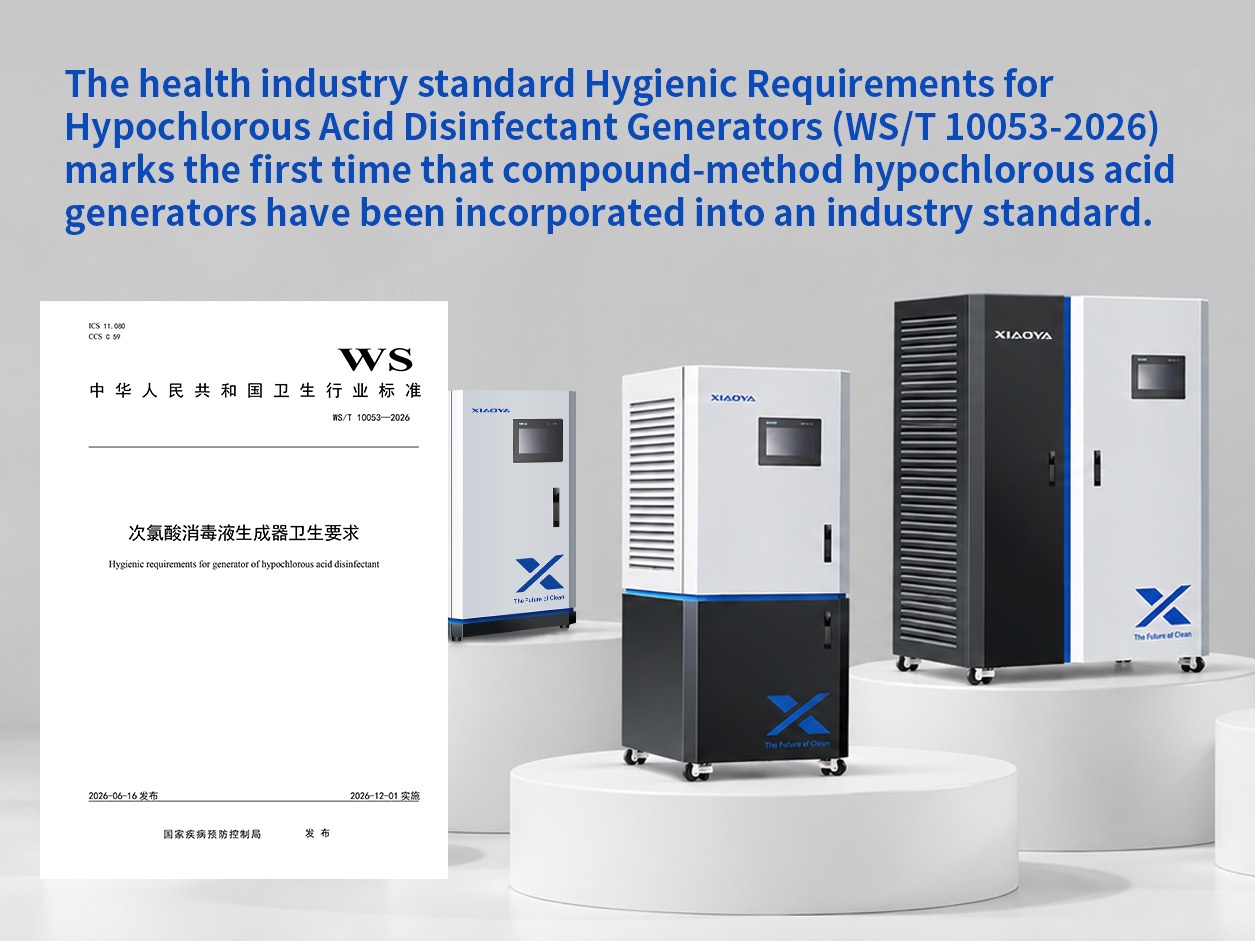
 WS/T 10053-2026 Includes the Compound Method for the First Time: Standard Signals and Market Opportunities for Mass Agricultural Production of Hypochlorous Acid Generators
 Evaluating HClO Generator Lifecycle Costs Beyond the Initial Equipment Price
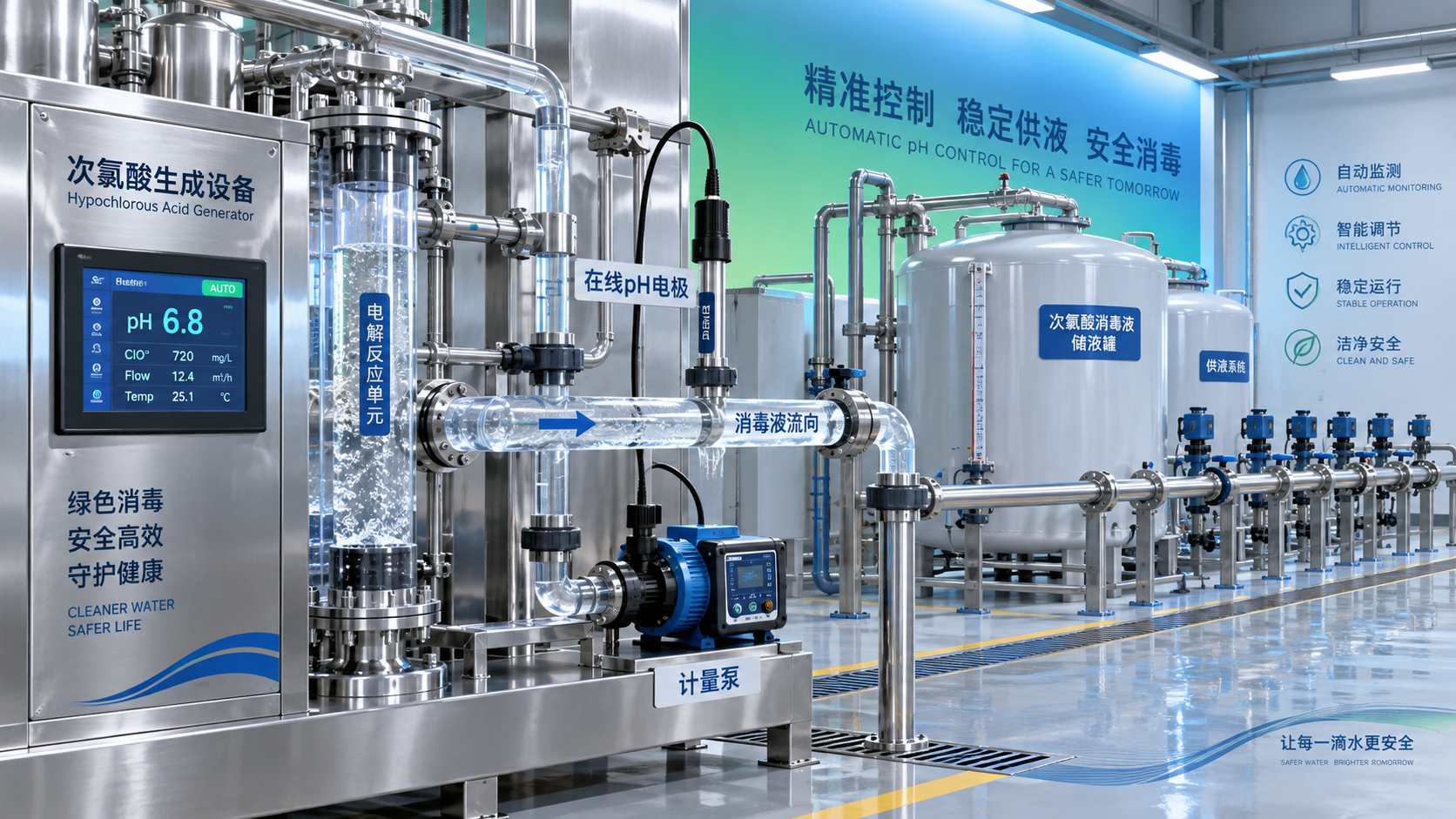
 HClO Generator pH Control: Why It Determines Disinfection Performance
- Which Safety Features Matter Most When Buying an HClO Generator?
 Troubleshooting Low ORP Readings on a Hypochlorous Acid Machine
Leave us a message

Xiaoya Group was founded in 1979,expert in the electrolyzed water industry.
Get in Touch
*We respect your confidentiality and all information are protected.