news
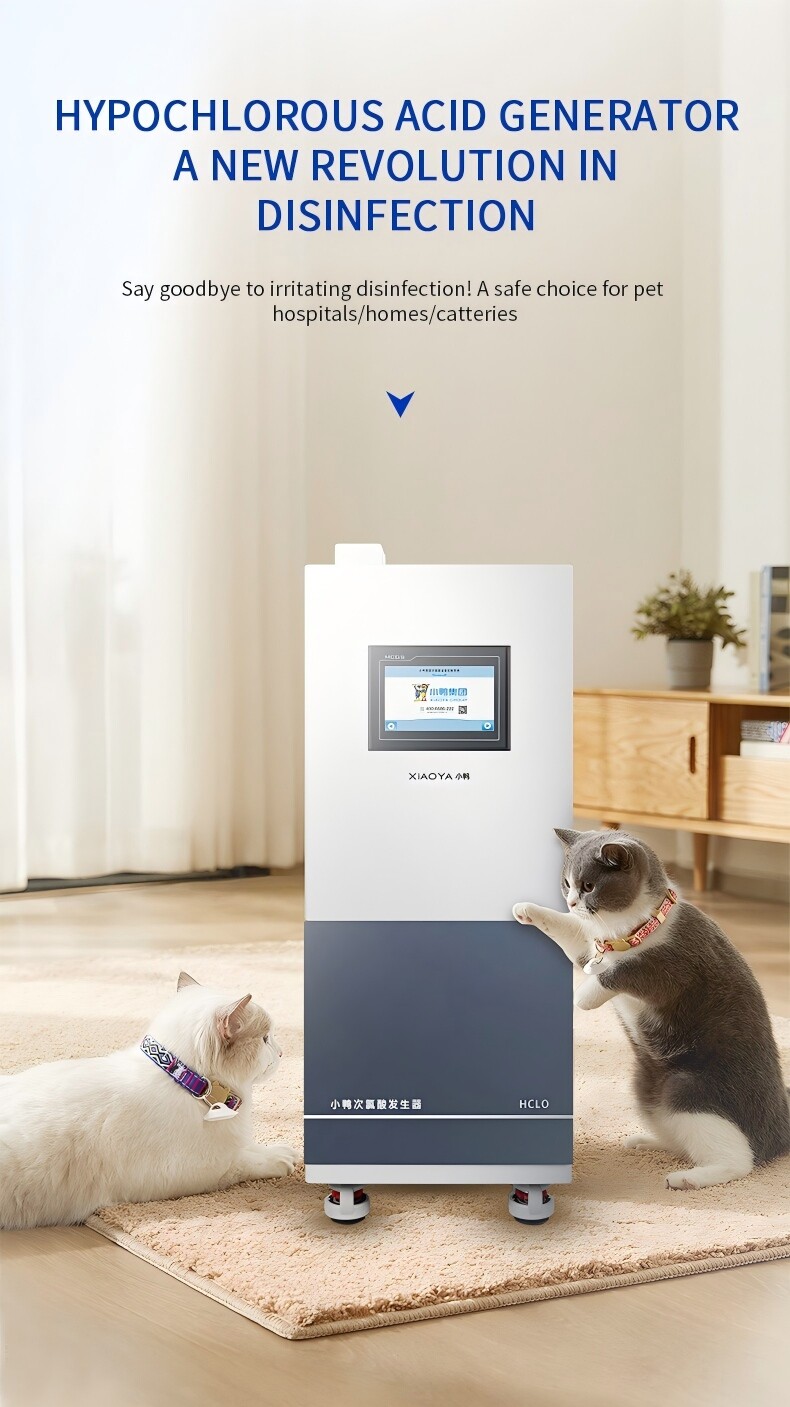
Water quality plays a critical role in hypochlorous acid generator performance, influencing disinfectant concentration, stability, equipment efficiency, and long-term reliability.
For automated disinfection appliances, minerals, impurities, pH, and conductivity directly affect electrolysis and the consistency of hypochlorous acid water.
As safer disinfection grows in homes, healthcare spaces, kitchens, bathrooms, and food logistics, better water control supports dependable hygiene outcomes.
Why does water quality matter in hypochlorous acid generator performance?
Water quality determines how efficiently electrical energy converts chloride ions into hypochlorous acid, also called HClO.
When the water source is stable, hypochlorous acid generator performance becomes easier to control across batches, cycles, and operating environments.
Poor water quality may cause unstable available chlorine concentration, irregular pH, excessive scaling, or premature electrolytic cell wear.
This is especially important for automated equipment where sensors, pumps, dosing modules, and PLC controls depend on repeatable water input.
- Minerals affect conductivity and scaling risk.
- Organic impurities consume active chlorine.
- pH changes the balance between HClO and hypochlorite.
- Turbidity may reduce disinfection reliability.
For reliable hypochlorous acid generator performance, water should be treated as a core process condition, not a secondary utility.
How do pH and conductivity influence electrolysis results?
pH is one of the most important indicators in water quality management for hypochlorous acid equipment.
Slightly acidic conditions usually support a higher proportion of HClO, which has strong broad-spectrum disinfection capability.
If pH becomes too high, more active chlorine shifts toward hypochlorite ions, reducing disinfection efficiency in many applications.
Conductivity also matters because electrolysis depends on ion movement between electrodes inside the electrolytic cell.
Low conductivity may cause weak output, unstable current, or reduced available chlorine concentration.
Excessively high conductivity may increase heat, energy consumption, and stress on electrical components.
Balanced conductivity helps improve hypochlorous acid generator performance while protecting the cell, power supply, and control system.
Practical control suggestions
- Measure inlet water pH before installation.
- Confirm conductivity range under real operating conditions.
- Use automated alarms for abnormal current or pH drift.
- Record water quality data for process traceability.
What problems do hard water and minerals create?
Hard water contains calcium, magnesium, and other minerals that can deposit on electrodes, pipelines, valves, and spray components.
Scaling reduces heat transfer, blocks flow paths, and weakens electrolytic efficiency over time.
In severe cases, hard water may shorten electrolytic cell service life and increase unplanned maintenance frequency.
Water quality in hypochlorous acid generator performance becomes visible when identical settings produce different available chlorine readings.
This often happens when seasonal water hardness changes, especially in facilities using municipal water without pretreatment.
Softening, filtration, or controlled blending can reduce mineral impact and stabilize generator output.
Common mineral-related warning signs
- Available chlorine drops without setting changes.
- Electrode voltage rises gradually.
- Flow rate becomes unstable.
- Nozzles, pumps, or solenoid valves clog more often.
Routine descaling and inlet filtration help protect hypochlorous acid generator performance in continuous automated disinfection systems.
Which impurities reduce disinfection concentration and stability?
Organic matter, iron, manganese, suspended solids, and residual disinfectants may react with generated hypochlorous acid.
These reactions consume available chlorine before the solution reaches the target surface or product.
As a result, measured output concentration may appear acceptable, while real application concentration becomes insufficient.
This gap is important in food preservation, cold chain disinfection, kitchen sanitation, and healthcare surface treatment.
For high-sensitivity scenarios, pre-filtration and controlled storage conditions are necessary for stable hypochlorous acid generator performance.
One industrial example is Special Hypochlorous Acid Generator for Cold Chain Transportation of Lotus Root Sprouts, model AQ-P1000.
It generates slightly acidic hypochlorous acid water with pH 5.0 to 6.5 and adjustable available chlorine of 10 to 300mg/L.
Its output reaches at least 1000L/h, supporting soaking sterilization, ice water pre-cooling, air-drying packaging, and cold chain transportation.
PLC intelligent control, fault alarm, and data traceability help maintain repeatable operation under demanding automated processing conditions.
How should water be selected for different application scenarios?
Water selection should match the application risk, disinfection target, equipment capacity, and required output consistency.
Small household appliances may tolerate moderate variation if basic filtration and maintenance are properly managed.
Healthcare and food applications usually require stricter control because microbial risk and compliance expectations are higher.
For cold chain preservation, water quality affects both microbial reduction and the visual quality of fresh produce.
Stable slightly acidic water can help support browning inhibition, pesticide residue degradation, and zero-residue processing.
Matching water quality to the application improves hypochlorous acid generator performance and reduces unnecessary chemical, energy, and maintenance costs.
What mistakes should be avoided during operation?
A common mistake is judging water suitability only by appearance.
Clear water may still contain high hardness, dissolved metals, or organic compounds that interfere with electrolysis.
Another mistake is adjusting salt dosage without checking inlet water conductivity and pH.
This may temporarily raise available chlorine but also increase corrosion risk, energy use, or cell stress.
Storage mistakes also reduce disinfectant stability, especially under heat, sunlight, contamination, or long holding times.
Freshly generated hypochlorous acid water usually delivers better stability when used promptly and stored in clean, closed containers.
Quick FAQ for troubleshooting
Conclusion: how to improve hypochlorous acid generator performance
Water quality in hypochlorous acid generator performance affects concentration, stability, energy efficiency, safety, and equipment life.
The most practical approach is to measure pH, conductivity, hardness, turbidity, and organic load before process design.
Then match filtration, softening, monitoring, and maintenance intervals to real application conditions.
For automated disinfection appliances, stable inlet water helps PLC control systems deliver repeatable and traceable results.
Before scaling production or continuous use, test the water source under actual pressure, temperature, and operating cycles.
A disciplined water quality plan is the simplest next step toward safer, cleaner, and more reliable hypochlorous acid disinfection.
NEWS
 Public Facility HOCl Storage: Managing Heat, Light, and Shelf Life
 On-Site HOCl vs. Purchased Disinfectant for Municipal Buildings
- Sizing a Public Facility HOCl Generator for Peak Cleaning Demand
- What Can a Hypochlorous Acid Generator Do for Public Facility Cleaning?
 WS/T 10053-2026 Includes the Compound Method for the First Time: Standard Signals and Market Opportunities for Mass Agricultural Production of Hypochlorous Acid Generators

Leave us a message

Xiaoya Group was founded in 1979,expert in the electrolyzed water industry.
Get in Touch
*We respect your confidentiality and all information are protected.