news
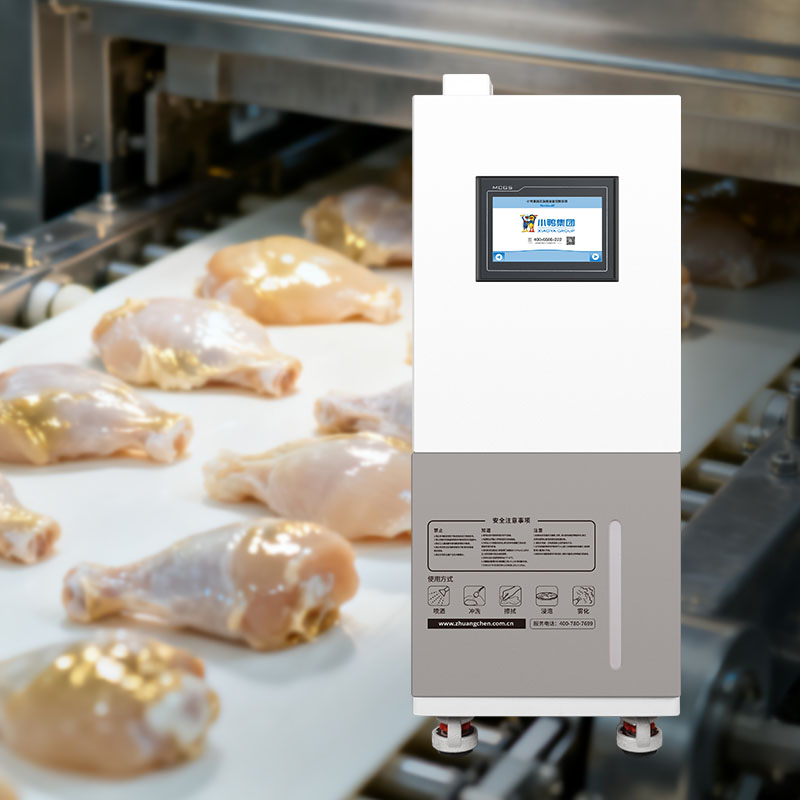
As food safety standards grow stricter across automated production environments, food-grade hypochlorous acid generators are becoming essential for reliable sanitation. For manufacturers seeking efficient, chemical-conscious disinfection solutions, these systems support cleaner processing, stronger compliance, and safer end products. Backed by integrated R&D and production expertise, they offer a practical path to improving hygiene performance in modern food-related equipment applications.
For OEMs, equipment integrators, and plant managers in automated equipment sectors, sanitation is no longer a secondary utility. It directly affects audit readiness, line uptime, worker safety, and product quality. In food-contact and adjacent hygiene-sensitive environments, the right hypochlorous acid generation system can reduce manual chemical handling, improve consistency, and support scalable disinfection across multiple process points.
Why Food-Grade Hypochlorous Acid Matters in Automated Equipment
Food-grade hypochlorous acid is widely valued because it combines strong microbial control with practical compatibility for automated sanitation workflows. In equipment manufacturing linked to kitchen appliances, health care and disinfection appliances, and small household systems, this matters when hygiene needs to be built into the equipment itself rather than added as an afterthought.
In many automated production settings, sanitation must be repeated 2 to 6 times per day depending on product category, contact surface, and shift pattern. Manual dosing increases variation. On-site generation helps maintain a more stable concentration range, often within 10–300 mg/L, which is useful when different cleaning tasks require different disinfection intensities.
Key operational drivers
- More frequent sanitation cycles in high-throughput automated lines
- Need to reduce chemical storage and transport inside production areas
- Pressure to simplify operator workflows from 5–7 steps to 2–3 steps
- Higher expectations for traceable, repeatable, and sensor-monitored disinfection
Where generators fit best
These systems are especially relevant for equipment used around food preparation zones, wash modules, surface treatment stations, water path disinfection, and odor control. For enterprises that integrate R&D, production, and operation, generator selection also affects long-term maintenance planning, component matching, and after-sales service efficiency.
The table below outlines how food-grade hypochlorous acid generators compare with more traditional sanitation approaches in automated equipment applications.
For automated equipment buyers, the practical advantage is not only disinfection performance. It is also process simplification. Fewer handling steps can reduce training time, while integrated monitoring helps maintain more stable sanitation outcomes across daily operation.
Selection Criteria for Manufacturers and Equipment Integrators
Choosing a food-grade hypochlorous acid generator should start with line demand, installation conditions, and control architecture. In automation projects, a mismatch in flow rate, voltage, or water pressure can create avoidable downtime. Buyers should review at least 4 dimensions before approval: output capacity, control compatibility, maintenance cycle, and safety protection.
Parameters that directly affect usability
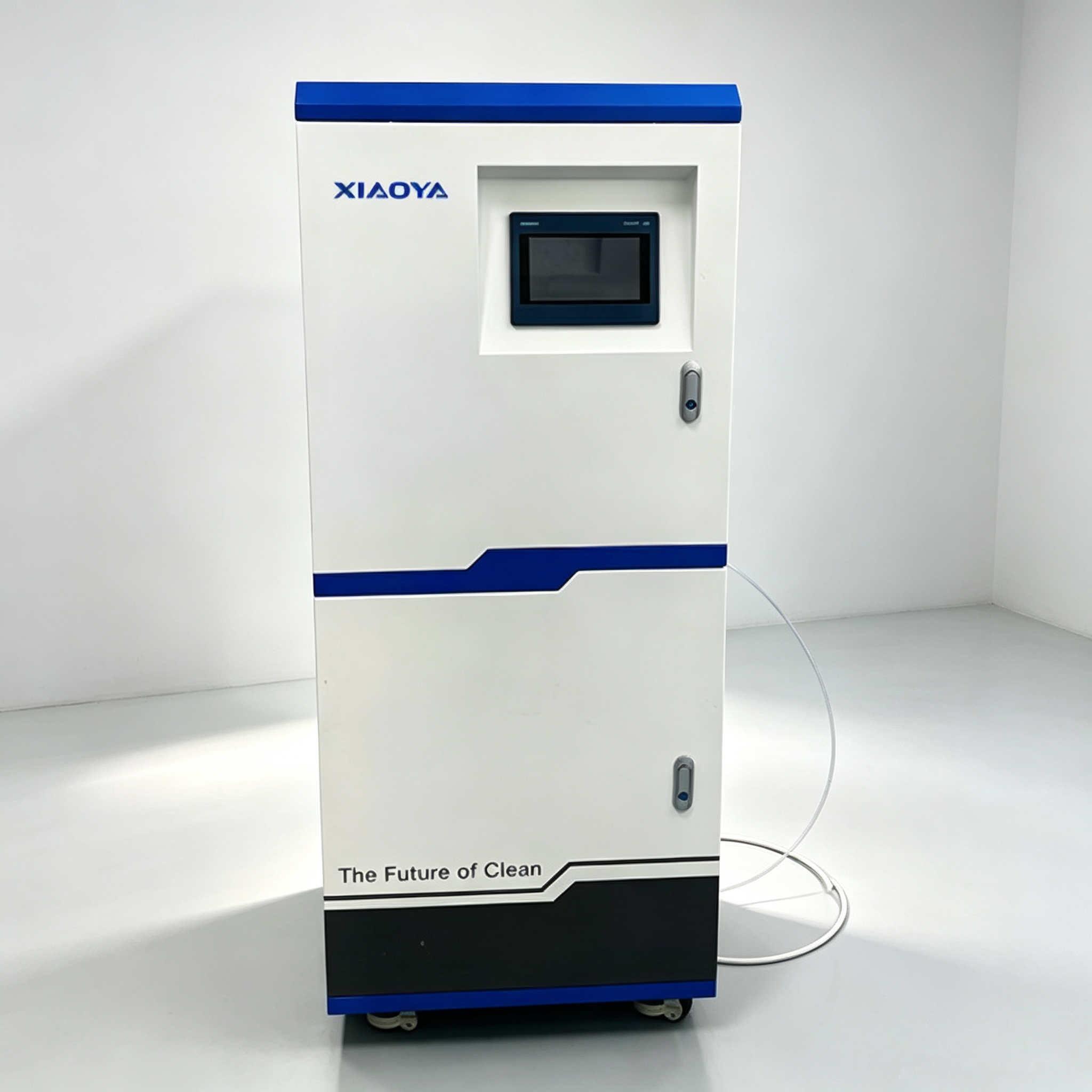
A typical system may operate at 220V/50Hz, require inlet water pressure of 0.15–0.25 MPa, and provide adjustable available chlorine concentration based on use case. For continuous sanitation zones or larger-scale installations, production capacity becomes critical. A 1000 L/h class unit may be appropriate where multiple outlets, rinse points, or disinfection tasks run within the same shift window.
Checklist for procurement teams
- Confirm target application: food-contact surfaces, water systems, odor control, or mixed-use sanitation.
- Match capacity to hourly demand, peak load, and number of distribution points.
- Verify service life of the electrolyzer and planned replacement cycle.
- Check sensor protection, alarm logic, and operator interface requirements.
- Review installation footprint, such as 900 × 700 × 1500 mm, against available space.
The following table summarizes several decision points that matter when a generator is being evaluated for automated equipment or hygiene-sensitive industrial environments.
A disciplined procurement process helps avoid buying a unit that looks sufficient on paper but fails in live operation. In automation, the best generator is the one that matches sanitation frequency, controls integration, and maintenance resources without adding process complexity.
From Food Processing Hygiene to Adjacent High-Sanitation Applications
Although the main discussion centers on food safety standards, many buyers also operate in adjacent sectors where hygiene automation follows similar logic. This includes breeding equipment, waterline treatment, odor reduction, and disinfection systems for environments where continuous occupancy or sensitive biological conditions must be considered.
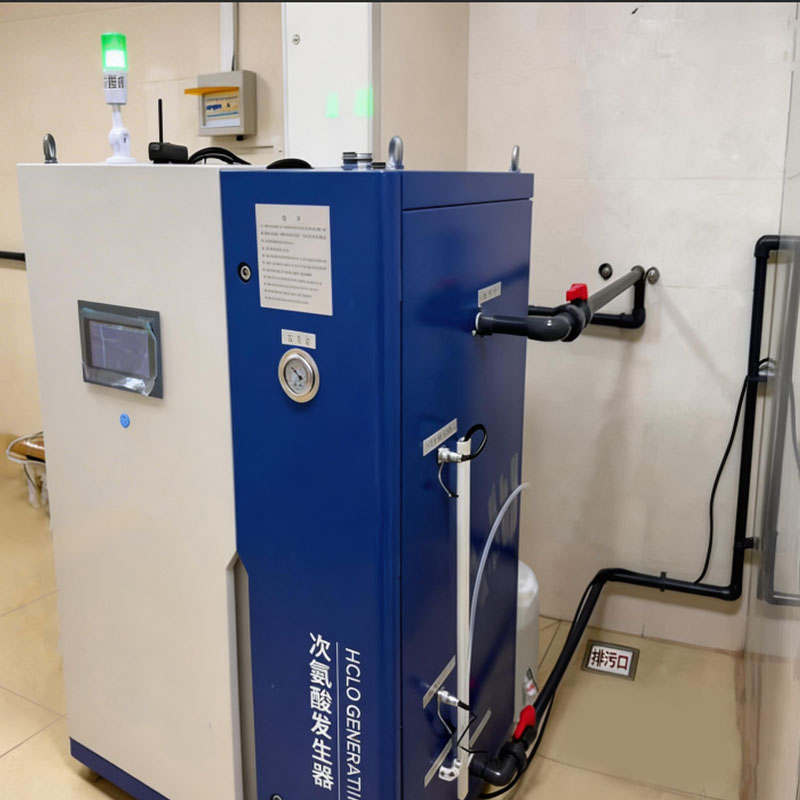
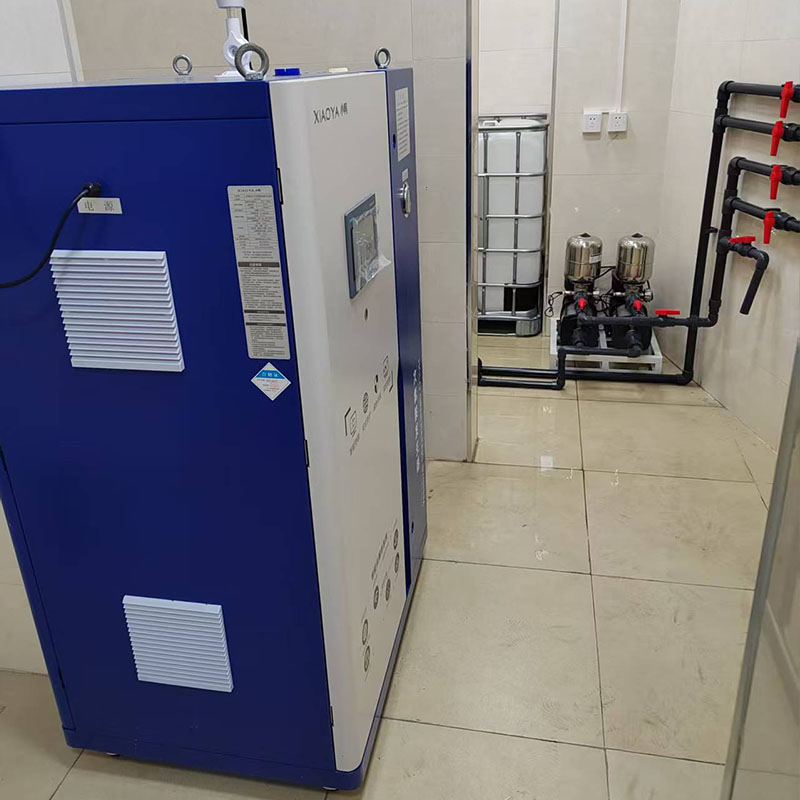
A relevant example is the Hypochlorous Acid Generator for Animal Husbandry and Breeding. Built for scenarios such as large-scale pig farms, chicken farms, and cattle or sheep farms, it provides a production capacity of 1000 L/h, operates at pH 6.37, and offers available chlorine concentration from 10 to 300 mg/L depending on customer requirements.
Why this matters to automation buyers
The crossover value is clear. Equipment designed for livestock environments must handle odor control, biofilm inhibition, drinking water safety, and reliable operation with living organisms present. Those same engineering priorities—stable output, modular design, intelligent control, and low operating burden—are directly relevant to automated food-related sanitation systems.
Transferable design lessons
- Modular architecture simplifies service and future expansion.
- Sensor-based protection increases reliability in continuous-use settings.
- Lower chemical handling supports safer daily routines for operators.
- Controlled water disinfection helps manage biofilm risk in pipelines and tanks.
When a supplier has integrated R&D, production, and operational understanding, these lessons can be translated into better system design for kitchen, bathroom, health care, and disinfection appliance applications. That is especially important where sanitation modules must fit compact equipment layouts, low-power designs, or multi-function product platforms.
Implementation, Maintenance, and Risk Control
Even a well-selected generator needs a structured rollout plan. In most projects, implementation can be divided into 3 stages: requirement confirmation, installation and commissioning, and operating verification. Depending on piping complexity and control integration, a practical lead time may range from 7 to 21 days.
A practical 5-step deployment process
- Audit sanitation points, daily usage volume, and line scheduling.
- Define concentration targets for surfaces, waterlines, or environmental spraying.
- Match unit capacity, power supply, and water pressure conditions.
- Integrate alarms, dosing logic, and operator control procedures.
- Set maintenance intervals, spare parts planning, and performance checks.
Common mistakes to avoid
One common error is selecting by headline capacity alone. Another is ignoring electrolyzer life, which affects replacement planning after 3000 hours or more of operation. A third is underestimating space, drainage, or electrolyte replenishment needs, such as a 5 L tank requirement in some configurations. These details shape real operating cost.
It is also important to define acceptance criteria early. At minimum, buyers should verify 3 items during handover: output stability, control response, and sanitation workflow compatibility. For plants running 2 or 3 shifts, maintenance access and training clarity become just as important as technical specification.
Food safety standards are tightening, but compliance becomes more manageable when sanitation is engineered into the equipment and production process from the start. For automation businesses serving hygiene-sensitive markets, food-grade hypochlorous acid generators offer a balanced route to cleaner operation, stronger control, and more consistent disinfection performance.
If you are evaluating sanitation modules for food-related equipment, health care and disinfection appliances, or adjacent automated applications, now is the right time to compare capacities, control options, and deployment requirements. Contact us to get a tailored solution, review technical details, or learn more about equipment-integrated disinfection systems that fit your production goals.
NEWS
 Accumulating Strength and Reaching New Heights: A Record of the Production Breakthrough of Xiaoya Small Home Appliances' Hypochlorous Acid Generators
 Can a Public Facility HOCl Generator Pay Back Its Installation Cost?
 Public Facility HOCl Storage: Managing Heat, Light, and Shelf Life
- On-Site HOCl vs. Purchased Disinfectant for Municipal Buildings
- Sizing a Public Facility HOCl Generator for Peak Cleaning Demand

Leave us a message

Xiaoya Group was founded in 1979,expert in the electrolyzed water industry.
Get in Touch
*We respect your confidentiality and all information are protected.