




news
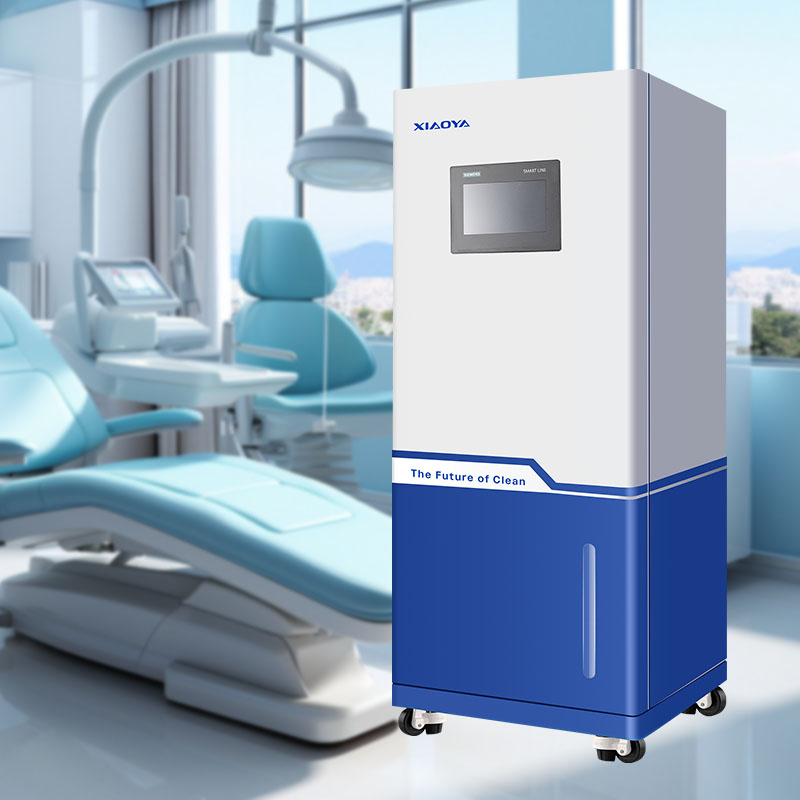
Proper maintenance and calibration of your hypochlorous acid generator are essential for ensuring stable performance, consistent disinfectant quality, and long-term equipment reliability.
Across automated disinfection equipment, demand is shifting from simple output capacity toward measurable accuracy, remote visibility, and predictable sanitation results.
Healthcare spaces, kitchens, bathrooms, farms, and small household disinfection systems now expect cleaner operation with fewer chemical risks.
Stable Hypochlorous Acid Generator Performance Is Becoming a Core Automation Requirement
A hypochlorous acid generator depends on controlled electrolysis, stable water quality, accurate dosing, and dependable sensing.
When any parameter drifts, the final disinfectant may lose strength, become unstable, or fail to meet operational expectations.
This is why maintenance and calibration are no longer occasional service tasks.
They are becoming part of daily quality control for automated sanitation equipment.
Trend Signals: Disinfection Systems Are Moving Toward Measurable Output
Modern users increasingly ask whether generated solution quality can be verified in real time.
Key indicators include pH, available chlorine concentration, ORP, flow rate, temperature, and operating pressure.
These values help determine whether the hypochlorous acid generator is producing effective disinfectant under changing conditions.
Automation also makes performance deviations easier to identify before they become sanitation failures.
Why Calibration Matters More as Applications Expand
A hypochlorous acid generator may serve different environments with very different risk profiles.
Healthcare disinfection needs dependable microbial control, while kitchen sanitation values safe surface treatment and residue reduction.
Animal breeding facilities require high-volume output, drinking water safety, deodorization, and reliable spray disinfection.
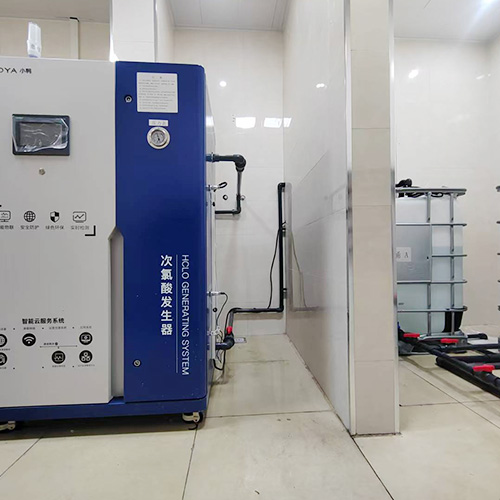
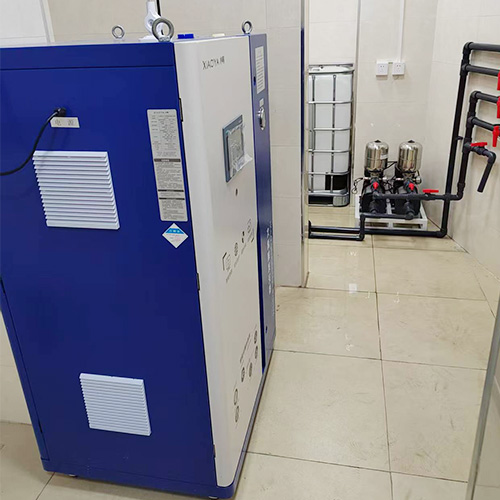
For example, the Hypochlorous Acid Generator for Animal Husbandry and Breeding supports large-scale farm disinfection scenarios.
Its AQ-P1000 model is designed for 1000 L/h production capacity, with customizable available chlorine concentration from 10 to 300 mg/L.
Such equipment shows why maintenance must match both automation complexity and application intensity.
Key Maintenance Points That Protect Equipment Reliability
Routine maintenance should focus on components that directly influence electrolysis efficiency and disinfectant consistency.
- Check inlet water pressure and keep it within the recommended operating range.
- Inspect filters to prevent scale, sediment, or particles from entering the electrolyzer.
- Clean electrolyte lines to avoid salt crystallization and uneven dosing.
- Verify tank levels and confirm automatic refill functions work correctly.
- Examine electrodes for scaling, corrosion, abnormal color, or unstable output.
- Review alarms, shutdown records, and sensor feedback after each operating cycle.
The electrolyzer is especially important because it determines conversion efficiency and long-term output stability.
A clean and well-protected electrolyzer helps reduce energy waste and unexpected downtime.
Calibration Priorities for Accurate Disinfectant Quality
Calibration ensures that displayed values reflect actual solution performance.
Without calibration, a hypochlorous acid generator may appear normal while producing inconsistent disinfectant.
Calibration frequency depends on water quality, operating hours, temperature changes, and hygiene requirements.
High-frequency use normally requires more frequent sensor validation and record keeping.
Operational Impacts Across Sanitation and Automation Workflows
Well-maintained equipment improves more than disinfectant output.
It also supports safer workflow planning, lower chemical storage pressure, and stronger compliance documentation.
In automated facilities, unstable output can affect cleaning schedules, labor allocation, and downstream hygiene verification.
In farms, insufficient concentration may allow biofilm growth in drinking water pipelines.
Excessive concentration may waste resources or create unnecessary environmental stress.
Balanced calibration helps maintain the intended safety profile of hypochlorous acid disinfection.
Maintenance Warning Signs That Should Not Be Ignored
Several symptoms indicate that maintenance or calibration is overdue.
- pH readings fluctuate without changes in water or electrolyte supply.
- Available chlorine concentration drops below the expected range.
- The system produces abnormal noise, heat, or repeated alarms.
- Electrolyte consumption becomes unusually high or low.
- Spray disinfection produces inconsistent deodorization or sanitation results.
- Remote monitoring data shows irregular flow, pressure, or temperature trends.
Early response prevents minor drift from becoming equipment failure.
It also protects the service life of major components.
What to Watch as Intelligent Control Becomes Standard
The next stage of hypochlorous acid generator management will rely more on data-driven maintenance.
PLC control, remote monitoring, multiple sensor protection, and automated shutdown functions are becoming practical expectations.
Equipment such as the Hypochlorous Acid Generator for Animal Husbandry and Breeding reflects this shift through intelligent monitoring and modular design.
For demanding environments, automation reduces manual guesswork and improves response speed.
- Track operating hours for electrolyzer maintenance planning.
- Store calibration records for quality review and troubleshooting.
- Use alarm history to identify repeated root causes.
- Compare production data with actual disinfection outcomes.
- Adjust maintenance cycles according to seasonal water quality changes.
Practical Response Plan for Long-Term Reliable Operation
A clear maintenance schedule helps keep every hypochlorous acid generator predictable.
This schedule should be adapted to actual usage intensity and solution quality targets.
High-volume disinfection equipment may need shorter service intervals.
Action Steps for Better Disinfection Value
Start by defining target pH, available chlorine concentration, and production volume for each application.
Then create a written inspection and calibration record for every hypochlorous acid generator.
Train operators to recognize abnormal data, not only visible equipment problems.
Finally, connect maintenance decisions with real sanitation outcomes, including odor control, surface hygiene, and water pipeline cleanliness.
Consistent maintenance and calibration turn automated disinfection equipment into a dependable long-term asset.
They support cleaner environments, safer operation, lower downtime, and more reliable hypochlorous acid disinfectant quality.
NEWS
 Disinfection Empowers Orthodontic Safety: Hypochlorous Acid Generators Build a Sterile Defense Line for Dental Instruments
- Accumulating Strength and Reaching New Heights: A Record of the Production Breakthrough of Xiaoya Small Home Appliances' Hypochlorous Acid Generators
 How Do HOCl Generators Turn Salt and Water into Cleaning Solutions?
 Medical HOCl Generator Procurement: Service, Training, and Traceability
- Integrating a Medical HOCl Generator into Hospital Cleaning Stations
Leave us a message

Xiaoya Group was founded in 1979,expert in the electrolyzed water industry.
Get in Touch
*We respect your confidentiality and all information are protected.