news
A low ORP reading on a hypochlorous acid machine should be treated as an operating condition to investigate, not as proof that the disinfectant has failed. In a produce wash line, tool-sanitizing station, or cleaning-water system, a falling value can indicate weak oxidation potential, but it can also result from pH drift, contaminated water, probe fouling, or an incorrect measurement method.
The fastest path is to verify the reading before changing machine settings. Check the ORP sensor, confirm pH and available chlorine concentration, then inspect water supply and electrolysis conditions. Raising salt concentration or running the unit harder before these checks can create an unstable solution and make the original problem harder to identify.
Start by confirming that the ORP value is real
ORP probes work in a demanding environment. Mineral deposits, biofilm, oil residue, organic matter, or a damaged reference junction can slow the probe response or pull the reading down. A sensor placed in a stagnant sample container may also produce a different result from one measured in fresh, circulating hypochlorous acid water.
Before adjusting the hypochlorous acid machine, inspect the sensor and its installation point. Make sure the probe is submerged to the required depth, cable connections are dry and secure, and the sample or process stream is flowing as intended. Clean the probe only with the method specified by its manufacturer; aggressive scrubbing or unsuitable chemicals may damage the sensing surface.
- Allow enough time for the probe to stabilize after cleaning, startup, or a change in water flow.
- Use the correct ORP calibration or verification solution recommended for that sensor.
- Compare the installed sensor with a properly maintained portable meter when readings appear doubtful.
- Record the ORP value together with pH, available chlorine concentration, water temperature, and sampling location.
ORP should not be interpreted in isolation. Two samples with similar available chlorine can show different ORP values when their pH, temperature, organic load, or dissolved contaminants differ. The practical question is whether the ORP reading agrees with the other process measurements and with the required sanitation condition.
Check pH before assuming the cell is underperforming
For hypochlorous acid water, pH strongly affects the balance between hypochlorous acid and hypochlorite ion. A pH shift upward generally reduces the proportion of the more active hypochlorous acid form and may be accompanied by a lower ORP reading. This is why a solution may appear to have some available chlorine while delivering less oxidation potential than expected.
Review both the current pH and its trend. A sudden upward movement may point to an incorrect source-water condition, alkaline carryover from a tank or pipeline, a dosing issue, or incomplete rinsing after cleaning. A very low pH is not automatically desirable either. It can signal an abnormal operating condition and may affect materials, process compatibility, and solution stability.
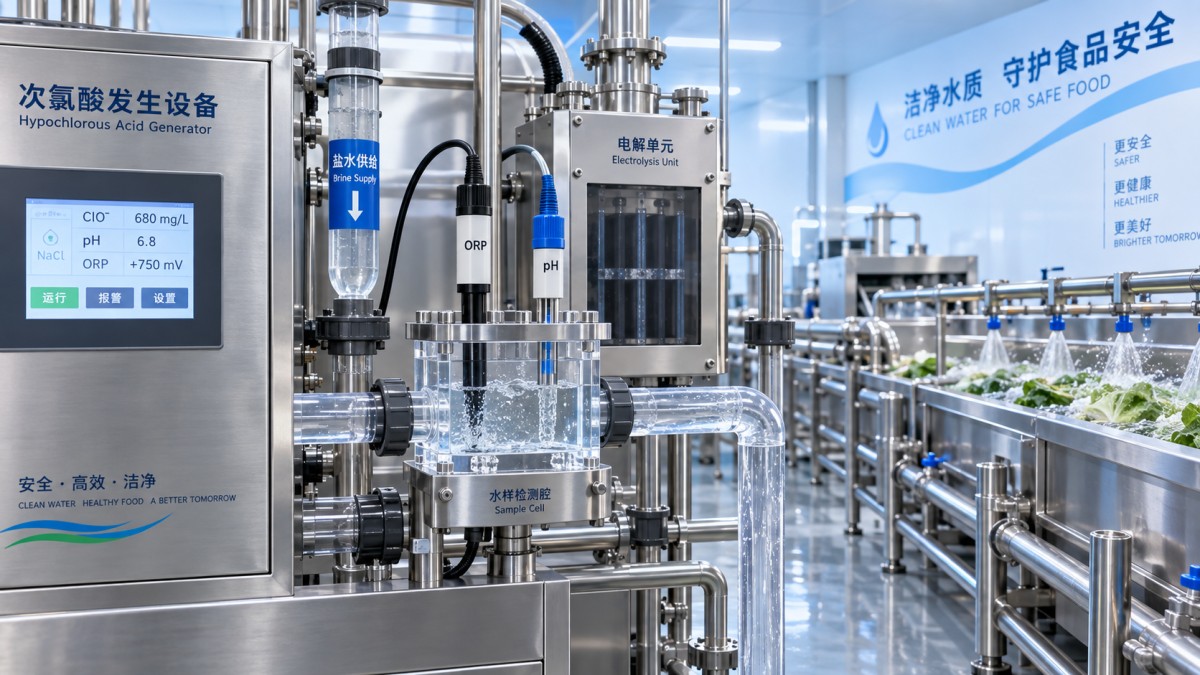
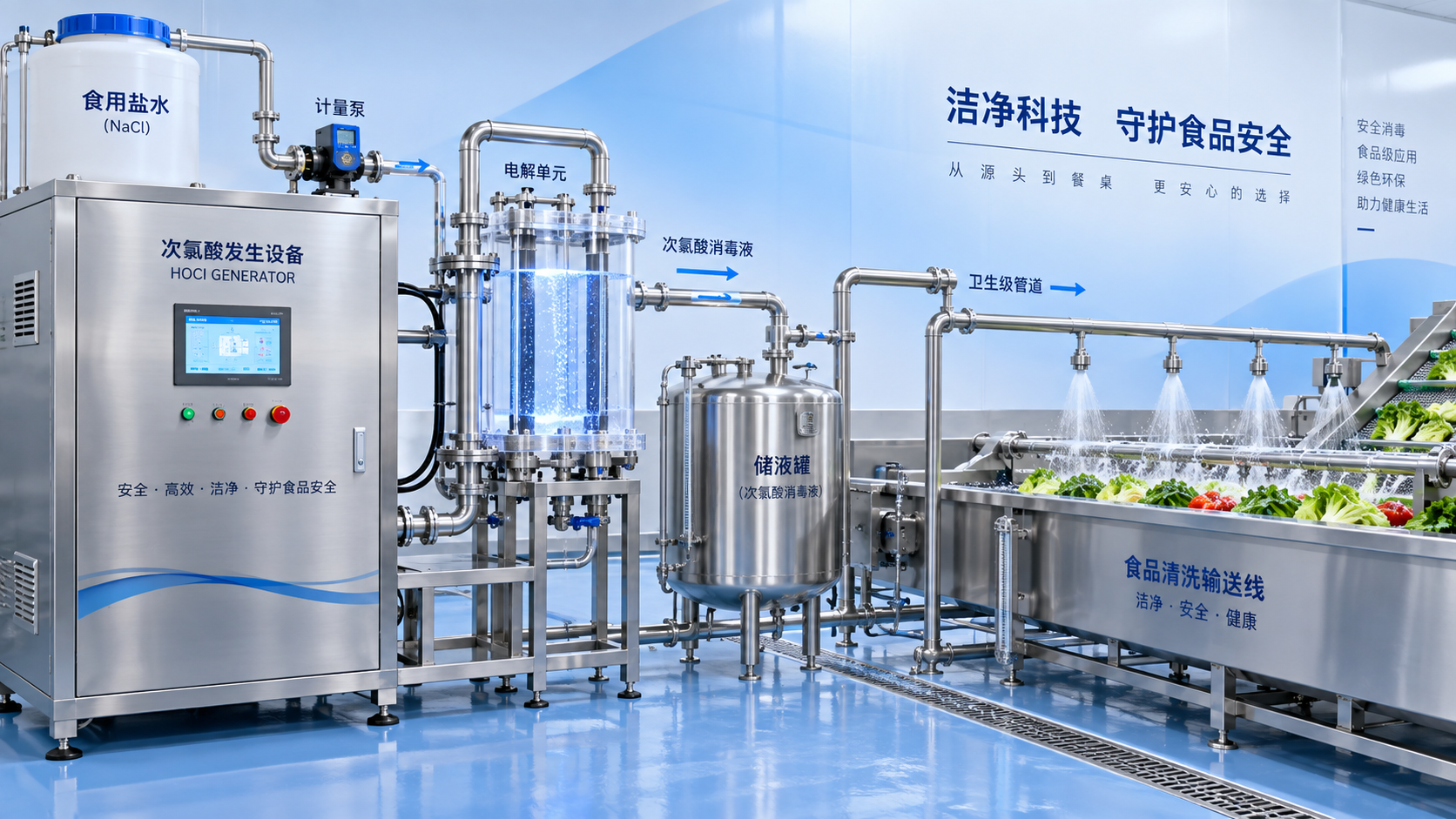
Machines designed for mildly acidic hypochlorous acid production typically operate within a controlled pH window. For example, the Electrolytic Salt Hypochlorous Acid Water Generator | For Fresh‑Cut Produce Processing is specified for a pH range of 5.0 to 6.5 and provides real-time monitoring of pH, ORP, and concentration through its PLC touch screen. That type of monitoring is useful because it lets an operator see whether the low ORP event follows a pH change, a concentration drop, or both.
Look upstream at the water and salt feed
Electrolysis depends on consistent feed quality. Source water with excessive hardness, suspended solids, unusual mineral content, or residual treatment chemicals can affect conductivity, scale formation, and sensor behavior. Pure water requirements should be followed where the equipment specification calls for them. A change in municipal water treatment or a newly serviced prefilter may be enough to alter operating results.
Salt quality and feeding consistency matter as well. The system needs the intended sodium chloride feed, properly dissolved and delivered at the correct rate. Bridging in a salt hopper, a blocked feed path, low electrolyte level, or a pump that is no longer delivering consistently can reduce production even though the screen shows that the machine is running.
Useful observations during a low-ORP event
Do not compensate for a salt-feed problem by adding salt manually without following the machine procedure. Overfeeding can cause its own faults, contribute to deposits, and produce a solution outside the intended process range. Restore the controlled feed path instead.
Inspect flow, electrolysis, and the condition of the cell
A low ORP result may originate in the generation section when water flow is too high, too low, intermittent, or bypassing the intended path. Verify inlet pressure, filters, flow switches, valves, and circulation pumps. Air entering the line can interfere with stable measurement and may indicate a loose fitting, depleted tank, or suction-side restriction.
Scale is another frequent issue, especially where incoming water has mineral content. Deposits reduce effective electrolysis and can disturb flow. Follow the manufacturer’s cleaning interval and approved descaling process rather than applying an improvised chemical treatment. Mixing acids, chlorine-containing solutions, or unknown cleaners around a hypochlorous acid system can create hazardous conditions and may damage components.
The electrolytic cell also has a service life. A declining output trend after feed quality, flow, pH, and sensor accuracy have been confirmed may justify a cell inspection. Review operating hours, fault history, and whether the machine reaches its expected concentration at the normal setpoint. On units using ruthenium-iridium-coated titanium electrodes, proper water preparation and scheduled maintenance help preserve cell performance, but no electrode should be assumed to operate indefinitely without verification.
Take samples where the disinfectant is actually used
A good reading at the machine outlet does not guarantee the same condition at a wash tank, spray bar, flume, or CIP return line. Organic matter introduced by fresh-cut produce, soil, food residues, and dirty equipment consumes oxidizing capacity. Long hold times, open tanks, heat exposure, and repeated recirculation can also change solution characteristics before the water reaches the application point.
Measure at least two locations during troubleshooting: close to the generator outlet and at the point of use. If the outlet is stable but the downstream reading is low, inspect dilution water, tank turnover, make-up flow, debris removal, and the process load. In a produce application, it may be necessary to refresh solution more often or improve pre-rinsing so the sanitizing water is not overloaded by incoming soil and plant material.
Available chlorine testing should be performed using a suitable method and fresh sample because hypochlorous acid water changes over time. Use clean sampling containers and avoid transferring samples through containers that previously held detergents, alkaline cleaners, or other chemicals. A contaminated container can distort both pH and ORP readings.
Restore operation in a controlled sequence
- Pause use of the affected solution when process requirements call for verified sanitation values.
- Verify ORP with a clean, maintained sensor or a second meter.
- Measure pH and available chlorine from a fresh sample at the outlet.
- Check water supply, salt level, electrolyte delivery, flow, and active alarms.
- Inspect the probe location and compare outlet readings with point-of-use readings.
- Clean or service filters, lines, and the cell only according to the approved maintenance procedure.
- Produce a fresh batch or resume generation, then document the stabilized readings before returning to normal use.
When the same low-ORP pattern returns after basic checks, preserve the recorded values rather than repeatedly resetting the machine. A log of pH, chlorine concentration, water source changes, flow conditions, alarms, and cell operating hours gives maintenance personnel a clearer basis for locating a recurring fault. This is especially important where a continuous supply supports washing, immersion disinfection, or CIP cleaning rather than occasional batch use.
The goal is not to chase one ORP number. Reliable operation comes from confirming that the sensor is accurate, the generated solution is within its intended pH and concentration range, and the solution remains effective through the actual application process.
NEWS
 WS/T 10053-2026 Includes the Compound Method for the First Time: Standard Signals and Market Opportunities for Mass Agricultural Production of Hypochlorous Acid Generators
 Troubleshooting Low ORP Readings on a Hypochlorous Acid Machine
 A Buyer’s Checklist for Comparing Hypochlorous Acid Machine Specifications
- Hypochlorous Acid Machine Fundamentals: From Electrolysis to Usable HClO
 Comparing Mobile and Fixed Livestock HClO Generators for Large Farms
Leave us a message

Xiaoya Group was founded in 1979,expert in the electrolyzed water industry.
Get in Touch
*We respect your confidentiality and all information are protected.