news
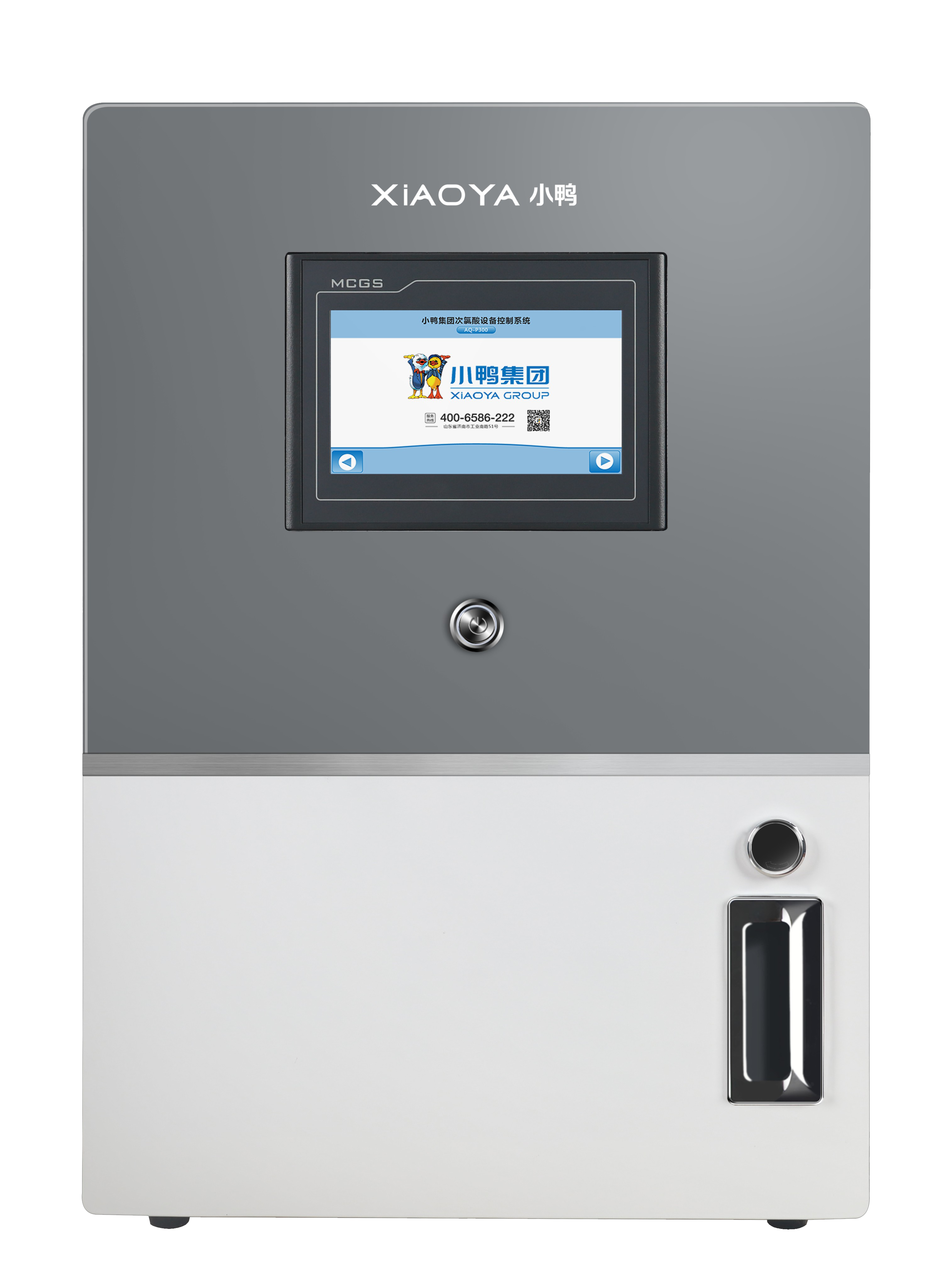
Water quality is not a side issue
A hypochlorous acid hocl generator depends on controlled electrolysis, not just salt and power.
When source water is hard, mineral content can interfere with output stability, cleaning cycles, and verification results.
That matters in automated equipment environments where disinfection must stay consistent across shifts, batches, and audit checks.
For operations spanning healthcare, sanitation appliances, food handling, and household systems, water quality often becomes a hidden process variable.
Can hard water really affect a hypochlorous acid hocl generator?
Yes, and the effect is usually gradual before it becomes obvious.
Hard water contains higher levels of calcium and magnesium.
Inside a hypochlorous acid hocl generator, those minerals can deposit on electrodes, flow paths, and sensors.
Once scaling starts, electrolysis efficiency may drop.
That can shift available chlorine concentration, raise energy consumption, and make pH control less predictable.
In practical terms, the machine may still run, but the disinfectant quality may no longer match the target process window.
This is why water source review should sit alongside concentration testing and routine sanitation records.
What problems usually appear first?
The first sign is rarely total failure.
More often, teams notice unstable readings, slower response, or more frequent maintenance alarms.
A hypochlorous acid hocl generator affected by hard water may show several early symptoms:
- available chlorine drifts outside the expected range
- pH moves away from the preferred weakly acidic zone
- electrode cleaning frequency increases
- flow becomes uneven because of internal scale
- verification tests vary between production periods
These are not just maintenance issues.
They can affect disinfection repeatability, document control, and equipment life.
How do you judge whether water hardness is becoming a process risk?
A simple hardness number is useful, but it is not enough on its own.
The better approach is to compare water data with machine behavior and finished solution results.
The table below helps connect field symptoms with likely causes.
In actual applications, trending matters more than one isolated reading.
If hardness rises seasonally, the hypochlorous acid hocl generator may need different pretreatment or cleaning frequency.
Is soft water always necessary, or can a system work with hard water?
Not every installation requires fully softened water, but untreated hard water is a common source of avoidable instability.
The real question is whether the water condition still supports your required concentration, pH, uptime, and cleaning interval.
Some automated equipment can tolerate moderate hardness when pretreatment, pressure, and maintenance are tightly controlled.
Higher-risk applications usually need a narrower operating window.
For example, in meat processing and cold chain sanitation, output consistency is often more important than merely keeping the machine running.
That is where solution design matters.
One reference point is Hypochlorous Acid Generator for Meat Product Disinfection and Fresh-keeping, model AQ-P300-W.
Its output range of 160-300 L/h, pH 5.0-6.5, and customizable 10-120 ppm concentration fit process-controlled sanitation more than one-size-fits-all use.
Even so, inlet water pressure and source stability still need confirmation before deployment.
What should be checked before choosing or validating a hypochlorous acid hocl generator?
A purchase decision based only on rated output can miss the real operating risk.
A more useful validation checklist includes water, process, and compliance factors together.
- Measure hardness, conductivity, and inlet pressure over time, not once.
- Confirm target available chlorine and pH by application point.
- Review whether soaking, rinsing, spraying, or atomization changes demand.
- Estimate cleaning frequency and electrolyzer replacement cycle.
- Check whether certifications align with your sanitation or export requirements.
The better systems are designed around process continuity.
For instance, a unit with CE, US FDA, USDA, and related recognition may simplify internal qualification work.
A main component life of 5000 hours or more also changes maintenance planning in a meaningful way.
What mistakes are most common after installation?
The biggest mistake is treating the hypochlorous acid hocl generator like a plug-and-play sanitizer source.
In reality, water changes, operating load, and cleaning practice all affect long-term performance.
Another common mistake is testing only available chlorine while ignoring pH and source water variation.
That can hide a weakening disinfectant profile until audit failures or process deviations appear.
Some operations also underestimate how strongly application method changes consumption.
Spray and atomization systems, for example, may need tighter control than manual rinse use.
Where product protection and microbial control must coexist, the second mention of Hypochlorous Acid Generator for Meat Product Disinfection and Fresh-keeping is relevant because it combines sterilization and fresh-keeping goals without relying on residue-heavy chemistry.
So, what is the practical next step?
If hard water is part of your supply, assume it deserves verification rather than guesswork.
Start by linking source water data to concentration, pH, and maintenance trends on the same record.
Then decide whether pretreatment, tighter cleaning routines, or a different hypochlorous acid hocl generator configuration is needed.
A reliable system is not defined only by production capacity.
It is defined by whether it keeps disinfectant quality stable under real operating water conditions.
That is the standard worth using when comparing solutions, setting validation rules, and planning long-term equipment performance.
NEWS
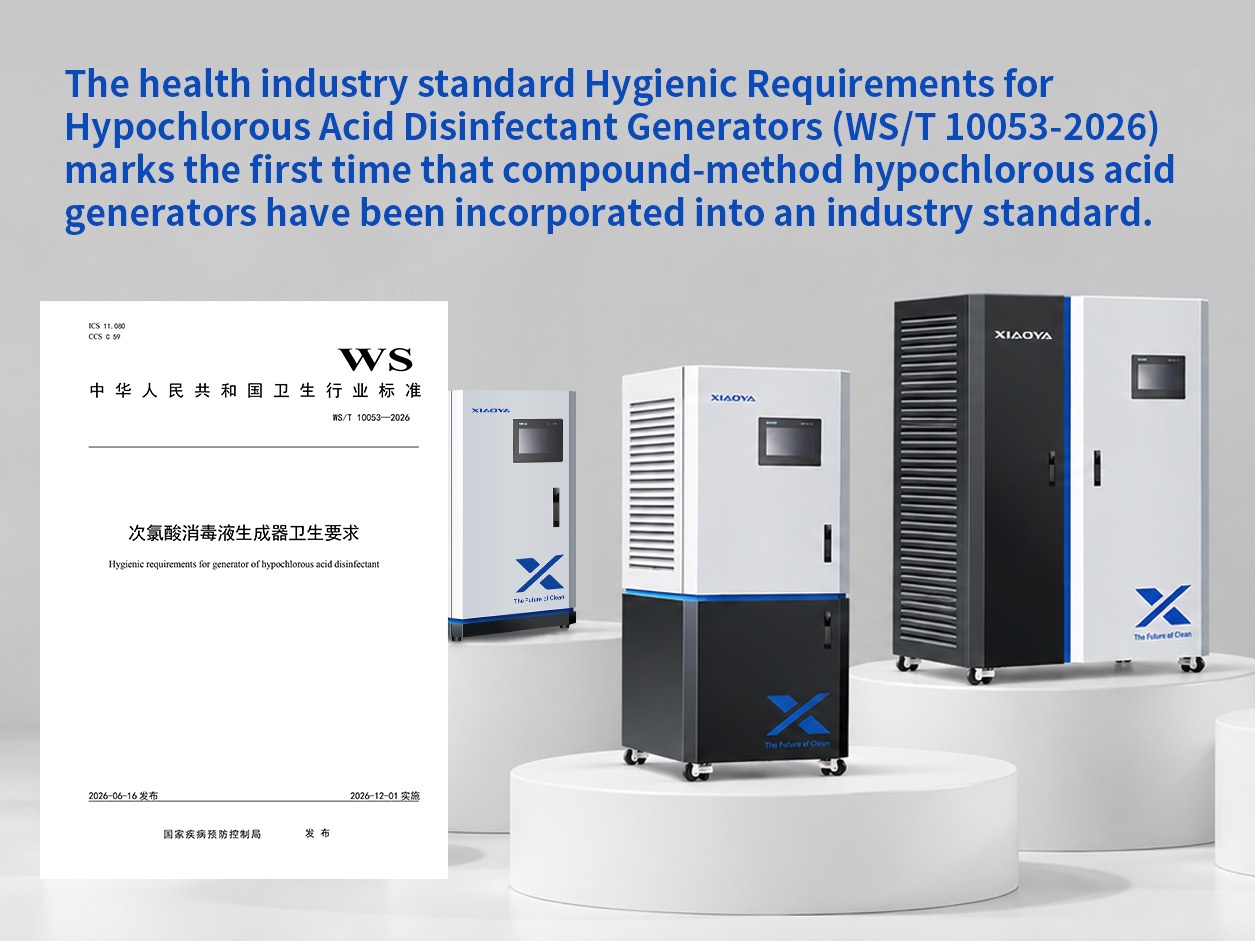
 WS/T 10053-2026 Includes the Compound Method for the First Time: Standard Signals and Market Opportunities for Mass Agricultural Production of Hypochlorous Acid Generators
 Evaluating HClO Generator Lifecycle Costs Beyond the Initial Equipment Price
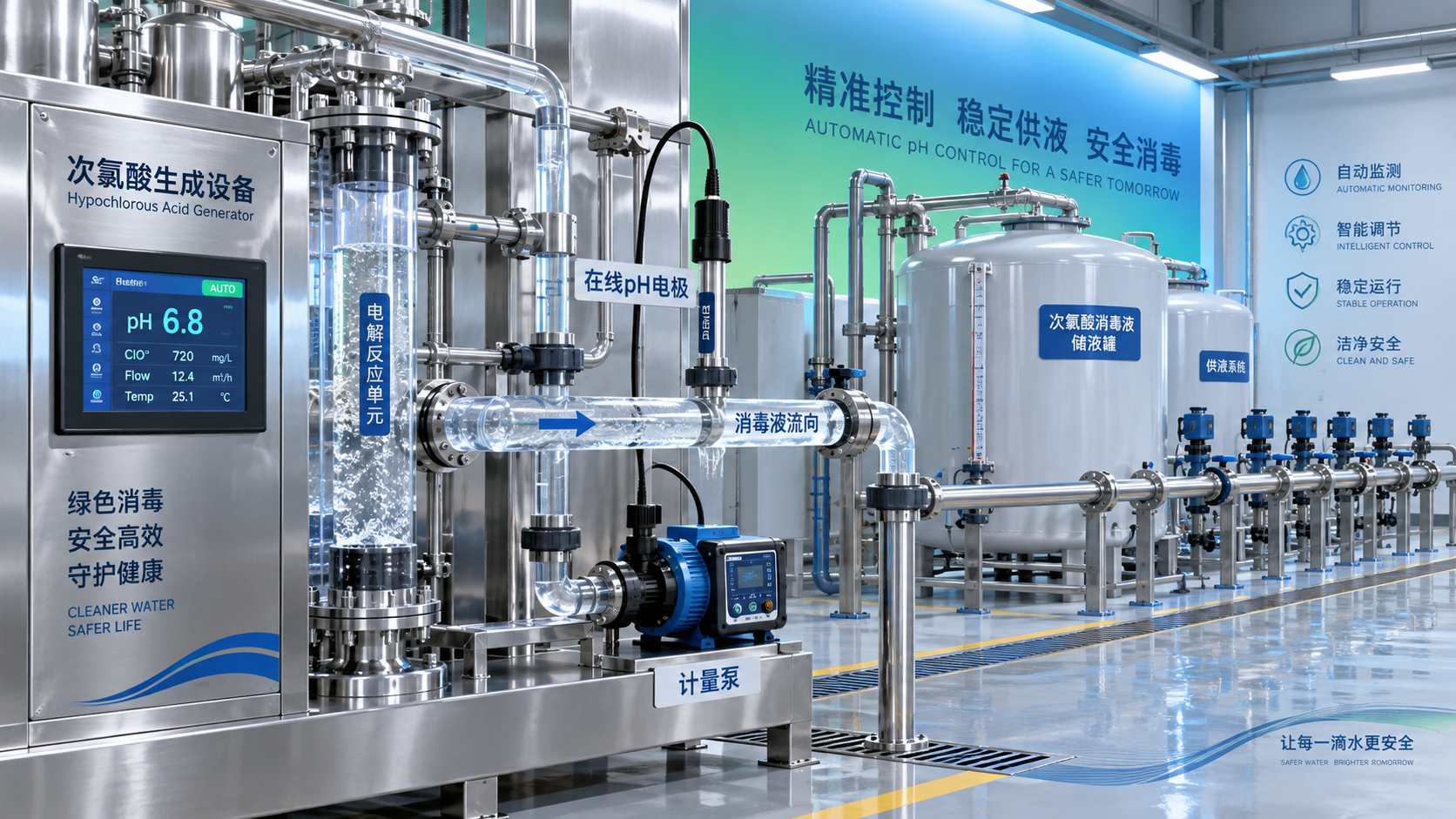
 HClO Generator pH Control: Why It Determines Disinfection Performance
- Which Safety Features Matter Most When Buying an HClO Generator?
 Troubleshooting Low ORP Readings on a Hypochlorous Acid Machine
Leave us a message

Xiaoya Group was founded in 1979,expert in the electrolyzed water industry.
Get in Touch
*We respect your confidentiality and all information are protected.