news
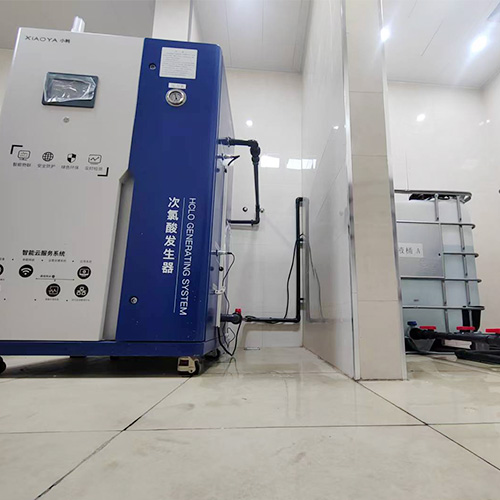
Before expanding production or deployment, Medical disinfection protocols must be validated with precision to protect patients, meet regulatory expectations, and maintain consistent product quality. For quality control and safety management teams in automated equipment environments, the most critical steps include verifying microbial efficacy, equipment stability, process repeatability, and traceable compliance data. A strong validation framework helps reduce risk, prevent costly failures, and build confidence before scaling operations.
Why validation becomes more demanding at scale
In pilot runs, many disinfection processes appear stable because operators are watching closely, loads are limited, and environmental variation is still manageable. Scaling changes that. Throughput rises, shift patterns change, maintenance intervals stretch, and minor deviations that were tolerable in a small run can become systemic. For quality and safety teams, the question is not whether a process can pass one test, but whether it can hold its performance across time, equipment states, operators, and real production conditions.
This is especially relevant in automated equipment environments, where disinfection is often linked to water treatment, component cleaning, surface sanitation, or device-contact hygiene. At that point, validation is no longer a lab exercise. It becomes a control strategy tied to equipment capability, utility quality, preventive maintenance, alarm management, and record integrity.
Start with the claim: what exactly must the protocol achieve?
Many validation problems start too late because the intended claim was never defined tightly enough. “Effective disinfection” is not a usable validation target. Teams need to specify what is being controlled, under which conditions, and to what acceptance threshold. That usually means clarifying at least four points:
- Which microorganisms or indicator organisms are relevant to the process risk profile.
- Whether the protocol is aimed at surface disinfection, fluid-path disinfection, water sterilization support, or terminal treatment.
- What contact time, dose, temperature, flow, or exposure window defines acceptable performance.
- Which residual risks remain and must be controlled elsewhere in the process.
Without that definition, teams often end up validating activity in ideal conditions rather than performance in production conditions. That distinction matters during audits and even more during deviation investigations.
Microbial efficacy comes first, but it should not be isolated from process conditions
Microbial kill performance is usually the first item teams look at, and it should be. But in practice, efficacy data only carries weight when it is linked to actual process variables. A protocol that achieves a strong reduction rate in a controlled test may weaken quickly if water quality shifts, organic load increases, UV intensity decays, or flow exceeds validated limits.
For this reason, microbial validation should be designed around worst-case or boundary-case conditions, not only nominal settings. Quality teams should ask whether the study covered:
- Maximum and minimum operating flow
- End-of-life consumable conditions
- Expected incoming water variability
- Dirty versus clean start states
- Actual dwell time rather than theoretical dwell time
This is where some common assumptions break down. For example, a high stated sterilization rate does not automatically mean robust field performance. It only becomes meaningful when the surrounding process conditions are defined and controlled.
Equipment stability is often the hidden risk
In automated disinfection systems, the protocol is only as reliable as the equipment delivering it. Teams sometimes validate chemistry or UV performance well, then underweight mechanical and control-system drift. Yet scale-up failures frequently come from the equipment side: sensor bias, lamp aging, membrane fouling, inconsistent pump output, valve timing errors, or PLC logic changes introduced during optimization.
Before scaling, it is worth separating validation into at least three layers: the disinfection principle, the equipment execution, and the production environment. If one layer is weak, the others cannot compensate for it. A UV-based or filtration-assisted process, for example, should be checked not only for target wavelength or nominal capacity, but also for how output changes across maintenance cycles and how alarms are triggered when performance starts to decline.
In water-related disinfection applications, a unit such as Duckling ultrafiltration water purification and sterilization device XYCL-1000 may be relevant as a reference case for upstream control thinking rather than as a stand-alone answer. Its published configuration combines ultrafiltration with UV-C 254nm sterilization, with a stated ultrafiltration flow of 1000L/H, UV sterilization capacity up to 0.35T/H, and a claimed sterilization rate above 99.9%. For validation teams, the important point is not the headline number itself, but whether those values remain within control limits under real inlet water conditions, lamp aging, and maintenance practice.
Repeatability matters more than a single passing result
A protocol is not ready for scale because it succeeded once under supervision. It is ready when repeated runs show a predictable outcome with acceptable variation. That means validation should include repeated-cycle testing across shifts, operators, and production windows. For safety managers, repeatability is also where human factors enter the picture: setup errors, incomplete pre-rinse steps, delayed consumable replacement, and override behavior during line pressure events can all undermine a process that looked technically sound.
In practical terms, repeatability testing should answer three questions:
- Does the process deliver the same result over consecutive cycles?
- Does it remain stable after routine stoppages, restart events, and maintenance interventions?
- Can the same result be achieved without reliance on one highly experienced operator?
If the answer to the third question is unclear, the protocol is not yet fully industrialized.
Traceability and data integrity are part of validation, not paperwork after the fact
In regulated or semi-regulated environments, teams sometimes treat records as a documentation burden rather than part of the control system. That is a mistake. At scale, traceability is how you prove that validated conditions were actually maintained. It is also how you detect early drift before it becomes a release or safety issue.
For Medical disinfection processes tied to automated equipment, useful validation records typically include equipment identity, cycle parameters, alarm events, calibration status, consumable life status, maintenance history, and exception handling. If data is collected manually, the risk of inconsistency rises. If data is collected automatically, teams still need to verify that timestamps, parameter mappings, user permissions, and audit trails are reliable.
Any gap here will weaken both compliance posture and internal root-cause analysis. In many cases, the issue is not that a protocol failed, but that the team cannot prove whether the validated state was preserved.
Watch the interfaces: utilities, water quality, and upstream contamination
Disinfection protocols rarely operate in isolation. Their performance depends heavily on upstream and downstream interfaces, especially water quality. This is where scale-up projects can be caught off guard. A system validated with one incoming water profile may behave differently when transferred across facilities, seasons, or utility networks.
For quality personnel, that means validation should define the acceptable range of incoming utility conditions, including particulate load, microbial burden, hardness, conductivity, or other relevant indicators depending on application. Where water is part of the process, pretreatment and sterilization devices should be assessed as part of the same risk chain, not as separate procurement items.
The practical concern is straightforward: if the incoming condition is outside the validated envelope, disinfection performance may still look normal from the HMI while actual risk rises in the background.
Regulatory and standard alignment should be interpreted conservatively
Because this is a standards-oriented topic, teams often ask which single certification or standard “covers” the process. In reality, Medical disinfection validation usually sits across multiple layers of expectation: product safety, hygiene control, process validation, equipment qualification, and documented change control. The exact framework depends on jurisdiction and application, and specific citations should be confirmed against the target market and device category【待核实】.
What matters operationally is that teams can show a defensible chain from risk assessment to protocol definition, execution parameters, acceptance criteria, revalidation triggers, and corrective action. That is the language auditors and customers both understand. A certificate may support confidence, but it does not replace process evidence.
Typical triggers for revalidation
- Changes to disinfectant chemistry, UV source, membrane media, or core components
- Software or PLC logic changes affecting sequence or timing
- Shift in incoming water quality or source
- Throughput increase beyond the original validated envelope
- Persistent deviations, trending drift, or unexplained microbial results
A useful pre-scale checkpoint for quality and safety teams
What experienced teams look for before approving scale-up
The strongest teams do not ask only whether the protocol works. They ask whether it will keep working when the line is busier, the consumables are older, the water is less forgiving, and the most experienced operator is off shift. That mindset usually leads to better validation decisions than focusing narrowly on a pass/fail report.
When reviewing a supporting technology or subsystem, details such as UV wavelength, consumable life, replacement interval, and throughput are useful because they shape the validation window. For instance, if a device uses a UV-C 254nm source with a designed lamp life of 8000 hours but recommends replacement after 7200 hours, that replacement point should be reflected in the maintenance and revalidation logic rather than treated as a purchasing detail. The same applies to filtration elements with a nominal 3 to 5 year lifespan: actual service life depends on incoming water quality, so the validated state should be linked to monitored conditions rather than calendar assumptions alone.
That is the point where validation becomes a management tool rather than a technical formality. It helps quality and safety teams decide whether the protocol is robust enough to scale, what limits must be enforced, and where to put monitoring effort before a small deviation turns into a reportable failure.
NEWS
 Public Facility HOCl Storage: Managing Heat, Light, and Shelf Life
 On-Site HOCl vs. Purchased Disinfectant for Municipal Buildings
- Sizing a Public Facility HOCl Generator for Peak Cleaning Demand
- What Can a Hypochlorous Acid Generator Do for Public Facility Cleaning?
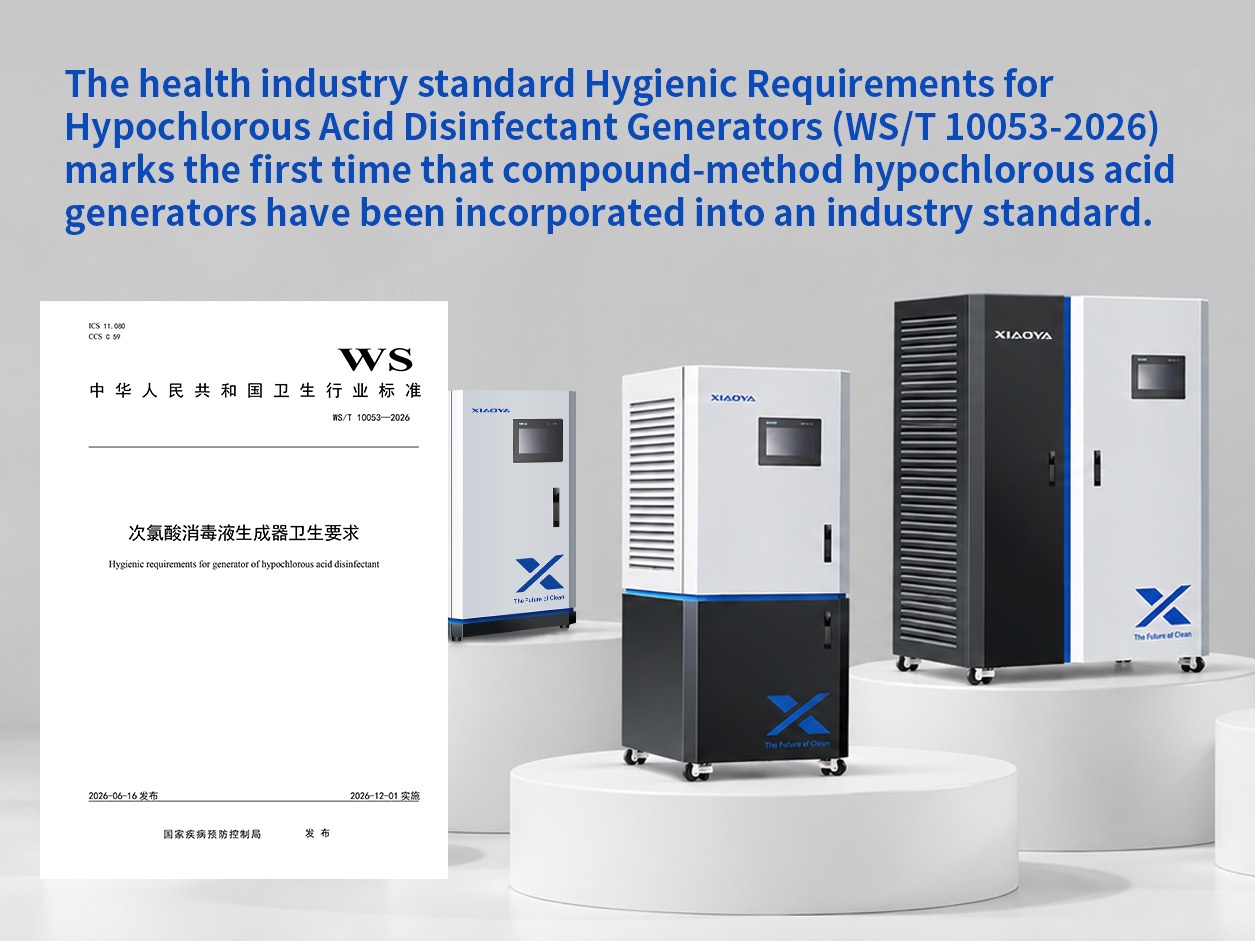
 WS/T 10053-2026 Includes the Compound Method for the First Time: Standard Signals and Market Opportunities for Mass Agricultural Production of Hypochlorous Acid Generators

Leave us a message

Xiaoya Group was founded in 1979,expert in the electrolyzed water industry.
Get in Touch
*We respect your confidentiality and all information are protected.