news
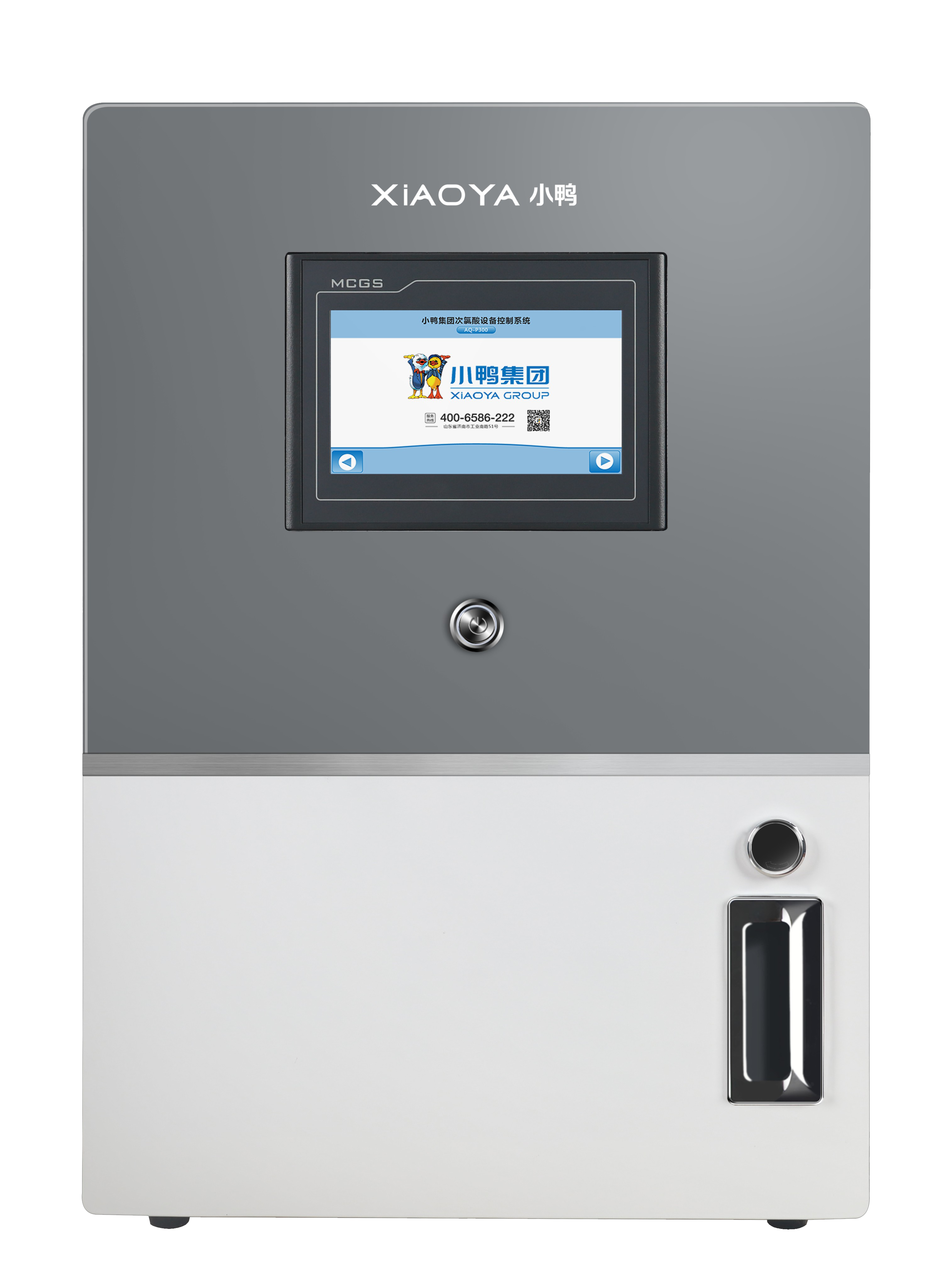
When a hocl machine starts producing inconsistent disinfection results, field teams often inspect the cell, the dosing pump, the electrodes, or the control board first. Those checks are necessary, but in many service cases the root problem sits upstream: unstable brine. If the salt solution entering the electrolytic process is not consistent in purity, concentration, or water chemistry, the machine may still run, alarms may remain intermittent, and yet the output quality drops enough to create repeated complaints.
For maintenance personnel, this matters because brine inconsistency rarely looks like a single dramatic failure. It usually appears as drifting effective chlorine concentration, unstable pH, shortened electrode life, scale buildup, unusual current behavior, or a system that “recovers” after cleaning and then slips again. Understanding this relationship is what separates a temporary reset from a durable repair.
Why brine quality directly affects HOCl generation
A hocl machine depends on controlled electrolysis. In practical terms, the machine is not simply turning salt and water into a stable disinfectant regardless of input conditions. It is operating within a narrow electrochemical window. Once the incoming brine changes, the reaction environment also changes.
Three variables are usually behind the problem:
- Salt purity
- Brine concentration
- Feed water condition, including hardness, conductivity, and impurities
When these vary too much, the machine cannot maintain a stable ratio between current, flow, and reaction efficiency. The result is that hypochlorous acid output becomes uneven, even if the unit appears mechanically normal.
In service work, this is why replacing parts without checking brine quality often leads to repeat visits. The machine was not necessarily defective; the process conditions were.
What inconsistent salt purity does inside the system
Salt is often treated as a commodity input, but not all salt behaves the same in electrolysis equipment. High-purity salt supports predictable conductivity and fewer side reactions. Lower-grade salt may contain calcium, magnesium, iron, sulfate, insoluble particles, or anti-caking additives. Those contaminants create problems in several ways.
One is scale and deposit formation. Calcium and magnesium can precipitate on electrodes and inside flow paths, reducing current efficiency and blocking stable contact between electrolyte and electrode surfaces. Another is contamination of the electrolytic cell, which can shift output and force more frequent cleaning cycles. Iron and other trace metals may also contribute to discoloration or abnormal deposits that technicians sometimes misread as cell aging alone.
There is also a control issue. If impurity levels vary by batch, the same salt dosing setting may produce different conductivity from one refill to the next. The machine then behaves inconsistently even though no settings changed. This is a common reason why customers report that the unit “sometimes works well and sometimes doesn’t.”
Why concentration swings are more damaging than many operators expect
Brine concentration is not just a preparation detail. It directly influences conductivity, current draw, and conversion efficiency. If the brine is too weak, the machine may struggle to generate the intended effective chlorine concentration. If it is too strong, reaction balance can shift, component stress rises, and by-product formation risk may increase depending on the system design.
For maintenance teams, the more important point is fluctuation. A machine can often tolerate a controlled setpoint, but it performs poorly when concentration keeps moving above and below the intended range. That creates unstable output which may show up as:
- Variable disinfection efficacy at the point of use
- Frequent recalibration requests
- Current or voltage readings that drift during operation
- Intermittent low-output alarms
- Customer complaints that appear to have no fixed pattern
This is especially common where operators prepare brine manually, refill tanks by estimation, or use containers with no concentration verification method.
Water quality is often the hidden multiplier
Even when the salt itself is acceptable, feed water can destabilize the process. Hard water promotes scale. Water with suspended solids can foul filters and inject inconsistency into the electrolyte tank. If the source water quality changes seasonally or between municipal and stored supply, the same machine may behave differently week to week.
In practice, after-sales teams should pay particular attention when a site reports increased maintenance frequency after changes in local water supply, tank cleaning schedules, or plumbing modifications. These operating changes are easy for end users to overlook, but they often explain why a previously stable hocl machine begins losing effectiveness without any obvious hardware failure.
This is also why integrated feed control matters. In some systems, stable water delivery is as important as salt quality itself. A unit such as the water supply system, designed for controlled water supply and hypochlorite-based bactericidal use, reflects this principle: stable flow and consistent input conditions are part of output stability, not separate issues. Where equipment is rated around 60-100L/H production with effective chlorine concentration in the 10-120mg/L range, upstream inconsistency can quickly move real performance away from nominal performance.
Symptoms that point to brine inconsistency rather than component failure
Experienced technicians usually save time by reading the failure pattern, not just the alarm code. Brine inconsistency is more likely when the following conditions appear together:
- The cell tests functional after cleaning, but output declines again within a short period
- Electrode wear seems faster than expected, despite normal runtime
- pH and available chlorine readings fluctuate more than the operating load would explain
- The site reports recent changes in salt supplier, salt storage, or water source
- Multiple machines at one location show similar instability
- Replacing sensors or pumps improves symptoms only temporarily
By contrast, a true component failure usually creates a more consistent fault signature. Brine-related issues tend to be variable, recurring, and strongly influenced by operator habits.
Common service misjudgments
One frequent mistake is treating low chlorine output as a cell-end-of-life problem too early. Electrolyzer service life may be rated above 8000 hours in some systems, but real life is heavily influenced by input quality and cleaning burden. If poor brine causes repeated scaling, the cell may underperform long before its nominal life is reached, without actually being an intrinsic manufacturing defect.
Another mistake is relying on salt type labels alone. “Refined salt” is not a technical diagnosis. Maintenance teams need to verify whether the salt is suitable for electrolysis applications and whether the impurity profile is stable batch to batch. Packaging claims do not replace field testing.
The third is ignoring the electrolyte tank behavior. In systems with a small electrolyte tank capacity, such as 1L designs, small preparation errors can have a disproportionate effect because the system has less buffering against concentration variation. If the operator is topping off rather than fully preparing the solution correctly, instability becomes more likely.
How to troubleshoot the issue efficiently on site
The fastest route is to test the process chain in sequence instead of isolating the machine immediately.
Start with the brine preparation method. Ask how the salt is measured, how often the solution is replaced, whether the tank is cleaned, and whether operators mix by weight or by approximation. Then check salt source consistency. If the customer has recently switched suppliers due to cost or availability, that is a significant clue.
Next, inspect the water side. Look for hardness scaling, sediment, filter condition, and any signs that source water has changed. If available, compare conductivity and hardness against previous service records. Historical comparison is often more useful than a one-time reading.
After that, inspect the cell and flow path for deposits. The type of scaling often tells you whether the issue is mineral-related, contamination-related, or simply overdue maintenance. Then validate output using reliable test methods rather than depending only on display values.
If the hardware remains stable under a known-good brine sample, the diagnosis is usually clear: the machine was reacting to poor input control, not failing on its own.
What corrective action actually reduces repeat service calls
In most cases, the durable fix is procedural, not electronic. Maintenance teams reduce repeat failures when they push customers toward tighter input management:
- Use consistent, electrolysis-suitable salt from a controlled supplier
- Standardize brine preparation by weight, not estimation
- Monitor source water quality, especially hardness and visible sediment
- Clean electrolyte tanks and feed lines on schedule
- Record output concentration, pH, and current trends together
- Train operators to report supplier or water source changes immediately
Where site conditions are unstable, recommending better pretreatment or more controlled water feed can be more effective than repeated component replacement. That is not a sales argument; it is a service-cost argument. A machine running at rated voltage 220V~/50Hz and modest power such as 410W still depends on process discipline. Electrolysis does not compensate for poor inputs indefinitely.
Why this matters beyond one repair visit
For after-sales teams, brine inconsistency is not a minor operating detail. It affects warranty discussions, spare-parts consumption, maintenance intervals, and customer trust. If the root cause is missed, the same hocl machine may cycle through cleaning, recalibration, and part changes without ever delivering stable disinfection performance.
The practical lesson is simple: when output instability appears, treat brine as a primary diagnostic variable, not a background condition. In automated disinfection equipment, input quality is part of the system. Once service teams approach it that way, they usually solve the problem faster and prevent it from returning under a different fault label.
NEWS
 Public Facility HOCl Storage: Managing Heat, Light, and Shelf Life
 On-Site HOCl vs. Purchased Disinfectant for Municipal Buildings
- Sizing a Public Facility HOCl Generator for Peak Cleaning Demand
- What Can a Hypochlorous Acid Generator Do for Public Facility Cleaning?
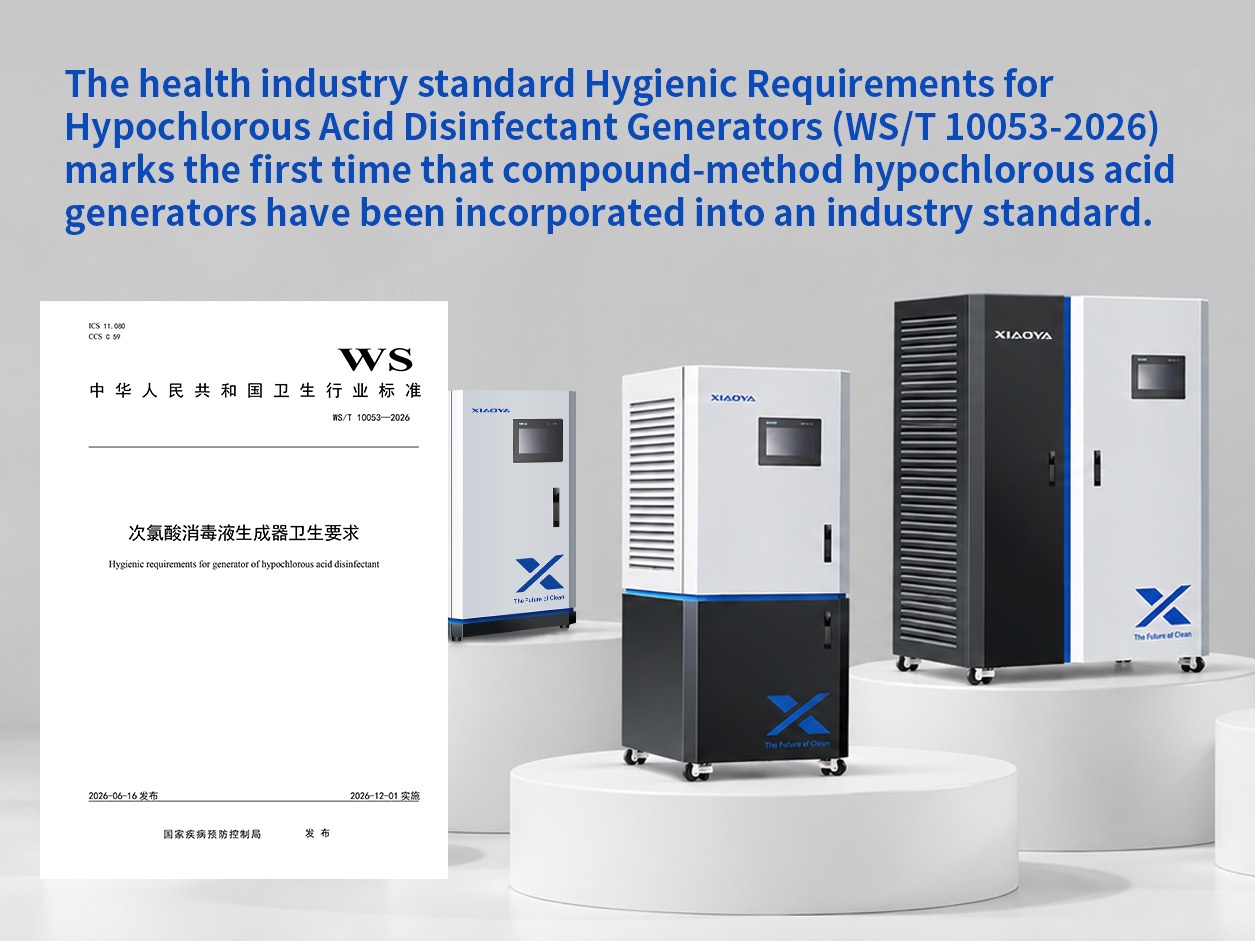
 WS/T 10053-2026 Includes the Compound Method for the First Time: Standard Signals and Market Opportunities for Mass Agricultural Production of Hypochlorous Acid Generators

Leave us a message

Xiaoya Group was founded in 1979,expert in the electrolyzed water industry.
Get in Touch
*We respect your confidentiality and all information are protected.