news
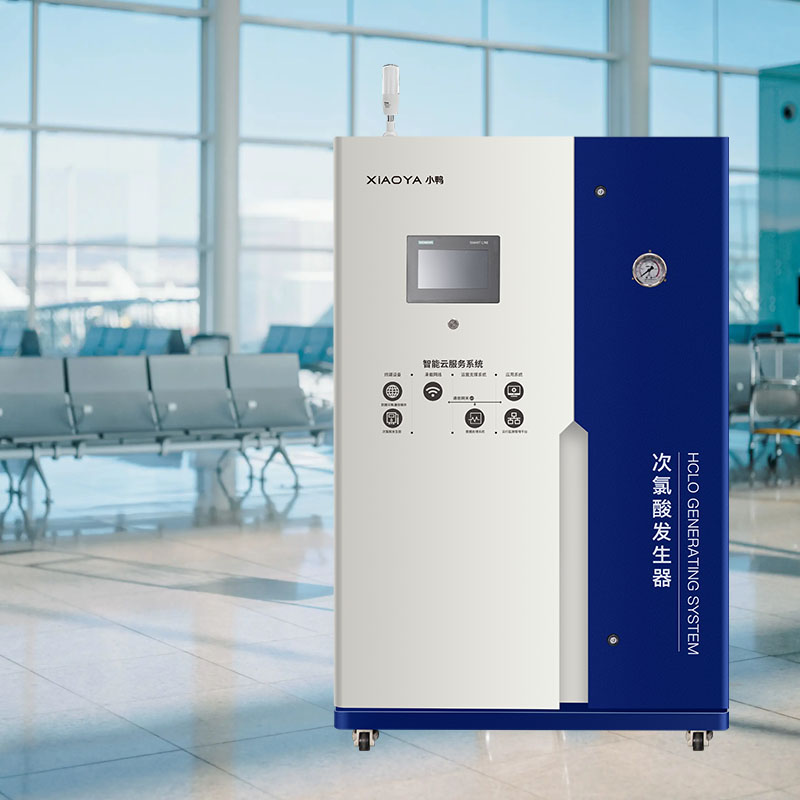
Where electrolytic purification outperforms conventional chemical treatment
As manufacturers seek cleaner, safer, and more efficient process solutions, electrolytic purification is gaining attention for its ability to outperform conventional chemical treatment in key applications. For businesses across kitchen and bathroom appliances, healthcare and disinfection equipment, clean energy, and small household devices, the appeal is not just about replacing chemicals. It is about tighter process control, fewer residues, and a production environment that is easier to manage when quality requirements keep rising.
That matters especially in automated equipment environments. Once a process is built into a production line, any instability in water quality, surface cleanliness, disinfection performance, or waste handling tends to show up everywhere at once: in yield, maintenance intervals, operator workload, and compliance reviews. In those situations, electrolytic purification is often worth looking at not because it is fashionable, but because it can simplify what chemical dosing systems tend to complicate over time.
Why the comparison is not always fair on paper
Conventional chemical treatment usually looks straightforward in early evaluations. The chemistry is familiar, initial equipment can be simple, and many plants already know how to buy, store, and use treatment agents. But paper comparisons often miss the hidden variables: dosing accuracy, storage conditions, residue management, operator safety procedures, and how process drift affects downstream equipment.
Electrolytic systems shift part of the logic from chemical consumption to controlled electrochemical reaction. That changes the cost structure and, more importantly, the control structure. Instead of relying mainly on regular replenishment of external chemicals, the process depends more on electrical input, water characteristics, electrode condition, and system design. In automated manufacturing, that can be an advantage because these are variables that can often be monitored and adjusted more precisely.
Where electrolytic purification tends to do better
The first area is residue-sensitive production. In kitchen and bathroom appliance manufacturing, surface treatment, cleaning, and rinse quality directly affect appearance and long-term corrosion behavior. A process that reduces chemical carryover can make subsequent finishing steps more stable. The same logic applies to small household appliances, where compact assemblies leave little tolerance for unwanted deposits in narrow passages or contact areas.
The second is disinfection-related equipment. In healthcare and disinfection appliance production, chemical treatment may achieve the target result, but it can also introduce concerns about storage, handling, and residual presence, depending on the process and the materials involved. Electrolytic purification can be attractive when the goal is to generate treatment capability on site and reduce reliance on transporting or stocking larger volumes of treatment chemicals. Whether it fully replaces chemistry depends on the application, but in some process stages it clearly improves operational cleanliness.
A third advantage shows up in systems that run continuously. Conventional treatment can work well in batch-style operations, yet continuous automated lines often expose the weak points of manual adjustment. If feed quality fluctuates, chemical systems may need frequent recalibration. Electrolytic purification, when matched correctly to conductivity, flow, and contaminant load, can hold a narrower operating window with less intervention.
There is also an environmental handling issue that should not be overlooked. Chemical treatment does not end at the reaction stage; it continues into storage rules, spill response, wastewater burden, and documentation. Electrolytic approaches do not remove all of those responsibilities, but they may reduce them enough to matter, particularly for manufacturers integrating R&D, production, and operation under one roof. The broader the operational footprint, the more valuable simplification becomes.
What this means for automation equipment design
In automation projects, treatment technology should not be treated as an isolated utility choice. It affects sensor placement, pipe materials, maintenance access, drainage strategy, ventilation, and digital monitoring. Electrolytic purification often fits well with modern equipment design because it supports real-time control logic. Current, voltage, flow, temperature, and water conditions can be tracked more directly than the real effectiveness of a chemical tank that only looks full and within nominal concentration.
This is one reason manufacturers serving sectors like clean energy equipment or disinfection appliances increasingly evaluate purification and thermal systems together rather than separately. If the process requires steam, heat, cleaning, or sterilization support, the stability of the utility platform matters. For example, a compact steam source with intelligent monitoring and low-emission operation may be more compatible with distributed automated layouts than a traditional centralized setup. In that context, equipment such as Thermal Engine is relevant not as a standalone sales item, but as part of a broader discussion about controllable, cleaner process infrastructure. Given parameters such as rated steam capacities of 500kg and 1000kg, 1.0mpa rated pressure, combustion adjustment from 20% to 100%, and flue gas temperature below 55°C, it reflects the same design direction many factories are moving toward: compact, monitored, and easier to integrate near the point of use.
Where chemical treatment still has the edge
Electrolytic purification is not automatically better in every case. If influent water quality is highly unstable, if contaminant chemistry is unusual, or if the plant already has a mature and well-controlled chemical treatment program, the practical gain may be smaller than expected. Capital cost, electrode life, scaling tendency, and water conductivity requirements all need review.
It is also important to separate “less chemical handling” from “no chemistry concerns.” Electrochemical processes can create byproducts or material compatibility questions that must be checked against the application. In sectors involving medical-related disinfection functions, export requirements, or region-specific compliance, those details usually need confirmation against actual standards and project documentation.
A practical way to evaluate the switch
A useful assessment starts with four questions. What problem is the current treatment method failing to control consistently? Is the issue chemical cost, residue, safety handling, maintenance frequency, or line stability? Which process variables can be measured now, and which are still being guessed? And if the treatment method changes, what happens to the connected utility systems such as steam, heat recovery, drainage, and real-time monitoring?
This broader view often produces better decisions than a narrow chemical-versus-electrolytic debate. A company active in kitchen and bathroom appliances, healthcare and disinfection appliances, clean energy, and small household appliances typically does not need one universal answer. It needs a process architecture that matches product sensitivity, factory layout, maintenance capability, and energy strategy.
That is why purification upgrades are frequently discussed alongside compact thermal solutions, distributed installation, and lower-emission utility design. A system built around stable inputs and real-time monitoring is usually easier to scale than one that depends on frequent manual correction. Features often highlighted in advanced thermal support equipment, including a 2㎡ footprint, no separate boiler room requirement, intelligent monitoring, and NOX below 30mg/m3, show how process support technology is evolving in the same direction as electrolytic treatment: tighter control with less operational friction.
For companies considering electrolytic purification, the next step is not a blanket yes or no. It is to map the contaminant profile, define the acceptable output range, verify material compatibility, and check how the treatment method interacts with the rest of the automated line. If those pieces line up, electrolytic purification often proves stronger where conventional chemical treatment struggles most: consistency, residue control, and day-to-day manageability.
NEWS
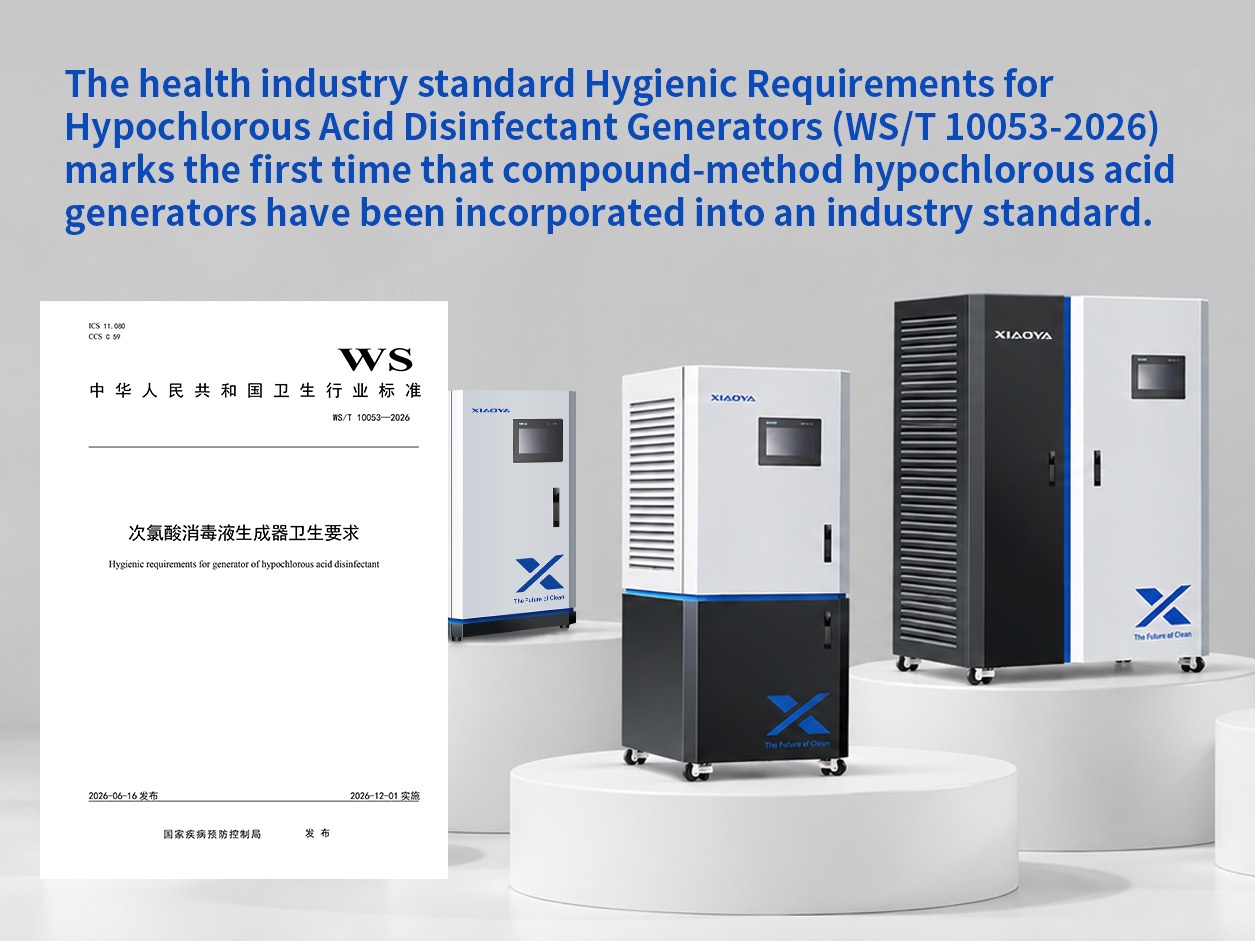
 WS/T 10053-2026 Includes the Compound Method for the First Time: Standard Signals and Market Opportunities for Mass Agricultural Production of Hypochlorous Acid Generators
 Evaluating HClO Generator Lifecycle Costs Beyond the Initial Equipment Price
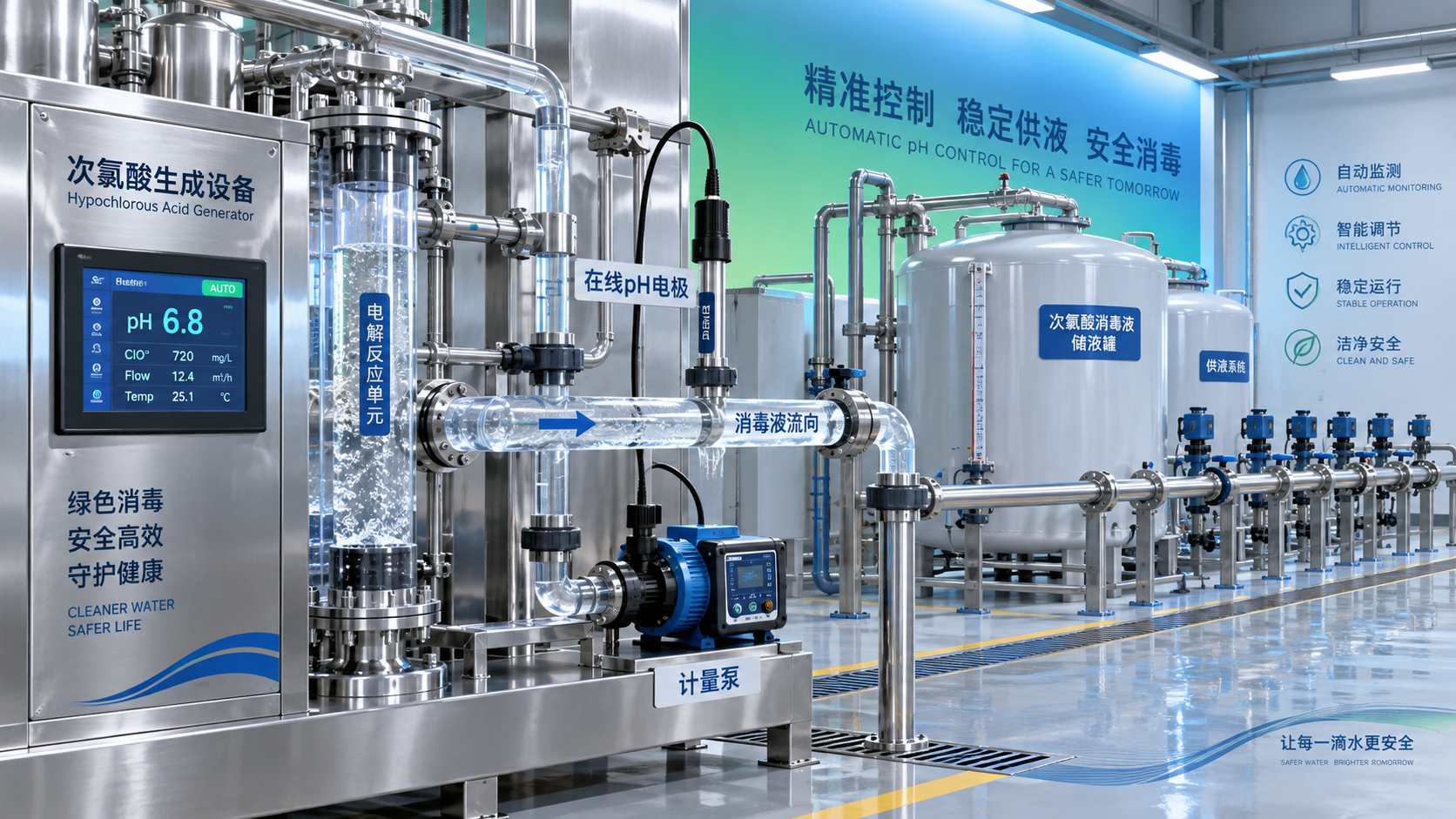
 HClO Generator pH Control: Why It Determines Disinfection Performance
- Which Safety Features Matter Most When Buying an HClO Generator?
 Troubleshooting Low ORP Readings on a Hypochlorous Acid Machine
Leave us a message

Xiaoya Group was founded in 1979,expert in the electrolyzed water industry.
Get in Touch
*We respect your confidentiality and all information are protected.