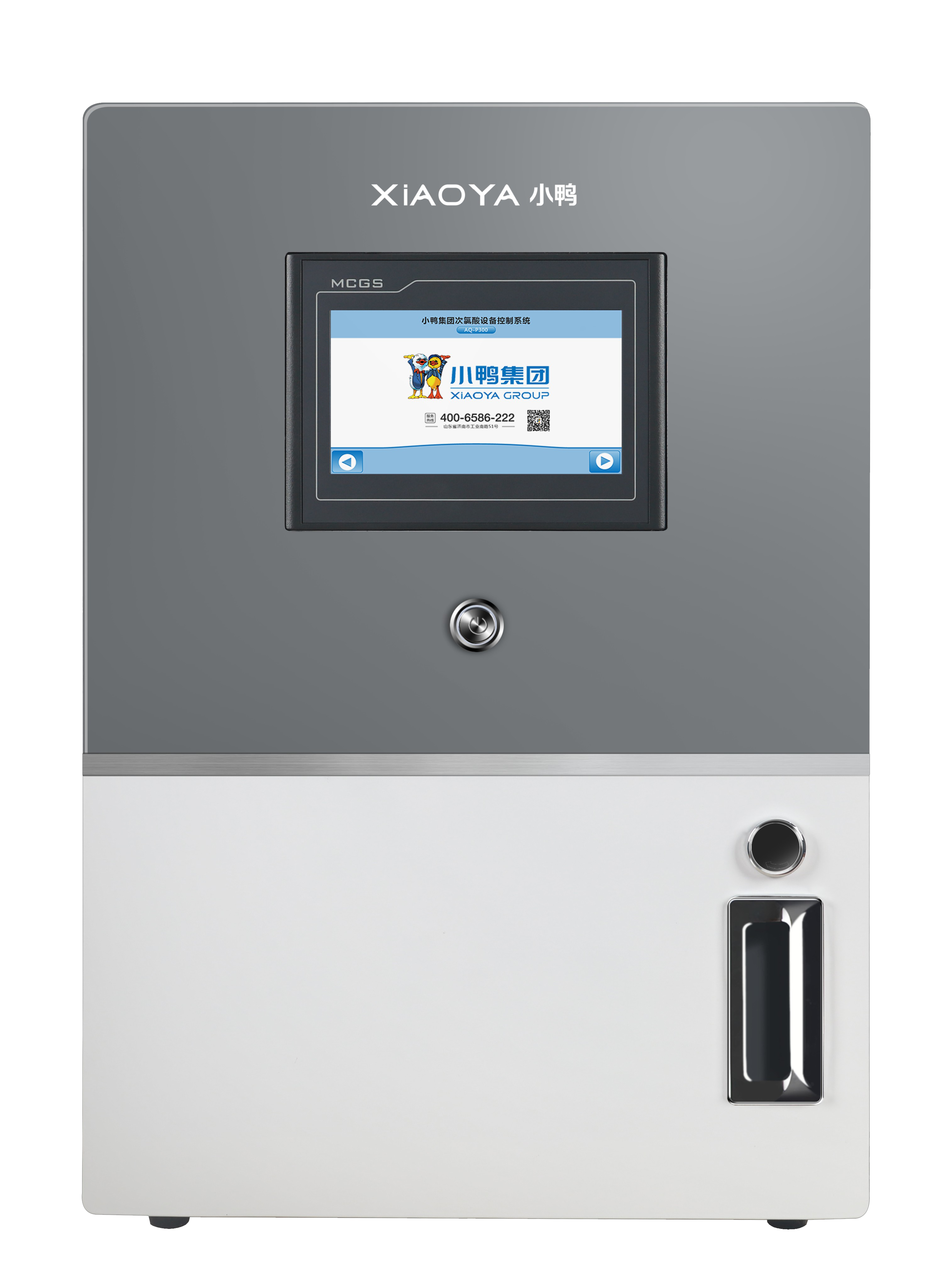
Selecting a HOCl generator for hospital disinfection is not only about output capacity or a clean brochure specification. In a hospital, the real question is simpler and tougher: can this system operate safely, consistently, and predictably in the exact place where staff will use it every day? For quality control teams and safety managers, verification is the step that separates a promising technology from an approved onsite disinfection tool.
That matters because hypochlorous acid systems sit at the intersection of chemistry, electrical equipment, water quality, infection control, and occupational safety. A generator may produce effective disinfectant in a factory test, yet still fail onsite if ventilation is poor, feed water fluctuates, dosing drifts, or cleaning routines are not built into operation. Verification should therefore focus on the installed system, not just the product leaflet.
Start with the onsite safety questions, not the sales claims
Before reviewing any test report, define what “safe for hospital use” means in your own facility. In most cases, the checklist includes electrical safety, chemical exposure control, stability of disinfectant concentration, compatibility with local water conditions, risk of chlorine-related byproducts, leak prevention, ease of cleaning, and operator protection during routine maintenance.
For a HOCl generator for hospital disinfection, the evaluation should also consider where the solution will be used: environmental surface disinfection, equipment exterior wiping, sanitation support areas, or non-critical washing applications. Different use points create different risk profiles. A compact unit in a central preparation room may be easier to control than a distributed system placed close to wards or sterile-support areas.
Confirm the generator’s process chemistry under real operating conditions
One of the most common verification mistakes is assuming that “HOCl” on a label automatically means stable, hospital-ready output. In practice, the antimicrobial performance and handling safety of electrolyzed solutions depend heavily on pH, available chlorine concentration, oxidation-reduction potential, and the balance between hypochlorous acid and other chlorine species.
Your onsite verification protocol should include repeated measurements across a normal operating window, not just a single startup reading. Review:
- Available chlorine concentration at minimum, normal, and peak output
- pH stability during continuous production
- ORP consistency where relevant to your process validation
- Output variation after standby periods, restart cycles, and cleaning cycles
- Degradation rate during temporary storage, if the hospital does not use the solution immediately
Hospitals often prefer systems that can tightly control chemistry because staff cannot spend time constantly correcting output. Some electrolysis platforms designed for regulated sanitation applications use proton exchange membrane technology to improve consistency. For example, Food Hypochlorous AcidGenerator / table salt (NaCl) uses food-grade salt and purified water for onsite production, with adjustable available chlorine concentration and pH control. While it is presented for food-related applications, the design details are still useful for hospital evaluators because they highlight what to look for: controlled pH range, predictable HOCl content, cleaning functions, and defined utility consumption.
Check material safety and construction details that affect hospital deployment
In certification reviews, the conversation often stays too high-level. Yet many onsite failures come from very physical issues: tubing that degrades, seals that leak, electrodes that scale quickly, or housings that are difficult to sanitize externally. Ask for a bill of critical wetted materials and verify chemical compatibility with salt, purified water, acidic or neutral output modes, and cleaning agents.
A generator built with a perfluorosulfonic acid proton exchange membrane, such as a Nafion-type membrane, may offer better process separation and electrolysis stability than lower-grade alternatives. That does not replace verification, but it does indicate whether the design is intended for controlled generation rather than improvised chlorine production.
Also inspect practical points that matter in hospitals:
- Drainage routing and overflow control
- Corrosion resistance of connectors and frames
- Cabinet ingress protection in wet utility rooms
- Clear labeling of salt loading, water inlet, and maintenance access points
- Physical safeguards against unintended operator contact with energized parts
Electrical and installation safety should be validated at the point of use
Because this belongs to the automation equipment sector, electrical verification deserves more than a quick visual check. Confirm whether the rated voltage and frequency match the site supply, whether earthing is correctly implemented, and whether residual-current protection is required under local code. A machine rated at 220V~/50Hz and 1500W, for instance, may be straightforward to install, but only if the branch circuit, moisture protection, and emergency shutdown arrangements are appropriate for the room.
Safety managers should witness or document:
- Startup current behavior and breaker compatibility
- Protection against water ingress near power components
- Interlocks for low water, low salt, or abnormal operating conditions
- Alarm visibility and fault logging
- Safe shutdown response during power interruption
If the unit is intended for a disinfection room shared with other utilities, assess cumulative heat load, splash exposure, and operator movement paths. A technically compliant unit can still be unsafe if installed where hoses cross walkways or if the control panel is difficult to access during an emergency.
Do not ignore gas release, ventilation, and residual exposure risks
Even when a HOCl generator for hospital disinfection is designed for low-concentration output, verification should include a review of possible chlorine-related gas generation under upset conditions. This is especially important during acid cleaning, descaling, improper mixing, or operation outside the intended pH window.
Ask the supplier for operating restrictions and maintenance precautions in writing. Then verify onsite whether the room ventilation, exhaust pattern, and chemical storage practices support safe use. The goal is not to treat every generator as a major hazard source, but to make sure a minor deviation does not become a staff exposure event.
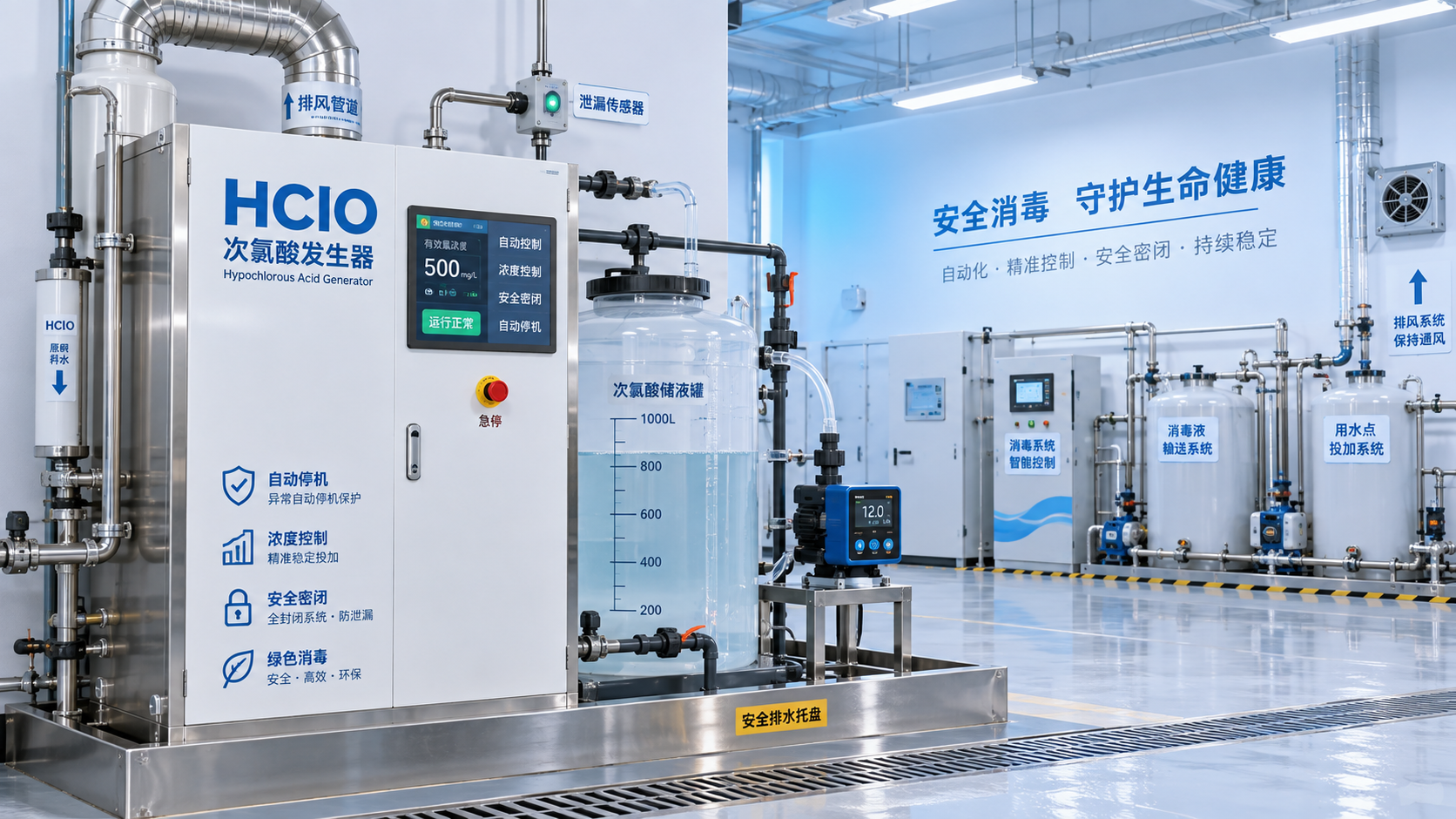
Pay special attention to cleaning mode transitions. Systems that include automatic water flushing, self-cleaning, and acid cleaning can reduce fouling and extend service life, but they also require disciplined procedures, drainage control, and staff training. Built-in cleaning is useful only when operators understand when each function should be used and what PPE is required.
Validate output quality against the hospital’s disinfection protocol
Technical verification should connect directly to infection-control practice. If your facility requires a specific concentration range for surface disinfection, test whether the generator can hold that range repeatedly over several batches and across different times of day. If the hospital plans to dilute or distribute the solution, include those downstream steps in the validation.
Useful acceptance criteria may include:
- Concentration remains within the hospital’s approved use range
- pH stays within the validated chemistry window
- No unacceptable residue, odor, or material compatibility issue at use points
- Batch records are easy to maintain for traceability
- Operators can verify output with routine field test methods
A system with adjustable output can be valuable, but only if controls are protected against accidental changes. In hospital settings, unrestricted adjustment may create more risk than flexibility.
Review maintenance burden before approval
Quality teams sometimes approve a unit based on day-one performance and only later discover that scaling, membrane wear, or cleaning downtime makes stable operation difficult. Ask for the expected service life of key components, recommended maintenance intervals, and the signs that output quality is beginning to drift.
For example, an electrolysis cell life of 6000 hours or more sounds promising, but that figure should be interpreted alongside actual site conditions: feed water purity, frequency of operation, cleaning discipline, and load variation. Lower salt and power consumption can also be operationally attractive, especially for facilities trying to balance infection control demands with utility efficiency, but efficiency should never be accepted as a substitute for chemical consistency and safety evidence.
A practical approval framework for QC and safety managers
If you need a workable internal process, think in three layers. First, document review: technical parameters, material information, operating instructions, and safety documentation. Second, installation qualification: utilities, electrical protection, ventilation, drainage, and alarms. Third, performance qualification: repeated output testing, operator workflow review, and maintenance simulation.
Only after those three layers are complete should a hospital formally sign off on routine use. This approach reduces a familiar problem in healthcare facilities: equipment that appears compliant on paper but becomes difficult to control once placed into a real cleaning and disinfection workflow.
In the end, verifying a HOCl generator for hospital disinfection is less about chasing one ideal specification and more about proving repeatable safety at the point of use. If the generator can maintain chemistry, protect operators, fit the installation environment, and support documented maintenance, it is far more likely to remain compliant long after commissioning day.
NEWS
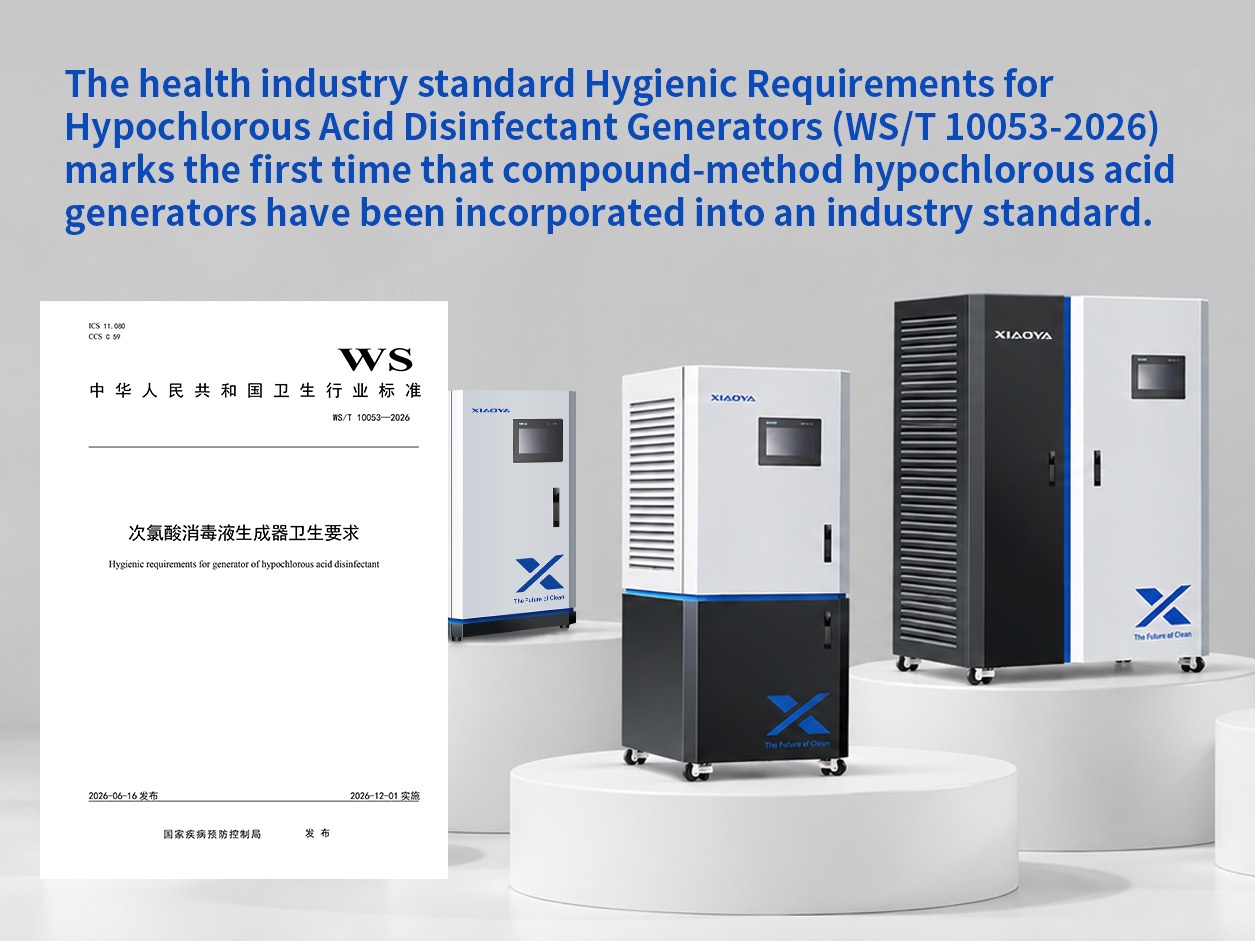
 WS/T 10053-2026 Includes the Compound Method for the First Time: Standard Signals and Market Opportunities for Mass Agricultural Production of Hypochlorous Acid Generators
 Evaluating HClO Generator Lifecycle Costs Beyond the Initial Equipment Price
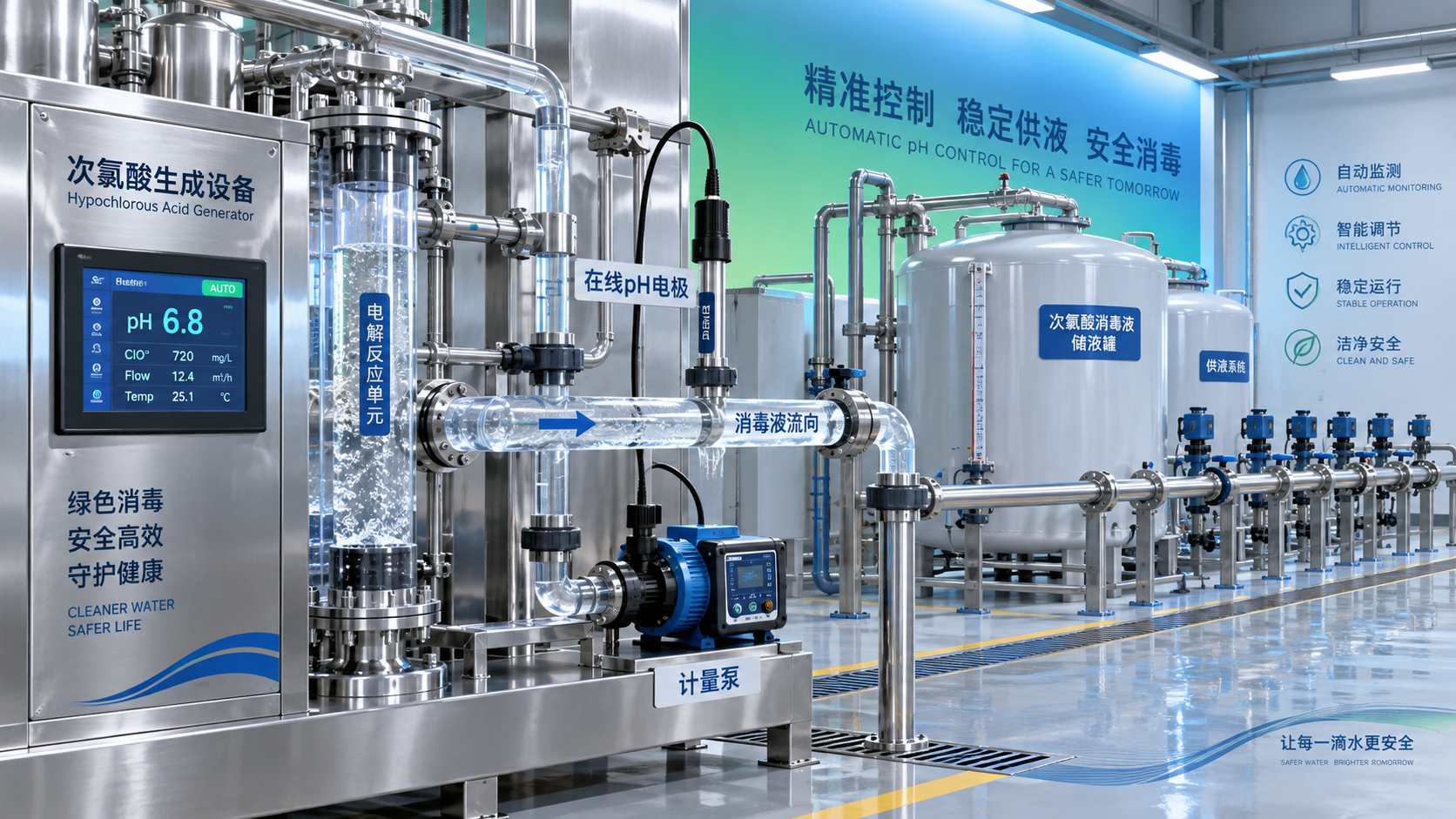
 HClO Generator pH Control: Why It Determines Disinfection Performance
- Which Safety Features Matter Most When Buying an HClO Generator?
 Troubleshooting Low ORP Readings on a Hypochlorous Acid Machine
Leave us a message

Xiaoya Group was founded in 1979,expert in the electrolyzed water industry.
Get in Touch
*We respect your confidentiality and all information are protected.