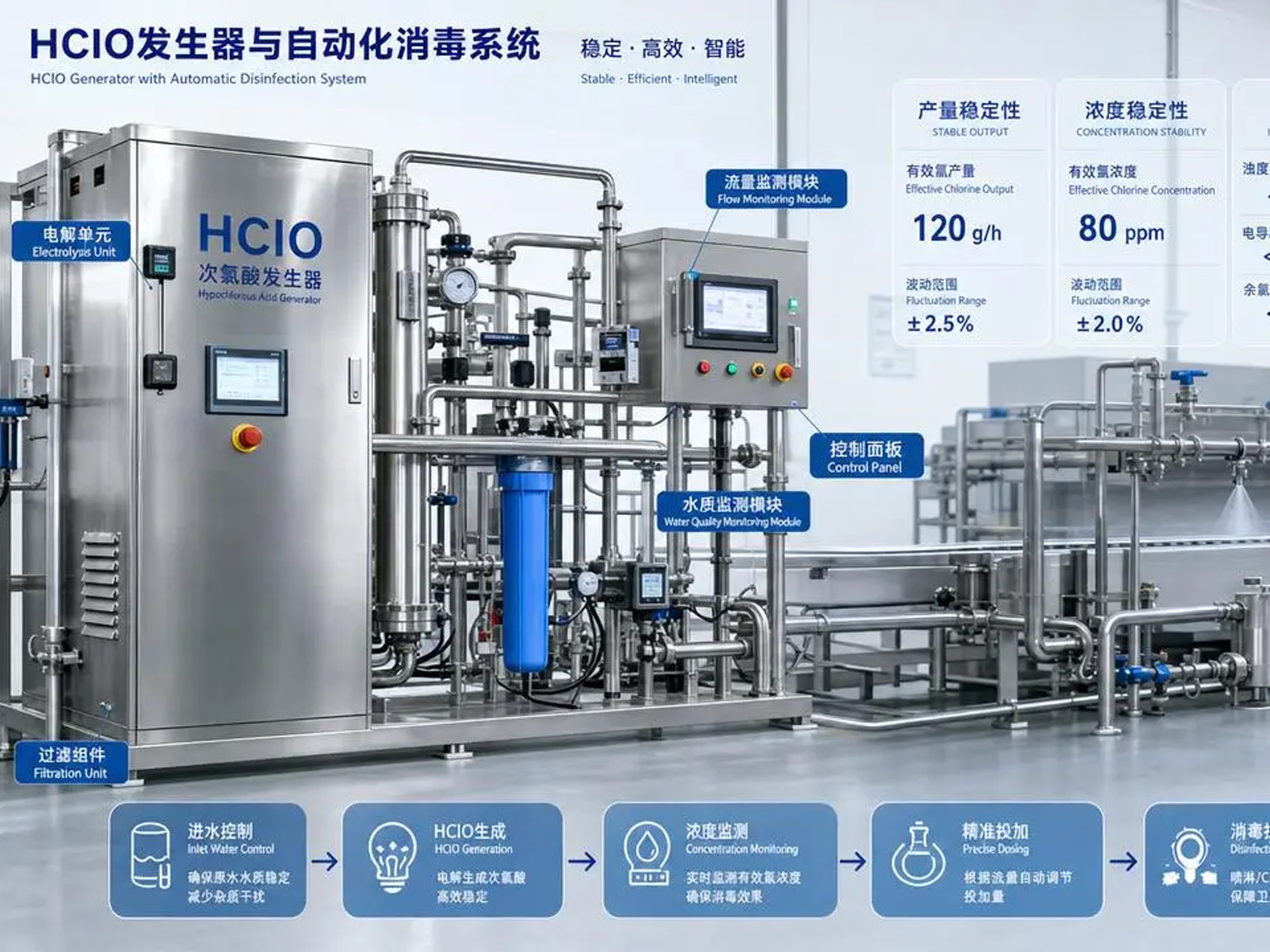
Why HClO generator selection now needs closer review
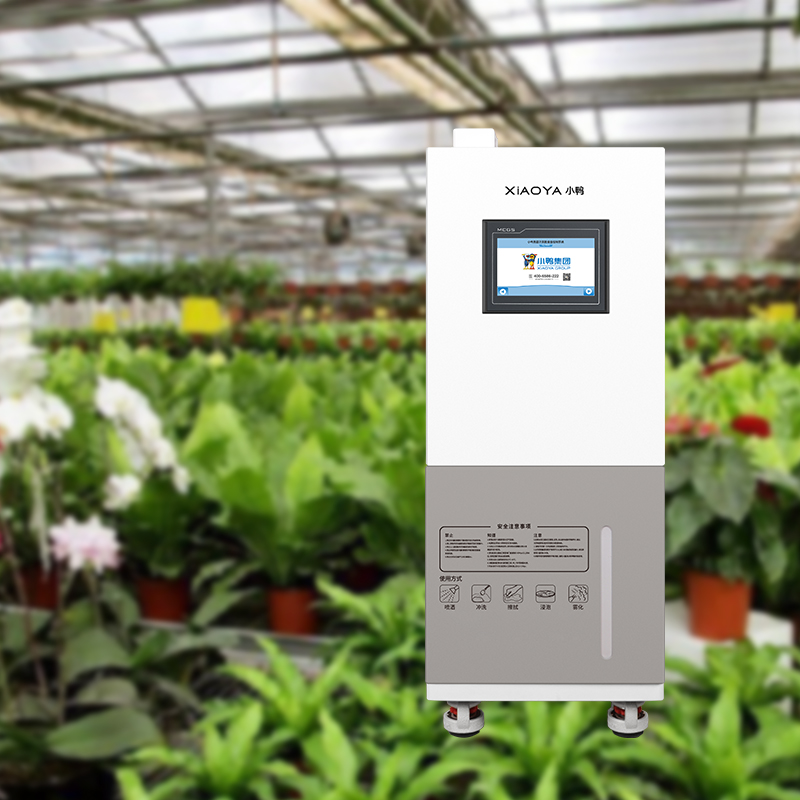
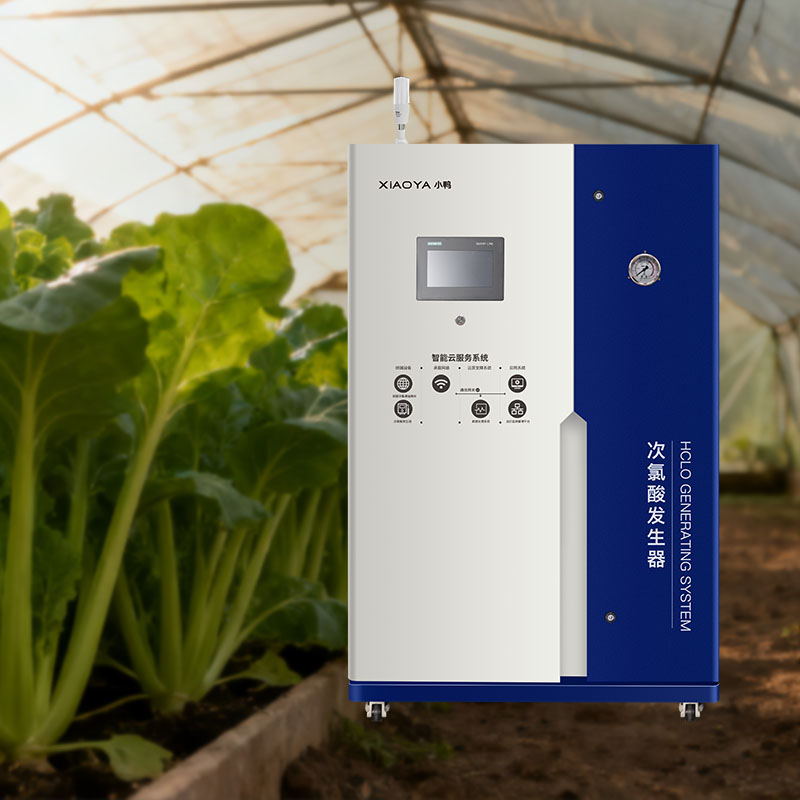
An HClO generator is no longer judged well by output alone.
In automated equipment, disinfection quality depends on stable concentration, predictable water input, and clean integration with upstream and downstream systems.
That matters across kitchen and bathroom appliances, health care and disinfection appliances, clean energy projects, and small household appliance production.
For companies combining R&D, production, and operation, poor specification creates repeat problems in validation, maintenance, and field performance.
A practical review of an HClO generator starts with what the system must actually deliver, under real water conditions and real duty cycles.
What the key parameters really mean
Output is important, but output without usable concentration can be misleading.
A higher flow rate does not help if available hypochlorous acid falls outside the target disinfection window.
Usually, three values deserve attention together.
- Rated output under standard conditions
- Actual concentration stability during continuous operation
- Recovery speed after start-stop or peak demand
This is especially relevant when the HClO generator feeds automated spraying, CIP loops, humidification-assisted sanitation, or closed disinfection modules.
In those cases, fluctuations can affect contact time, dosing accuracy, and compliance records.
Output should match the process profile
Some lines need short bursts with fast response.
Others need lower but uninterrupted production over long shifts.
A suitable HClO generator is sized by peak demand, average demand, and standby requirements together, not by catalog maximum alone.
Water quality often decides real-world performance
Source water quality is one of the most underestimated factors.
Hardness, conductivity, chloride balance, suspended solids, and organic load can shift generation efficiency and shorten component life.
Even a well-designed HClO generator may underperform if feed water is unstable.
In practice, local water reports are useful, but they are not enough.
Seasonal variation, recycled water use, and pressure swings should also be reviewed before finalizing an HClO generator specification.
System compatibility matters as much as chemistry
A reliable HClO generator must fit the control architecture and the physical process environment.
That includes communication interfaces, dosing logic, alarm management, material compatibility, and cleaning access.
When the unit is added to automated equipment, integration questions quickly become operating questions.
- Can concentration data be exported to the PLC or MES?
- Does the skid support safe shutdown after a water fault?
- Are wetted materials suitable for long-term oxidant exposure?
- Can maintenance be done without stopping the whole line?
These points are often more valuable than a nominal output increase.
A technically stronger choice is often the one that performs steadily inside the full automation sequence.
How application context changes the evaluation
Different sectors ask different things from an HClO generator.
In appliance manufacturing, compact layout and repeatable sanitation cycles may be the main concern.
In health care and disinfection appliances, concentration verification and traceability tend to move higher on the checklist.
In clean energy or distributed utility systems, operating efficiency and low service burden become more important.
That is why supporting equipment should also be judged through the same systems lens.
For example, thermal support for sanitation loops may benefit from compact, distributed infrastructure such as Thermal Engine.
Its 2㎡ footprint, 380V supply, intelligent real-time monitoring, and low NOX profile fit projects where space, control visibility, and environmental performance all matter.
That does not replace HClO generation, but it shows how utility decisions and disinfection decisions often intersect in automated systems.
Useful checkpoints before specification or procurement
A disciplined review usually prevents later redesign.
Focus on measurable questions
- What concentration range is required at the actual use point?
- How much output is needed during the highest demand window?
- What water pretreatment is already installed?
- What calibration, cleaning, and replacement intervals are expected?
- Which alarms must connect to existing automation logic?
Look beyond purchase price
An HClO generator with lower maintenance demand may produce better lifecycle value than a cheaper unit with unstable electrodes or tighter water sensitivity.
The same thinking applies to supporting utility equipment.
Where steam or thermal support is part of the sanitation design, comparing efficiency, emissions, monitoring, and installation constraints is worthwhile.
A unit such as Thermal Engine, with 20-100% combustion adjustment and over 20 protection units, reflects that broader reliability mindset.
A practical way to move forward
The best HClO generator choice usually comes from matching chemistry, water conditions, controls, and maintenance expectations in one review process.
Start with the real disinfection target, then confirm feed water variability, duty cycle, integration needs, and service access.
From there, compare shortlisted systems using field-relevant performance data rather than catalog claims alone.
That approach leads to a more dependable HClO generator specification and reduces surprises after installation.
If the project also depends on thermal utilities, reviewing adjacent equipment at the same time can make the final solution more coherent and easier to operate.
NEWS
 Upgrade in Healthy Living: Hypochlorous Acid Generators Become the New Standard for Luxury Villas
- The Ultimate Solution to Pet Shop Disinfection Challenges! XIAOYA Hypochlorous Acid Generator: Safe Pet Protection with Peace of Mind
 Hypochlorous Acid Generator vs Sodium Hypochlorite Generator
- Hypochlorous Acid Generator Supplier
- Hypochlorous Acid Generator Manufacturer
Leave us a message

Xiaoya Group was founded in 1979,expert in the electrolyzed water industry.
Get in Touch
*We respect your confidentiality and all information are protected.